
Using cable labels and markers in large projects helps you quickly identify and organize cables, reducing errors and streamlining maintenance. Apply consistent color coding for different systems, and verify labels are durable and visible. Position labels near connectors with clear information like circuit numbers and destinations. Regularly review and update labels as your project progresses. Keep these best practices in mind, and you’ll discover more ways to improve your wiring management effectively.
Key Takeaways
- Implement consistent color coding and labeling standards aligned with project documentation for easy identification.
- Use durable, weather-resistant labels and industrial printers to ensure longevity in harsh environments.
- Position labels near connectors or terminations with clear, concise information for quick reference.
- Train team members on labeling procedures, emphasizing standardization and proper documentation practices.
- Regularly review and update labels to reflect project changes, maintaining accuracy and reducing errors.
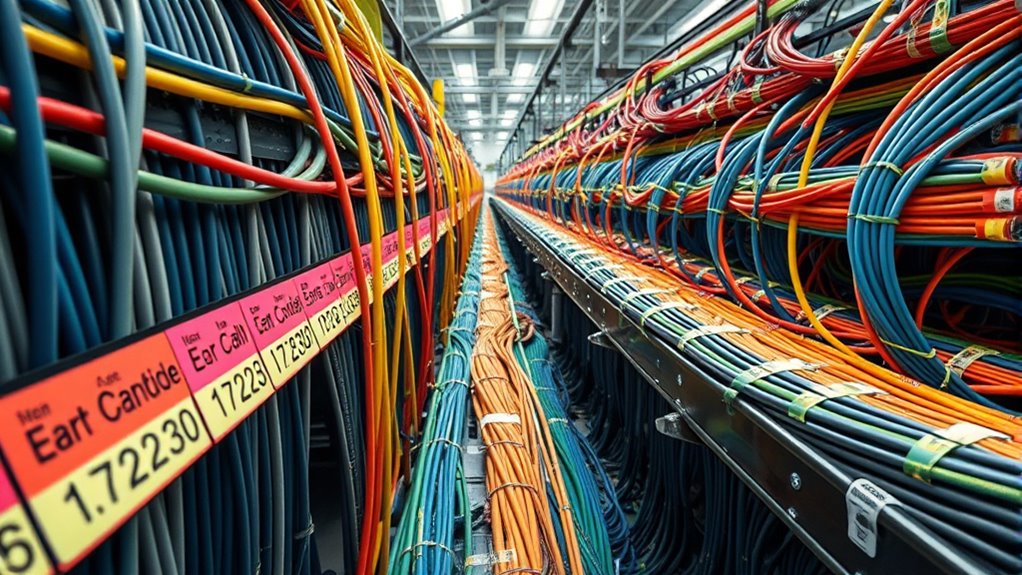
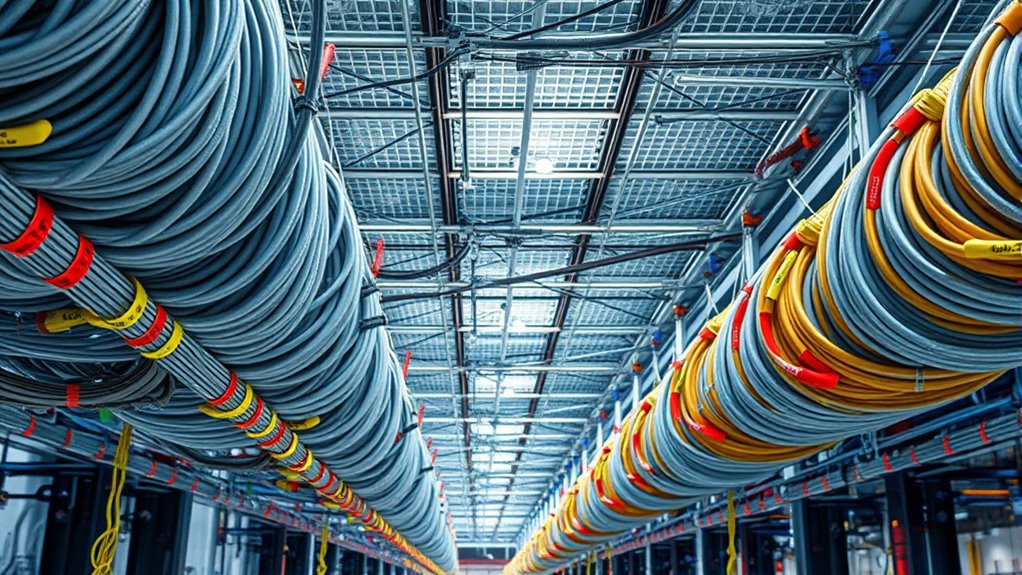
When managing large-scale electrical or communication projects, using effective cable labels and markers is essential for organization and safety. Proper labeling helps you identify cables quickly, reduces errors, and streamlines troubleshooting. One of the most effective strategies is incorporating color coding into your labeling system. Color coding allows you to visually distinguish between different types of cables, circuits, or systems at a glance. For example, you might assign red for power cables, blue for data lines, and yellow for control wiring. This quick visual cue reduces confusion and speeds up installation and maintenance processes. When implementing color coding, consistency is key. Use the same colors throughout the project, and document your scheme thoroughly so everyone on the team understands the system. This consistency minimizes mistakes and guarantees that anyone can follow the labeling system easily, even if they’re new to the project.
Alongside color coding, adhering to labeling best practices is crucial. You want labels to be clear, durable, and easy to read. Use high-quality, weather-resistant labels suitable for the environment—especially if cables are exposed to moisture, heat, or other harsh conditions. Position labels close to connectors or terminations, ensuring they’re visible but won’t interfere with installation or operation. When labeling, include essential information such as circuit numbers, source/destination points, or function descriptions. Keep the text concise but informative, avoiding clutter that can make labels difficult to interpret. Also, consider using both alphanumeric codes and symbols to improve readability and reduce language barriers among your team members. Additionally, understanding the contrast ratio of your labels and displays can help ensure they remain legible in various lighting conditions, which is especially important for large projects with diverse environments.
Automation tools or label printers designed for industrial use can help you produce professional, consistent labels quickly. This approach saves time and guarantees uniformity across all cables. Remember to review your labeling system periodically, especially if project scope expands or changes occur. Updating labels as needed keeps your system accurate and prevents confusion down the line. Training team members on your labeling standards is equally important, as it guarantees everyone follows the same procedures and understands the significance of each label. When everyone adheres to these best practices—using consistent color coding, clear labeling, and durable materials—you lay the foundation for a safer, more efficient project. Proper cable labels and markers aren’t just about organization; they’re essential tools for preventing costly mistakes, speeding up repairs, and maintaining a high standard of safety throughout your entire project.

Brady M210 Portable Label Printer with Rubber Bumpers, Multi-Line Print, 6 to 40 Point Font (Replaces BMP21-PLUS Printer)
Auto-format labels with 11 pre-loaded application design guides for rapid and accurate label creation
As an affiliate, we earn on qualifying purchases.
As an affiliate, we earn on qualifying purchases.
Frequently Asked Questions
How Do Cable Labels Withstand Extreme Environmental Conditions?
Your cable labels withstand extreme environmental conditions by meeting strict cable labeling standards that guarantee environmental durability. They are made from high-quality, weather-resistant materials like vinyl or polyester, which resist moisture, UV rays, chemicals, and temperature fluctuations. By choosing labels designed for harsh environments, you ensure your cables stay clearly marked and protected, even in challenging conditions, reducing maintenance costs and preventing confusion during large projects.
What Are the Best Materials for Durable Cable Markers?
The best materials for durable cable markers combine flexibility and resilience. You should opt for weatherproof vinyl or polyester, as they resist water, chemicals, and UV rays, ensuring material durability. These materials also allow for label customization, so you can personalize markings for clarity and consistency. Choosing sturdy, adaptable materials guarantees your labels stay legible and intact, even in harsh environments, simplifying large project management while safeguarding your cables effectively.
Can Cable Labels Be Reused on Different Projects?
Yes, you can reuse cable labels on different projects if they’re designed for label customization and durability. Look for labels with strong adhesive and weather-resistant materials, especially if you’ll be reapplying them frequently. Using color coding helps you quickly identify cables, making reusability easier. Just make certain the labels are clean and intact before reapplying, and choose reusable options that can be easily removed without leaving residue.
How Do You Ensure Label Adhesion Over Long-Term Use?
Think of your cables as silent messengers; you need their labels to stay put like loyal guardians. To guarantee long-term adhesion, choose high-quality labels that resist wear, and use color coding for quick identification. When label removal becomes necessary, do it carefully to avoid damage. Applying labels on clean, dry surfaces and selecting those with strong adhesive properties guarantees they’ll cling tight, even through the chaos of long-term use.
Are There Digital Solutions for Managing Cable Labels?
Yes, there are digital solutions for managing cable labels. You can use digital labeling software to create, organize, and update labels easily. These programs allow you to generate consistent labels, track your labeling system, and print directly from your device. Digital management streamlines your workflow, reduces errors, and makes long-term updates simple, ensuring your cable labels stay accurate and organized throughout your project.
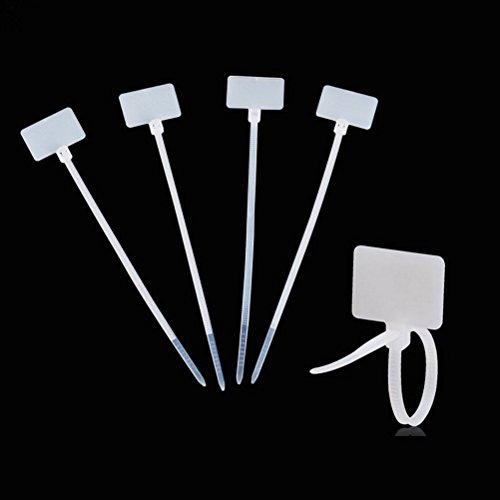
Amgate 100 Pcs Write on Tags Wire Zip Ties Cable Mark Tags Nylon Power Marking Label (100pcs)
Material : Nylon
As an affiliate, we earn on qualifying purchases.
As an affiliate, we earn on qualifying purchases.
Conclusion
Using cable labels and markers isn’t just about organization; it’s about making your large project smoother and more efficient. When you take the time to label properly, you’ll find that troubleshooting, updates, and future expansions become almost effortless. It’s a coincidence how clear labels often prevent delays and errors, saving you time and money. In the end, the small effort you put into labeling truly makes a big difference—proving that good organization is always worth it.

300 Pack Color-Coding Cable Labels Tags Kit with 3 Markers – Water-Resistant Wire Labels for Electronics, Home Theater & PC Setup | Tear Resistant & Heat Resistant Organizer Stickers (-22°F to 248°F)
Versatile Color-Coding System: 300 pre-cut cable labels (60 each in 5 colors) + 3 smudge-proof markers create an…
As an affiliate, we earn on qualifying purchases.
As an affiliate, we earn on qualifying purchases.

Premium Wire Marker Book Numbered 1-45 for Cable Management, Vinyl-Coated, High-Tack Adhesive, Electric Panel Wire Labels 10 Pages/Book
High-Quality Construction: Pre-printed wire markers made from durable, vinyl-coated cloth for long-lasting use.
As an affiliate, we earn on qualifying purchases.
As an affiliate, we earn on qualifying purchases.