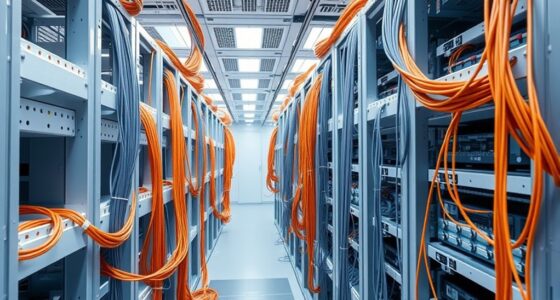

When planning outdoor cable installation, understanding the environment and proper techniques is indispensable to guarantee your network’s reliability and longevity. From evaluating potential hazards like sunlight and weather to choosing the right protective measures, each step plays a critical role. Skipping important procedures can lead to costly repairs or downtime. To avoid these pitfalls, it’s essential to know the best practices—so let’s explore what it takes to do this right.
Key Takeaways
- Assess environmental conditions to select appropriate trenching, routing, and protective measures for outdoor cable installation.
- Ensure trenches meet depth and width standards, and lay cables carefully to avoid damage and sharp bends.
- Use weatherproof jackets, waterproof connectors, and sealed conduits to protect cables from moisture, UV, and temperature extremes.
- Secure cables with proper fasteners and install protective sleeves at surface crossings to prevent physical damage.
- Conduct routine inspections and maintenance to address wear, corrosion, or damage, ensuring long-term outdoor network reliability.

Installing outdoor cables requires careful planning and proper techniques to guarantee safety and reliability. Whether you’re running fiber optic lines or other types of cables, understanding the essentials can make the process smoother and prevent costly mistakes. Fiber optic cables are increasingly popular for outdoor setups because they offer high-speed data transmission over long distances. However, they are delicate and need special attention during installation. To ensure peak performance, weatherproofing is critical. Without proper weatherproofing, cables can be vulnerable to moisture, temperature fluctuations, and physical damage, all of which can impair signal quality or cause failure.
Before beginning the installation, you should evaluate your environment thoroughly. Identify potential hazards like exposure to direct sunlight, heavy rain, snow, or high winds. This assessment helps determine the best routing path and the necessary protective measures. When laying fiber optic cables, digging trenches is common, but you must ensure the trench’s depth and width comply with local codes and standards. Proper trenching minimizes the risk of accidental damage and provides a stable environment for the cable. Once the trench is prepared, you should lay the cable carefully, avoiding sharp bends or kinks that could compromise the fiber’s integrity.
Weatherproofing is a crucial step in outdoor cable installation. Use high-quality protective jackets designed specifically for outdoor conditions, especially for fiber optic cables. These jackets shield the delicate fibers from moisture, UV rays, and temperature extremes. Additionally, employing waterproof connectors and sealants helps prevent water ingress, which can cause signal attenuation or complete failure. When pulling the cable through conduit or protective tubing, ensure that the conduit is also weatherproofed and properly sealed at all entry points. This added layer of protection extends the life of your cables and maintains peak performance.
Use weatherproof jackets, waterproof connectors, and sealed conduit to protect outdoor cables from moisture and temperature extremes.
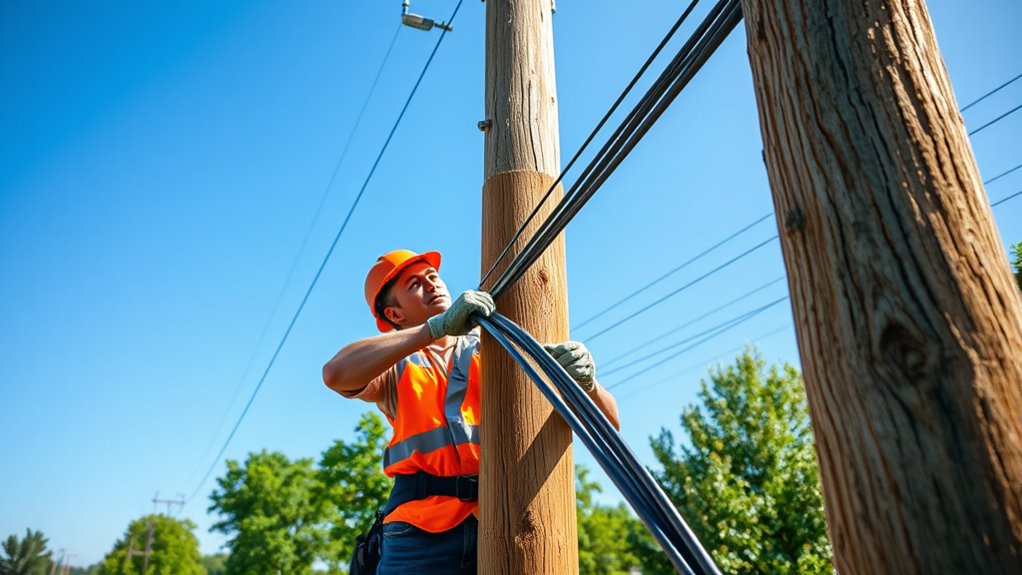
Secure the cables properly to prevent movement, especially in areas prone to wind or vibrations. Use appropriate fasteners and anchors that won’t damage the cable coating or fibers. Also, consider installing protective sleeves or conduits at points where cables pass through surfaces or around sharp edges. These measures provide extra weatherproofing and mechanical protection. Regular inspections and maintenance are essential to identify any signs of wear, corrosion, or damage over time. If any issues are found, address them promptly to keep your outdoor network running smoothly.
Top picks for "outdoor cable installation"
Open Amazon search results for this keyword.
As an affiliate, we earn on qualifying purchases.
Frequently Asked Questions
What Is the Average Lifespan of Outdoor Cables?
Outdoor cables typically last between 10 to 30 years, depending on cable durability and lifespan factors. You can extend their life by choosing high-quality, weather-resistant materials and ensuring proper installation. Keep in mind that exposure to extreme weather, UV rays, and physical damage can shorten their lifespan. Regular inspections and maintenance help identify issues early, ensuring your outdoor cables perform reliably for as long as possible.
How Do I Prevent Wildlife From Damaging Outdoor Cables?
Think of your cables as delicate treasures hidden in a wild jungle. To prevent wildlife damage, you must act as their guardian. Use wildlife prevention techniques like installing protective conduits and sturdy fencing, making cables less appealing or accessible. Regular inspections and wildlife deterrents, like motion-activated lights or repellents, keep critters at bay. Proper cable protection guarantees your outdoor setup stays safe and functional, no matter how curious nature gets.
Are There Eco-Friendly Options for Outdoor Cable Insulation?
Yes, you can choose eco-friendly insulation for outdoor cables by opting for sustainable cable options. Look for materials like recycled polyethylene or biodegradable compounds that reduce environmental impact. These eco-friendly insulation choices are designed to be durable and weather-resistant, ensuring your cables last while supporting sustainability. By selecting sustainable cable options, you contribute to environmental preservation without sacrificing performance or safety in outdoor installations.
How Does Weather Affect Outdoor Cable Performance?
Weather impacts outdoor cable performance markedly, so you need to contemplate weather resilience and material durability. Extreme temperatures, rain, snow, and UV exposure can cause cables to degrade or lose insulation over time. You should select cables designed to withstand these conditions, ensuring they remain resilient against weather fluctuations. Proper installation and protective coatings also help enhance durability, preventing damage and maintaining ideal performance in harsh outdoor environments.
What Maintenance Is Required for Outdoor Cable Systems?
You should regularly perform cable inspections to identify any damage or wear early. Keep an eye out for corrosion, which can weaken the system, and take steps to prevent it by applying protective coatings or using corrosion-resistant materials. Additionally, make certain that connectors are tight, and clear any debris that could cause moisture buildup. Proper maintenance extends your outdoor cable system’s lifespan and keeps it functioning reliably in all weather conditions.
Conclusion
Remember, a stitch in time saves nine. By carefully planning your outdoor cable installation—considering environmental hazards, following proper trenching techniques, weatherproofing, and ensuring mechanical protection—you’ll set the foundation for a reliable network. Regular inspections keep everything in top shape, preventing costly repairs down the line. Stay proactive and attentive to detail, and your cables will stand the test of time. With patience and care, you’ll enjoy a durable, long-lasting outdoor setup.