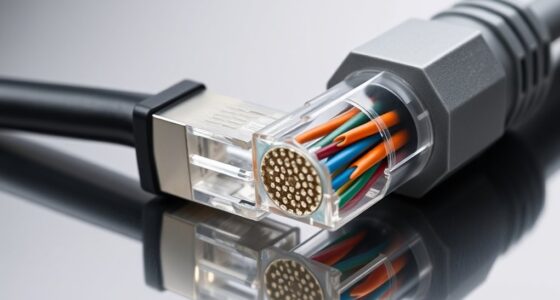
Power over Ethernet allows you to transmit both data and electrical power through a single Ethernet cable, simplifying device setup. When you connect a PoE-enabled device, the switch or injector and the device negotiate power needs using standard protocols. This process guarantees safe and efficient power delivery without additional wiring. Understanding how this negotiation and transmission work can help you optimize your network setup and troubleshoot potential issues more effectively.

Get business pricing on networking and server gear
- Business-only prices and quantity discounts
- Tax-exempt purchasing
- Multiple users, one account, clear invoices
Key Takeaways
- PoE combines electrical power and data transfer over a single Ethernet cable.
- Devices and switches negotiate power needs before delivery to ensure compatibility.
- PoE uses specific standards (like IEEE 802.3af/at/bt) to define power levels and safety protocols.
- Power is transmitted over the same twisted pairs used for data, often after negotiation.
- Proper cabling and adherence to standards ensure safe, efficient, and reliable PoE operation.
Ever wondered how devices like security cameras and Wi-Fi access points get power and data through a single cable? The answer lies in Power over Ethernet, or PoE. This technology simplifies installations by allowing both electrical power and data to travel over one Ethernet cable, eliminating the need for separate power supplies or outlets. But to make this work seamlessly, certain standards and types of cabling are involved. PoE standards define the rules for delivering power safely and efficiently, guaranteeing compatibility between devices. The most common standards include IEEE 802.3af, 802.3at, and the newer 802.3bt, each providing different power levels and capabilities. These standards specify how much power can be sent over the cable and how it’s negotiated between the power source and the device, or powered device (PD). Knowing these standards helps you choose the right equipment and avoid issues like overloads or insufficient power.
The backbone of PoE is Ethernet cabling, which must support both data transfer and power delivery. Typically, Cat5e, Cat6, or higher categories are used because they have the necessary wiring configurations and shielding to handle the increased demands. Ethernet cabling consists of multiple twisted pairs of copper wires, and PoE takes advantage of these pairs to carry electricity alongside data signals. When you connect a PoE-enabled device, like a security camera, to a PoE switch or injector, the system first negotiates how much power the device needs. Once agreed upon, the Ethernet cable carries both the data packets and the electrical current needed for operation. This process is intelligently managed so that power is only supplied when the device is compatible and requires it, preventing damage or waste.
Using the right Ethernet cabling is vital because not all cables are created equal. For example, Cat5e cables can support up to 100 Mbps and are suitable for many PoE applications, but Cat6 cables can handle higher frequencies and provide better performance for newer standards like 802.3at and 802.3bt. Additionally, proper installation ensures that the cabling maintains its shielding and minimizes interference, which is essential for both data integrity and reliable power delivery. As PoE continues to evolve, the standards become more robust, allowing for higher power levels and more versatile applications. A thorough understanding of the power negotiation process helps ensure a safe and efficient setup. By understanding PoE standards and choosing appropriate Ethernet cabling, you can set up a clean, efficient network that powers your devices without the clutter of extra cords or outlets.
Products Worth Considering

Jackery Explorer 300 Portable Power Station, 292Wh

LG UltraGear 32GX850A-B 32-Inch 4K UHD Glossy OLED Gaming Monitor

Bose SoundLink Flex Bluetooth Speaker (2nd Gen), Portable Waterproof Speaker, Black
As an affiliate, we earn on qualifying purchases.
Frequently Asked Questions
Can Power Over Ethernet Damage Connected Devices?
Power over Ethernet generally won’t harm your devices if proper cable insulation and voltage regulation are in place. The system is designed to limit voltage and current, protecting connected equipment. However, using damaged cables or poor-quality equipment can cause issues. Always make certain your cables are intact and your power sources regulate voltage properly to prevent potential damage and ensure safe operation.
What Are the Limitations of Power Over Ethernet Distance?
The main limitation of Power over Ethernet distance is that it’s affected by cable quality and power capacity. As the cable length increases beyond 100 meters, voltage drops can occur, reducing the amount of power delivered to your device. Poor quality cables or those not rated for higher power capacity can worsen this issue, causing insufficient power delivery or even damage. To maximize distance, use high-quality cables and appropriate power settings.
How Does Poe Prioritize Multiple Devices?
You don’t need to worry about device prioritization with PoE; it automatically handles traffic through device prioritization and traffic management. The system assigns higher priority to critical devices, like security cameras or VoIP phones, ensuring they receive power first during limited power scenarios. This intelligent traffic management helps maintain network stability and ensures essential devices stay powered, even when overall power is constrained.
Is Poe Compatible With All Network Switches?
Ever wondered if all network switches support PoE? Not all switches are compatible because PoE standards vary, like IEEE 802.3af or 802.3at, and switch compatibility depends on whether the device complies with these standards. To guarantee seamless power delivery, check your switch’s specifications and confirm it supports the required PoE standards. If it doesn’t, you might need a PoE injector or a compatible switch for proper operation.
What Safety Standards Govern Power Over Ethernet?
You should know that Power over Ethernet (PoE) is governed by safety standards and cabling specifications to guarantee safe operation. These standards, like IEEE 802.3af and 802.3at, include safety certifications that verify compliance with electrical safety rules. When installing PoE devices, always follow these standards to prevent hazards, protect equipment, and ensure reliable power delivery. Proper cabling and adherence to safety certifications are essential for secure PoE use.
Conclusion
Now that you know how Power over Ethernet works, it’s clear that it’s like a magic trick where power and data share the same road. By negotiating safely and efficiently, PoE keeps your devices powered without the mess of extra cables. It’s a clever dance of technology that simplifies your setup and keeps everything running smoothly. Once you understand this, you’ll see PoE as the silent hero powering your network’s backbone behind the scenes.