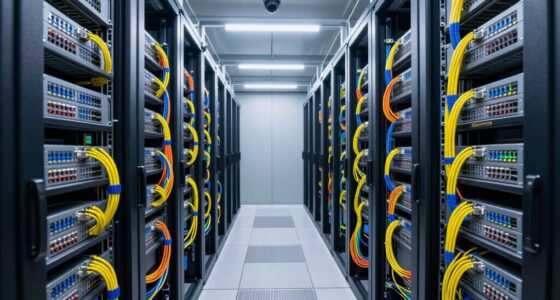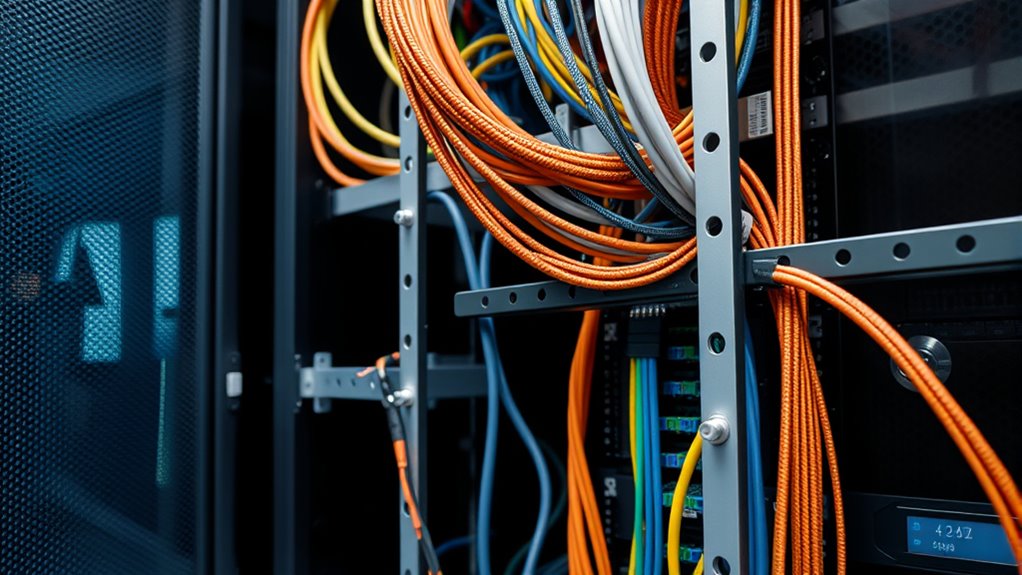

Ensuring proper grounding and bonding in your data center cabling isn’t just a best practice — it’s essential for safety, equipment protection, and reliable data transmission. When systems aren’t correctly grounded, you risk electrical faults, data errors, or even equipment damage. Understanding how to implement and maintain effective grounding systems can make a significant difference in your operations. Exploring the key principles and standards can help you safeguard your infrastructure and optimize performance.
Key Takeaways
- Proper grounding and bonding ensure safety, equipment protection, and reliable data transmission in data center cabling systems.
- They help mitigate electromagnetic interference (EMI), reducing data errors and maintaining network performance.
- Effective grounding provides a low-resistance path for electrical surges, protecting devices from lightning and power fluctuations.
- Inadequate grounding increases risks of equipment damage, data loss, electrical shocks, and non-compliance with standards.
- Regular inspection and adherence to industry standards are essential for maintaining effective grounding and bonding systems.
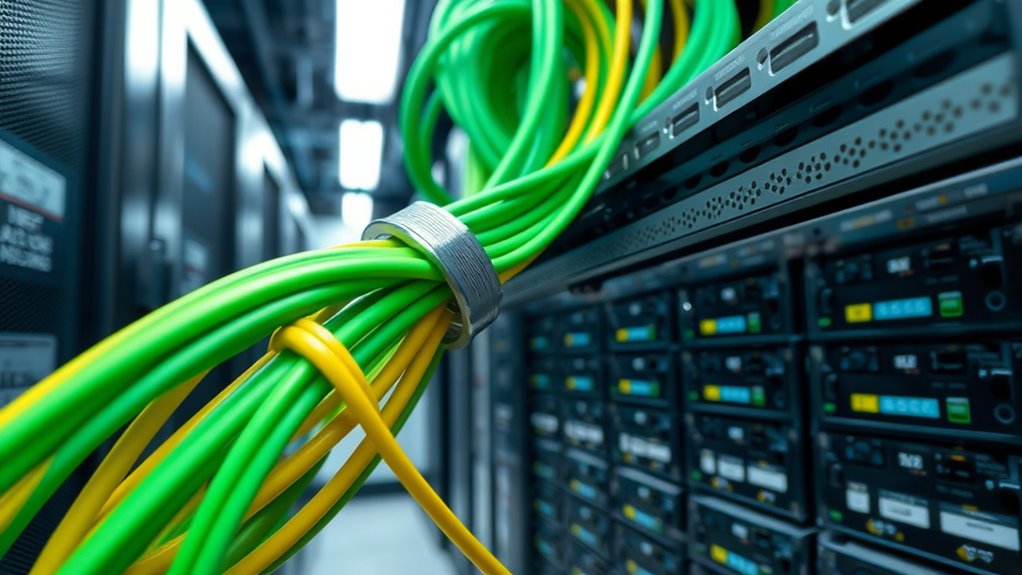
Effective grounding and bonding are essential for guaranteeing the safety and reliability of data center cabling systems. When you implement proper grounding practices, you create a path for electrical faults to safely dissipate, reducing the risk of damage to sensitive equipment. Bonding, on the other hand, ensures that all metal parts are connected to a common ground point, preventing potential differences that could lead to electric shock or equipment malfunction. Without these measures, your data center becomes vulnerable to electrical issues that can disrupt operations, cause data loss, or pose safety hazards.
Electromagnetic interference (EMI) is a common challenge in data centers, especially as high-speed data transfer demands grow. EMI can cause signal degradation, data errors, and slow network performance. Proper grounding and bonding are your first line of defense against EMI. By establishing a low-resistance ground system, you minimize the electromagnetic noise coupling into your cabling. This reduces interference and ensures cleaner signals, which is crucial for maintaining data integrity and network speed. Bonding all metallic components together helps create a shielded environment where electromagnetic fields are contained, preventing external noise from corrupting your data transmission.
Surge protection is another critical aspect that relies heavily on effective grounding and bonding. Power surges caused by lightning strikes, power fluctuations, or electrical faults can severely damage your equipment. When your grounding system is well-designed, it provides a direct route for surge currents to safely exit the system, protecting your cabling and connected devices. Bonding ensures that all components share a common reference point, preventing voltage differences that can cause sparks or damage during a surge event. Implementing surge protection devices (SPDs) along with robust grounding and bonding creates a layered defense, greatly reducing the risk of costly equipment failure.
If you neglect proper grounding and bonding, you risk exposing your data center to electrical noise, surges, and potential safety hazards. Properly designed grounding systems should follow industry standards, such as those from the National Electrical Code (NEC) and the Institute of Electrical and Electronics Engineers (IEEE). Regular inspection and maintenance are also important to guarantee these systems remain effective over time. Remember, a well-grounded and bonded infrastructure doesn’t just protect your equipment—it safeguards your entire operation, ensuring data transmission remains stable, secure, and free from preventable electrical disturbances.

OHLECTRIC Lay-in Grounding Connectors 10-Pack, DB Direct Burial Pool Bonding Lugs, Copper Ground Wire Lugs for 4-14 AWG, Conduits, Outdoor Electrical Grounding, Suitable for Data Centers
- Wire Compatibility: Fits 4-14 AWG wires
- Pack Size: Includes 10 connectors
- Application Use: For pool bonding and grounding
As an affiliate, we earn on qualifying purchases.
As an affiliate, we earn on qualifying purchases.
Frequently Asked Questions
How Does Grounding Impact Data Center Cybersecurity?
Grounding considerably enhances your data center cybersecurity by reducing electromagnetic interference and electrical noise. When properly grounded, your cables are less prone to signal disruptions, which helps prevent data corruption and potential security breaches. It also aids in electrical noise mitigation, ensuring stable and reliable network performance. This stability minimizes vulnerabilities that hackers could exploit, keeping your data secure and your operations running smoothly. Proper grounding is essential for maintaining a secure, resilient data center environment.
What Are Common Grounding Mistakes in Data Centers?
You often make mistakes with equipment grounding, like neglecting proper connections or using inadequate grounding conductors. Stray voltage can easily occur if grounding paths aren’t continuous or properly bonded, which can lead to equipment damage or safety hazards. Always confirm your grounding systems are correctly installed and maintained, avoiding loose connections or grounding loops. Properly bonded and grounded systems prevent stray voltage issues and protect your data center’s reliability.
How Often Should Grounding Systems Be Inspected or Tested?
You should inspect and test your grounding systems at least annually, following established testing protocols. Regular inspections help identify corrosion, loose connections, or damage that could compromise system safety. In high-risk environments or after major system changes, more frequent testing may be necessary. Consistent inspection frequency guarantees your grounding remains effective, minimizing electrical hazards and ensuring data center reliability. Always document your inspections and adhere to industry standards for best results.
What Are the Cost Implications of Improper Grounding?
Imagine a fragile web of data, easily shattered by unseen electrical faults. If you neglect proper grounding, you risk costly outages, equipment damage, and data loss. The cost analysis shows that improper grounding can lead to significant repair expenses and downtime. Investing in effective grounding is essential for risk mitigation, saving you money in the long run by preventing damage and ensuring continuous, reliable operation of your data center.
How Do Grounding Standards Vary Internationally?
You should know that international standards for grounding compliance vary considerably across regions. For example, the IEC sets guidelines used globally, while North America follows NEC and UL standards. These differences influence your cabling practices, requiring you to adapt to specific regional requirements to guarantee safe, compliant installations. Understanding these variations helps you avoid compliance issues, maintain safety, and ensure your data center’s grounding system functions effectively worldwide.

Schneider Electric – Square D Secondary Surge Arrestor – QO Load Center, Surge Protective Device, NEMA 1 Indoor, 5kA, 22.5kW SCCR, 3 Wire, 12/24V AC, 1 Phase, CSA Certified, Dark Gray, QO2175SB
- High-energy surge suppression: Provides severe transient surge protection
- Individual fuse protection: Each MOV is individually fused for safety
- 120/240 VAC, 1 Phase: Voltage rating suitable for residential use
As an affiliate, we earn on qualifying purchases.
As an affiliate, we earn on qualifying purchases.
Conclusion
You might think grounding and bonding are just technical details, but they truly protect your data center. Some believe that modern equipment doesn’t need as much grounding, yet evidence shows proper grounding reduces equipment failures and data errors considerably. Regular inspections and adherence to standards aren’t optional—they’re essential. Ensuring effective grounding and bonding keeps your operations safe, reliable, and efficient. Don’t underestimate their power; they’re the backbone of your data center’s security and performance.

Faraday Fabric Tape 1inch x 50 Feet Double Conductive High Temp Cloth Tape for Electrical Connection, EMI Shielding, Wire Harness Wrap, ESD Grounding, Display Repair, Cable Interference Blocking
- High-Strength Conductive Fabric: Made of polyester fiber with copper-nickel layer
- Reliable Electrical Conductivity: Ensures strong circuit connections and EMI shielding
- Double-Sided Conductive Tape: Facilitates non-solderable electronic connections
As an affiliate, we earn on qualifying purchases.
As an affiliate, we earn on qualifying purchases.

CYANTEKOMS 3 Pack Grounding Rod with Clamp 4 Feet Long Copper Electrical Ground Rod for Electric Fences Satellite Dishes Generator Grounding Earthing ((Set of 3) 3/8’’ x 4 Feet Ground Rod Kit)
- Set of 3 Grounding Rods: Includes three 4-foot copper rods and clamps
- Anti-sliding Clamp Design: Prevents slipping for secure grounding
- Copper Clad Construction: Corrosion-resistant and highly conductive
As an affiliate, we earn on qualifying purchases.
As an affiliate, we earn on qualifying purchases.