
When selecting industrial cables, understanding their environmental ratings is vital for ensuring safety and reliability in tough conditions. These ratings evaluate how well cables resist chemicals, heat, and fire, which can considerably impact performance and longevity. Knowing the standards and certifications involved helps you choose cables that meet your specific needs. But what exactly do these ratings involve, and how do they protect your equipment and personnel?
Key Takeaways
- Environmental ratings assess a cable’s resistance to chemicals, heat, and fire hazards for demanding industrial conditions.
- They ensure cables can withstand corrosive substances and prevent premature degradation.
- Fire safety ratings indicate a cable’s ability to resist flames, emit minimal smoke, and reduce toxicity during fires.
- Testing and certification confirm compliance with safety standards, validating cable performance in harsh environments.
- Proper ratings help extend cable lifespan, improve reliability, and support regulatory safety compliance.

Have you ever wondered how industrial cables are rated for environmental safety? It’s a critical question, especially when you consider the demanding conditions many cables face in harsh environments. Manufacturers assign these ratings based on several factors, including chemical resistance and fire safety, to guarantee the cables can perform reliably without risking safety or functionality. These ratings help you determine whether a specific cable suits your application, whether it’s exposed to corrosive substances, extreme heat, or potential fire hazards.
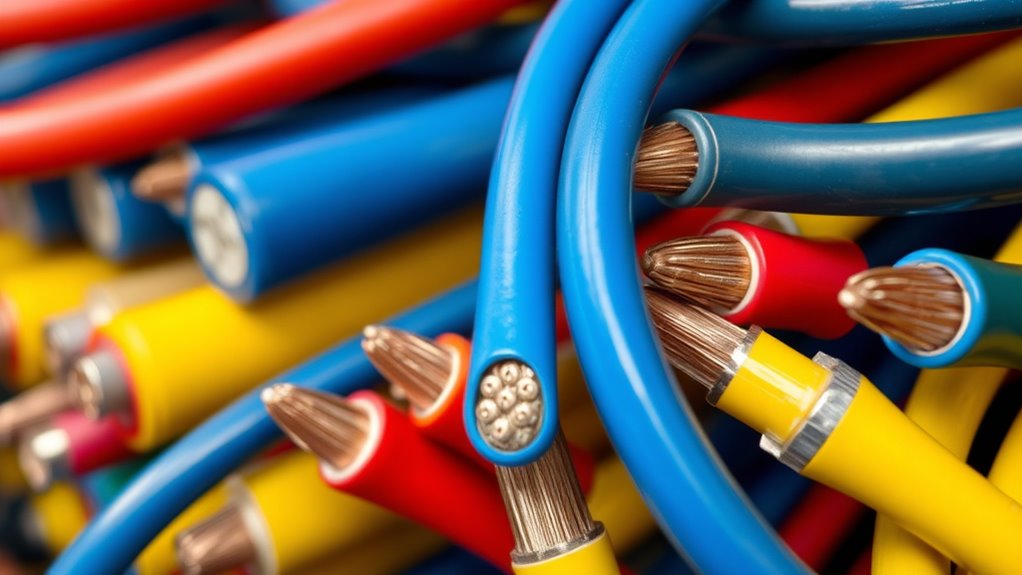
Chemical resistance is essential because industrial settings often involve exposure to various chemicals—oil, acids, solvents, and other corrosive agents—that could degrade standard cables. When selecting cables, you need to pay attention to their chemical resistance ratings to prevent failures and guarantee longevity. Cables with high chemical resistance are coated or constructed with materials like thermoplastic, fluoropolymer, or special rubber compounds. These materials act as a barrier, preventing chemicals from penetrating the insulation or jacket, which could otherwise cause shorts, corrosion, or breakdown over time. Recognizing these ratings helps you choose cables that won’t degrade prematurely, saving you money and reducing downtime.
Choosing chemically resistant cables prevents degradation, ensuring longevity and reducing costly downtime in industrial settings.
Fire safety is another fundamental aspect of environmental ratings. In many industrial environments, the risk of fire isn’t just about immediate safety but also about preventing catastrophic failures that could lead to injuries or extensive damage. Fire-resistant cables are designed to withstand high temperatures and resist the spread of flames. They often feature special insulation materials, such as flame-retardant polymers or mineral-based compounds, which slow down or inhibit ignition. Some cables are rated for fire safety based on standards like flame retardancy, smoke emission, and low toxicity of combustion gases. When you select cables with appropriate fire safety ratings, you’re not only protecting your personnel but also ensuring compliance with safety regulations and reducing liability.
Understanding how these ratings are determined can help you make smarter choices. Testing labs evaluate cables under controlled conditions to simulate real-world exposure—whether it’s chemical splashes or fire hazards. The ratings they assign are based on standardized tests, such as UL 94 for flame retardancy or specific chemical exposure tests. These ratings give you confidence that the cables will perform safely and reliably in your environment.

BEST CONNECTIONS Split Wire Loom Flex-Guard Convoluted Tubing Protective Split Cable Sleeves for Auto Home Industrial Electrical Wires Chemical Resistant Conduit Black (1/4", 1/2", 3/4" – 20 ft)
SPECIFICATION – Color: Black | Material: High-Quality Polyethylene.
As an affiliate, we earn on qualifying purchases.
As an affiliate, we earn on qualifying purchases.
Frequently Asked Questions
How Do Environmental Ratings Affect Cable Installation Costs?
Environmental ratings can increase your cable installation costs because they influence your cost estimation and installation procedures. Higher-rated cables often require specialized handling, protective measures, or additional equipment, which add to expenses. You might need to invest in extra safety gear or follow stricter guidelines. While these costs are higher upfront, they guarantee durability and compliance, ultimately saving you money on repairs or replacements over time.
Are Environmentally Rated Cables Suitable for Outdoor and Marine Environments?
Think of environmentally rated cables as guardians of your outdoor and marine projects. They’re designed with corrosion resistance and UV stability, making them ideal for harsh conditions. You can trust these cables to withstand saltwater, sun exposure, and moisture, ensuring long-lasting performance. When you choose environmentally rated cables, you’re selecting durability and reliability, turning your installation into a resilient fortress against nature’s relentless elements.
What Standards Define Environmental Ratings for Industrial Cables?
You should look at standards like UL and IEC to understand environmental ratings for industrial cables. These standards define requirements for chemical resistance, guaranteeing cables withstand corrosive substances, and fire safety, which ensures cables resist ignition and limit fire spread. By following these guidelines, you ensure your cables are suitable for challenging outdoor and marine environments, providing durability and safety in demanding conditions.
Can Environmental Ratings Change Over a Cable’s Lifespan?
Yes, environmental ratings can change over a cable’s lifespan due to factors like environmental degradation. As your cable ages, exposure to moisture, UV rays, or chemicals may diminish its durability, potentially lowering its environmental rating. You should regularly inspect and maintain your cables to guarantee they meet safety and performance standards, especially in harsh environments. Proper care helps sustain the lifespan durability and maintains the cable’s environmental ratings over time.
How Do Environmental Ratings Impact Cable Recycling and Disposal?
Environmental ratings influence how you approach cable recycling and disposal. High ratings mean the cables are easier to recycle through specialized processes, reducing waste. Conversely, low-rated cables may contain hazardous materials, making disposal more complex and subject to strict regulations. You need to follow recycling processes carefully and adhere to disposal regulations to minimize environmental impact. These ratings guide you toward greener choices and ensure responsible handling at the end of the cable’s life.
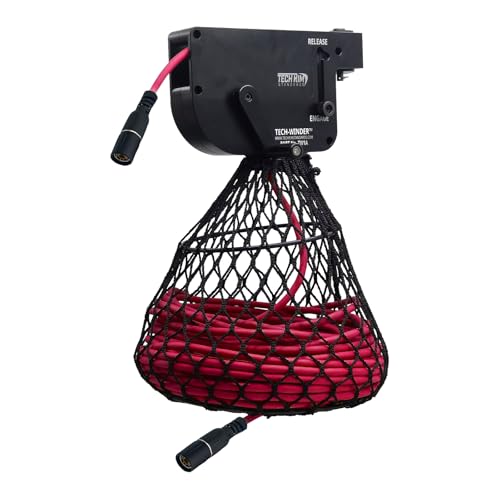
Tech-Winder – Industrial Grade – Aluminum Casing Fire Retardant – Robot Cell Pendant Cable Winder – Cord and Cable Reel
Designed for robot teach pendant cable management
As an affiliate, we earn on qualifying purchases.
As an affiliate, we earn on qualifying purchases.
Conclusion
Understanding environmental ratings helps you choose the right industrial cables for tough conditions. These ratings ensure your cables resist chemicals, heat, and fire, keeping your operations safe and reliable. By selecting properly rated cables, you reduce downtime and maintenance costs while protecting your team. Don’t you want to make certain your equipment can handle the harshest environments? Investing in quality-rated cables isn’t just smart—it’s essential for long-term safety and performance.

11 Gauge High Temperature Wire 16.4Ft, 11 AWG Heat Resistant Copper Wire
PRODUCTOR SPECIFICATION: This high temperature wire is made of mica tape, fiberglass, and stranded oxygen-free pure copper wire,…
As an affiliate, we earn on qualifying purchases.
As an affiliate, we earn on qualifying purchases.

NewYork Cables CAT6 Plenum Cable 1000ft | 100% Solid Bare Copper, UTP, 550MHz, 23AWG, 4Pair 10GB Ethernet Cable, Certified CMP-Rated Bulk Cat 6 for Networking & Gaming (1000ft, Pure Copper,Green)
𝟏𝟎𝟎% 𝐏𝐔𝐑𝐄 𝐂𝐎𝐏𝐏𝐄𝐑 𝐂𝐎𝐍𝐃𝐔𝐂𝐓𝐎𝐑𝐒: Our cat6 cable 1000ft, a pure copper cable provides top-notch speed and performance. The…
As an affiliate, we earn on qualifying purchases.
As an affiliate, we earn on qualifying purchases.