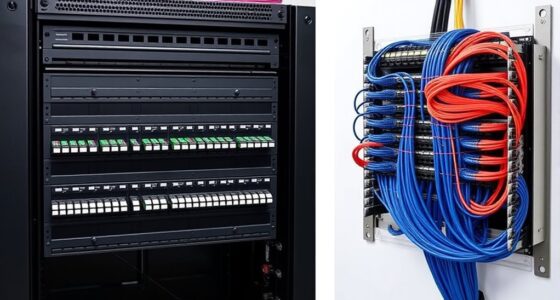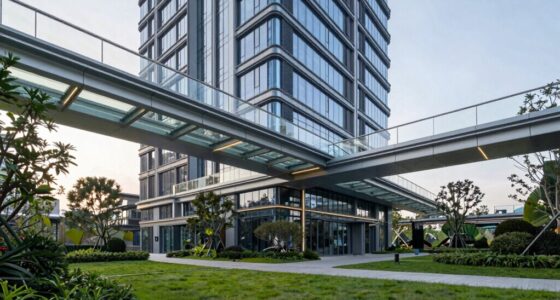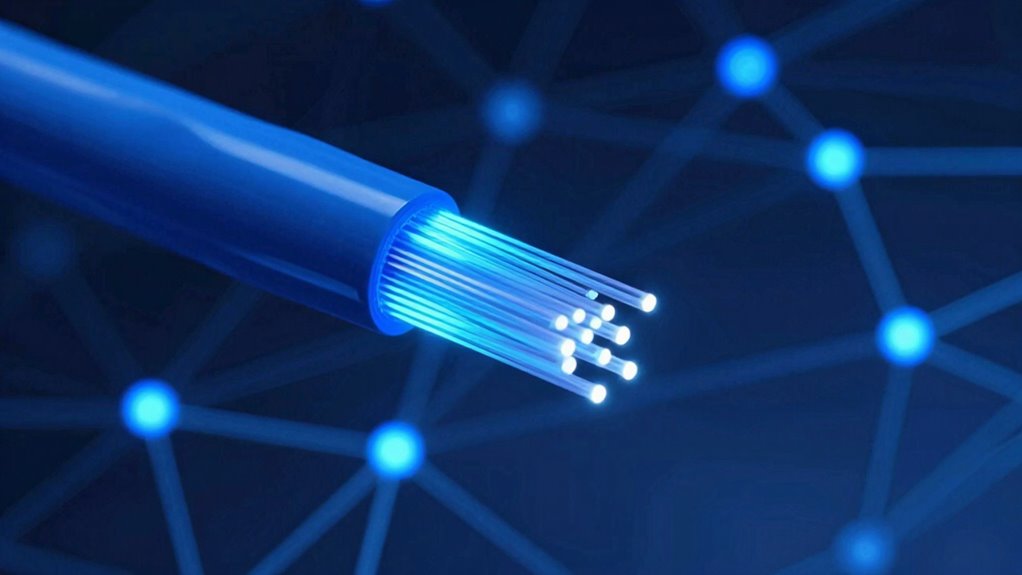

Fiber optic cables are ideal for long campus links because they offer unmatched bandwidth, ensuring high-speed, reliable internet across extensive areas. You’ll benefit from enhanced security features that protect sensitive data from interference and hacking. Their durability makes them resistant to weather and electromagnetic interference, reducing maintenance costs. Plus, fiber is easy to install and scalable, supporting future growth. Keep going to discover how fiber can transform your campus network for years to come.
Key Takeaways
- Fiber provides high bandwidth and minimal signal loss over long distances, ensuring reliable connectivity across sprawling campuses.
- Its enhanced security features protect sensitive data from tapping and interference more effectively than copper cables.
- Fiber’s durability and resistance to environmental factors guarantee stable performance in various weather conditions.
- Easy deployment and scalability support seamless campus expansion and integration of new digital infrastructure.
- Long-term investment in fiber infrastructure future-proofs campus networks for evolving technological demands.
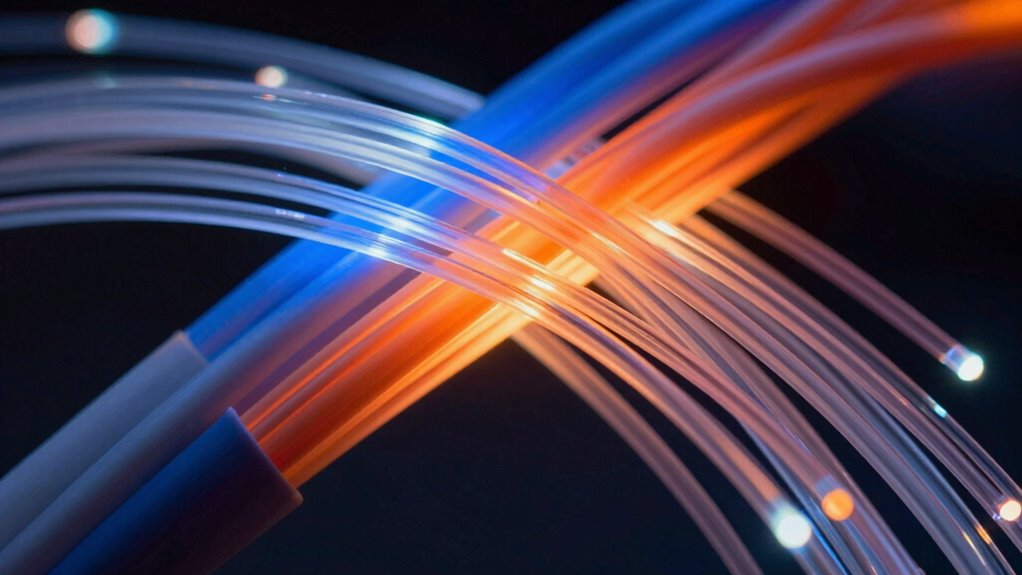
As campuses seek faster and more reliable network connections, fiber optic technology emerges as a strong choice to meet those demands. When you consider fiber installation, you’re opting for a solution that offers exceptional bandwidth and minimal latency, making it ideal for long campus links. When you consider fiber installation, you’re opting for a solution that offers exceptional bandwidth and minimal latency, making it ideal for long campus links. Unlike traditional copper cables, fiber can transmit large amounts of data over long distances without significant signal degradation. This means you won’t need to worry about signal boosters or repeaters, which can add complexity and cost. The ease of deploying fiber across sprawling campuses allows you to connect multiple buildings seamlessly, guaranteeing everyone has access to high-speed internet and digital resources. Additionally, the signal degradation in fiber optic cables is minimal, ensuring consistent performance even over extensive distances. Research indicates that the capacity for data transmission in fiber optic cables is substantially higher than traditional options, further supporting long-term scalability.
Security is another essential factor that makes fiber a compelling option for campus networks. Fiber optic cables are inherently more secure than copper wires because they’re less susceptible to tapping or interference. When you install fiber, you markedly reduce the risk of data breaches or eavesdropping, which is critical for protecting sensitive research, administrative data, and student information. Additionally, fiber installation can incorporate advanced encryption methods and secure hardware, further strengthening your network against cyber threats. As cyberattacks become more sophisticated, having a secure backbone like fiber gives your campus peace of mind, knowing that your data remains protected. The security advantages of fiber are a critical consideration for any institution handling confidential information.
Beyond security, fiber’s durability and resistance to environmental factors stand out. Unlike copper, fiber isn’t affected by electromagnetic interference or weather conditions, which can disrupt traditional networks. This resilience means your campus network stays dependable, even in adverse conditions, ensuring continuous access for students and staff alike. The low maintenance requirements of fiber optic cables also translate into fewer disruptions and costs over time, making it a smart investment for long-term campus connectivity. Moreover, fiber’s high bandwidth capacity supports current and future technological needs, facilitating seamless integration with emerging digital tools and services. The ability of fiber to handle future technological demands makes it an invaluable asset for ongoing campus expansion and innovation. With its resilience and capacity, fiber helps future-proof your campus network infrastructure.
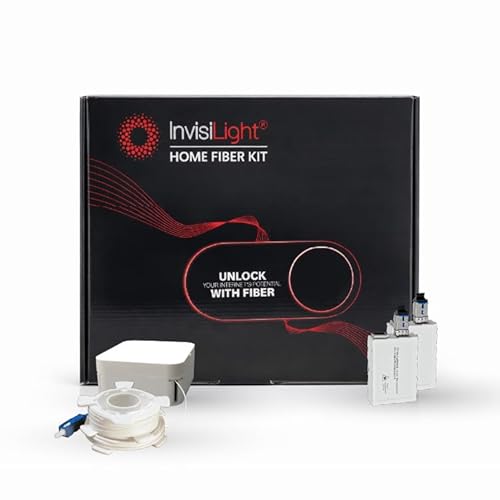
InvisiLight Home Fiber Kit: Wired Internet Where You Need It – Create a Nearly Invisible Wired Connection for Wi-Fi, Gaming, and More – Ultra-Thin 0.6mm Fiber, DIY Installation, Up to 1Gbps Speed
- Invisible Fiber Path: Connects devices discreetly without drywall damage
- Complete Installation Kit: Includes fiber, cables, converters, and tools
- Easy Plug-and-Play Setup: No configuration needed for quick installation
As an affiliate, we earn on qualifying purchases.
As an affiliate, we earn on qualifying purchases.
Frequently Asked Questions
How Does Fiber Compare to Wireless Options for Campus Connectivity?
Fiber outperforms wireless alternatives for campus connectivity because it offers superior signal reliability over long distances. Unlike wireless options, which can be affected by interference or physical obstacles, fiber provides consistent, high-speed data transmission. You’ll experience fewer disruptions and faster speeds, making it ideal for supporting the demands of large campuses. With fiber, your network stays stable and efficient, ensuring smooth operations and reliable communication across the entire campus.
What Are the Initial Installation Costs for Fiber in Large Campuses?
The initial installation costs for fiber in large campuses vary based on factors like size, complexity, and existing infrastructure. You should conduct a detailed cost estimation that includes fiber cabling, trenching, and equipment. The installation process can be intensive, involving trenching, laying fiber, and testing. While upfront costs are higher than wireless options, fiber offers superior speed and reliability, making it a worthwhile long-term investment for extensive campus connectivity.
How Scalable Is Fiber Infrastructure for Future Campus Expansions?
You’ll find fiber infrastructure highly scalable, supporting campus expansions with ease. About 80% of fiber networks are designed with redundancy, ensuring reliable future-proofing infrastructure. As your campus grows, fiber can easily accommodate increased bandwidth needs and new buildings without major overhauls. This flexibility allows you to expand seamlessly, maintaining high-speed connectivity and minimizing disruptions, making fiber an excellent choice for long-term campus growth and technological evolution.
What Maintenance Challenges Are Associated With Fiber Networks?
You’ll find fiber networks generally have high fiber durability, which reduces frequent repairs, but maintenance challenges still exist. You need to plan maintenance scheduling carefully to prevent disruptions, especially since fiber cables can be sensitive to environmental factors like temperature and moisture. Regular inspections and timely repairs are vital to guarantee peak performance, but the overall durability of fiber means you won’t need to service it as often as other options.
How Does Fiber Support High-Bandwidth Applications on Campuses?
You might think fiber’s installation complexity limits its use, but in reality, its high capacity supports demanding applications like streaming and large data transfers on campuses. Fiber’s security features protect sensitive information, making it ideal for institutions. Its ability to handle high-bandwidth applications ensures seamless connectivity across long distances, overcoming limitations of traditional cables. So, despite installation challenges, fiber’s performance and security make it the optimal choice for campus networks.

Cable Matters 5-Pack OS2 LC to LC Plenum Fiber Optic Cable, 3.3ft / 1m
- Type of Fiber: OS2 Single Mode Fiber
- Cable Length: 3.3ft / 1m
- Connector Type: LC to LC UPC
As an affiliate, we earn on qualifying purchases.
As an affiliate, we earn on qualifying purchases.
Conclusion
Choosing fiber for your campus links isn’t just a smart move—it’s essential. Did you know that fiber optic cables can transmit data at speeds of up to 100 Gbps? That’s nearly 100 times faster than traditional copper cables. With such impressive speed and reliability, fiber guarantees your campus stays connected and future-ready. So, if you want seamless, high-capacity networking, fiber is unquestionably the way to go. Don’t settle for less—opt for fiber and elevate your campus connectivity today.

Visual Fault Locator 30KM – VFL Fiber Optic Tester Kit Include Single Mode 9/125um FC Male to LC Female Adapter, Fiber Optic Lights for Network Cable (Battery not Included)
- Quick Fault Detection: Locates fiber issues instantly with laser
- Portable Field Tool: Compact design with long battery life
- Universal Adapter Compatibility: Works with ST, SC, FC connectors
As an affiliate, we earn on qualifying purchases.
As an affiliate, we earn on qualifying purchases.

100M/328FT OM3/OM4 LC to LC Outdoor Armored Fiber Optic Patch Cable, Multimode Duplex 50/125μm, 10Gb/40Gb/100Gb, Industrial TPU Jacket, Direct Burial, Uniboot, MMF, OD 5mm, Pulling Eye Kit Installed
- Outdoor-Grade TPU Jacket: Waterproof, UV resistant, abrasion protection
- Dual Armor Construction: Steel spiral and fiberglass protection
- Pre-Installed Pulling Eye: Easy conduit and trench installation
As an affiliate, we earn on qualifying purchases.
As an affiliate, we earn on qualifying purchases.