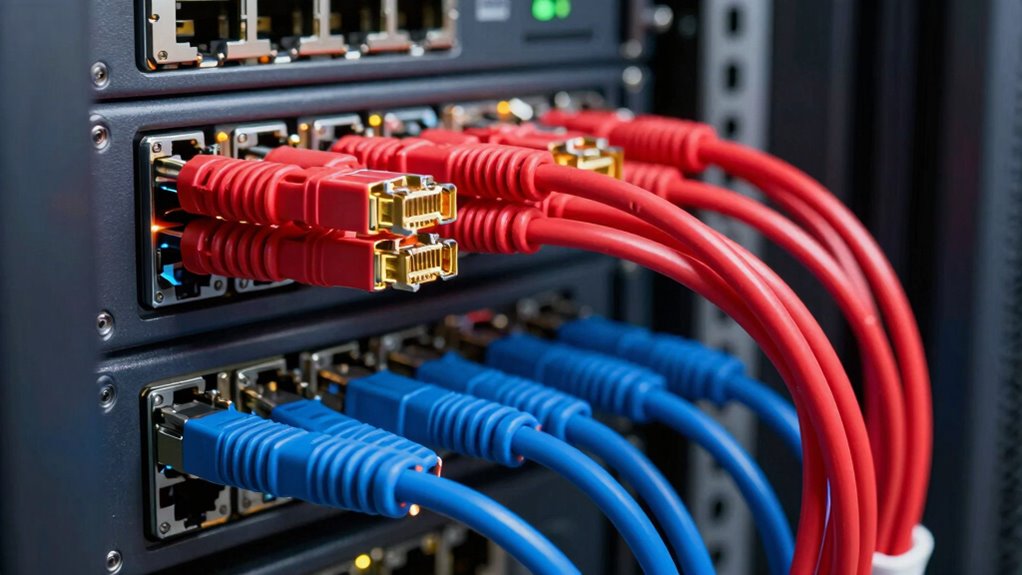

When thinking about redundancy in cabling, focus on designing fault-tolerant pathways rather than just adding extra cables. Choose the right topology, like mesh or ring, to provide multiple routes for data, so a single failure won’t stop your network. Incorporate backup links that activate automatically and consider your physical environment and future needs. If you keep exploring, you’ll uncover ways to build resilient systems that stay up during failures.

Get business pricing on networking and server gear
- Business-only prices and quantity discounts
- Tax-exempt purchasing
- Multiple users, one account, clear invoices
Key Takeaways
- Focus on designing multiple physical pathways to ensure continuous connectivity despite cable or port failures.
- Incorporate diverse topologies like ring or mesh to create inherent redundancy and fault tolerance.
- Evaluate critical segments and add backup links that automatically activate during primary link failures.
- Consider environmental factors and future growth to ensure scalable and resilient cabling infrastructure.
- Prioritize fault-tolerant design principles beyond hardware redundancy for long-term network stability.
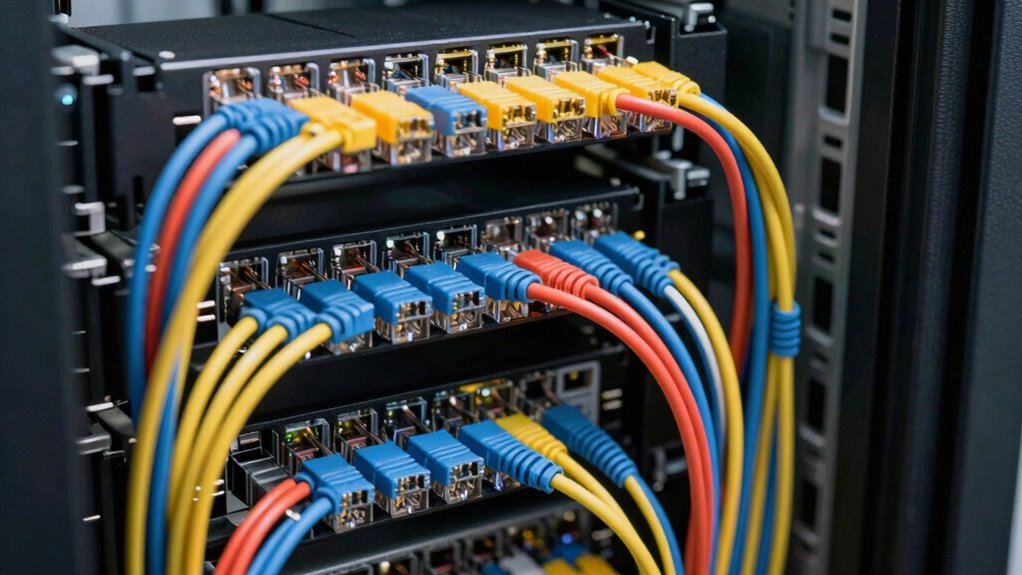
Have you ever considered how essential redundancy is in your cabling infrastructure? It’s not just about having extra cables lying around; it’s about designing a system that remains operational even when parts fail. When you think about cabling, the cabling topology you choose plays a fundamental role in ensuring fault tolerance. A well-planned topology can prevent single points of failure and enable your network to adapt seamlessly to issues as they arise. Whether you opt for a star, ring, or mesh layout, understanding how each configuration affects fault tolerance helps you build a resilient infrastructure. For instance, a star topology centralizes connections, making it simple to manage, but a failure at the central point can bring down the entire network. Conversely, a ring or mesh topology introduces multiple pathways, so if one cable or connection fails, data can reroute through alternative routes, maintaining network integrity.
Thinking about redundancy means more than just adding extra cables. It’s about designing your cabling system with fault tolerance at its core. You should evaluate critical segments and identify potential weak points, then incorporate alternative pathways or backup links that activate automatically if a primary link fails. This proactive approach minimizes downtime and keeps your operations running smoothly. It’s also essential to evaluate the physical environment and future growth. As your network expands, a flexible cabling topology that supports scalability without compromising fault tolerance will save you headaches down the line. Considering cabling topology in your planning is crucial for fostering a resilient network infrastructure.
Design with fault tolerance at its core, incorporating backup links and scalable topologies to ensure continuous operation and future growth.
When you’re planning your cabling infrastructure, reflect on how redundancy impacts overall system reliability. Redundancy isn’t just about having duplicate hardware; it’s about creating a network that can adapt and continue functioning despite failures. The right cabling topology helps facilitate this resilience, ensuring that if one path is disrupted, data finds another route without interruption. This kind of fault tolerance is critical in environments where uptime is paramount, such as data centers or enterprise networks. By integrating redundancy thoughtfully into your cabling design, you’re not only protecting your infrastructure but also enhancing its stability and longevity.
Ultimately, contemplating redundancy in cabling involves a strategic perspective. You need to see beyond the immediate setup and plan for potential failures. Incorporate diverse cabling topologies that promote fault tolerance, and always design with scalability and resilience in mind. Doing so ensures your network remains robust, minimizing risks and maximizing uptime, even when unexpected issues occur.
As an affiliate, we earn on qualifying purchases.
Frequently Asked Questions
How Does Redundancy Impact Overall Network Latency?
Redundancy can slightly increase overall network latency due to additional paths or backup links, but it markedly boosts network resilience. When designed properly, redundant cabling minimizes latency impacts by providing quick failover options, ensuring data flows smoothly. This balance between redundancy and latency reduction helps maintain peak performance, especially during outages, while safeguarding your network’s stability and reducing downtime risks.
What Are the Cost Considerations for Redundant Cabling Systems?
You need to weigh the costs of redundant cabling carefully, as it can be a double-edged sword. Conduct a thorough cost analysis to understand upfront expenses versus long-term benefits, like reduced downtime. Remember, effective risk management involves investing in reliable infrastructure to avoid costly outages. While redundant cabling may seem pricey initially, it’s often a wise investment to keep your network running smoothly and prevent expensive disruptions down the line.
How Do I Test Redundancy Effectiveness Over Time?
You should regularly perform backup testing to guarantee your redundant cabling system functions correctly during failures. Simulate failure scenarios and monitor how quickly your system switches to backup cables. Conduct failure analysis to identify potential weak points and verify if backup paths remain operational over time. Document these tests to track performance and address issues promptly, ensuring your redundancy stays effective and reliable in real-world situations.
What Are Common Mistakes When Implementing Cabling Redundancy?
You might think you’re safe with a single cable, but that’s a recipe for disaster—one failed connection, and chaos ensues. Common mistakes include ignoring single points of failure and neglecting backup pathways. Instead, you guarantee multiple routes and diverse cabling. Don’t overlook the importance of testing these redundancies regularly; otherwise, your “fail-safe” plan might just be a fancy illusion waiting to be shattered when you least expect it.
How Does Redundancy Influence Future Scalability?
Redundancy positively influences future scalability by providing an alternative design that allows your network to grow without risking failure mitigation. When you incorporate redundant cabling, you guarantee that additional devices or increased traffic won’t compromise performance. This flexibility lets you expand seamlessly, knowing your infrastructure can handle future demands. By planning for redundancy now, you create a resilient system capable of adapting to evolving needs, reducing downtime and supporting long-term growth.
fault-tolerant network backup links
As an affiliate, we earn on qualifying purchases.
As an affiliate, we earn on qualifying purchases.
Conclusion
Now that you understand the importance of cabling redundancy, you might think you’ve got it all figured out. But here’s the twist—there’s always a deeper layer to contemplate. Will your current setup stand the test of unexpected failures? The future of your network depends on it. Keep questioning, keep testing, because the moment you think you’re safe, that’s when the real challenge begins. Are you ready to take your redundancy strategy to the next level?
As an affiliate, we earn on qualifying purchases.
scalable network cabling solutions
As an affiliate, we earn on qualifying purchases.
As an affiliate, we earn on qualifying purchases.
Fall Picks
fall essentials
As an affiliate, we earn on qualifying purchases.