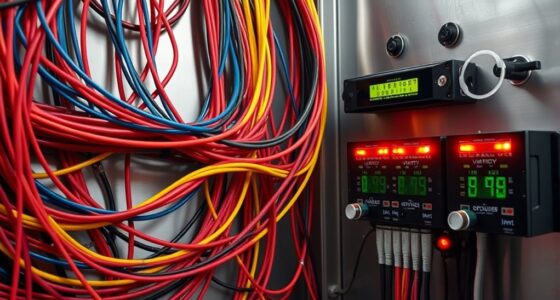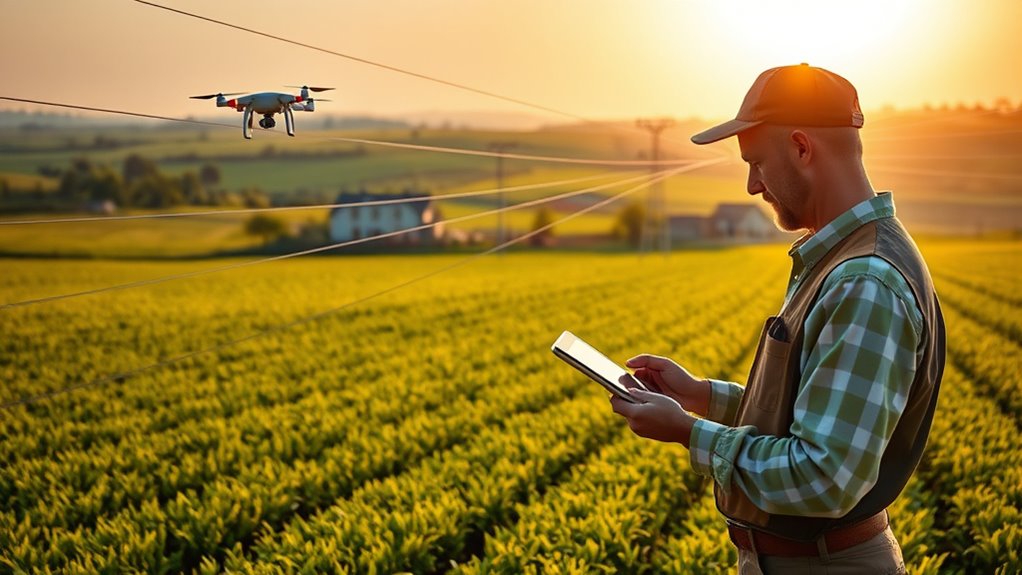

As someone involved in modern farming, you understand how critical reliable networking becomes for smart agriculture. Connecting sensors, devices, and equipment across large fields requires a thoughtful approach to guarantee seamless data flow and security. Without effective networks, implementing automated systems and real-time decision-making can become challenging. Exploring the latest wireless protocols and architectures reveals how you can optimize farm productivity while safeguarding sensitive information—something you’ll want to take into account carefully.
Key Takeaways
- IoT connectivity enables real-time data sharing among farm devices, enhancing decision-making and operational efficiency.
- Selecting appropriate data transmission protocols (e.g., MQTT, LoRaWAN, NB-IoT) depends on farm size and data needs.
- Ensuring security through encryption and authentication protects sensitive agricultural data from cyber threats.
- Combining wireless technologies like Wi-Fi, cellular, and LPWAN allows comprehensive coverage tailored to farm layouts.
- Modular and scalable network architectures facilitate easy deployment, maintenance, and expansion of smart farm systems.
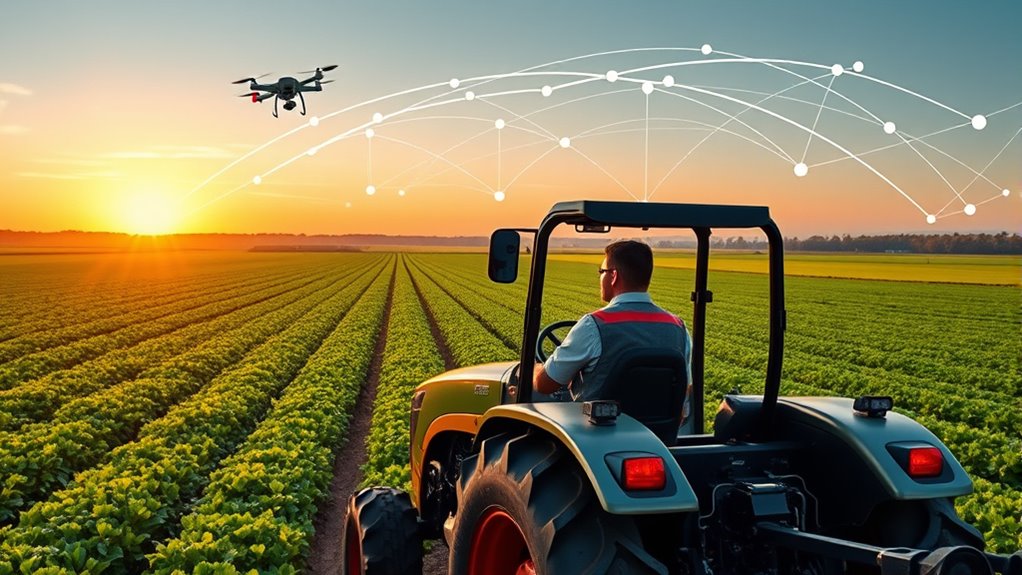
Have you ever wondered how modern farms optimize their productivity? It all comes down to effective networking that connects various smart devices and sensors across the fields. IoT connectivity plays a pivotal role here, enabling farm equipment, soil sensors, weather stations, and irrigation systems to communicate seamlessly. Without reliable IoT connectivity, these devices can’t transmit essential data in real-time, which hampers decision-making and reduces efficiency. That’s where data transmission protocols come into play—they’re the rules that guarantee information flows smoothly and securely between devices. Protocols like MQTT, LoRaWAN, and NB-IoT are commonly used in agriculture because they’re designed to handle low-power, long-range communication. Choosing the right protocol depends on factors like the size of the farm, data volume, and power availability. When you set up your smart farm, understanding these protocols helps you create a robust network that minimizes data loss and latency. For example, MQTT is lightweight and ideal for real-time monitoring, while LoRaWAN offers long-range communication suitable for large rural areas. These protocols also prioritize security, protecting sensitive farm data from potential cyber threats. You’ll want to guarantee your network uses proper encryption and authentication measures, especially when transmitting critical information like crop health or livestock location. Establishing strong IoT connectivity involves deploying a mix of wireless technologies—Wi-Fi, cellular networks, LPWAN, or even satellite links—depending on your farm’s layout and connectivity needs. Each technology has its strengths: Wi-Fi offers high data rates but limited range, while LPWAN provides extensive coverage with low power consumption. You may find that a hybrid approach works best, combining multiple protocols and technologies to cover different zones of your farm. This layered network architecture ensures consistent data flow, even in remote or challenging environments. Additionally, selecting pre‑configured networking hardware designed specifically for agricultural settings can significantly simplify deployment and maintenance. As you implement these systems, keep in mind that scalable, flexible connectivity is key. You might start with a few sensors and expand as your farm grows. Regular maintenance and updates are essential to keep your network secure and efficient. By focusing on IoT connectivity and selecting suitable data transmission protocols, you set the foundation for a smart, responsive farm. This connectivity not only improves crop yields and resource management but also reduces waste and operational costs. Ultimately, a well-designed network empowers you to make smarter decisions, leading to more sustainable and profitable farming practices.
PRECISION AGRICULTURE TECHNOLOGY SYSTEMS: Iot sensors automated farming and yield optimization
As an affiliate, we earn on qualifying purchases.
As an affiliate, we earn on qualifying purchases.
Frequently Asked Questions
How Does Network Security Impact Smart Agriculture Systems?
Network security greatly impacts your smart agriculture systems by protecting against cybersecurity threats that could disrupt operations or damage equipment. It also guarantees data privacy, keeping sensitive farm data safe from unauthorized access. When you implement strong security measures, you prevent potential breaches, safeguard your information, and maintain trust with partners. Failing to do so can lead to costly disruptions, data loss, and compromised system integrity, affecting your farm’s productivity and security.
What Are the Cost Considerations for Deploying Smart Farming Networks?
Deploying smart farming networks can feel like investing in a spaceship, but it’s necessary for success. You need to take into account the cost analysis carefully, including infrastructure investment like sensors, connectivity, and data management systems. While initial expenses are high, the long-term benefits—like increased yields and resource efficiency—make it worthwhile. Planning wisely ensures you balance costs with operational gains, making your smart agriculture venture both sustainable and profitable.
How Can Network Scalability Be Ensured for Expanding Farms?
To guarantee network scalability for expanding farms, you should implement a mesh topology, which allows devices to connect directly and dynamically, facilitating easy expansion. Additionally, prioritize bandwidth management to handle increased data traffic efficiently as your farm grows. This approach ensures your network remains reliable, flexible, and capable of supporting more sensors and devices without sacrificing performance, making your smart agriculture system future-proof and adaptable.
What Role Does AI Play in Agricultural Networking?
Think of AI as the brain behind your farm’s network, turning raw data into actionable insights. You see AI-driven data analysis and machine learning integration work together like a seasoned farmer adjusting techniques based on weather patterns. This enables your network to optimize resources, predict issues, and improve yields. AI’s role is vital in making your agricultural network smarter, more responsive, and efficient, ensuring you’re always a step ahead.
How Do Weather Conditions Affect Network Reliability in Agriculture?
Weather variability can markedly impact your agricultural network’s reliability by causing signal interference, especially during storms or heavy rain. These conditions weaken wireless signals and disrupt data transmission, leading to potential data loss or delays. To maintain consistent connectivity, you should consider weather-resistant hardware, backup communication methods, and strategic placement of network devices, ensuring your smart agriculture systems remain functional despite adverse weather conditions.
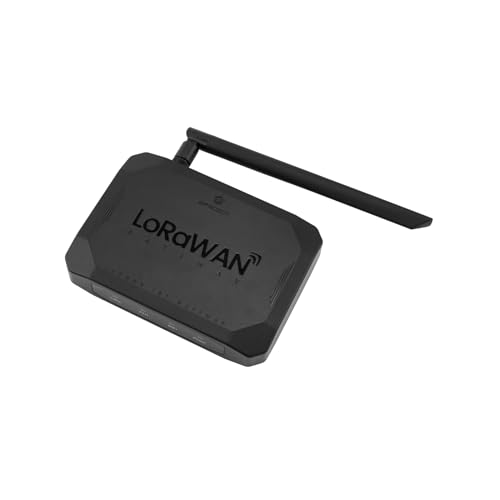
Private LoRaWAN Gateway (US 915MHz) | Built-in Local Server (ChirpStack) & Node-RED | 8-Channel Indoor IoT Hub for Smart Agriculture & Industrial Monitoring | No Monthly Fees, All-in-One Edge Server
[COMPLETE PRIVATE IOT ECOSYSTEM IN A BOX]: Stop struggling with complex cloud configurations. This gateway comes pre-loaded with…
As an affiliate, we earn on qualifying purchases.
As an affiliate, we earn on qualifying purchases.
Conclusion
By now, you see how networking acts as the backbone of smart agriculture, weaving together sensors and devices like a finely tuned symphony. It’s not just about technology; it’s about nurturing your farm’s future with real-time insights and secure connections. When you harness these networks, you’re planting seeds for sustainability and growth, turning your farm into a thriving, interconnected ecosystem—proof that, with the right tools, you’re steering your farm toward a smarter, greener tomorrow.

Next Generation Wireless LANs: 802.11n and 802.11ac
Used Book in Good Condition
As an affiliate, we earn on qualifying purchases.
As an affiliate, we earn on qualifying purchases.
smart farm networking hardware
As an affiliate, we earn on qualifying purchases.
As an affiliate, we earn on qualifying purchases.