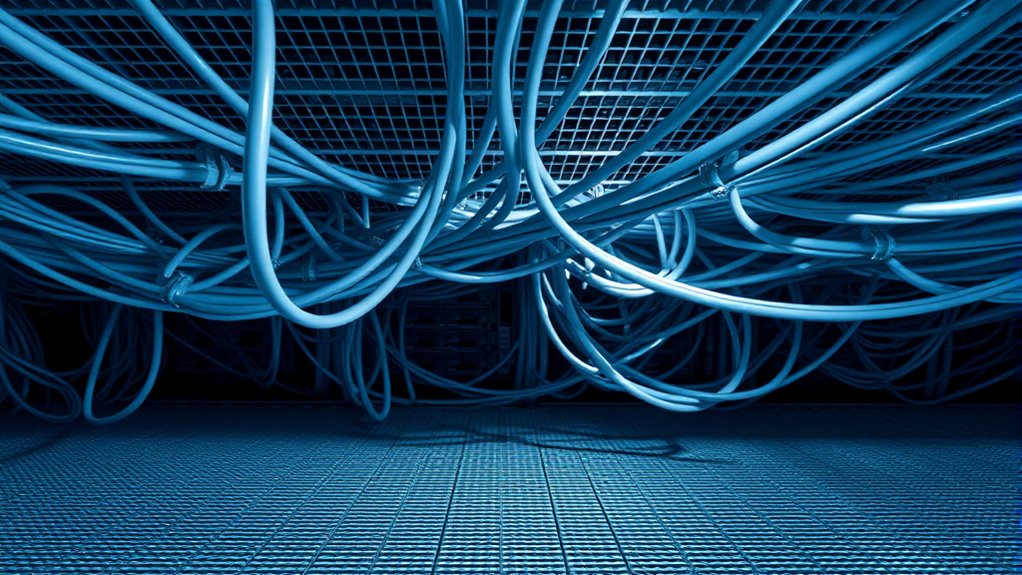

Routing cables through raised floors is a critical task that requires careful planning and attention to detail. Proper techniques ensure your cables remain organized, protected, and do not interfere with airflow or structural integrity. Choosing the right penetration points and securing your cables correctly can prevent future issues. If you want to maintain an efficient, scalable data center, understanding best practices for this process is essential—there’s more to take into account than just running wires.
Key Takeaways
- Plan penetration points strategically for future scalability and minimal disruption.
- Use proper grommets or brush plates to protect cables and prevent debris entry.
- Secure and organize cables with ties or Velcro straps to maintain neat routing.
- Seal openings snugly around cables to support airflow and prevent dust infiltration.
- Label cables at both ends for easy identification during maintenance and troubleshooting.
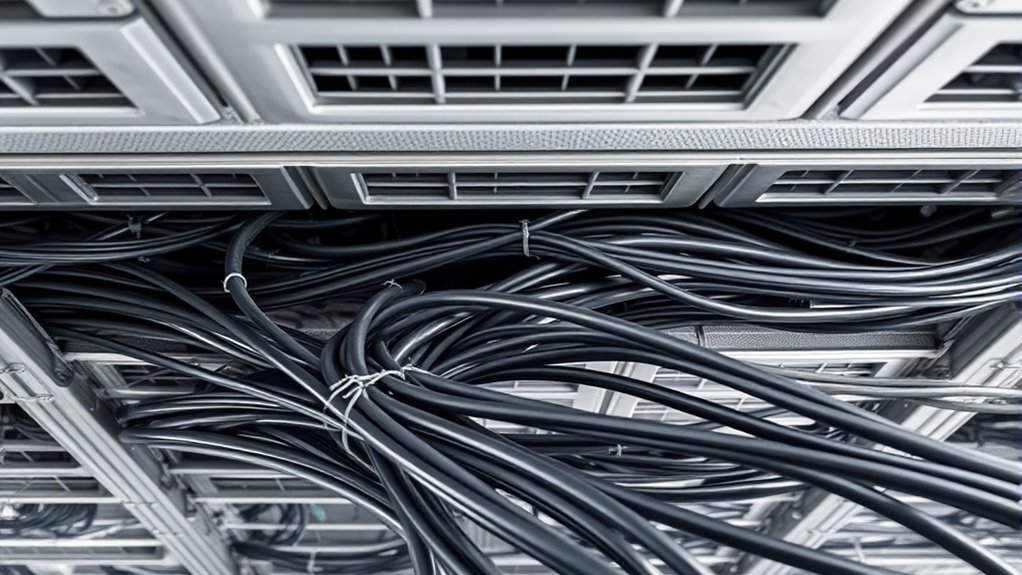
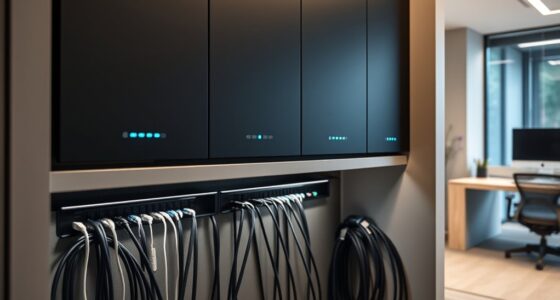
Routing cables through raised floors is vital for maintaining a clean, organized, and efficient data center or server room. When you plan to implement cable management effectively, you need to think carefully about how cables are routed, secured, and accessed. Proper cable management not only improves airflow but also reduces the risk of accidental disconnections and makes future upgrades easier. One key aspect of this process involves mastering floor penetration techniques, which are essential when running cables from underneath the raised floor to equipment racks or outlets above.
Effective cable routing through raised floors ensures a tidy, accessible, and high-performing data center environment.
Floor penetration techniques determine how you create openings in the raised floor to allow cables to pass through while keeping the area safe and organized. You should use proper floor grommets or brush plates to minimize dirt, dust, and airflow disruption. These accessories help protect cables from damage and prevent debris from falling into the data center, which could compromise equipment or cause overheating. When selecting penetration points, consider the layout of your data center, the number of cables you’ll be running, and the need for future scalability. Planning these points in advance allows you to avoid unnecessary holes, which could weaken the floor’s structural integrity or create clutter.
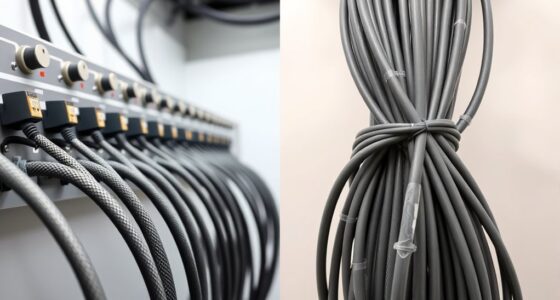
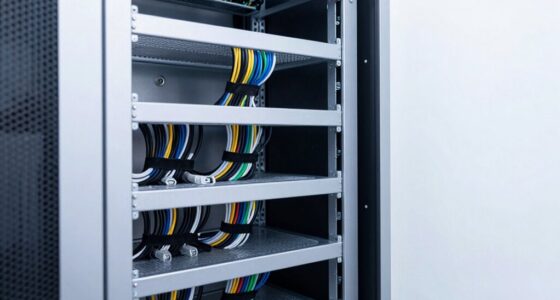
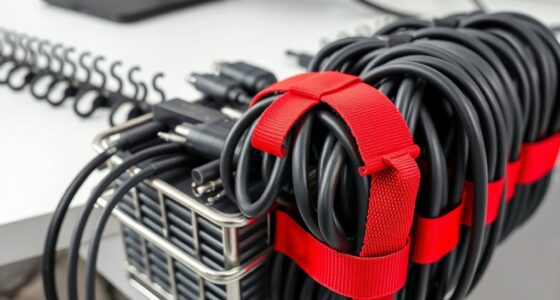
As you implement cable management, remember that consistency is key. Use cable ties, Velcro straps, or cable trays to bundle cables neatly and prevent tangling. This not only improves airflow but also reduces the strain on connectors and ports. When running cables through the raised floor, keep them organized by function or destination, which simplifies troubleshooting and future modifications. Make sure that cables are not tightly bent or pinched, as this can degrade signal quality or damage the insulation.
Incorporate appropriate floor penetration techniques by ensuring that all holes are properly sealed with grommets or brush plates that fit snugly around the cables. This helps maintain the integrity of the raised floor system, prevents dust infiltration, and supports efficient airflow. Additionally, label cables at both ends to provide clear identification, reducing the time needed for maintenance or troubleshooting. By combining disciplined cable management with strategic floor penetration techniques, you create a safer, more reliable environment for your data center equipment. This approach helps guarantee that your infrastructure remains scalable, accessible, and optimized for performance. Proper planning and adherence to best practices in floor penetration can significantly enhance the overall security and efficiency of your setup. Overall, investing time and effort into proper cable routing and penetration methods pays off by enhancing operational efficiency and longevity of your data center setup.

4-Inch Cable Management Grommet for Raised Floors – Airflow & Dust Protection, Data Center & Server Room Use – Durable Rubber Floor Grommet Insert (Single Pack)
4" round brush grommet designed for easy cable pass through exterior walls, providing a clean and professional look…
As an affiliate, we earn on qualifying purchases.
As an affiliate, we earn on qualifying purchases.
Frequently Asked Questions
What Are the Best Tools for Cable Routing in Raised Floors?
You should use cable clips and cable protectors for effective routing in raised floors. Cable clips secure the cables neatly along the floor’s framework, preventing tangles and damage, while cable protectors shield the cables from foot traffic and heavy equipment. These tools guarantee safety and organization, making installation easier. Always choose durable clips and protectors suited for your cable types and floor specifications to maintain a clean, professional setup.
How Do I Prevent Cable Damage During Installation?
Your cables are more fragile than glass, so protect them during installation. Use cable protection sleeves or conduit to shield against damage. Follow proper installation techniques like gently bending cables, avoiding sharp edges, and securing them properly. Handle cables carefully and avoid pulling or twisting. By prioritizing careful handling and employing protective measures, you guarantee your cables stay safe, reliable, and undamaged throughout the installation process.
Are There Specific Regulations for Cable Management in Raised Floors?
Yes, there are specific regulations for cable management in raised floors. You should guarantee proper cable labeling for easy identification and maintenance. Follow fire safety standards by using fire-resistant cables and avoiding clutter that could block airflow or hinder evacuation. Always adhere to local building codes and industry best practices to ensure safety, organization, and compliance when routing cables through raised floors.
How Often Should Raised Floor Cable Pathways Be Inspected?
You should inspect raised floor cable pathways at least twice a year to guarantee safety and proper function. Incorporate these inspections into your maintenance schedule, checking for signs of wear, damage, or obstruction. Regular inspections help prevent issues before they escalate, maintaining ideal airflow and cable organization. Keep detailed records of each inspection to monitor cable health over time and address potential problems promptly.
Can I Upgrade Cables Without Removing the Raised Floor?
Yes, you can upgrade cables without removing the raised floor. You’ll need to access the cable pathways carefully, often by lifting or removing sections of the floor tiles or panels. Use proper tools and follow safety guidelines to avoid damage. This allows you to perform a cable upgrade efficiently, minimizing disruption to your workspace while ensuring the new cables are properly installed within the raised floor system.

VCE Brush Wall Plate Cable Pass Through with Bracket, Decorator Cover for Low Voltage Cables – White, 2-Pack
In Wall Cable Management – With VCE cable wall plates, you can quickly and easily run the cables…
As an affiliate, we earn on qualifying purchases.
As an affiliate, we earn on qualifying purchases.
Conclusion
By properly routing cables through raised floors, you guarantee better airflow and reduce overheating risks. Using techniques like grommets and secure bundling keeps your system organized and protected. Did you know that poor cable management can increase cooling costs by up to 30%? Taking the time to plan penetration points and maintain neat cabling not only boosts performance but also saves money in the long run. Stay organized, stay efficient.

150PCS Reusable Cable Ties – 4+6+8+10inch Multi-Purpose Cable management Hook & Loop Cable Straps Wire Ties,Adjustable Fastening Cord Organizer,Cable Organizer for Home,Office and Data Centers,Black
Cable Ties Package includes: The bundle comes in 4 different sizes.Each fastening cable ties set includes 4 inch…
As an affiliate, we earn on qualifying purchases.
As an affiliate, we earn on qualifying purchases.

4 PCS 3/4 inch Wall Grommets for Starlink Cable Grommets White Non-Slip Starlink Wall Cable Pass Through Bushing Grommets 19mm Diameter Silicone 3/4 inch Starlink Cable Routing Kit for Protecting Cord
White starlink cable routing kit is designed specifically for starlink cables, with a cable core hole diameter of…
As an affiliate, we earn on qualifying purchases.
As an affiliate, we earn on qualifying purchases.