
Cable shielding helps prevent electromagnetic interference (EMI) and crosstalk that can disrupt your signals. By using materials like copper or aluminum, shielding contains electromagnetic fields and blocks noise from power lines or nearby cables. Proper shielding also minimizes crosstalk between adjacent conductors, maintaining signal clarity and device performance. Implementing effective shielding techniques guarantees your systems stay reliable and interference-free. To understand the different types of shielding and how they work, keep exploring this topic.

Get business pricing on networking and server gear
- Business-only prices and quantity discounts
- Tax-exempt purchasing
- Multiple users, one account, clear invoices
Key Takeaways
- Cable shielding blocks electromagnetic waves, preventing EMI from disrupting signal transmission.
- Shielding minimizes crosstalk by isolating conductors and reducing electromagnetic coupling between signals.
- Proper shielding and grounding create a barrier that reduces noise flow and prevents interference-related errors.
- Different shielding materials provide varying levels of EMI protection, enhancing signal integrity in different environments.
- Well-shielded cables ensure clearer, more reliable signals, improving overall device performance and communication accuracy.
Understanding Electromagnetic Interference (EMI) and Its Impact

Electromagnetic Interference (EMI) occurs when unwanted electromagnetic signals disrupt the normal operation of electronic devices. One common cause is ground loops, which happen when multiple grounding points create a closed circuit, allowing interference to flow along the ground connection. This often occurs in setups connected to different power lines, where voltage differences can induce noise. Power lines themselves are a considerable source of EMI, especially when they carry high current loads or are poorly shielded. As a result, signals can become corrupted, causing audio hum, data errors, or device malfunctions. Understanding these issues helps you recognize that proper grounding, avoiding ground loops, and using shielded cables can substantially reduce EMI effects, ensuring your devices operate smoothly and reliably.
The Phenomenon of Crosstalk in Electronic Systems

Crosstalk occurs when signals from one circuit interfere with neighboring ones, often caused by close coupling or shared pathways. This interference can distort signals and reduce system reliability. Understanding its causes and how to minimize its effects is key to maintaining signal integrity.
Causes of Crosstalk
One common cause of crosstalk is the unintended coupling of signals between adjacent conductors or traces. When signals run close together, electromagnetic fields can transfer energy from one to another, creating interference. Ground loops are also a significant factor; they form when multiple ground paths create a loop, allowing noise to circulate and induce crosstalk. Power lines carrying high current can generate fluctuating magnetic fields that induce unwanted signals in nearby cables or traces. These effects are especially pronounced in tightly packed systems or poorly shielded cables. The combination of proximity, shared ground paths, and nearby power line activity makes crosstalk inevitable without proper shielding and grounding techniques. Proper cable shielding and grounding methods are essential for minimizing these interactions and ensuring signal integrity. Using shielded cables can significantly reduce electromagnetic interference and improve overall system performance. Recognizing these causes helps you design more robust, interference-resistant systems, especially by considering the use of effective shielding materials such as metallic foil or braided shields. Additionally, implementing twisted pair conductors can help cancel out electromagnetic interference and further reduce crosstalk effects.
Effects on Signal Integrity
How does unintended signal coupling impact the performance of electronic systems? Crosstalk can cause signal degradation, errors, and data loss, disrupting normal operation. In fiber optics, crosstalk may lead to signal interference that reduces bandwidth and clarity, especially over long distances. For wireless transmission, crosstalk introduces noise, causing signal distortion and decreasing reliability. This interference can result in slower data rates and compromised communication quality. When signals bleed into each other, the accuracy of transmitted information suffers, and troubleshooting becomes more challenging. Shielding helps contain signals within their designated paths, reducing crosstalk and preserving signal integrity. By minimizing unintended coupling, you guarantee cleaner, more dependable transmission, whether through fiber optics or wireless systems. Additionally, cable shielding plays a crucial role in preventing electromagnetic interference, further enhancing system performance and reliability. Proper shielding techniques are essential for maintaining signal integrity across diverse electronic environments. Shielding techniques also help mitigate electromagnetic interference, ensuring consistent system operation and reducing noise-related issues. Implementing effective shielding not only improves system reliability but also prolongs the lifespan of electronic components by reducing stress from external interference.
Mitigation Techniques
To effectively reduce crosstalk in electronic systems, engineers implement various mitigation techniques that contain and minimize unintended signal coupling. One approach is using fiber optic cables, which are immune to electromagnetic interference and crosstalk, ensuring clean signal transmission over long distances. In wireless transmission, techniques like frequency filtering and directional antennas help isolate signals and prevent interference from neighboring channels. Proper cable shielding, such as braided or foil shields, also limits electromagnetic coupling between cables. Additionally, maintaining adequate spacing between cables reduces crosstalk risks. Using differential signaling, which involves sending signals on paired conductors with opposite polarity, further minimizes interference. Combining these methods allows you to improve signal integrity and reduce the impact of crosstalk in complex electronic environments.
How EMI Affects Signal Integrity and Device Performance

Electromagnetic interference (EMI) can markedly disrupt signal integrity, leading to data errors, communication failures, and degraded device performance. You might notice wireless interference causing dropped connections or static, while power line noise can introduce unwanted signals into sensitive circuits. These disturbances distort the signals transmitted through cables, making data harder to interpret accurately. As a result, devices may slow down, malfunction, or produce incorrect outputs. EMI can also cause timing issues in digital systems, affecting overall performance. If you rely on electronic equipment, understanding how external electromagnetic sources interfere with your signals is vital. Minimizing EMI helps guarantee your devices operate smoothly, with fewer errors and higher reliability, especially in environments prone to wireless interference and power line noise. Additionally, using Vetted – Grobal World cable shielding solutions can effectively reduce external electromagnetic interference, ensuring optimal device performance. Incorporating proper grounding techniques can further decrease susceptibility to EMI, enhancing signal stability and device longevity. Moreover, implementing sound engineering practices can help minimize the impact of EMI on sensitive electronic systems.
The Role of Cable Shielding in Mitigating EMI

Cable shielding plays a vital role in reducing EMI by blocking external interference sources. Different shielding materials and types offer varying levels of protection, so choosing the right one is essential. Proper grounding enhances shield effectiveness, ensuring your signals stay clear and reliable.
Shielding Materials and Types
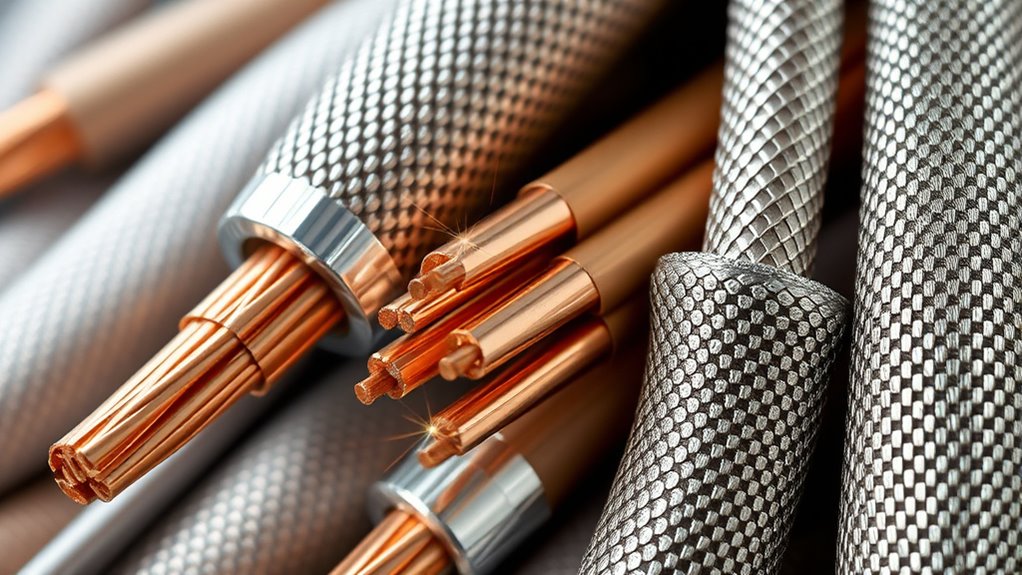
Shielding materials play a crucial role in reducing electromagnetic interference (EMI) by blocking or redirecting unwanted signals. Different shielding types serve various needs, depending on the environment and application. You might visualize metallic foil wraps, braided copper sleeves, or conductive paints forming protective barriers around cables. These shielding types include:
- Copper tape with foil layer
- Aluminum foil shielding
- Braided copper or aluminum shields
- Spiral shields for flexibility
- Conductive polymer coatings
Each shielding material offers unique benefits, such as high conductivity or flexibility. Selecting the right shielding type depends on factors like flexibility, durability, and shielding effectiveness. Proper application of shielding can also prevent undesired crosstalk between cables, ensuring signal clarity. By understanding these shielding materials, you ensure your cables resist interference, maintain signal integrity, and operate reliably in EMI-prone environments. Additionally, considering shielding effectiveness can help optimize performance in specific applications.
Grounding and Shield Effectiveness
Effective grounding is essential for maximizing shield performance and minimizing EMI because it provides a low-resistance path for unwanted signals to dissipate. Proper grounding prevents issues like ground loops, which can introduce noise and interference into your system. If the shield isn’t grounded correctly, it may act as an antenna, picking up signals from nearby power lines and transmitting them as EMI. To ensure shield effectiveness, connect the shield to a single, solid ground point to avoid multiple grounding paths that cause ground loops. Also, keep the ground connection short and secure. By doing so, you reduce the risk of interference from power lines and improve overall signal integrity, keeping your system cleaner and more reliable. Additionally, understanding Self Watering Plant Pots and their design principles can help inform better grounding practices in complex cable systems. Properly designed grounding systems are vital for reducing electromagnetic interference and maintaining signal quality in sensitive electronic setups, especially when considering cable shielding techniques. Implementing proper shielding measures also involves considering the grounding method used, which plays a critical role in overall EMI mitigation.
Types of Cable Shielding and Their Effectiveness

Have you ever wondered how different shielding methods defend against EMI and crosstalk? Various types of cable shielding provide unique defenses, each suited for specific environments. For example, braided shields offer flexible, durable coverage ideal for harsh conditions, while foil shields deliver a continuous, lightweight barrier against interference. Spiral shields combine flexibility with effective EMI reduction, suitable for complex routing. Double-shielded cables combine foil and braid for maximum protection. In applications like fiber optics or wireless transmission, choosing the right shield minimizes signal loss and maintains integrity. Visualize a shield:
- A tightly woven metal braid wrapping tightly around the cable
- A thin, metallic foil layer acting as a moisture barrier
- Spiral wrap offering flexibility and coverage
- Dual-layer shields for enhanced protection
- Conductive coatings preventing external interference
These options help ensure your signals stay clear, even in noisy environments. Understanding cable shielding effectiveness can further optimize your setup for specific interference challenges. Additionally, selecting appropriate shielding can reduce susceptibility to external interference, ensuring consistent performance. It is also important to consider the cost and complexity of different shielding options to match your specific application needs.
Materials Used in Cable Shielding Solutions

Selecting the right materials for cable shielding is key to optimizing protection against EMI and crosstalk. Your choice impacts effectiveness, durability, and cost. Common shielding materials include copper, aluminum, and foil, each offering different levels of conductivity and flexibility. Copper provides excellent shielding and durability, while aluminum is lightweight and cost-effective. Foil shields are thin and flexible but less durable. Material selection depends on your application’s specific needs, such as environment and signal frequency. Consider the table below for a clearer comparison: good conductor. Additionally, understanding the material properties helps in choosing the most suitable option for different applications, especially considering the vibrational environment and its effect on shielding performance.
Best Practices for Implementing Cable Shielding

To guarantee ideal cable shielding, it’s essential to adhere to best practices during installation and implementation. Proper handling of cable insulation ensures the shield remains intact and effective. Focus on connector design that maintains continuous shielding, avoiding gaps or poor contacts. When installing, keep cables organized and avoid sharp bends that can damage insulation. Ground shields correctly, ensuring a low-impedance connection to prevent EMI leaks. Use shielded connectors designed for your cable type to enhance effectiveness. Proper termination and shielding continuity are vital for maximum performance. Visualize these key steps:
- Ensuring continuous cable insulation coverage
- Selecting connectors with robust shielding and proper grounding
- Avoiding sharp bends or kinks in cables
- Securing cables to prevent movement and wear
- Maintaining clean, secure connections at every junction
Following these practices greatly reduces EMI and crosstalk.
Comparing Different Shielding Techniques for Various Applications

Different shielding techniques are suited to various applications based on their effectiveness, flexibility, and cost. For instance, foil shielding offers excellent EMI protection but can limit cable flexibility, making it ideal for tight spaces or flat cable installations. Braided shielding provides good flexibility and durability, suitable for dynamic environments where cables move frequently. Spiral shields are cost-effective and easy to install but may offer less uniform coverage, making them better for less sensitive signals. Double-shielded cables combine foil and braid for maximum EMI protection, though they can be stiffer and more expensive. When choosing a shielding method, consider your installation needs, the flexibility required, and budget constraints to ensure ideal performance without sacrificing ease of cable handling.
Future Trends in Cable Shielding and EMI Protection

Advancements in materials science and digital technologies are driving significant innovations in cable shielding and EMI protection. Future trends focus on enhanced materials that better block wireless interference and power line noise. You’ll see flexible, multi-layer shields with nanomaterials and conductive polymers that adapt to different frequencies. Imagine:
Future cable shields will be smarter, lighter, and more adaptive with nanomaterials and conductive polymers.
- Ultra-thin, highly effective shields wrapping cables seamlessly
- Smart shielding that adjusts based on interference levels
- Integration of graphene for superior conductivity
- Coatings that repel electromagnetic waves in real-time
- Shields designed for high-speed, high-frequency data transfer
These developments aim to improve signal integrity and reduce interference in complex environments. As wireless interference and power line noise become more prevalent, future cable shielding will be smarter, lighter, and more adaptive—ensuring reliable performance in an increasingly connected world.
Frequently Asked Questions
How Does Cable Shielding Influence Overall System Reliability?
Cable shielding boosts your system’s reliability by reducing interference and noise. When you use effective shielding materials, they block unwanted signals, and proper grounding enhances this protection. This combination guarantees cleaner data transmission, minimizes errors, and prevents system failures. By maintaining grounding effectiveness, your cables stay protected against EMI and crosstalk, resulting in more stable, consistent performance and longer-lasting equipment, ultimately keeping your system dependable.
What Are Common Signs of EMI or Crosstalk Issues?
You might notice reduced signal quality, such as noise or static, which indicates interference sources affecting your system. You could also experience data errors or unexpected device malfunctions. These issues often stem from inadequate shielding materials that fail to block electromagnetic interference. When shielding isn’t effective, crosstalk between cables becomes more apparent, causing signals to bleed into each other and disrupting your system’s performance.
Can Shielding Solutions Be Customized for Specific Environments?
Did you know that 85% of industrial facilities use tailored shielding solutions? Yes, shielding can be customized for your specific environment, ensuring ideal protection against EMI and crosstalk. You should work with specialists to develop environment-specific shielding that accounts for your unique electrical landscape, equipment, and interference sources. This tailored approach enhances performance, reduces noise, and prolongs your cable lifespan, making your system more reliable and efficient.
How Cost-Effective Are Advanced Shielding Techniques?
Advanced shielding techniques are often cost-effective because they reduce signal interference, which minimizes costly repairs and equipment downtime. By investing in high-quality shielding materials, you can attain better protection against EMI and crosstalk, leading to long-term cost savings. While initial expenses might be higher, the durability and effectiveness of these materials ensure your system runs smoothly, ultimately saving you money and improving overall performance.
What Standards Govern Cable Shielding Effectiveness?
Imagine your cables fighting invisible enemies—EMI and crosstalk—that threaten signal integrity. You rely on strict testing standards like IEC 61000-4 and UL 444 to gauge shielding effectiveness. These standards specify requirements for shielding materials, ensuring they block interference effectively. By adhering to them, you guarantee your cables perform reliably in challenging environments, safeguarding your data and maintaining seamless communication across all your devices.
Conclusion
By understanding how cable shielding combats EMI and crosstalk, you can protect your devices and guarantee reliable performance. But as technology advances, new challenges will emerge—will your shielding methods keep up? Staying informed about the latest materials and techniques is essential. The future of EMI protection holds surprises that could change everything. Are you ready to discover what’s next and stay ahead in safeguarding your systems? The answer might surprise you.
Halloween Picks
halloween
As an affiliate, we earn on qualifying purchases.