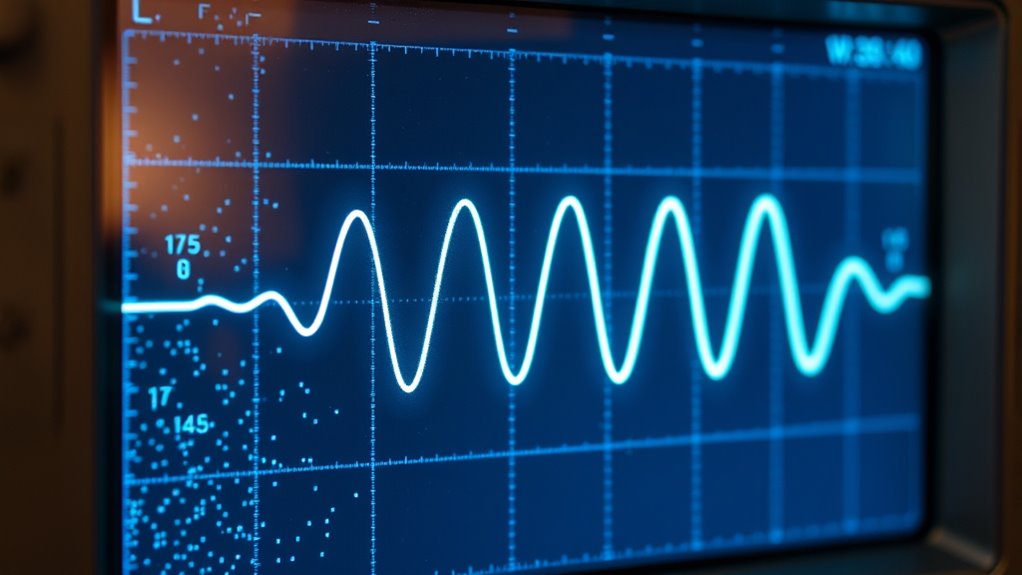

Understanding the signal-to-noise ratio (SNR) is essential if you want clear, reliable communication or high-quality recordings. This measure tells you how much stronger your signal is compared to background noise. The higher the SNR, the better your system performs. But what happens when noise overwhelms your signal, and how can you improve it? Exploring these questions can help you optimize your devices and make sure your data stays accurate.
Key Takeaways
- SNR measures the strength of the desired signal compared to background noise, indicating overall clarity.
- Expressed in decibels (dB), higher SNR values mean cleaner, more distinguishable signals.
- A high SNR results in better audio quality and more accurate data transmission with less static.
- Improving SNR involves reducing noise sources or amplifying the signal through various techniques.
- SNR is crucial for evaluating and optimizing communication and audio systems for clear, reliable performance.
Have you ever wondered how clear a signal is amidst background interference? When you’re trying to listen to music, make a phone call, or transmit data, the quality of that transmission depends heavily on the signal-to-noise ratio. This ratio measures how much of the desired signal stands out against unwanted background noise, directly impacting both audio clarity and data quality. A high signal-to-noise ratio means your audio sounds crisp and clear, with minimal hissing or static, and your data arrives accurately without errors. Conversely, a low ratio indicates that noise overshadows the main signal, causing distorted sound or corrupted data.
Understanding the concept of signal-to-noise ratio is vital for anyone working with electronic communications or audio systems. It helps you recognize why some signals are clearer than others and guides you in optimizing equipment to improve performance. For example, in a recording studio, engineers aim for a high SNR to guarantee every nuance of sound is captured precisely, resulting in better audio clarity. Similarly, in data transmission, a higher SNR reduces the chance of errors during transfer, ensuring your information remains intact and reliable. This ratio is measured in decibels (dB), with larger values indicating a cleaner, more distinguishable signal.
A high signal-to-noise ratio ensures clearer audio and more reliable data transmission.
You can think of the signal-to-noise ratio as the difference between the main message and the background chatter. When the ratio is high, it’s like having a conversation in a quiet room—your voice comes through clearly, and the listener can easily understand you. When the ratio drops, it’s like trying to chat in a noisy café, where background noise muddles your words. In wireless communications, this ratio determines how well your device can pick up signals without interference, which directly affects audio clarity in calls and the accuracy of data transmission. The better the SNR, the less effort your device needs to decipher the intended message, making for smoother communication. Improving the signal-to-noise ratio involves reducing noise sources or boosting the signal strength. Using shielding, filters, or amplifiers can help increase the SNR, resulting in better data quality and clearer audio. This is especially important in environments with a lot of electromagnetic interference or when transmitting over long distances. Recognizing the importance of a high signal-to-noise ratio allows you to choose better equipment, optimize your setup, and troubleshoot issues more effectively. Ultimately, whether you’re streaming music, making calls, or transferring information, a strong ratio guarantees that what you receive is as close to the original as possible, delivering superior audio clarity and data integrity.
Top picks for "signal noise ratio"
Open Amazon search results for this keyword.
As an affiliate, we earn on qualifying purchases.
Frequently Asked Questions
How Does Temperature Affect Signal-To-Noise Ratio?
You’ll find that as temperature increases, thermal noise also rises, leading to signal degradation. Higher temperatures cause atoms to move more vigorously, generating more thermal noise, which makes it harder to distinguish the signal from background noise. This reduces your signal-to-noise ratio, meaning your system becomes less effective. To maintain a good ratio, cooling components can help lower thermal noise and improve overall signal clarity.
What Are Common Tools to Measure SNR Accurately?
You can measure SNR accurately using tools like spectrum analyzers and digital audio workstations. These devices help you identify the noise floor and dynamic range, which are vital for precise measurements. For example, spectrum analyzers visualize the noise floor across frequencies, giving you a clear picture of your signal quality. By analyzing these parameters, you guarantee your system maintains a high SNR, essential for peak performance.
How Does SNR Impact Audio Quality in Recordings?
A higher SNR directly improves your audio quality by enhancing clarity and reducing background noise. When SNR is high, your recordings sound cleaner and more professional because noise is less noticeable. Conversely, a low SNR means more noise interferes with the audio, decreasing clarity. By focusing on noise reduction techniques, you can boost your SNR, ensuring your recordings are crisp, clear, and more enjoyable for listeners.
Can SNR Be Improved Without Changing Equipment?
Imagine recording in a noisy room; you can improve your SNR without new gear by applying noise reduction techniques and signal amplification. You might use editing software to filter out background noise or boost weaker signals. These methods enhance your audio quality by decreasing noise and making your main sound clearer, effectively improving your SNR without needing to change your equipment.
What Is the Ideal SNR for Different Applications?
The ideal SNR varies by application; for high-quality audio, aim for at least 60 dB, while for wireless communications, 20-30 dB often suffices. You want a high signal strength relative to the noise floor, ensuring clear, reliable data. In sensitive measurements or broadcasting, maximizing SNR minimizes noise interference. Adjust your setup accordingly, focusing on improving signal strength or reducing noise floor, to achieve the most favorable SNR for your specific needs.
Conclusion
Think of your signal as a shining lighthouse piercing through a stormy night. When your SNR is high, your message shines clearly, guiding everything safely to shore. But when noise takes over, it’s like the storm drowns out your light, making it hard to see or understand. By boosting your signal or reducing noise, you keep that lighthouse bright and steady, ensuring your message always reaches its destination with clarity and confidence.