Did you know that data center traffic is expected to quadruple by 2027, making high-speed Ethernet deployments more critical than ever? As demand for faster, more reliable connections grows, deploying 400G and 800G Ethernet becomes essential for maintaining performance and scalability. But implementing these advanced networks involves complex choices around fiber optics, virtualization, and power management—topics that could transform your infrastructure entirely. Are you prepared to navigate these technological shifts effectively?
Key Takeaways
- Utilize fiber optic cabling to support high-speed, low-latency transmission required by 400G/800G Ethernet standards.
- Ensure reliable power supplies to maintain stability during high-capacity data center operations.
- Implement network virtualization to optimize bandwidth allocation, traffic management, and scalability.
- Upgrade network infrastructure gradually to accommodate emerging standards without disrupting existing services.
- Incorporate future-proof components and scalable architecture to adapt to evolving high-speed Ethernet technologies.

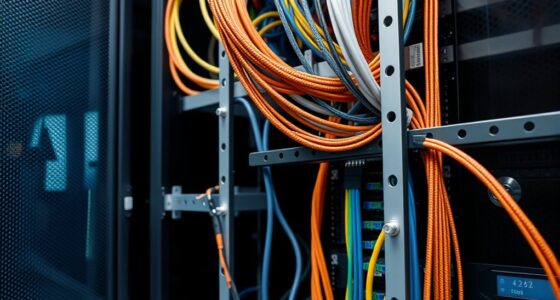
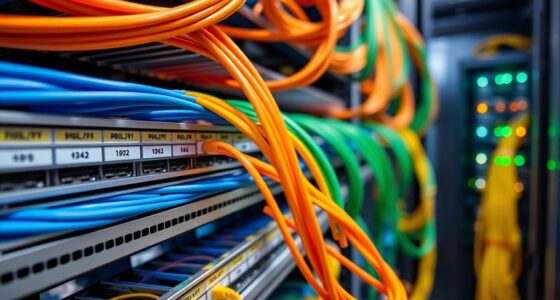
Have you ever wondered why Ethernet remains the backbone of modern data centers? The answer lies in its incredible versatility, scalability, and compatibility with cutting-edge technologies like fiber optics and network virtualization. As data demands skyrocket, especially with the advent of 400G and 800G Ethernet, understanding how these components work together is essential for deploying an efficient, future-proof infrastructure. Fiber optics, in particular, forms a fundamental part of this ecosystem, enabling the high-speed, low-latency connections necessary for such advanced Ethernet standards. When you deploy 400G or 800G Ethernet, you’ll find that fiber optics allow you to transmit massive amounts of data over longer distances without degradation, making it ideal for data centers that need to support dense, high-performance environments. This technology also helps reduce the complexity of cabling, freeing up space and simplifying management, which is especially important as data centers grow in size and capacity. Moreover, reliable power supplies are critical to maintaining uninterrupted network operations during high-speed deployments. Meanwhile, network virtualization plays a key role in maximizing the efficiency of these high-speed Ethernet deployments. By abstracting physical network resources into multiple virtual networks, you can allocate bandwidth dynamically, isolate traffic, and optimize resource utilization. This means you’re not just increasing raw speed but also enhancing the flexibility and agility of your data center network. Virtualization allows you to create isolated environments for different applications or tenants, which is essential when deploying multi-tenant data centers or handling diverse workloads. As you implement 400G/800G Ethernet, integrating network virtualization ensures you’re leveraging each gigabit effectively, avoiding bottlenecks, and enabling rapid provisioning of new services. The combination of fiber optics and network virtualization helps future-proof your data center infrastructure. You’ll be able to scale up capacity without overhauling your entire network, as virtualization makes it easier to adapt to changing needs. Additionally, fiber optics support the high bandwidths required for these speeds, while virtualization optimizes how that bandwidth is used. As you plan your deployment, keep in mind that these technologies also improve resilience and reduce downtime. Fiber optics’ immunity to electromagnetic interference, paired with virtualization’s ability to reroute traffic swiftly in case of failures, ensures your data center remains reliable and available.

VANDESAIL 3M MPO to MPO Fiber Cable APC, OM4 Fiber Cable 40G/400G/800G, 16 Cores Female Type B Multimode LSZH, MTP Compatible for FTTx – 3M(9.8FT)
UP to 800GB High-Speed:Our OM4 16-fiber APC MPO Cable packs a punch with its dense 16-core design, enabling…
As an affiliate, we earn on qualifying purchases.
As an affiliate, we earn on qualifying purchases.
Frequently Asked Questions
What Are the Cost Implications of Deploying 400G and 800G Ethernet?
You’ll find that deploying 400g and 800g Ethernet impacts your budget considerably. Conducting a thorough cost analysis helps identify high expenses for advanced hardware and cabling. While initial investments are steep, long-term benefits like faster data transfer and future-proofing can justify the costs. Proper budget planning ensures you allocate resources effectively, balancing infrastructure upgrades with operational needs, ultimately maximizing your data center’s efficiency and scalability.
How Does High-Speed Ethernet Impact Data Center Power Consumption?
High-speed Ethernet heightens power consumption, prompting you to prioritize power efficiency. As data rates ramp up, energy efficiency becomes essential to reduce cooling requirements and prevent overheating. You’ll notice increased energy use from the higher bandwidth hardware, but smart planning and efficient cooling systems can mitigate these impacts. By balancing performance with power, you ensure your data center remains sustainable, secure, and streamlined amid the surge in speed and data.
What Are the Best Practices for Cable Management at These Speeds?
You should prioritize cable organization by using structured pathways and labeling systems to keep cables neat and accessible. Focus on fiber routing by maintaining clear, organized routes that minimize bends and stress on fibers, which helps prevent signal loss. Use management tools like cable trays and patch panels to keep everything orderly, reduce interference, and simplify maintenance, ensuring peak performance at high speeds. Proper cable management is essential for reliable, efficient data center operations.
How Do 400g/800g Ethernet Solutions Integrate With Existing Infrastructure?
You need to guarantee fiber compatibility with your current infrastructure to integrate 400g/800g Ethernet solutions smoothly. Address retrofit challenges by evaluating your existing cabling and hardware, upgrading connectors if necessary, and planning for minimal disruption. Working closely with vendors helps you identify compatible components, making upgrades seamless. Proper planning ensures your data center remains efficient and future-proof, reducing costly rework and downtime during integration.
What Security Considerations Are Unique to High-Speed Ethernet Deployments?
Did you know that 70% of data breaches involve physical security lapses? When deploying high-speed Ethernet, you need to prioritize encryption protocols to protect data in transit. Also, physical security measures become even more critical, as faster networks can transmit sensitive information quickly. You should implement strict access controls and monitor hardware closely to prevent tampering, ensuring your high-speed network remains secure against both cyber and physical threats.
800G Ethernet network switch
As an affiliate, we earn on qualifying purchases.
As an affiliate, we earn on qualifying purchases.
Conclusion
By embracing 400G and 800G Ethernet, you’re building a data center that’s a robust backbone, ready to ride the wave of future demands. Fiber optics act as the veins, carrying limitless data seamlessly, while virtualization weaves flexibility into your network fabric. With reliable power and these high-speed technologies, your infrastructure becomes a mighty river—powerful, resilient, and prepared to flow effortlessly into tomorrow’s digital landscape.

Power Backup Systems for Data Centers: UPS, Generators, and Redundancy
As an affiliate, we earn on qualifying purchases.
As an affiliate, we earn on qualifying purchases.

The Fast-Track Guide to VXLAN BGP EVPN Fabrics: Implement Today’s Multi-Tenant Software-Defined Networks
As an affiliate, we earn on qualifying purchases.
As an affiliate, we earn on qualifying purchases.