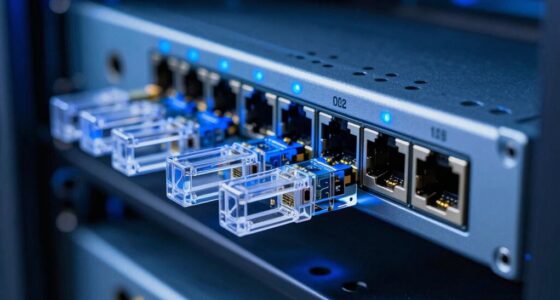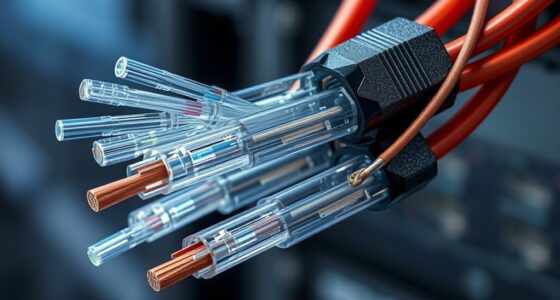

PoE design is essential in modern buildings because it allows you to power devices like Wi-Fi access points, security cameras, and sensors directly through Ethernet cables, reducing clutter and simplifying installation. It helps you create reliable, scalable networks that can adapt to future technology needs. Plus, it promotes energy efficiency and safety while minimizing costs and disruptions. Want to discover how PoE can transform your building systems even further? Keep exploring to find out more.

Get business pricing on networking and server gear
- Business-only prices and quantity discounts
- Tax-exempt purchasing
- Multiple users, one account, clear invoices
Key Takeaways
- Simplifies installation by reducing the need for separate power and data wiring.
- Enhances network reliability with centralized power management and seamless connectivity.
- Supports energy efficiency and sustainability through optimized power usage.
- Enables flexible device placement and scalable system upgrades.
- Improves safety by minimizing electrical hazards and supporting modern building standards.
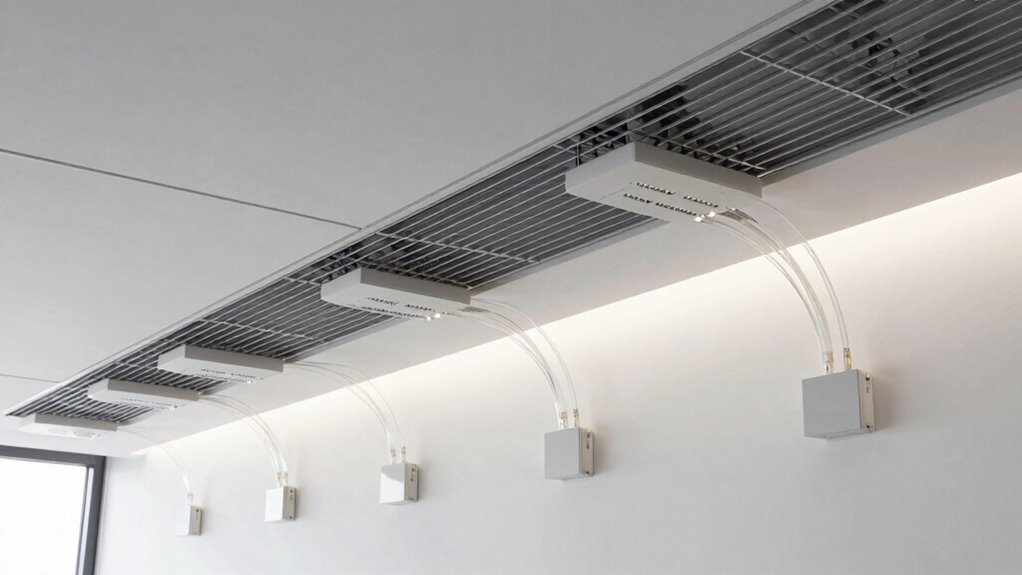
Power over Ethernet (PoE) has become an indispensable component in modern building design, enabling seamless integration of network, security, and automation systems. As buildings become smarter and more connected, PoE’s role extends beyond simple data transmission; it’s now about creating efficient, flexible environments that adapt to your needs. One of the most significant advantages of PoE is its ability to support wireless integration. By powering Wi-Fi access points directly through Ethernet cables, you eliminate the need for separate power sources, reducing clutter and simplifying installation. This streamlined approach guarantees that your wireless networks are robust and reliable, providing consistent connectivity throughout the building. As a result, you can support a growing number of devices and applications without sacrificing performance or security.
PoE supports wireless integration, simplifies installation, and ensures reliable connectivity for smarter, more efficient buildings.
Energy efficiency is another essential reason why PoE design is more important than ever in modern buildings. Traditional wiring systems often lead to energy wastage, especially when power supplies are not optimized or are used inefficiently. PoE, on the other hand, offers a centralized power management system that allows you to monitor and control energy consumption more effectively. You can turn off devices when they’re not in use, reducing unnecessary electricity use and lowering operational costs. This approach supports sustainability goals and helps you meet regulatory standards for energy efficiency. Plus, PoE devices tend to be more energy-efficient overall because they operate on low-voltage power, reducing the risk of power surges and electrical faults. Additionally, the use of PoE design can contribute to improved safety standards by minimizing electrical hazards in building systems. Incorporating energy management systems further enhances energy efficiency and operational oversight, ensuring that your building remains sustainable and compliant with evolving standards. Implementing smart building technologies that leverage PoE can also optimize resource utilization and streamline maintenance processes.
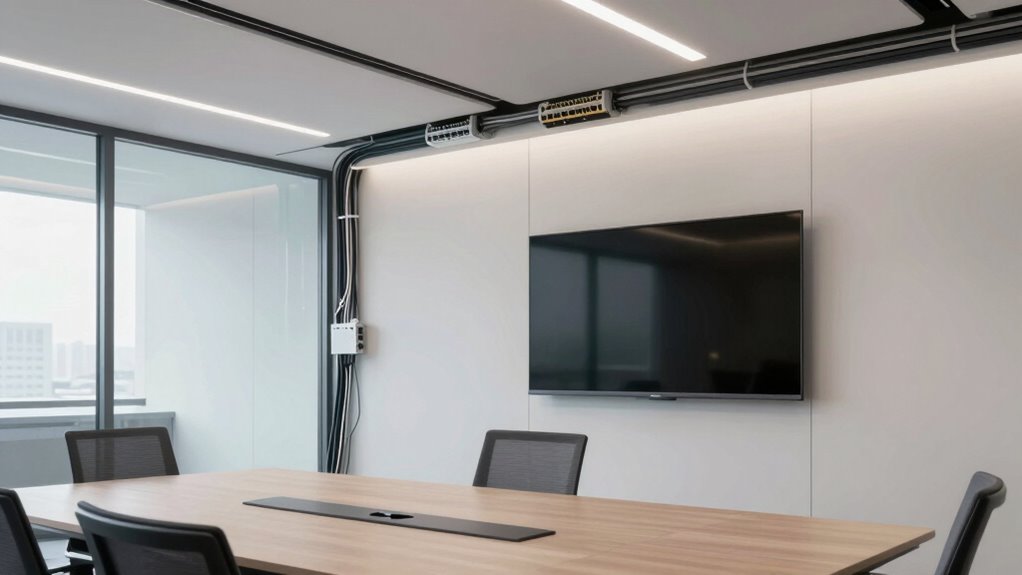
The flexibility PoE offers also makes it more indispensable in contemporary building design. Unlike traditional cabling, which requires dedicated power outlets and separate wiring runs, PoE allows you to place network devices anywhere there’s an Ethernet port. This adaptability simplifies upgrades and expansions, making your building more responsive to changing technological demands. Whether installing security cameras, sensors, or lighting controls, PoE provides a unified backbone that supports all these systems efficiently. This integrated approach reduces construction costs, shortens installation times, and minimizes disruptions, which is critical in commercial and residential spaces alike. Moreover, as technology advances, the ability to easily upgrade and integrate new systems without extensive rewiring becomes increasingly valuable for maintaining modern, efficient buildings.
In essence, PoE design’s significance hinges on its ability to create smarter, more energy-efficient buildings that are easier to manage and expand. It’s not just about connectivity anymore; it’s about building systems that are integrated, sustainable, and responsive to your evolving needs. By leveraging wireless integration and optimizing energy use, PoE empowers you to develop spaces that are future-proof, cost-effective, and aligned with modern standards of efficiency and convenience.
As an affiliate, we earn on qualifying purchases.
Frequently Asked Questions
How Does Poe Improve Building Security?
PoE improves building security by enabling your security cameras and access control systems to operate seamlessly over a single network. You can easily deploy and manage security cameras, ensuring real-time monitoring and quick response to threats. With PoE, your access control systems become more reliable and flexible, allowing remote management and instant updates. This integrated approach enhances overall security, making your building safer without complex wiring or additional power sources.
Can Poe Support Future Smart Building Technologies?
Yes, PoE can support future smart building technologies. Its power efficiency allows devices to operate effectively without wasting energy, which is essential as smart systems become more complex. Additionally, PoE’s system scalability means you can easily add new devices or upgrade existing ones without major infrastructure changes. This flexibility makes PoE ideal for evolving smart buildings, ensuring they can seamlessly incorporate advanced technologies over time.
What Are the Cost Benefits of Poe Integration?
You’ll find that PoE integration offers significant cost benefits, especially regarding energy efficiency and installation costs. By powering devices directly through Ethernet cables, you reduce energy waste and streamline wiring, which cuts down on labor and material expenses. This seamless setup not only lowers initial installation costs but also promotes ongoing savings through smarter energy use, making PoE a smart investment for modern buildings.
How Does Poe Affect Building Maintenance?
PoE simplifies building maintenance by enabling centralized power management and reducing the need for separate electrical wiring. With power redundancy built into PoE systems, you guarantee continuous operation during outages. Good cable management becomes easier, minimizing clutter and reducing troubleshooting time. Overall, PoE enhances reliability, streamlines maintenance, and keeps your building running smoothly by integrating power and data, making upkeep more efficient and less costly.
Are There Environmental Benefits to Using Poe?
Using PoE offers environmental benefits by improving energy efficiency and indoor air quality. You’ll reduce the need for separate power sources, cutting down energy consumption and waste. PoE devices also enable smarter building management, optimizing ventilation and lighting, which enhances indoor air quality. By streamlining power and data delivery, you contribute to a greener, more sustainable environment while creating healthier indoor spaces.
As an affiliate, we earn on qualifying purchases.
Conclusion
So, as you see, PoE design isn’t just a trend—it’s a game-changer for modern buildings. It simplifies wiring, boosts efficiency, and enhances flexibility, making your space smarter and more adaptable. Think about the possibilities when your building can evolve with your needs—won’t that make every day easier? Embracing PoE design isn’t just about keeping up; it’s about shaping the future of intelligent, connected spaces. Are you ready to build smarter?
As an affiliate, we earn on qualifying purchases.
As an affiliate, we earn on qualifying purchases.
Fall Picks
fall essentials
As an affiliate, we earn on qualifying purchases.