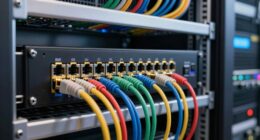
Imagine you’re setting up a network in a bustling industrial facility or a quiet office, and you’re wondering which type of Ethernet cable to use. Shielded and unshielded cables each have their advantages, but knowing which one fits your environment can be tricky. The right choice could impact your network’s performance and reliability more than you realize. So, what really sets shielded cables apart from unshielded ones, and how do you decide?
Key Takeaways
- Shielded cables have an extra shielding layer to block electromagnetic interference, unlike unshielded cables that rely on twisted pairs.
- Shielded Ethernet cables perform better in noisy environments, providing more reliable data transmission compared to unshielded cables.
- Unshielded cables are more flexible, easier to install, and cost less but are more susceptible to EMI.
- Shielded cables are recommended for industrial or electronically dense settings, while unshielded suits typical office or home use.
- The choice depends on environmental EMI levels, installation complexity, and budget considerations.
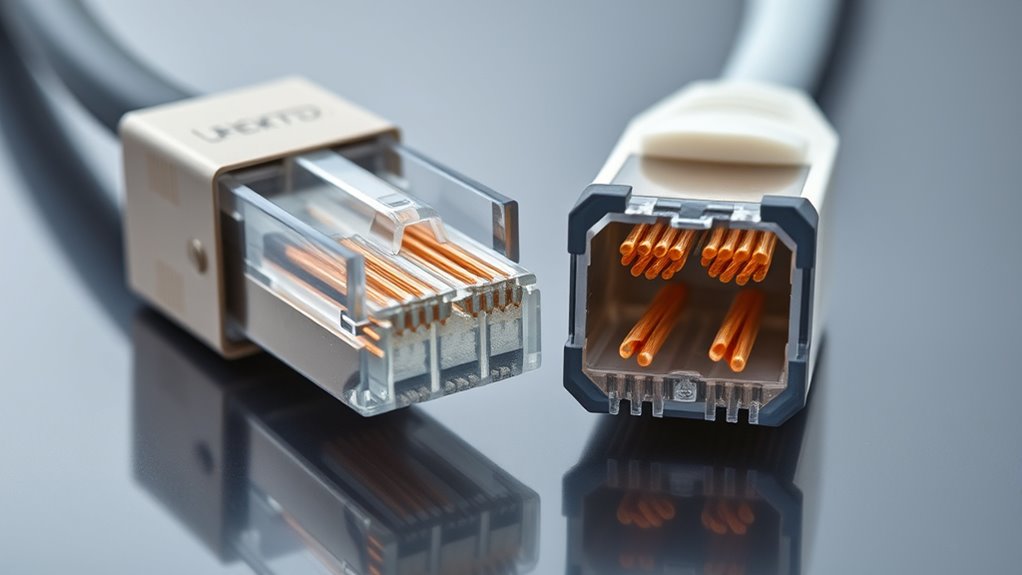
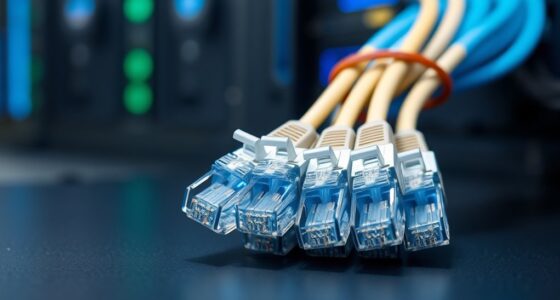
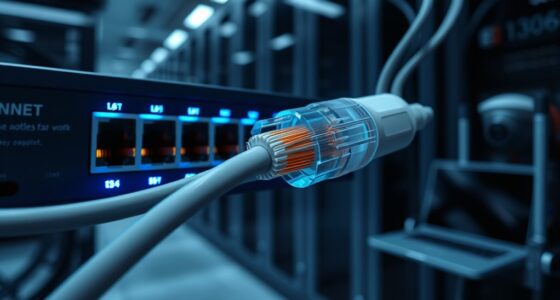
When choosing Ethernet cables, understanding the difference between shielded and unshielded options is essential for ensuring ideal network performance. Shielded Ethernet cables, often labeled as STP or S/FTP, are designed with an additional layer of shielding that surrounds the conductors. This shield acts as a barrier against electromagnetic interference (EMI), which can disrupt data transmission and cause network issues. If you work in an environment filled with large motors, wireless devices, or other sources of interference, shielded cables can considerably improve reliability by reducing signal noise. Conversely, unshielded cables, commonly known as UTP, lack this extra layer. They rely solely on twisted pairs of wires to cancel out interference naturally, making them more susceptible to EMI, especially in complex or noisy environments.
Shielded Ethernet cables reduce interference, ensuring reliable data transmission in noisy environments.
Electromagnetic interference is a major concern when selecting cables. Without proper shielding, EMI can cause data corruption, slow speeds, and increased packet loss. Shielded cables, with their metallic or foil shielding, help maintain signal integrity over longer distances and in electrically noisy settings. This makes them ideal in industrial facilities, data centers, or office environments with many electronic devices. However, it’s worth noting that shielded cables tend to be bulkier and less flexible, which can complicate installation in tight spaces or areas requiring frequent cable adjustments.
Cost comparison plays a key role in your decision. Generally, shielded Ethernet cables cost more upfront than unshielded ones, due to the additional materials and manufacturing processes involved. The price difference might be substantial depending on the shielding type and cable quality. However, think of it as an investment: shielded cables can save you money in the long run by reducing downtime and minimizing troubleshooting caused by interference. If your environment doesn’t have substantial EMI sources, unshielded cables are a cost-effective choice, providing sufficient performance at a lower price point. They’re easier to install and handle, making them suitable for most typical office or home setups.
Ultimately, your choice hinges on your environment’s susceptibility to electromagnetic interference and your budget constraints. If you operate in a high-interference setting or require maximum reliability, spending extra on shielded cables is justified. For standard, low-interference environments, unshielded cables offer a practical, economical solution. By weighing the impact of EMI and considering your budget, you can select the Ethernet cable type that best aligns with your network needs, ensuring smooth, dependable connectivity. Additionally, understanding cable shielding technology can help you make more informed decisions about your network infrastructure.

Cable Matters 10Gbps Snagless Shielded Cat 6A Ethernet Cable – 10ft, Cat 6A Cable, Cat6A Cord, Ethernet Cord, Black
High Performance Cat6a, 26 AWG, RJ45, Shielded Ethernet Cable provides universal connectivity for LAN network components such as…
As an affiliate, we earn on qualifying purchases.
As an affiliate, we earn on qualifying purchases.
Frequently Asked Questions
How Do Shielded Cables Affect Network Latency?
Shielded cables reduce network latency by protecting against electromagnetic interference, which can cause signal disruptions. When you use shielded cables, your network maintains better signal integrity, resulting in fewer retransmissions and delays. This is especially important in environments with high interference, as shielding minimizes data errors and ensures faster, more reliable communication. So, opting for shielded cables can markedly improve your network’s speed and stability.
Are Shielded Cables More Environmentally Friendly Than Unshielded?
You might think shielded cables are more eco-friendly, but they often use more materials and energy in manufacturing, impacting their sustainability. While they protect data better, their environmental footprint is usually higher due to complex production processes. Unshielded cables, on the other hand, typically have a lower environmental impact, making them a more sustainable choice. So, if you prioritize environmental considerations, unshielded cables often serve you better.
What Are the Maintenance Requirements for Shielded Cables?
You should regularly inspect shielded cables for damage, ensuring grounding techniques are intact to maintain their shielding effectiveness. Keep connectors clean and secure to prevent signal interference. Proper grounding enhances cable durability, reducing wear and corrosion over time. Avoid unnecessary bending or pulling, which can compromise shielding and insulation. Routine maintenance helps extend the lifespan of your shielded cables, ensuring peak performance and protecting your network from interference.
Can I Mix Shielded and Unshielded Cables in One Network?
You can mix shielded and unshielded cables in your network, but it’s not ideal. Proper grounding practices are essential to prevent interference, especially where different cable types meet. Keep in mind, shielded cables are less flexible, which can complicate installation. To guarantee peak performance, use appropriate connectors and maintain consistent grounding, minimizing potential interference and ensuring your network remains stable and efficient.
How Do Shielded Cables Impact Wireless Network Performance?
Shielded cables can reduce electromagnetic interference, which helps maintain your wireless network’s signal quality. By minimizing interference, they prevent signal attenuation that could weaken your Wi-Fi performance. Using shielded cables in your setup can lead to more stable connections and fewer disruptions, especially in environments with lots of electronic devices. However, they’re more expensive and less flexible, so weigh the benefits against your specific network needs.

TRUE CABLE Cat6 Riser (CMR), 1000ft, Blue, 23AWG 4 Pair Solid Bare Copper, 550MHz, ETL Listed, Unshielded Twisted Pair (UTP), Bulk Ethernet Cable
[High Performance Network Cable] This riser rated cat 6 lan cable is 23 AWG with 4 pairs (8…
As an affiliate, we earn on qualifying purchases.
As an affiliate, we earn on qualifying purchases.
Conclusion
Ultimately, choosing between shielded and unshielded Ethernet cables depends on your environment. If you’re in a noisy, electromagnetic arena, shielded cables safeguard your signal and sustain your speed. For simpler, less stressful setups, unshielded cables offer ease and economy. Decide based on your space’s severity, and steer your setup smartly. Shielded or unshielded, your network’s success depends on your specific needs. Make the right choice and connect confidently!

Cat 8 Ethernet Cable 40ft, High Speed LAN Cables 40Gbps 2000MHz Shielded, Heavy Duty 26AWG Outdoor Indoor Cat8 RJ45 Internet Cord Compatible with Gaming PC PS5 Xbox Router Modem Office Industrial
Heavy Duty & Direct Burial: Double shielded Cat8 Ethernet cable reduces EMI/RFI interference; provides high fidelity for long…
As an affiliate, we earn on qualifying purchases.
As an affiliate, we earn on qualifying purchases.
![Cable Matters [UL Listed] 10Gbps in-Wall (CM) Rated 23AWG Bare Copper Shielded Cat 6A Cable - 500ft, Solid, S/STP, S/FTP Shielded Cat6a Bulk Ethernet Cable, Cat6a Ethernet Cord, Blue](https://m.media-amazon.com/images/I/511BY7ASCxL._SL500_.jpg)
Cable Matters [UL Listed] 10Gbps in-Wall (CM) Rated 23AWG Bare Copper Shielded Cat 6A Cable – 500ft, Solid, S/STP, S/FTP Shielded Cat6a Bulk Ethernet Cable, Cat6a Ethernet Cord, Blue
Shielded Cat6a Bulk Ethernet Cable: CM-rated solid shielded Cat 6A Shielded/Foil Twisted Pair (S/FTP) bulk cable is engineered…
As an affiliate, we earn on qualifying purchases.
As an affiliate, we earn on qualifying purchases.