
Imagine a maze of cables weaving through a robotics facility, each wire essential yet vulnerable to damage and disarray. Properly managing these connections isn’t just about neatness; it’s about ensuring safety, reliability, and ease of maintenance. Without the right strategies, small issues can turn into costly downtime. To keep your automation systems running smoothly, understanding effective cabling approaches becomes vital—so, let’s explore how to keep those wires organized and resilient.
Key Takeaways
- Use organized cable routing solutions like trays and ties to prevent tangling and facilitate maintenance.
- Select durable, rugged cables suited for harsh environments to ensure long-term reliability.
- Follow industry standards for cable specifications to guarantee compatibility and system resilience.
- Secure cables properly to avoid tension, wear, and accidental disconnections during system operation.
- Implement effective cable management strategies to reduce downtime, simplify troubleshooting, and support future upgrades.

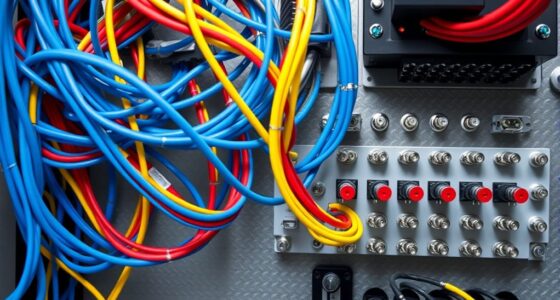
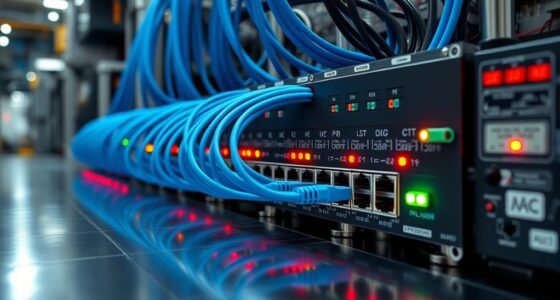
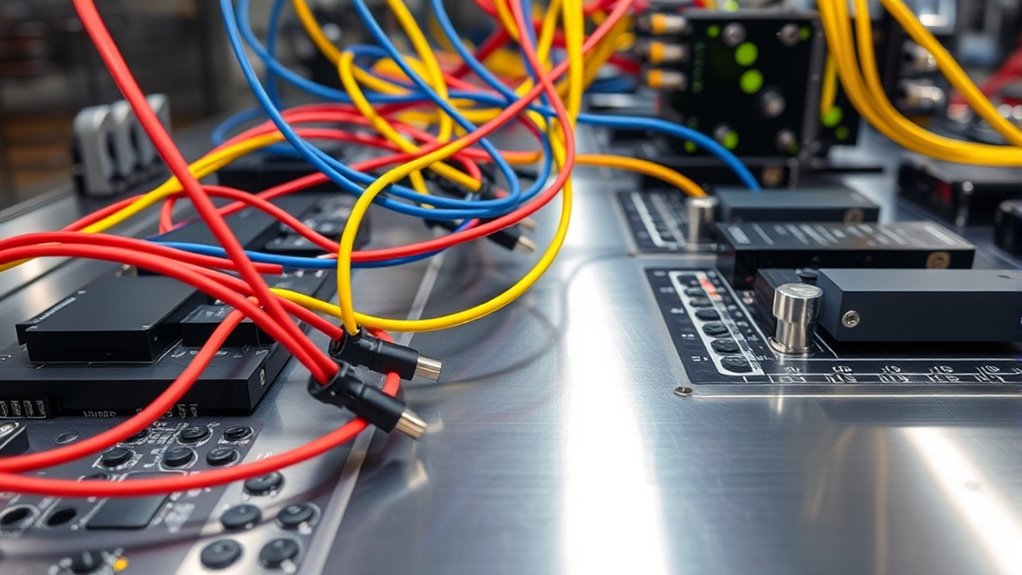
Effective cabling is essential for the reliable operation of robotics and automation systems. When you’re designing or maintaining these systems, paying close attention to wire management can make all the difference. Proper wire management ensures that cables are organized, secured, and routed efficiently, reducing the risk of tangling, wear, and accidental disconnections. By implementing effective wire management strategies, you help prevent unnecessary downtime and make troubleshooting much simpler. You can use cable trays, conduits, and cable ties to keep cables neatly arranged, avoiding clutter that could hinder movement or cause interference. This not only enhances system reliability but also streamlines future upgrades or repairs, saving you time and effort.
Cable durability is another critical aspect to consider when working with robotics and automation systems. The environment in which these systems operate often exposes cables to vibrations, mechanical stress, and sometimes even harsh conditions like temperature fluctuations or exposure to chemicals. That’s why selecting cables with high durability ratings is vital. You want cables that can withstand bending, pulling, and environmental stressors without degrading or failing prematurely. Investing in high-quality, rugged cables might cost more initially, but it pays off in the long run by reducing maintenance costs and minimizing unexpected breakdowns. When you choose cables with reinforced insulation and robust outer jackets, you’re ensuring they can handle the physical demands of your application.
Additionally, understanding cable standards and specifications can help you select the most suitable cables for your specific environment and operational needs, further enhancing system resilience. Integrating good wire management with durable cables creates a resilient system that performs consistently over time. Proper routing and securing of cables prevent unnecessary tension and movement that could damage the wires. Additionally, using durable cables that resist abrasion and environmental wear extends the lifespan of your cabling infrastructure. This combination reduces the frequency of replacements and repairs, which can be costly and disruptive. When you plan your cabling layout thoughtfully, considering both wire management and cable durability, you set your automation system up for success. It becomes easier to maintain, troubleshoot, and upgrade, all while minimizing downtime.
Ultimately, attention to wire management and cable durability isn’t just about keeping things tidy; it’s about building a dependable foundation for your robotics and automation systems. By choosing the right cables and organizing them effectively, you ensure smoother operation, fewer interruptions, and a longer-lasting setup. Your focus on these details pays off in increased efficiency, safety, and system longevity, making your automation processes more reliable and easier to manage over time.
Frequently Asked Questions
What Are the Best Cable Types for High-Speed Data Transfer?
For high-speed data transfer, you should use fiber optics or twisted pair cables. Fiber optics offer incredible bandwidth and minimal signal loss over long distances, making them ideal for demanding applications. Twisted pair cables, like Cat6 or Cat7, are also excellent, providing reliable high-speed connections with good interference resistance. Choose fiber optics for the fastest, most future-proof performance, and twisted pair for cost-effective, versatile solutions.
How Do I Choose the Right Cable Shielding for Robotic Environments?
Think of choosing cable shielding like armor for a knight; it must safeguard against electromagnetic interference while maintaining cable durability. To decide, consider your environment’s electromagnetic noise levels—if high, opt for braided or foil shielding for extra protection. If your setup involves frequent movement or harsh conditions, prioritize durable shielding options. This approach ensures your robotic systems stay precise, reliable, and resistant to interference.
What Are Common Issues Caused by Improper Cable Management?
Improper cable management often leads to cable damage and signal interference, disrupting your robotic system’s performance. You might notice frequent failures, data loss, or reduced efficiency. When cables are tangled or poorly routed, they’re more prone to wear and tear, causing breaks or shorts. Additionally, unmanaged cables can cause electromagnetic interference, impairing signal quality. To avoid these issues, guarantee proper routing, secure attachments, and regular inspections of your cables.
How Do Cables Impact Robot Safety and Reliability?
Cables play a vital role in robot safety and reliability by ensuring durable connections. Poor cable installation techniques can lead to damage, reducing cable durability and increasing the risk of failures. Properly managed cables prevent tripping hazards and prevent interference with moving parts. When you use correct installation techniques, you enhance the system’s overall safety, minimize downtime, and maintain consistent performance, making your automation system more reliable and safe to operate.
Are There Industry Standards for Robotic Cabling Systems?
Yes, industry standards exist to guarantee robotic cabling systems are safe and reliable. You should focus on fostering flexible frameworks that prioritize cable durability and connector compatibility. Standards like ISO and IEC set clear guidelines, ensuring cables withstand wear and tear while maintaining seamless connections. Following these standards helps you create consistent, compliant, and safe cabling solutions that enhance your robotics system’s overall performance and longevity.
Conclusion
By properly organizing your cables with trays, ties, and durable wiring, you guarantee your robotics system runs smoothly and safely. Imagine a factory where streamlined wiring prevented downtime during a critical production shift—saving time and money. Taking these steps might seem small, but they make a big difference in reliability and maintenance. When you prioritize good cable management, you set your automation system up for long-term success and efficiency.