
Implementing edge computing at your factory floor can transform how you manage operations by enabling real-time data analysis close to your machines. This approach helps you quickly identify issues, reduce downtime, and optimize workflows without overloading your network. As more factories adopt these systems, understanding how edge computing integrates with existing control and sensor networks becomes vital to staying competitive in today’s fast-paced manufacturing landscape.
Key Takeaways
- Enables real-time data processing locally near machines for immediate insights and faster decision-making.
- Supports predictive maintenance by continuously monitoring equipment health and scheduling proactive repairs.
- Ensures operational resilience during network disruptions and reduces cloud data transmission costs.
- Integrates seamlessly with sensors and control systems to provide comprehensive, actionable production data.
- Enhances security by keeping sensitive factory data onsite while enabling faster analytics and operational agility.
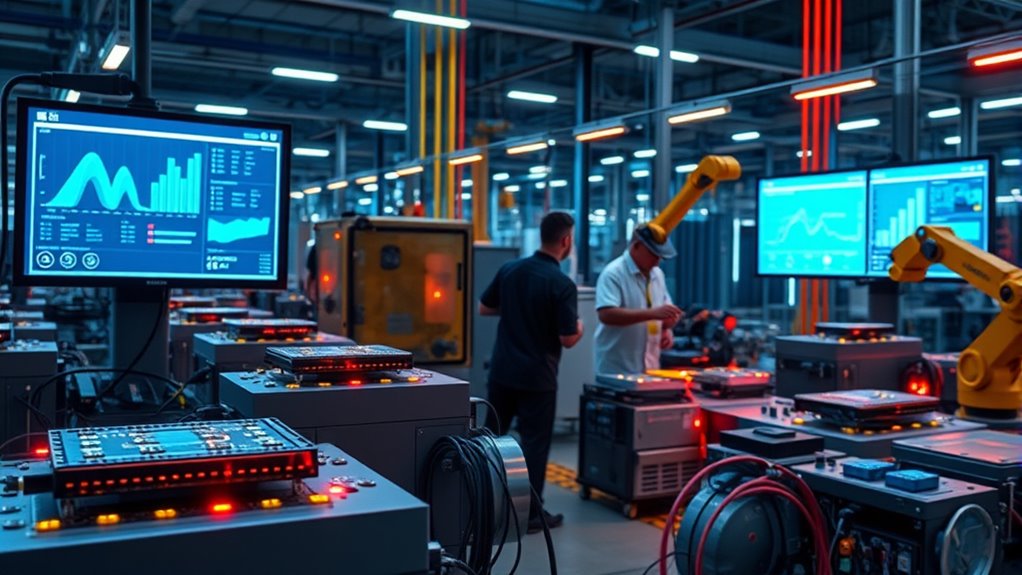
Edge computing is transforming the factory floor by bringing data processing closer to the machines and systems that generate it. This shift enables you to analyze data in real time, providing immediate insights that were previously difficult to obtain. Instead of relying on distant data centers, your manufacturing equipment now processes information locally, reducing latency and improving responsiveness. With real time analytics at your fingertips, you can swiftly identify inefficiencies, detect anomalies, and respond to issues before they escalate. This immediate visibility helps optimize your operations, minimize downtime, and enhance overall productivity.
One of the most significant advantages of edge computing is its impact on predictive maintenance. Traditional maintenance schedules often rely on fixed intervals or reactive repairs after a failure occurs, which can lead to unnecessary downtime and costs. By leveraging edge devices to continuously monitor machine health, you get detailed, real-time data on equipment performance. This data enables you to predict when a component might fail or require servicing, allowing maintenance to be scheduled proactively. As a result, you reduce unexpected breakdowns, extend equipment lifespan, and lower maintenance expenses. Predictive maintenance empowered by edge computing ensures you keep your factory running smoothly without costly interruptions.
Implementing edge computing also means you’re less dependent on cloud connectivity for critical decisions. If your factory faces network issues, the local processing capabilities ensure operations continue uninterrupted. This resilience is vital for maintaining high levels of efficiency and safety. Furthermore, by processing data at the source, you decrease the volume of information sent to the cloud, cutting down on bandwidth use and associated costs. This localized approach not only speeds up decision-making but also enhances data security, as sensitive information stays within the factory’s perimeter.
You’ll also notice that edge computing simplifies integration with existing systems. Its flexible architecture allows you to connect various sensors, machines, and control systems seamlessly. This integration facilitates thorough monitoring and control, giving you a holistic view of your production environment. As you adopt more advanced analytics tools, the data processed at the edge feeds into smarter algorithms, further refining your predictive maintenance models and operational strategies.
In essence, by embracing edge computing on the factory floor, you gain a competitive advantage through faster insights, smarter maintenance, and more resilient operations. It transforms your manufacturing process into a more agile, efficient, and data-driven environment. With real time analytics and predictive maintenance capabilities at your disposal, you’re better equipped to meet market demands, reduce costs, and foster innovation—all while keeping your factory running at peak performance. Additionally, understanding security considerations is crucial, as data security measures are essential to protect sensitive factory information from cyber threats.
Frequently Asked Questions
How Does Edge Computing Impact Factory Cybersecurity Measures?
Edge computing enhances your factory’s cybersecurity by reducing the risk of data breaches through localized processing. You can implement stronger cybersecurity protocols directly at the edge, minimizing exposure to external threats. With Industrial IoT devices communicating securely, you gain better control over sensitive information. This setup also enables faster threat detection and response, ensuring your factory remains protected and operational even during cyberattacks.
What Are the Costs Associated With Implementing Edge Computing?
Implementing edge computing involves a cost analysis that includes infrastructure investment, which can be significant upfront. You’ll need to budget for hardware, software, and network upgrades to support local processing. Ongoing expenses like maintenance, upgrades, and staff training also add to costs. While initial investments might seem high, the efficiency gains and reduced data transfer costs can offset these over time. Planning carefully helps you balance expenses with long-term benefits.
How Is Data Privacy Managed in Edge Computing Systems?
You manage data privacy in edge computing systems through data encryption and strict access controls. Encrypt sensitive data both at rest and in transit to prevent unauthorized access. Implement access controls to restrict data and device access to authorized personnel only. Regularly update security protocols and monitor systems for vulnerabilities. This way, you guarantee that your factory’s data remains secure and compliant with privacy standards.
Can Edge Computing Integrate With Existing Factory Automation?
Did you know that 70% of factories are already exploring edge integration? You can seamlessly incorporate edge computing into your existing factory automation systems, enhancing real-time data processing and decision-making. By doing so, you improve efficiency, reduce latency, and increase flexibility. Edge computing easily integrates with your current setup, making upgrades smooth and cost-effective, helping your factory stay competitive in the rapidly evolving industrial landscape.
What Are the Future Trends in Factory Edge Computing?
You’ll see factory edge computing evolving with smarter factory automation and enhanced data analytics capabilities. Future trends include increased integration of AI and machine learning to optimize processes in real-time, improving efficiency and predictive maintenance. You’ll also notice more modular, scalable edge solutions, enabling seamless adaptation to changing production needs. As technology advances, expect greater security measures and better connectivity, making factory automation more resilient and data-driven than ever before.
Conclusion
By processing data locally, you can reduce downtime by up to 50% and cut bandwidth costs considerably. Edge computing makes your factory more responsive and resilient, helping you catch issues before they escalate. With 70% of manufacturers already adopting edge solutions, it’s clear this technology is transforming industry. Embracing this approach means you’ll stay competitive, optimize operations, and keep your factory running smoothly in today’s fast-paced market.