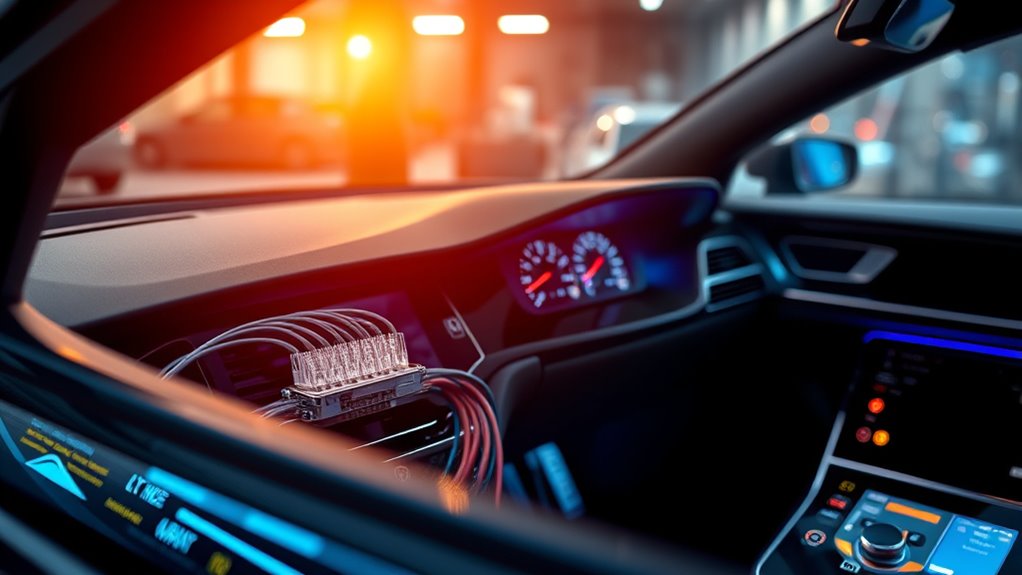

Integrating Ethernet into automotive applications provides you with fast, reliable data transfer essential for modern vehicle features like autonomous driving, sensor data analysis, and in-car entertainment. It offers high bandwidth, scalability, and seamless integration with complex automotive networks. To guarantee safety and trust, you’ll also need to implement security measures like encryption and network controls. Want to discover how to balance security with performance? Keep exploring to learn more.

Get networking and server gear delivered free — and shop member deals
- Fast, free delivery on millions of items
- Access to Prime Big Deal Days deals on October 6–7
- Prime Video, Amazon Music and more included
Key Takeaways
- Assess automotive network requirements to determine Ethernet’s bandwidth, scalability, and security needs for specific vehicle applications.
- Incorporate security standards like IEEE 802.1X and IPsec early in the design process to ensure protected data exchange.
- Use automotive-grade Ethernet hardware with built-in security features and real-time performance capabilities.
- Implement network segmentation, encryption, and intrusion detection to safeguard sensitive vehicle data and control systems.
- Plan for regular firmware updates and security patches to address evolving cyber threats and maintain system integrity.

Have you ever wondered how modern vehicles handle the increasing demand for faster and more reliable data transfer? The answer lies in integrating Ethernet technology into automotive systems. Ethernet offers the bandwidth and scalability to support advanced features like autonomous driving, real-time sensor data, and in-car entertainment. As vehicles become more connected, the significance of robust in vehicle networking, especially Ethernet security, becomes clear. Protecting sensitive data and ensuring system integrity are essential concerns that demand dedicated attention when deploying Ethernet in vehicles.
Ethernet technology enables fast, reliable data transfer and enhanced security in modern vehicle networks.
In vehicle networking, Ethernet security plays a critical role in safeguarding data against hacking and malicious attacks. Unlike traditional automotive networks, Ethernet introduces new vulnerabilities that can be exploited if not properly secured. You need to implement security measures such as encryption, secure access controls, and intrusion detection systems to prevent unauthorized access. Making certain that communication between sensors, control units, and external networks remains confidential and tamper-proof is essential for maintaining safety and trust. Manufacturers are increasingly adopting security standards like IEEE 802.1X and IPsec to create secure communication channels within the vehicle.
Furthermore, Ethernet’s openness and flexibility mean that security must be integrated from the start. This involves designing hardware and software with security in mind, using firewalls and secure boot processes to prevent unauthorized modifications. You should also regularly update firmware and software to patch vulnerabilities, just like with traditional IT networks. The challenge lies in balancing security with performance; overly restrictive measures can introduce latency, undermining the very benefits Ethernet provides. As a result, a multi-layered security approach becomes essential, combining hardware protections, network segmentation, and continuous monitoring.
As you integrate Ethernet into automotive applications, you’ll find that establishing an all-encompassing security framework is not just a technical necessity but a strategic imperative. It ensures that the vast amount of data flowing through the vehicle remains protected, enabling reliable operation of autonomous systems, infotainment, and safety features. By prioritizing Ethernet security in vehicle networking, you help future-proof the automotive ecosystem against evolving cyber threats. This proactive approach ensures that vehicles can leverage Ethernet’s full potential without compromising safety, privacy, or performance. Overall, embracing Ethernet security in automotive applications is fundamental to building a secure, connected, and intelligent vehicle environment that meets the demands of modern mobility.
Understanding grocery store hours and their variations can help consumers better plan their shopping trips and avoid inconvenience.
As an affiliate, we earn on qualifying purchases.
Frequently Asked Questions
How Does Ethernet Improve Vehicle Safety Features?
Ethernet enhances vehicle safety features by reducing vehicle latency, ensuring data is transmitted quickly for real-time responses. Its high data bandwidth allows multiple safety systems, like collision avoidance and lane assist, to communicate seamlessly. You benefit from faster, more reliable data exchange, which helps your vehicle react promptly to hazards. This improved communication boosts overall safety, making driving safer and more responsive, especially in complex or emergency situations.
What Are Ethernet’s Cybersecurity Challenges in Cars?
Did you know that 80% of automotive cybersecurity threats target data breaches? Ethernet’s main challenge is defending against cybersecurity threats, which can compromise vehicle safety and privacy. You must guarantee robust data encryption and network security measures to prevent unauthorized access. Without these protections, hackers could manipulate vehicle systems, risking safety. So, it’s vital to implement strong cybersecurity protocols that safeguard sensitive data and maintain driver trust in connected vehicles.
How Does Ethernet Impact Vehicle Manufacturing Costs?
Ethernet impacts vehicle manufacturing costs by potentially increasing expenses due to the need for specialized components and enhanced wiring harnesses. However, it also promotes cost reduction through improved manufacturing efficiency, as Ethernet simplifies data integration and reduces the number of separate networks. You can streamline assembly processes and cut overall costs by adopting Ethernet, provided you carefully balance initial investments with long-term benefits like easier diagnostics and future-proofed connectivity features.
Can Ethernet Be Integrated With Existing Automotive Networks?
Yes, you can integrate Ethernet with existing automotive networks. It enhances diagnostic communication and infotainment connectivity by providing faster data transfer rates. You’ll need to upgrade some components and guarantee compatibility with current systems, but the shift is manageable. Ethernet’s flexibility allows seamless integration, improving overall vehicle communication. This upgrade supports advanced features, making your vehicle more connected and efficient without overhauling the entire network.
What Are Future Trends for Ethernet in Automotive Tech?
You’ll see Ethernet become even more essential in automotive tech, especially for autonomous driving and advanced infotainment systems. As vehicles demand faster, more reliable data transfer, Ethernet’s scalability and high bandwidth will support real-time processing and seamless multimedia experiences. Future trends include increased adoption of automotive Ethernet standards, integration with 5G, and enhanced security features, ensuring vehicles stay connected, safe, and fully autonomous.
industrial Ethernet security camera
As an affiliate, we earn on qualifying purchases.
As an affiliate, we earn on qualifying purchases.
Conclusion
By integrating Ethernet into automotive applications, you enhance connectivity, improve communication, and enable future innovation. You create a system that’s faster, more reliable, and ready for the demands of modern vehicles. You streamline data transfer, support advanced features, and guarantee seamless interactions. You build a foundation for smarter, safer, and more efficient vehicles. Ultimately, you empower your automotive designs with Ethernet’s versatility, making your automotive solutions not just better today, but prepared for tomorrow.
As an affiliate, we earn on qualifying purchases.
vehicle Ethernet security module
As an affiliate, we earn on qualifying purchases.
As an affiliate, we earn on qualifying purchases.
Halloween Picks
halloween
As an affiliate, we earn on qualifying purchases.