
Did you know that falls and electrical shocks account for nearly 40% of accidents during cable installation? Ensuring safety isn’t just about following rules—it’s about preventing injuries that could have serious consequences. Proper precautions, such as hazard assessments and PPE, are essential, but every step matters. To protect yourself and your team, understanding the key safety measures can make all the difference when working in potentially hazardous environments.
Key Takeaways
- Conduct a thorough hazard assessment of the site to identify electrical, physical, and environmental risks before starting work.
- Wear appropriate PPE such as insulated gloves, eye protection, and steel-toed boots, ensuring proper fit and condition.
- Keep the work area organized, secure working surfaces, and prevent obstructions to minimize trip and fall hazards.
- Inspect all tools and equipment for proper functioning, and follow manufacturer instructions to ensure safe operation.
- Maintain clear communication with team members, use signals, and stay vigilant for hazards to promote a safety-conscious environment.
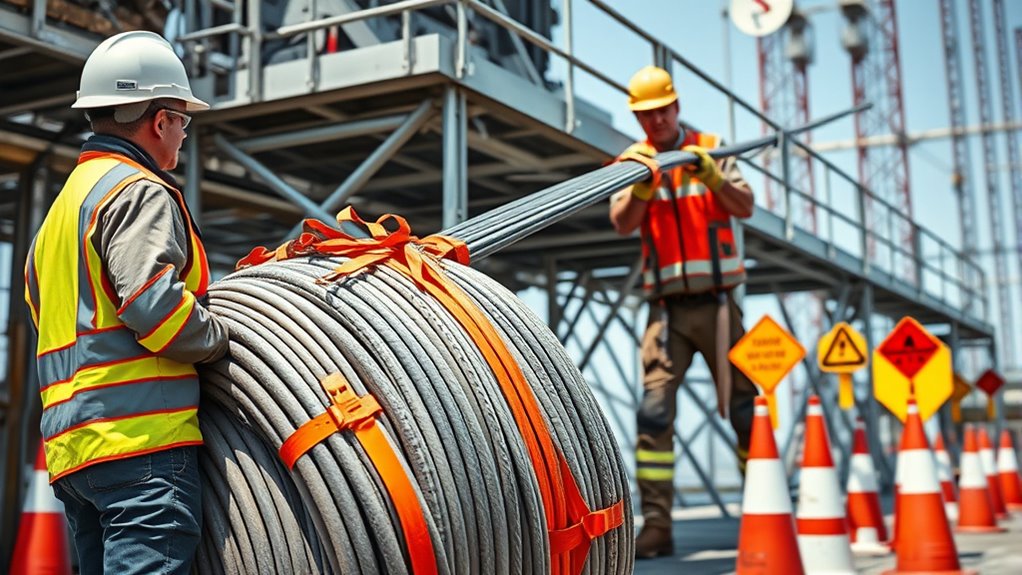
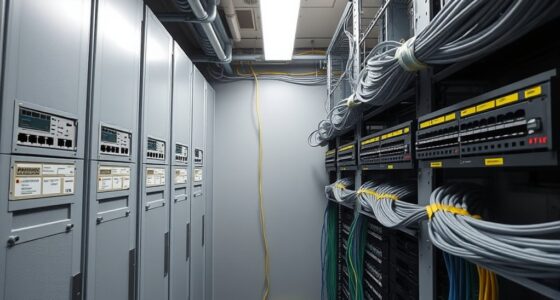
Cable installation is a task that requires careful attention to safety to prevent accidents and injuries. One of the most critical steps in guaranteeing a safe working environment is hazard identification. Before you begin, take the time to assess the site thoroughly. Look for potential dangers such as exposed electrical components, sharp edges, unstable surfaces, or obstructed pathways. Recognizing these hazards early allows you to develop a plan to mitigate risks, like marking off dangerous areas or using tools designed to handle specific challenges. Ignoring hazard identification can lead to serious accidents, so stay vigilant and methodical in your assessment process.
Assess the site thoroughly for hazards before starting cable installation to ensure safety and prevent accidents.
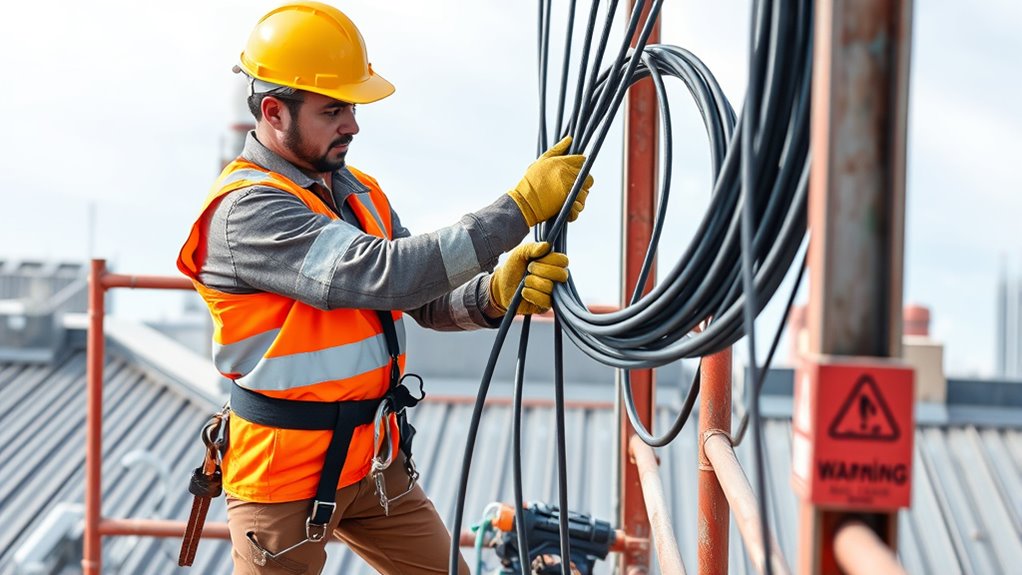
Equally important is understanding and following PPE requirements. Personal protective equipment serves as your first line of defense against workplace hazards. Depending on the specifics of your installation, PPE may include safety gloves, eye protection, hard hats, high-visibility vests, and steel-toed boots. Wearing the right gear shields you from electrical shocks, falling objects, and cuts from sharp cables or tools. Make sure your PPE fits properly and is in good condition before starting work; worn-out or ill-fitting gear can compromise your safety. It’s also essential to use specialized equipment, such as insulated gloves, when working near live wires, and to follow all manufacturer instructions for PPE use.
When performing cable installation, always be mindful of your environment. Keep work areas clean and organized to prevent trips and falls, especially when handling long cables or working at heights. Use proper lifting techniques to avoid strains and injuries, and never attempt to lift more than you can handle alone. If the task involves working at elevated heights, ensure you’re secured with fall protection gear such as harnesses and lanyards. Additionally, double-check all electrical connections and tools before use to prevent accidental shocks or shorts, and avoid working in wet conditions, which increase the risk of electrocution. Incorporating safety training into your routine ensures that all team members remain informed about best practices and emerging hazards.
Throughout the entire process, communication plays a crucial role. Make sure everyone on site is aware of the hazards and understands PPE requirements. Use clear signals and maintain open lines of communication to coordinate tasks safely. Remember, safety isn’t just about following rules; it’s about actively looking out for yourself and your colleagues. By adopting a proactive approach to hazard identification and consistently adhering to PPE requirements, you markedly reduce the risk of injury and ensure that your cable installation project proceeds smoothly and safely.

Walabot DIY 2 – Visual Stud Finder & Wall Scanner for Drywall. Detects Wood & Metal Studs, Plastic & Metal Pipes, Live & Non-Live Wires
Visually identifies the center of wood/metal studs and track pipes and wires
As an affiliate, we earn on qualifying purchases.
Frequently Asked Questions
What Are the Most Common Accidents During Cable Installation?
During cable installation, you’re most likely to encounter accidents like equipment slips or falls. To prevent these, always perform equipment inspection beforehand and guarantee all tools are in good condition. Use proper lifting techniques to avoid strains or injuries. Staying alert and following safety protocols reduces risks. Remember, taking these precautions helps keep you safe while installing cables efficiently and effectively.
How Can I Identify Electrical Hazards in the Work Area?
Like a trusty knight spotting a dragon, you can identify electrical hazards by looking for hazard signage and ensuring grounding protocols are in place. Check for exposed wires, damaged insulation, or unusual sparks. Always verify that equipment is properly grounded and follow safety signs closely. These steps help you recognize dangers early, preventing accidents and keeping your work area safe. Stay vigilant and trust your training to spot hazards before they escalate.
What PPE Is Mandatory for Cable Installation?
You must wear appropriate personal protective equipment (PPE) that meets PPE standards when installing cables. This includes insulated gloves, safety helmets, eye protection, and flame-resistant clothing to prevent electrical shocks and injuries. Always make certain your PPE is in good condition and properly fitted. Following PPE standards helps protect you from hazards, minimizing risks during cable installation. Remember, using the right PPE is essential for your safety on the job site.
How Often Should Safety Training Be Conducted?
You should conduct safety training regularly; it’s better to stay ahead of the game. Typically, training frequency depends on your team’s experience and job complexity, but refresher sessions should happen at least once a year. This keeps everyone sharp and informed about best practices, reducing risks. Don’t wait for an incident to remind you—scheduled refreshers guarantee safety remains a top priority, and your team stays prepared for any challenge.
What Emergency Procedures Should Be in Place?
You should have clear emergency protocols and evacuation plans in place before starting cable installation. Make certain everyone knows how to respond to emergencies, such as electrical shocks or fires. Regularly review and practice these plans, so in an emergency, you can act swiftly and safely. Keep all exits unobstructed, and make sure safety equipment like fire extinguishers and first aid kits are readily accessible.
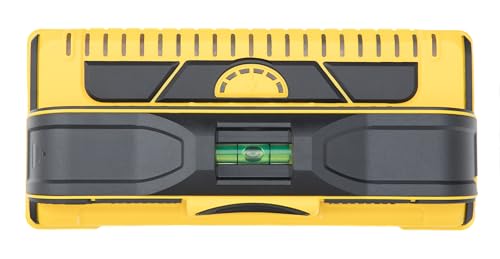
Franklin Sensors Prosensor M210 Stud Finder With 13-Sensors, Wood & Metal Stud Detector/Wall Scanner, Live Wire Detection, Made in the USA
Higher accuracy, better technology: with 13 patented sensors, the M210 detects studs more accurately
As an affiliate, we earn on qualifying purchases.
Conclusion
By staying attentive and following these safety steps, you’ll keep risks gently at bay. Remember, a cautious approach helps keep your work smooth and worry-free, turning potential hazards into mere whispers in the background. When you prioritize safety, you create a safer environment for everyone involved, allowing the installation to flow seamlessly like a well-conducted symphony. Ultimately, your careful actions guarantee not just a successful project, but a safe journey for all.

BOSCH GMS120-27 Professional Wall Scanner, Multi-Function Stud Finder, and Live Wire Detector for Electricians, Plumbers & Contractors
PRO-GRADE MULTI-FUNCTION DETECTION: Stop guessing, start knowing. This is not a simple stud finder; it is a professional-grade...
As an affiliate, we earn on qualifying purchases.

Premium Wall Scanner Stud Finder, Electronic Wall Stud Detector for Wood, Metal Studs, AC Wires, Joists, Pipes, Wire and Water Pipe Stud Finder, Visible Positioning Hole for Accurate Center Detection
1. Advanced 6-in-1 Detection Capability: This electronic wall stud detector incorporates advanced technology to accurately detect wood, metal...
As an affiliate, we earn on qualifying purchases.