When choosing cable for your building, understanding the difference between plenum and riser-rated options is vital for safety and compliance. Each type is designed for specific environments, with distinct fire-resistant properties and code requirements. Making the right choice can impact both your installation process and overall safety. So, what exactly sets these cables apart, and how do you determine which one fits your needs? Let’s explore the key factors to consider.
Key Takeaways
- Plenum cables meet stricter fire safety standards and produce less smoke, suitable for air-handling spaces.
- Riser cables are designed for vertical runs between floors, with less stringent fire safety requirements.
- Plenum cables are more expensive due to fire-retardant materials and certification, while riser cables are more cost-effective.
- Installing the correct cable type ensures compliance with building codes and reduces fire hazards.
- Proper understanding of each cable’s certification and application helps ensure safety and regulatory adherence.
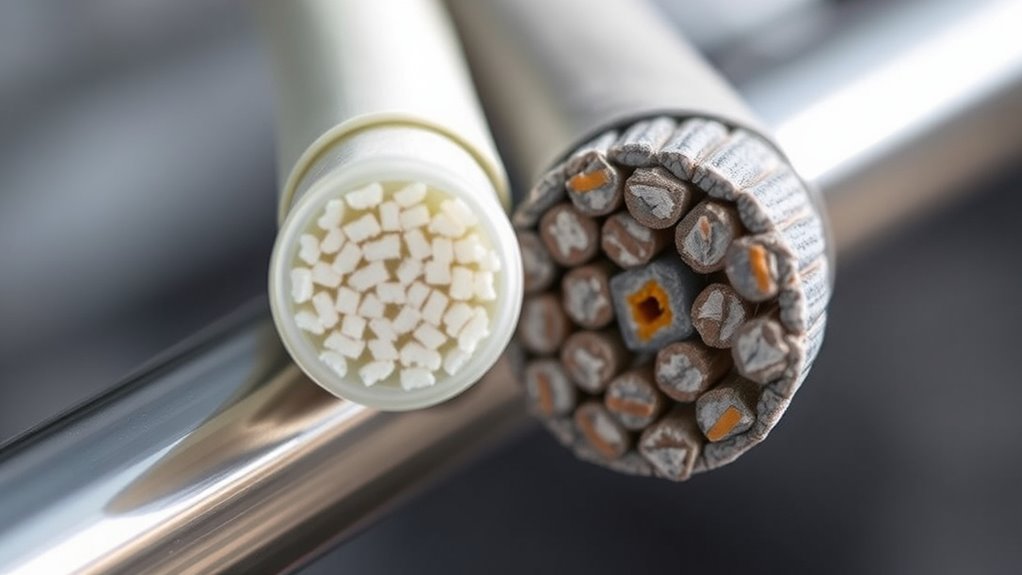
When selecting network cabling for your building, understanding the differences between plenum and riser-rated cables is essential. These distinctions impact not only the safety and compliance of your installation but also influence the overall performance and longevity of your network infrastructure. The primary difference lies in their fire safety properties, which are dictated by the materials used and their adherence to specific installation standards. Recognizing these differences helps ensure your cabling choices meet regulatory requirements and protect building occupants.
Plenum-rated cables are designed specifically to meet stringent fire safety standards required for spaces involved in air circulation, such as above drop ceilings or below raised flooring. These cables are made with fire-retardant insulation and jackets that produce minimal smoke and toxic fumes if a fire occurs. This feature is critical because in the event of a fire, smoke inhalation and toxic fumes pose significant risks. By using plenum-rated cables, you reduce these hazards and help your building comply with fire safety codes, such as those outlined by the National Fire Protection Association (NFPA). Installation standards for plenum cables are strict, requiring certification that the cables meet the necessary fire safety criteria. Failing to adhere to these standards can lead to code violations, insurance issues, and increased safety risks.
In contrast, riser-rated cables are suitable for vertical runs between floors, such as in elevator shafts or stairwells. These cables are designed to prevent the spread of fire between floors, which is a critical concern in multi-story buildings. While riser-rated cables also have fire-retardant properties, they are generally made with materials that meet less stringent standards than plenum cables. They produce less smoke and toxic fumes than non-rated cables but are not as rigorously tested for fire safety as plenum-rated options. Riser cables are typically less expensive and easier to install, making them a practical choice for non-ducted vertical runs where the risk of fire spread is a concern but where airflow is limited or controlled. Additionally, understanding resources and tools available can help you select compliant products that meet your specific building requirements.
Choosing the right cable involves understanding these distinctions and aligning your selection with local building codes and installation standards. Fire safety should be your top priority, and investing in the appropriate cabling ensures that your network infrastructure is both compliant and safe. Proper installation according to standards minimizes risks and ensures reliable performance over time. By understanding the specific fire safety features and regulatory requirements associated with plenum and riser-rated cables, you can make informed decisions that protect your building, its occupants, and your network’s integrity.
Frequently Asked Questions
Can Riser-Rated Cables Be Used in Plenum Spaces?
Riser-rated cables shouldn’t be used in plenum spaces because they don’t meet fire safety compliance for such environments. Plenum spaces require cables that follow strict installation guidelines to prevent fire hazards and toxic smoke. Using riser-rated cables in a plenum can violate building codes and compromise safety. Always choose plenum-rated cables for these areas to guarantee proper safety standards and compliance, protecting both people and property.
Are There Cost Differences Between Plenum and Riser-Rated Cables?
You might think plenum-rated cables are always pricier, but it’s not a simple rule. The cost comparison depends on installation considerations, like fire safety requirements and building codes. Plenum cables often cost more upfront because of special materials, but they could save you money long-term by reducing fire hazard risks. When planning your project, weigh these factors to determine if the higher initial investment aligns with your safety and budget goals.
How Do Fire Safety Standards Differ for These Cables?
You should know that fire safety standards differ mainly in fire safety compliance and cable certification. Plenum-rated cables meet stricter standards, including lower smoke production and flame spread, making them suitable for air-handling spaces. Riser-rated cables have less stringent requirements, focusing on preventing fire from spreading between floors. Always verify cable certification to guarantee your wiring complies with the relevant fire safety standards for your building.
Can These Cables Be Mixed in the Same Installation?
You can mix plenum and riser-rated cables in the same installation, but you must prioritize safety. While it’s technically possible, doing so can jeopardize fire safety standards and complicate code compliance. Cable mixing might lead to inadequate fire resistance or improper safety measures, risking damage or hazards. Always guarantee each cable type is installed according to its specific standards, and consult local codes to maintain supreme installation safety.
What Are the Environmental Impacts of Each Cable Type?
You should consider the environmental impact of each cable type, as plenum-rated cables often use flame-retardant, low-smoke materials that are more sustainable but can generate more chemical waste during manufacturing. Riser-rated cables tend to have a lower environmental footprint due to simpler insulation. When choosing, weigh sustainability considerations, such as recyclability and chemical emissions, to minimize ecological harm while ensuring safety and performance.
Conclusion
Choosing between plenum and riser-rated cable isn’t just about code; it’s about safety. When you install cables in air-handling spaces, you realize how a small detail can prevent smoke from spreading during a fire. It’s no coincidence that these cables are designed with safety in mind—your careful selection can make a difference in protecting lives and property. So, think about where your cables run—you’re helping create a safer, more resilient building.