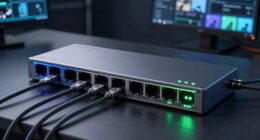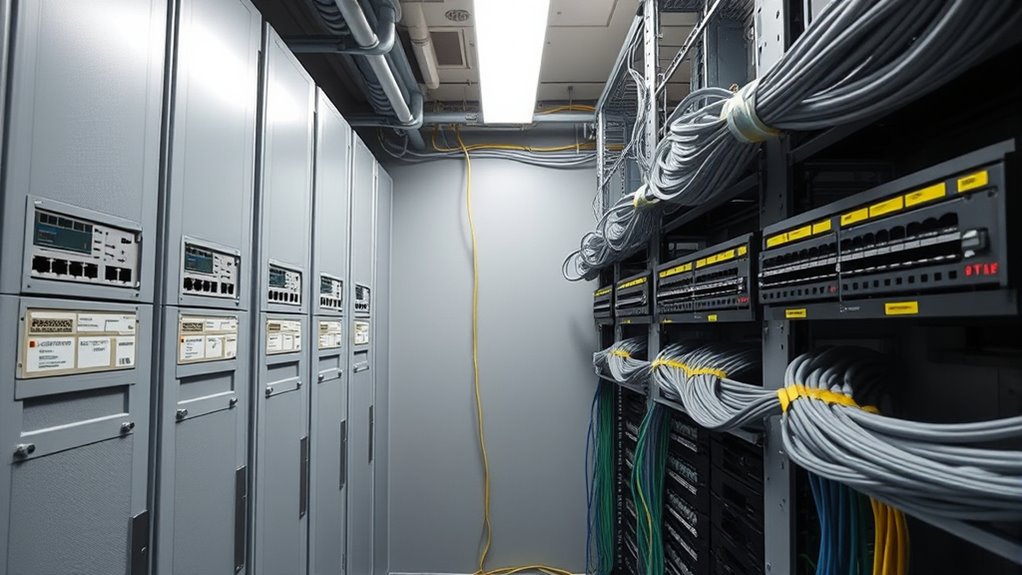

When designing a wiring closet, focus on proper cable management by using ties and labels to keep cables organized and easy to troubleshoot. Position the rack close to network devices and power sources for efficiency. Prioritize cooling with fans or ventilation to prevent overheating, and make certain there’s enough space for future equipment. Maintain a tidy, accessible layout for easy maintenance. Keep these best practices in mind to create a reliable, scalable setup that works smoothly—more tips await if you continue exploring.
Key Takeaways
- Prioritize proper cable management using ties, labels, and organized pathways to facilitate maintenance and troubleshooting.
- Position the rack for easy access, close to devices and power sources, while ensuring sufficient space for expansion.
- Ensure adequate cooling with fans or air conditioning, and locate the closet in well-ventilated, cool areas to prevent overheating.
- Keep high-density equipment centrally located and use horizontal cable managers to maintain an organized layout.
- Plan the space to optimize airflow, safety, and future growth, investing time in design to avoid costly reconfiguration later.

Designing a wiring closet is a critical step in ensuring your network runs smoothly and efficiently. One of the first considerations you need to address is cable management. Proper cable management isn’t just about keeping things tidy; it’s about creating a system that simplifies troubleshooting, reduces signal interference, and enhances airflow. Use cable ties, Velcro straps, or cable management panels to route cables neatly along designated pathways. Avoid crisscrossing wires haphazardly, as tangled cables can make maintenance frustrating and increase the risk of disconnections or damage. Label each cable clearly at both ends to quickly identify connections during upgrades or troubleshooting. This proactive approach saves you time and minimizes errors down the line.
Equally important is the placement of your equipment rack. The equipment rack should be positioned in a location that allows for easy access, proper ventilation, and minimal disruption. Ideally, you want it close enough to your network devices and power sources to reduce cable length and clutter, but not so close to walkways or high-traffic areas that it becomes a safety hazard. When placing your rack, consider airflow patterns; position it in a cool, well-ventilated space to prevent overheating. Installing a dedicated cooling solution, like fans or air conditioning, can help maintain ideal temperatures, prolonging the lifespan of your equipment. Also, ensure your rack has enough space for current devices and future expansion, so you don’t have to reconfigure your setup prematurely.
Additionally, think about the overall layout of the wiring closet. Keep high-density equipment centrally located to minimize cable lengths and signal degradation. Use horizontal cable managers within the rack to keep cables organized and prevent strain on connectors. For power management, install surge protectors and UPS units to safeguard your gear from power surges and outages. Proper placement of power outlets and ensuring they’re easily accessible can prevent the need for awkward stretching or unsafe wiring practices. Remember, a well-organized rack not only looks professional but also makes ongoing maintenance much simpler.
In essence, the key to designing an effective wiring closet lies in meticulous cable management and strategic equipment rack placement. Taking the time to plan these elements carefully can save you countless headaches later. A tidy, well-organized space improves airflow, simplifies troubleshooting, and provides a scalable foundation for your network. When you prioritize these practices from the start, you’ll ensure your network remains reliable, safe, and easy to manage, ultimately supporting your business’s or organization’s growth and operational efficiency.

VELCRO Brand 150pk Cable Ties Value Pack, 8in | Gifts for Tech Lovers | For Wire Management and Cord Organizer | Replace Zip Ties with Reusable Straps, Reduce Waste
CORD ORGANIZER TIES: Perfect for cord organization, keep your desk, office, classroom or workspace tidy with these reusable…
As an affiliate, we earn on qualifying purchases.
As an affiliate, we earn on qualifying purchases.
Frequently Asked Questions
How Often Should Wiring Closets Be Inspected and Maintained?
You should perform routine inspections and preventative maintenance on your wiring closet at least twice a year. Regular checks help identify potential issues like overheating, loose connections, or cable damage early. By staying proactive, you guarantee your system remains reliable and safe. Schedule these inspections regularly, and address any problems promptly to prevent downtime or costly repairs, keeping your wiring closet in excellent condition.
What Are the Most Common Wiring Mistakes to Avoid?
You should avoid poor cable management and improper grounding techniques, as they’re common wiring mistakes. Keep cables organized to prevent tangling and interference, using proper cable ties and labels. Guarantee grounding is correctly implemented to protect equipment and maintain safety. Never overload circuits or neglect regular inspections. By paying attention to cable management and grounding techniques, you can minimize errors, improve reliability, and ensure your wiring closet functions efficiently.
How Do I Choose the Right Cooling System for My Closet?
Imagine your wiring closet overheating during peak operation. You should evaluate ventilation options like exhaust fans or passive vents, which help maintain ideal temperature. Choose a cooling system type based on your closet size and heat load—options include air conditioning units or portable coolers. For small setups, passive ventilation may suffice, but larger or high-density environments benefit from active cooling systems to prevent equipment failure and ensure reliability.
Are There Specific Fire Safety Standards for Wiring Closets?
Yes, wiring closets must adhere to fire safety codes that specify fire prevention and suppression measures. You should guarantee compliance with sprinkler requirements, which may include installing automatic sprinklers if mandated by local regulations. Additionally, use fire-resistant materials, maintain clear access paths, and install smoke detectors. Regular inspections and adherence to these standards help protect your equipment and personnel, ensuring your wiring closet stays safe and compliant with all fire safety standards.
What Are the Best Practices for Cable Labeling and Organization?
Like an artist organizing a masterpiece, you should use clear cable labeling paired with color coding to streamline identification. Implement structured cable management to keep wires neat and accessible, avoiding chaos akin to a tangled web. Label both ends of each cable with concise descriptions, and assign specific colors for different functions or departments. This approach guarantees quick troubleshooting and efficient maintenance, making your wiring closet both professional and easy to navigate.

Rack Mount Fan – 4 Fans – 1U 19" Rackmount with Adjustable Temperature Control and Digital Display – Tupavco TP1701
Adjustable temperature control helps ensure optimal performance for rackmount such as network, server, music, and AV cabinets
As an affiliate, we earn on qualifying purchases.
As an affiliate, we earn on qualifying purchases.
Conclusion
By following these best practices, your wiring closet will be a well-oiled machine, ready to support your network for years to come. Think of it as the backbone of your entire setup—if it’s organized and maintained, everything else runs smoothly. Take the time to plan, label, and secure your cables properly, and you’ll avoid a tangled mess that’s harder to untangle than a ball of yarn. A solid wiring closet sets the stage for a reliable, efficient network.

JIQEZNL White Cable Labels, 300 Premium Wire Label Tags for Electronics, Printable Cord Labeling Tags for Ethernet and Network, Write on Labels for Cable Management
🔸【PREMIUM QUALITY】- We aim to give you the best product, manufactured cord labels with premium materials meeting flexible…
As an affiliate, we earn on qualifying purchases.
As an affiliate, we earn on qualifying purchases.

Anker Power Strip with 2100J Surge Protector, Outlet Extender, 5ft Extension Cord with Multiple Outlets, 12 AC, 2 USB A,1 USB C Port for 20W, Home Office, Dorm Room Essentials, TUV Listed
All the Power You Need: Features 12 AC outlets, 1 USB-C port, and 2 USB-A ports to give…
As an affiliate, we earn on qualifying purchases.
As an affiliate, we earn on qualifying purchases.