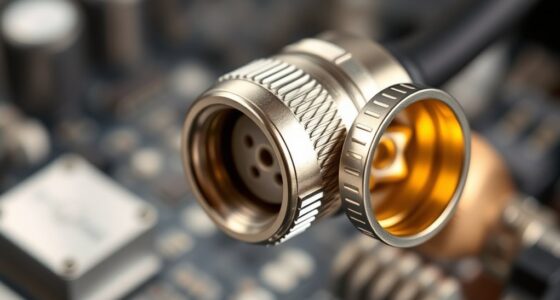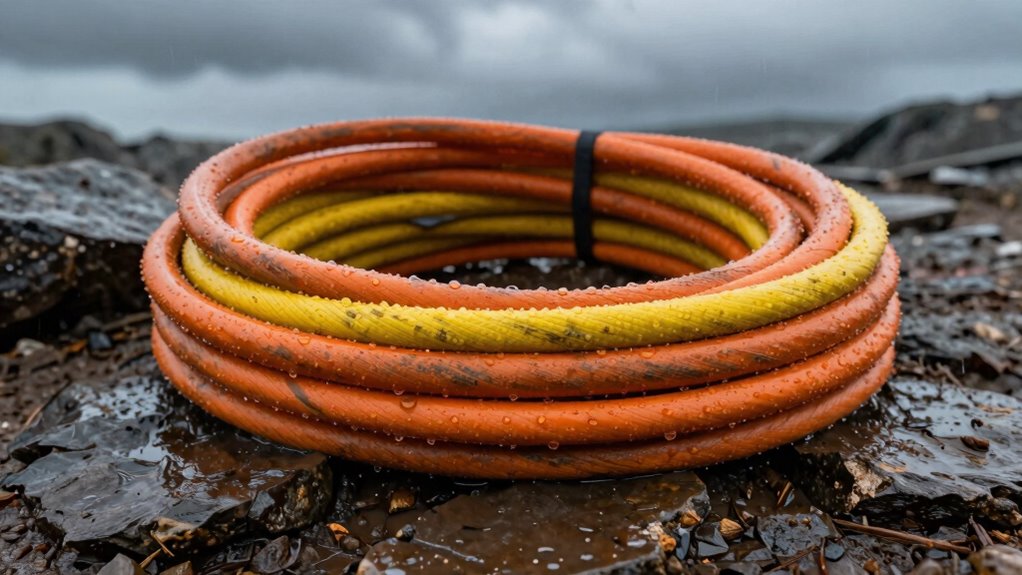

When choosing cables for harsh weather, focus on insulation and jacket materials designed to resist water, chemicals, and extreme temperatures. Look for options like rubber, polyethylene, or specialized thermoplastics that offer durability against UV exposure, moisture, and impact. Make certain the cables meet standards like UL or IEC for environmental resistance and mechanical strength. Selecting the right combination of insulation, jackets, and protective features helps maintain safety and reliability. If you want to know more, keep exploring the details behind these vital choices.
Key Takeaways
- Choose cables with insulation materials resistant to moisture, UV, chemicals, and temperature extremes for durability in harsh environments.
- Ensure cables meet standards like UL, IEC, or ASTM for mechanical strength and environmental resistance.
- Opt for jackets made of UV-resistant, chemical-resistant, and high tensile strength materials to protect against physical and chemical damage.
- Select cables rated for the specific temperature range of the environment to prevent insulation failure.
- Prioritize rugged, reinforced cables designed for mechanical resilience to withstand impacts, wind, and ice.
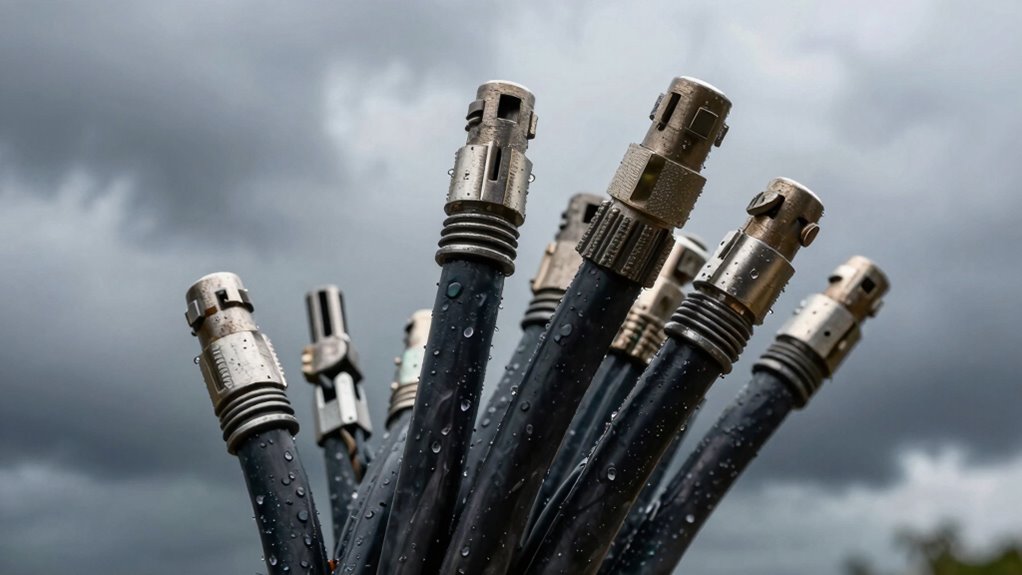
When selecting cables for harsh weather conditions, it’s crucial to choose options that can withstand extreme temperatures, moisture, and other environmental challenges. The key to making the right choice lies in understanding the insulation properties of the cables. Good insulation protects the conductors from external elements like water, chemicals, and temperature fluctuations, ensuring safety and functionality over time. For outdoor and severe environments, look for cables with insulation materials specifically designed to resist moisture ingress, UV exposure, and temperature extremes. Materials like rubber, polyethylene, or specialized thermoplastics often provide superior insulation properties suited for tough conditions.
Choose cables with durable, weather-resistant insulation for safety and reliability in harsh environments.
Beyond insulation, you need to contemplate the durability standards that the cables meet. Durability standards are benchmarks set by industry organizations to ensure cables can endure the conditions they’ll face. These standards cover aspects such as mechanical strength, resistance to chemical corrosion, and long-term stability under environmental stressors. When selecting cables, verify that they comply with recognized standards like UL, IEC, or ASTM, which indicate the product has been tested for durability in demanding environments. Cables that meet these standards are less likely to fail prematurely, reducing maintenance costs and preventing safety hazards.
You should also pay attention to the cable’s jacket material, which plays a crucial role in overall durability. For example, jackets made from UV-resistant polyethylene or thermoplastic elastomers tend to perform well outdoors, resisting cracking and degradation caused by sunlight and weather. If your application involves exposure to chemicals or oils, opt for cables with jackets designed specifically for chemical resistance. This additional layer of protection ensures the cable maintains its integrity over years of exposure, even in the toughest conditions. Additionally, selecting cables with high tensile strength can further enhance their ability to endure physical impacts and mechanical stress during installation and use. Incorporating heat resistance features can also help cables withstand high-temperature environments without degradation. It’s also important to consider the insulation properties because they determine how well the cable can resist environmental factors like moisture and temperature changes.
Temperature range is another critical factor. You want cables that can operate safely within the temperature extremes of your environment. Check the specifications for maximum and minimum operating temperatures. Cables with a wide temperature range, combined with suitable insulation and jacket materials, will provide reliable performance without risk of melting, brittle failure, or insulation breakdown. Additionally, selecting cables with 4K resolution capabilities can be advantageous if visual clarity is essential for your setup in challenging outdoor environments.
Finally, consider installation conditions. Harsh weather often means exposure to wind, ice, and physical impacts. Selecting cables with reinforced insulation and rugged outer jackets can help them resist mechanical damage. By prioritizing insulation properties and durability standards, you’re ensuring your cables can handle the environmental stresses they’ll face, reducing downtime and maintaining safety over the long haul. Properly rated cables can also simplify installation in demanding conditions, saving time and reducing potential hazards.

16/3 10A 125V 1250W 100 Ft Outdoor Extension Cord Waterproof, Weatherproof & Flame Retardant Black 3 Prong Power Cord Outside for Lawn & Garden, SJTW ETL Listed
- Safety Certified: ETL listed with high voltage testing
- Robust Construction: Copper core, thick insulation, flame retardant jacket
- Weatherproof & Durable: Waterproof, UV resistant, abrasion-resistant for outdoor use
As an affiliate, we earn on qualifying purchases.
As an affiliate, we earn on qualifying purchases.
Frequently Asked Questions
How Do I Prevent Cable Corrosion in Salty Environments?
To prevent cable corrosion in salty environments, you should choose cables with durable cable insulation that resists moisture and salt exposure. Apply corrosion-resistant coatings to protect the metal parts, and ensure proper sealing at connection points. Regularly inspect and clean the cables to remove salt buildup. Using high-quality, weatherproof cables designed for harsh conditions can considerably extend their lifespan and maintain reliable performance in salty, corrosive environments.
Are There Specific Cables for Extreme Cold Temperatures?
Yes, there are specific cables designed for extreme cold temperatures. You should look for cables with insulation made from temperature-resistant materials like thermoplastic or silicone, which maintain flexibility and performance in freezing conditions. These cables are engineered to withstand low temperatures without becoming brittle or cracking. Always check the manufacturer’s specifications to guarantee the cable’s insulation and materials are rated for the extreme cold you expect, ensuring safety and durability.
How Often Should I Inspect Cables After Severe Storms?
After severe storms, you should inspect your cables at least once a week to guarantee insulation integrity and connector stability. Look for cracks, fraying, or water damage that could compromise performance. Regular inspections help catch issues early, preventing outages or safety hazards. Always turn off power before inspecting, and consider professional assessments for thorough checks, especially if you notice any signs of wear or damage.
Can Regular Cables Withstand Prolonged Exposure to UV Rays?
You might think regular cables can withstand prolonged UV exposure, but they often can’t. UV resistance is vital for maintaining cable durability in harsh weather. Without proper protection, UV rays can degrade the cable’s insulation, leading to cracks and failures. To guarantee longevity, choose cables specifically designed with UV-resistant materials. This way, you safeguard your setup against sun damage and extend the lifespan of your cables in outdoor, sunny environments.
What Are the Signs That a Cable Needs Replacement After Weather Damage?
You’ll know a cable needs replacing after weather damage if you notice frayed or cracked insulation, which compromises protection. Look for exposed wires or discoloration, indicating deterioration. Reduced connection stability, frequent disconnections, or inconsistent performance also signal damage. Damaged cable insulation weakens weather resistance, making your connection unreliable. Address these signs promptly to prevent further damage and guarantee your cables maintain durability and proper connection stability during harsh conditions.

Outdoor Extension Cord Waterproof 16/3 25 FT, Black 3 Prong Power Cord Outside for Lawn & Garden, 13 Amps 1625 Watts 125 VAC 16AWG SJTW, ETL Listed
- Safety Certified and Tested: ETL listed with high voltage testing
- Robust Construction: Copper core, thick insulation, flame retardant
- Weatherproof and Waterproof: IP65 rated for outdoor use
As an affiliate, we earn on qualifying purchases.
As an affiliate, we earn on qualifying purchases.
Conclusion
When choosing cables for harsh weather, prioritize durability and weather resistance to guarantee longevity. Did you know that cables rated for extreme conditions can last up to 50% longer than standard ones? This means fewer replacements and less hassle during storms or freezing temperatures. By selecting the right cable, you protect your equipment and ensure reliable performance in any weather. Invest wisely—your equipment depends on it, especially when Mother Nature throws her worst at you.

Armpow 18 inch Black Zip Ties Heavy Duty 100 PACK, 220 LBS Ultra Exclusive Strong Plastic Wire Ties, Large Cable Ties Extra Long Tie Wraps, Indoor and Outdoor UV Resistant
- Heavy-Duty Strength: 220 lbs tensile capacity
- Large Size: 18 inch / 450mm length
- Wide and Thick Design: 9mm width for durability
As an affiliate, we earn on qualifying purchases.
As an affiliate, we earn on qualifying purchases.

NAOEVO 18 Gauge 5 Conductor Wire, Tinned Copper Automotive Wire, 100FT
- High Conductivity: Oxygen-free tinned copper core
- Wire Specifications: 18 AWG, waterproof IP68, 600V rated
- Temperature Range: -22°F to 221°F
As an affiliate, we earn on qualifying purchases.
As an affiliate, we earn on qualifying purchases.