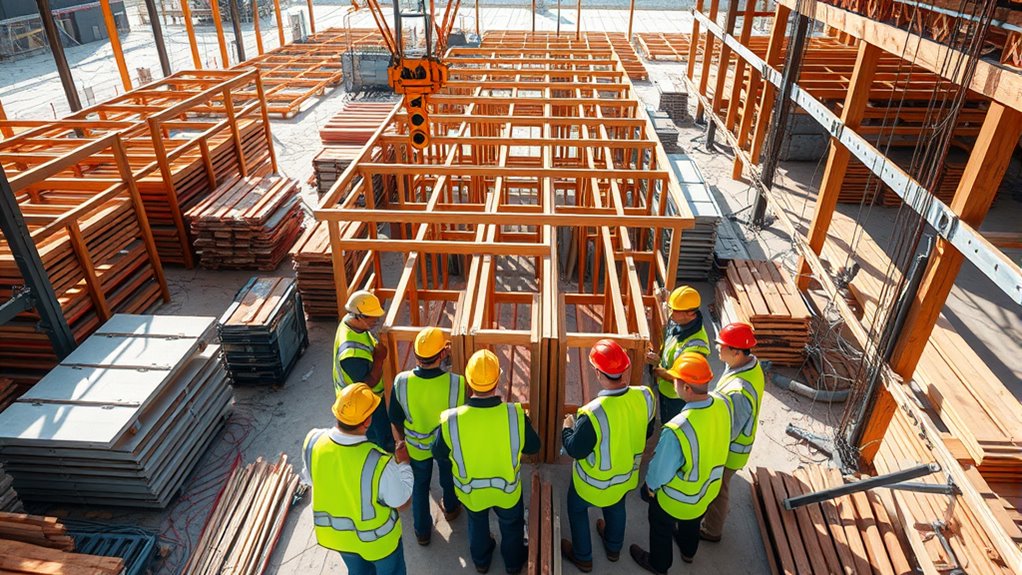

Effective coordination with other trades during a build is vital to keep projects running smoothly and on schedule. By establishing clear communication early, using shared tools, and aligning schedules, you can prevent conflicts and delays. Regular meetings help identify issues before they escalate, but the key lies in maintaining open dialogue and a defined chain of command. How you manage these interactions can make or break the project’s success.
Key Takeaways
- Establish clear communication channels early, using meetings and shared digital tools to keep all trades informed of schedules and updates.
- Align work schedules during planning to identify overlaps, gaps, and prevent bottlenecks in the construction timeline.
- Use shared calendars and real-time project management software for transparent coordination and immediate conflict detection.
- Foster open dialogue and quick conflict resolution through a defined chain of command and regular progress reviews.
- Maintain disciplined communication and proactive updates to ensure smooth integration of building components across trades.
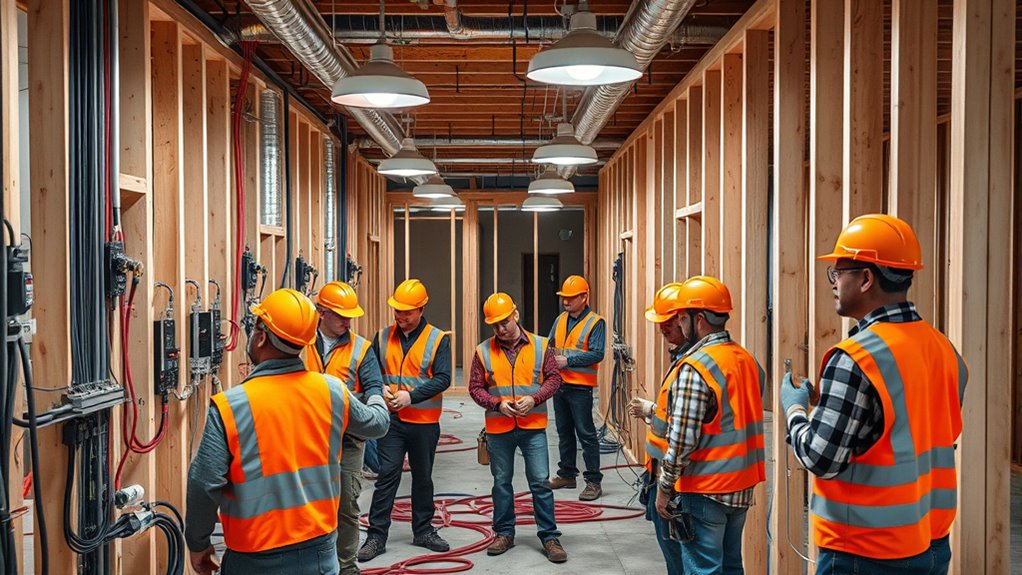
Effective coordination with other trades is crucial to guarantee your project runs smoothly and on schedule. When working alongside different teams—whether electricians, plumbers, HVAC specialists, or carpenters—you need to stay ahead of potential issues like scheduling conflicts that could delay the entire build. The key to preventing these setbacks lies in establishing clear communication protocols early in the project. These protocols serve as the foundation for sharing schedules, updates, and changes efficiently, reducing misunderstandings that often lead to delays.
Start by aligning your schedule with those of other trades right from the planning phase. Understand their timelines and workflows so you can identify overlaps or gaps that might cause bottlenecks. Regularly updating and sharing your schedule helps everyone stay informed and adapt to changes quickly. This proactive approach minimizes the chances of scheduling conflicts, which tend to arise when teams operate in silos or lack visibility into each other’s activities. When conflicts do occur, addressing them swiftly depends on your ability to communicate effectively. Use clear, direct language, and confirm shared understanding during meetings or written exchanges to avoid assumptions that could lead to errors or missed deadlines.
Align schedules early, communicate clearly, and share updates to prevent conflicts and keep projects on track.
Implementing structured communication protocols is essential. This might involve daily or weekly coordination meetings, digital project management tools, or shared calendars that everyone can access. These tools facilitate real-time updates and ensure all trades are aware of upcoming tasks, changes, or issues. When everyone sticks to the agreed-upon protocols, it becomes easier to spot potential conflicts early and resolve them before they escalate. For example, if an electrician needs to install wiring, but the framing isn’t complete, timely communication allows the carpenters to adjust their schedule, preventing rework or idle time.
Furthermore, establishing a clear chain of command ensures that questions or issues are directed to the right person immediately, avoiding miscommunication or delays in decision-making. Encourage open dialogue and foster a culture where trades feel comfortable raising concerns as soon as they arise. This openness allows you to address conflicts before they impact the schedule markedly. Remember, effective coordination isn’t just about avoiding conflicts; it’s about creating a collaborative environment where each trade understands their role within the larger project. When communication is prioritized and schedules are managed transparently, your build progresses more efficiently, with fewer surprises or costly delays. Maintaining awareness of building components and their integration within the project further enhances coordination efforts. When communication is disciplined and conflicts are managed proactively, you set the stage for a successful, on-time project completion.
Frequently Asked Questions
How Early Should Coordination Begin in a Construction Project?
You should start coordination during pre-construction planning, ideally as early as possible. Early trade integration helps identify potential conflicts and streamlines the process. By involving different trades from the beginning, you guarantee smoother collaboration, reduce delays, and improve overall project efficiency. Starting early also allows you to address design issues proactively, saving time and costs while fostering better communication among all team members.
What Are Common Challenges When Coordinating Multiple Trades?
Like a well-oiled machine, coordinating multiple trades can be tricky. You’ll face challenges with trade sequencing, ensuring each team hits their mark without delays. Safety protocols must be strictly followed to prevent accidents, especially in tight spaces. Communication breakdowns, conflicting schedules, and scope overlaps often cause confusion. Staying proactive, clear, and organized helps you navigate these issues, keeping the project on track and everyone safe.
How Do Communication Breakdowns Impact Project Timelines?
Communication breakdowns cause delays by creating barriers that hinder timely information sharing. When you face communication barriers or information silos, trades may wait on vital details, leading to missed deadlines or rework. These issues disrupt the project flow, causing frustration and costly downtime. To stay on schedule, you need clear, consistent communication channels, ensuring everyone is informed and aligned throughout the build process.
What Tools Assist in Effective Trade Coordination?
You can use digital scheduling tools and collaborative platforms to improve trade coordination. Digital scheduling helps you keep everyone on the same page with real-time updates and clear timelines. Collaborative platforms enable seamless communication, file sharing, and issue tracking among trades, reducing misunderstandings. By leveraging these tools, you guarantee smoother workflows, minimize delays, and foster better teamwork across all trades involved in the build.
How Is Conflict Resolution Handled Between Trades?
When conflicts escalate on a build, you step in as the peacemaker. You handle dispute resolution by calmly addressing issues, encouraging open dialogue, and finding common ground. You keep things professional, avoid blame, and aim for solutions that satisfy everyone. Think of yourself as the referee in a friendly game—diffusing tension quickly, so work can continue smoothly without unresolved disputes turning into full-blown conflicts.
Conclusion
By working together like pieces of a well-oiled machine, you guarantee every trade moves in harmony, avoiding jams and delays. Clear communication acts as the steady beat that keeps everyone in sync, while proactive adjustments are the navigational compass guiding the project smoothly forward. When you foster open dialogue and align schedules, you build a strong fabric of collaboration—turning the chaotic puzzle of construction into a masterful masterpiece, shining brightly at project’s end.