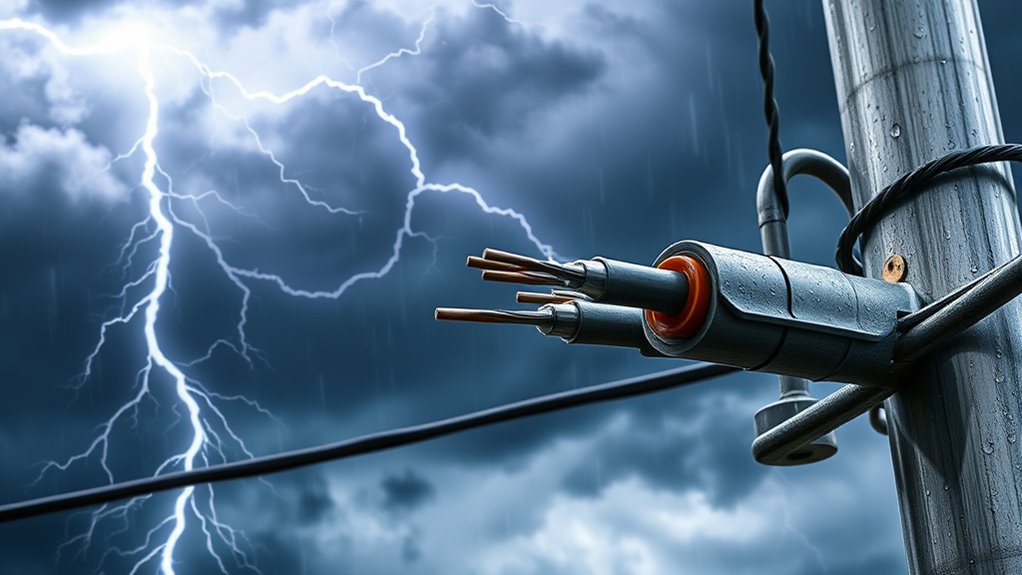
Protecting outdoor cabling from lightning strikes is essential to avoid costly damage and network downtime. Proper grounding and surge suppression can considerably reduce risks, but implementing these systems requires careful planning and ongoing maintenance. If you’re responsible for outdoor infrastructure, understanding the best practices and equipment options can make a difference. Curious about how to ensure your cables stay safe during thunderstorms? Keep exploring the key strategies that can safeguard your network effectively.
Key Takeaways
- Install grounding rods and plates connected with heavy-gauge copper wire to safely dissipate lightning energy.
- Use outdoor-rated surge suppressors at entry points and near critical network equipment to absorb voltage spikes.
- Ensure all grounding connections are tight, corrosion-resistant, and inspected regularly for optimal protection.
- Combine grounding systems with surge suppressors for comprehensive lightning risk mitigation.
- Conduct routine inspections, especially after severe weather, to maintain the integrity of the grounding and surge protection systems.

Outdoor cabling is susceptible to lightning strikes, which can cause severe damage and disrupt your network. When a lightning bolt hits nearby, the electrical surge can travel through your cables, damaging equipment or causing data loss. To safeguard your outdoor cabling effectively, you need to understand and implement proper grounding techniques and use surge suppressors. These measures help redirect dangerous electrical energy away from your equipment, minimizing the risk of costly repairs and downtime.
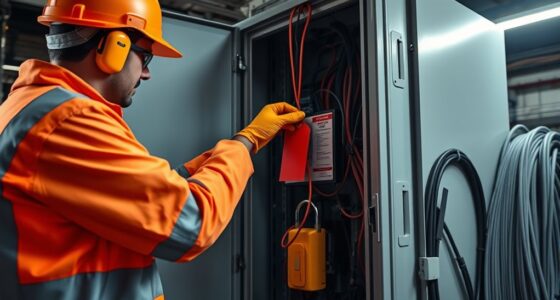
Grounding techniques are the foundation of outdoor lightning protection. Proper grounding provides a safe path for electrical surges to dissipate into the earth instead of traveling along your cables and damaging your devices. You should connect your outdoor cables to a grounding system that includes grounding rods or plates driven into the soil. Use heavy-gauge grounding wire, typically copper, to create a low-resistance connection between your network hardware and the grounding system. Make sure all connections are tight and corrosion-resistant, as corrosion can increase resistance and reduce effectiveness over time. Regular inspections are essential to guarantee your grounding system remains intact and functional, especially after severe weather events. Effective grounding not only protects your equipment but also reduces the risk of electrical shock hazards for anyone working around your outdoor infrastructure.
In addition to grounding, surge suppressors are crucial for safeguarding your cabling. These devices are designed to absorb and divert excess voltage caused by lightning strikes or power surges. Install surge suppressors at critical points, such as where your outdoor cables enter buildings, or near your main network equipment. Look for surge suppressors rated for outdoor use and capable of handling high-energy surges. When selecting these devices, consider their joule rating, which indicates how much energy they can absorb before failure. High-quality surge suppressors can prevent voltage spikes from reaching your sensitive equipment, protecting your network from catastrophic damage. Remember that surge suppressors are most effective when combined with proper grounding; they work together to create a thorough lightning protection system.
Frequently Asked Questions
Can Lightning Strikes Damage Underground Outdoor Cables?
Lightning strikes can damage underground outdoor cables, especially if they’re not properly protected. When lightning hits, it can cause power surges that travel through the cables. To prevent this, you should use a ground spike to divert the lightning’s energy safely into the ground and install surge protectors to block excess voltage. These steps help minimize the risk of damage and keep your outdoor cables safe during storms.
How Often Should Lightning Protection Systems Be Inspected?
Think of lightning protection systems like your car’s brakes — they need regular checks to keep you safe. You should inspect your protection system at least twice a year and after any severe storms. Following a consistent maintenance schedule ensures any damage is caught early, preventing costly repairs. Regular inspections help maintain ideal performance, just like routine car maintenance keeps you safe on the road.
Are There Specific Materials Best for Outdoor Cable Insulation?
For outdoor cables, you should choose insulation materials like polyethylene, PVC, or thermoplastic elastomers, which are known for their durability and weather resistance. These materials guard your outdoor cable from moisture, UV rays, and temperature fluctuations. Selecting the right insulation guarantees your cable remains reliable and safe over time. Always verify that the insulation materials meet industry standards for outdoor use to maximize protection and longevity.
What Are the Signs of Lightning Damage on Outdoor Cabling?
Lightning damage on outdoor cabling often shows as visible signs like scorch marks, melted insulation, or broken connectors. You might notice cable corrosion and insulation degradation, which act like silent alarms warning you of hidden damage. These issues can weaken the cable’s performance over time. Keep an eye out for frayed or discolored wires and unexplained connectivity problems—these signs tell you it’s time for a thorough checkup to prevent further damage.
Does Weather Affect the Effectiveness of Lightning Protection Equipment?
Weather impacts the effectiveness of lightning protection equipment, so you should regularly inspect and maintain it. Harsh conditions like heavy rain, snow, and strong winds can challenge equipment durability, potentially reducing its ability to divert lightning safely. By choosing weather-resistant materials and ensuring proper installation, you bolster protection. Keep an eye on weather patterns and perform routine checks to ensure your lightning protection system remains reliable in all conditions.
Conclusion
Just as Prometheus brought fire safely to humans, you must channel lightning’s power away from your outdoor cables. By installing proper grounding, surge suppressors, and conducting regular checks, you create a shield that protects your equipment and data from nature’s fury. Remember, a well-maintained lightning protection system isn’t just about avoiding damage; it’s about safeguarding your network’s future—turning a potential disaster into a story of resilience and foresight.