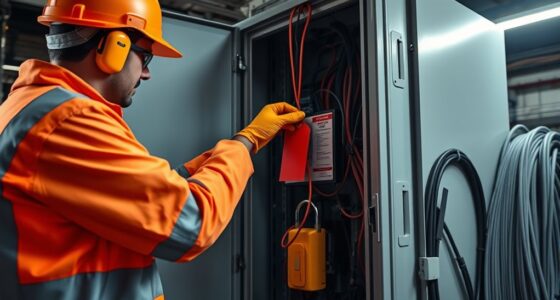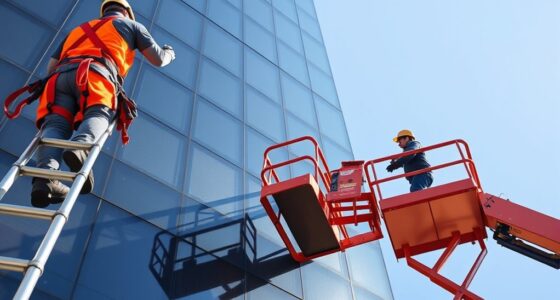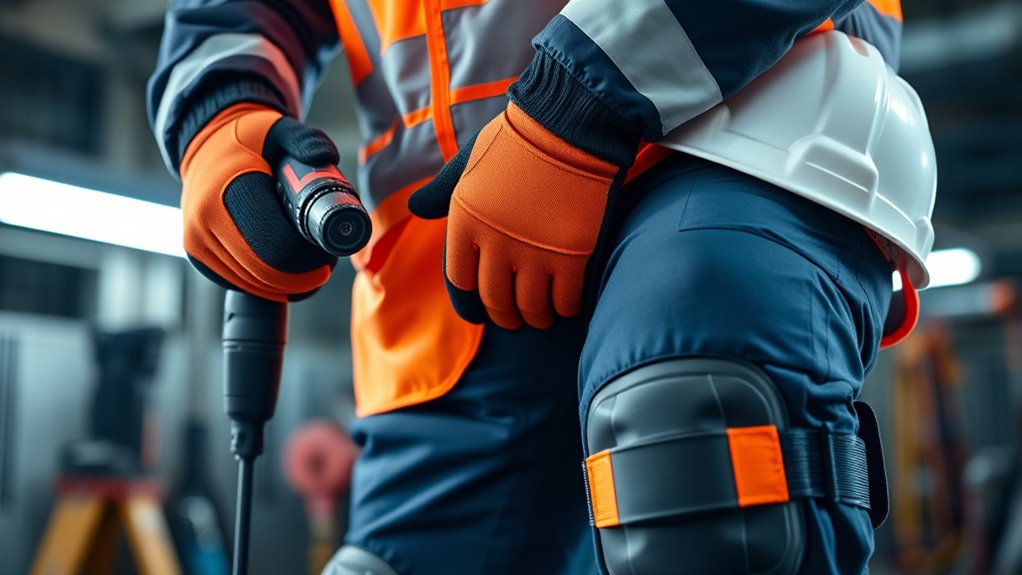

When you’re working as an installer, safety should always come first, and that’s where personal protective equipment (PPE) plays a key role. The right gear helps protect you from common hazards like falling objects, sharp tools, or chemical splashes, especially when working at heights or with heavy components. But knowing which PPE to wear and how to keep it in good condition can make all the difference. Are you confident you’re fully equipped for every task?
Key Takeaways
- Installers should wear safety footwear with steel toes and slip-resistant soles to protect against falling objects and slips.
- Impact-resistant eyewear is essential to shield eyes from dust, debris, sparks, and chemical splashes during installation.
- Helmets, gloves, and high-visibility clothing help prevent injuries and ensure visibility in busy or hazardous work environments.
- Regularly inspect and replace damaged PPE to maintain optimal protection and compliance with safety standards.
- Incorporating PPE use and robotics automation can further reduce risks and enhance overall safety for installers.
When installing equipment or working at heights, wearing the right personal protective equipment (PPE) is essential to keep yourself safe. Among the critical gear you need are safety footwear and protective eyewear. Safety footwear isn’t just about comfort; it’s about protecting your feet from falling objects, sharp debris, or accidental impacts. Heavy-duty boots with steel toes provide a sturdy barrier against crushing injuries and punctures, which are common hazards in installation environments. Good safety footwear also offers slip-resistant soles, helping you maintain footing on slippery or uneven surfaces, reducing the risk of falls. Investing in quality safety shoes ensures you stay stable and protected as you navigate complicated or cluttered work sites.
Wearing safety footwear protects your feet from falling objects, impacts, and slips on uneven surfaces.
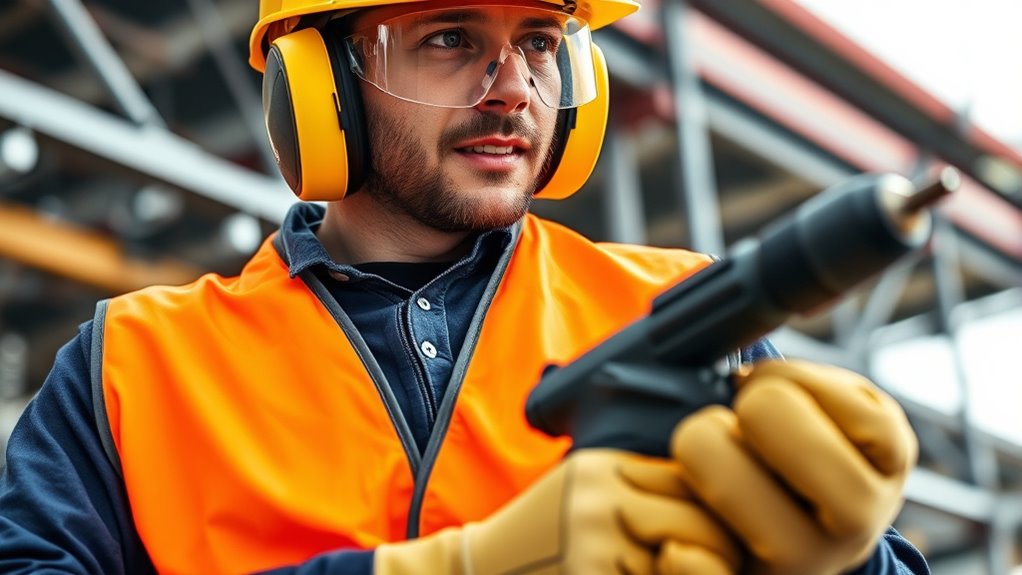
Protective eyewear is equally vital because your eyes are highly vulnerable to injury. During installations, you encounter dust, sparks, flying debris, or accidental splashes of chemicals or liquids. Without proper protective eyewear, these hazards can cause serious eye injuries, some of which might result in temporary or permanent vision loss. Safety glasses or goggles with impact-resistant lenses shield your eyes effectively, allowing you to work confidently without worrying about unexpected projectiles or irritants. When selecting protective eyewear, opt for designs that fit snugly and don’t fog up easily, so your vision remains clear and unobstructed throughout your task. Remember, eye injuries can happen in an instant, so always wear your protective eyewear whenever exposed to potential hazards.
In addition to safety footwear and protective eyewear, PPE includes gloves, helmets, ear protection, and high-visibility clothing—all designed to minimize injury risks. However, the two items mentioned are often overlooked despite their importance. Proper safety footwear ensures your feet stay protected from heavy objects and accidental impacts, while protective eyewear guards your vision against flying debris and particles. When you wear the correct PPE consistently, you markedly reduce the chances of injury, which means fewer delays, medical expenses, and discomfort.
Furthermore, incorporating robotics automation in installation processes can enhance safety by reducing the need for workers to perform hazardous tasks manually. Always inspect your PPE before use. Worn-out safety footwear can lose its protective qualities, and scratched or cracked eyewear can impair your vision. Make sure your safety shoes fit well and have no damage, and that your protective eyewear is clean and free from scratches. Remember, PPE isn’t just a requirement; it’s a critical part of your safety protocol. By prioritizing proper safety footwear and protective eyewear, you shield yourself from common hazards and guarantee you can focus on your work with confidence and peace of mind.

Timberland PRO Men's Pit Boss 6 Inch Steel Safety Toe Industrial Work Boot, Brown-2024 New, 10.5
- Comfort System: 24/7 support reduces foot fatigue
- Steel Safety Toe: Meets ASTM impact and compression standards
- Electrical Hazard Protection: Protects against live electrical circuits
As an affiliate, we earn on qualifying purchases.
As an affiliate, we earn on qualifying purchases.
Frequently Asked Questions
How Do I Choose the Right PPE for Specific Installation Tasks?
To choose the right PPE for specific installation tasks, you should conduct a thorough installation task analysis to identify potential hazards. Use PPE selection criteria based on this analysis, considering factors like protection level, comfort, and fit. Always prioritize equipment that shields you from physical, chemical, or electrical risks relevant to the task. Regularly review and update your PPE choices to guarantee maximum safety and compliance with current standards.
Are There PPE Standards Specific to the Installation Industry?
Think of PPE standards like a safety net; without it, you risk falling. In the installation industry, specific standards like OSHA and ANSI set the regulations for PPE compliance. These guidelines guarantee your gear meets safety requirements, reducing injury risks. Staying updated with industry regulations helps you select the right PPE, ensuring you’re protected while on the job and compliant with legal standards.
How Often Should PPE Be Inspected and Replaced?
You should inspect your PPE regularly—ideally before each use—to maintain ppe compliance and guarantee safety. Replace equipment immediately if it shows signs of damage or wear, such as tears, cracks, or deterioration. Conduct thorough ppe maintenance at least annually or following any incident that compromises its integrity. Staying vigilant helps protect you and keeps your PPE in top condition, preventing potential hazards on the job site.
Can PPE Be Customized for Individual Installer Needs?
Yes, you can personalize PPE for your needs, creating a perfect fit like a tailored suit. Custom fit PPE with ergonomic design guarantees comfort and safety, adapting to your unique movements and body shape. This personalized approach minimizes fatigue and maximizes protection, making your work feel less like a chore and more like a seamless extension of yourself. Talk to suppliers about options for customizing PPE to suit your specific requirements.
What Are the Common PPE Mistakes to Avoid During Installation?
You should always guarantee your PPE fits properly to provide full protection and avoid discomfort. Avoid wearing damaged or outdated gear, as it compromises safety. Regularly inspect and maintain your PPE to keep it in good condition. Don’t neglect proper fitting, which can lead to slips or exposure. Always follow safety protocols, replace worn-out equipment promptly, and clean your PPE regularly to prevent contamination.

TICONN Anti-Fog Safety Glasses for Men and Women, ANSI Z87.1 Scratch Proof Eye Goggles with Adjustable Arms and UV Protection (Clear, 1PK)
- Durable Polycarbonate Construction: Impact-resistant and lightweight design
- Anti-Fog and UV Protection: Scratch-resistant, clear vision, blocks 99.9% UV
- Adjustable and Comfortable Fit: Rubber frame, nose pads, adjustable temples
As an affiliate, we earn on qualifying purchases.
As an affiliate, we earn on qualifying purchases.
Conclusion
Remember, your safety gear is your shield against the unseen dangers of installation work. When you wear the right PPE, you’re not just protecting yourself—you’re embracing a duty to stay safe and confident on the job. Think of PPE as your armor in a battlefield; without it, you’re vulnerable. Prioritize regular inspections and proper use, and you’ll turn risks into mere shadows, allowing you to focus on your work with clarity and peace of mind.
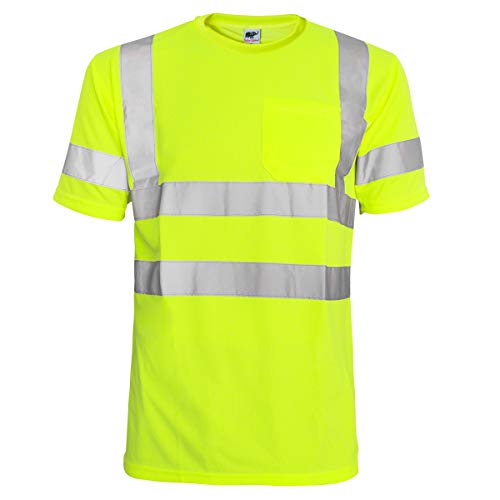
L&M Hi Vis T Shirt ANSI Class 3 Reflective Safety Lime Short Sleeve HIGH Visibility (XL)
- Material: 100% polyester moisture-wicking knit
- Reflective Stripes: Sewn-on premium reflective striping
- Design: Left chest pocket, short & long sleeves
As an affiliate, we earn on qualifying purchases.
As an affiliate, we earn on qualifying purchases.

SAFEBUILDER ABS Work-at-Height and Rescue Hard Hat Construction Safety Helmet Slotted Ventilated w/Adjustable Ratchet 6-Point Suspension ANSI Z89.1-14 (01-White Safety Helmet)
- Comfortable Fit: Adjustable head size 53-63cm with 6-point suspension
- Secure Fit: Y-type chinstrap keeps helmet fixed during work
- Humanized Design: Multiple adjustments for a custom fit and comfort
As an affiliate, we earn on qualifying purchases.
As an affiliate, we earn on qualifying purchases.