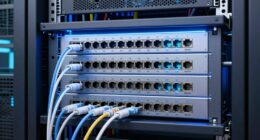
While a large, unified network might seem easier to manage, it also presents a significant security risk. Network segmentation offers a way to isolate sensitive data and critical systems, reducing the chances of widespread damage if an attacker gains access. The question is, how can you effectively implement segmentation to protect your assets without complicating your infrastructure? Understanding the key strategies and best practices can make all the difference.
Key Takeaways
- Dividing networks into isolated segments limits malware spread and contains breaches.
- Implementing strict access controls ensures only authorized users access sensitive segments.
- Using VLANs and micro-segmentation enhances control over network traffic and security boundaries.
- Regular audits and multi-factor authentication strengthen segmentation defenses.
- Network segmentation creates barriers that slow or prevent attacker movement within the network.

Network segmentation is a fundamental security practice that divides a larger network into smaller, isolated segments to improve control and reduce the risk of cyber threats. When you implement segmentation, you create boundaries within your network, which makes it harder for malicious actors to move freely if they gain access. This approach not only limits the spread of malware but also enhances your ability to monitor and respond to security incidents effectively. To make segmentation work effectively, you need to focus on access controls—these are the policies and mechanisms that determine who can access each segment and what actions they can perform. Proper access controls ensure that only authorized users or devices can connect to sensitive parts of your network, reducing the chances of insider threats or compromised accounts.
Segmentation strategies come in various forms, from simple VLANs (Virtual Local Area Networks) to more complex micro-segmentation approaches that use software-defined networking. Your choice depends on your network’s size, complexity, and security requirements. For example, isolating your financial systems from general user traffic prevents accidental or malicious access that could lead to data breaches. Similarly, segmenting guest Wi-Fi from core business operations ensures visitors can access the internet without compromising your internal resources. When designing these strategies, you need to think about the sensitivity of data stored within each segment and apply appropriate access controls accordingly. This way, you can enforce strict policies on critical segments while allowing more relaxed access for less sensitive areas.
Implementing security best practices such as regular audits and updates can further strengthen your segmentation strategy, ensuring ongoing protection against emerging threats. In practice, segmentation strategies work best when paired with robust access controls. For instance, multi-factor authentication (MFA) can add an extra layer of security for accessing sensitive network segments. Role-based access controls (RBAC) allow you to assign permissions based on user roles, minimizing the risk of privilege escalation. Regular reviews of access rights ensure that only current, authorized personnel can reach specific network segments, preventing outdated or unnecessary permissions from lingering. Combining segmentation with these controls means that even if an attacker breaches one part of your network, they won’t necessarily gain access to everything. Instead, they encounter multiple barriers that slow down or stop their progress.

EWIND 2025 Upgraded 5 Port Gigabit Ethernet Switch with LED&VLAN Isolation, Lifetime Protection, Plug & Play Unmanaged Network Switch, Fanless Quiet, Desktop/Wall Mount Metal Ethernet Splitter
🥇【Plug & Play with Dual-Color LEDs】This gigabit switch have instant network expansion with 5 auto-sensing 10/100/1000Mbps ports. This…
As an affiliate, we earn on qualifying purchases.
As an affiliate, we earn on qualifying purchases.
Frequently Asked Questions
How Does Network Segmentation Impact Overall Network Performance?
Network segmentation can improve overall network performance by reducing congestion through traffic isolation. By dividing your network into smaller segments, you manage latency more effectively, ensuring data flows smoothly within each segment. This minimizes delays and prevents traffic bottlenecks, leading to faster, more reliable connections. While segmentation requires proper planning, it ultimately enhances performance by optimizing traffic management and keeping critical systems responsive.
What Are Common Challenges Faced During Network Segmentation Implementation?
Ironically, the biggest challenge in implementing network segmentation is making access control and policy enforcement seamless. You might face hurdles like inconsistent policies, legacy systems that resist segmentation, or difficulty coordinating across teams. These issues often turn simple goals into complex puzzles, risking security gaps if not handled carefully. Staying vigilant, updating policies regularly, and ensuring everyone understands access controls can help you overcome these common obstacles.
Which Industries Benefit Most From Network Segmentation Strategies?
You’ll find that finance, healthcare, and retail industries benefit most from network segmentation strategies. These industry sectors handle sensitive data and face strict compliance requirements, making segmentation essential for protecting customer information and ensuring regulatory adherence. By implementing segmentation, you can limit access, reduce attack surfaces, and meet industry standards more effectively, ultimately strengthening your security posture and safeguarding critical assets across your organization.
How Does Segmentation Affect Remote and Cloud-Based Access?
Segmentation enhances remote access and cloud security by creating clear boundaries, so you control who enters each segment. It streamlines remote access, making it safer and easier for authorized users to reach necessary resources without exposing sensitive data. For cloud-based systems, segmentation isolates critical assets, reducing risks and limiting breaches. This layered approach guarantees your remote and cloud environments stay protected, while maintaining seamless, secure connectivity for your team.
What Are Best Practices for Maintaining Segmented Networks?
To maintain segmented networks effectively, you should implement strict access control, guaranteeing only authorized users can reach specific segments. Regularly review and update these controls to adapt to evolving threats. Maintain segment isolation by using firewalls and VLANs, preventing lateral movement if a breach occurs. Additionally, monitor network activity continuously for unusual behavior, and keep your segmentation infrastructure updated with the latest security patches to ensure ongoing protection.

Programming the BBC micro:bit: Getting Started with MicroPython
As an affiliate, we earn on qualifying purchases.
As an affiliate, we earn on qualifying purchases.
Conclusion
By implementing network segmentation, you create a fortress that’s nearly impenetrable, drastically reducing your chances of a devastating breach. You control access, limit malware spread, and make it far harder for attackers to move laterally. Regular audits and strong access controls keep your defenses razor-sharp. Embrace these best practices, and you’ll turn your network into an unbreakable barrier—protecting your data like a superhero guarding a priceless treasure. Stay vigilant and secure!

Yubico – YubiKey 5C NFC – Multi-Factor authentication (MFA) Security Key and passkey, Connect via USB-C or NFC, FIDO Certified – Protect Your Online Accounts
POWERFUL SECURITY KEY: The YubiKey 5C NFC is the most versatile physical passkey, protecting your digital life from…
As an affiliate, we earn on qualifying purchases.
As an affiliate, we earn on qualifying purchases.

Network Access Control For Dummies
As an affiliate, we earn on qualifying purchases.
As an affiliate, we earn on qualifying purchases.