
Imagine a company redesigning its products so that they can be easily repaired, reused, or recycled after use. Implementing circular economy principles involves more than just this shift; it requires rethinking entire supply chains, establishing take-back schemes, and fostering collaborations with suppliers and consumers. These changes can markedly reduce waste and costs while boosting sustainability. Exploring how to make these transformations work for your organization could reveal new opportunities for resilience and growth.
Key Takeaways
- Redesign products for repairability, upgradeability, and disassembly to extend lifespan and facilitate recycling.
- Establish take-back schemes and refurbishment programs to close the material loop.
- Collaborate with suppliers, partners, and consumers to promote reuse, recycling, and sustainable material sourcing.
- Educate consumers on proper disposal and participation in waste reduction initiatives.
- Embed circular economy principles into long-term business strategies to enhance resilience and competitiveness.
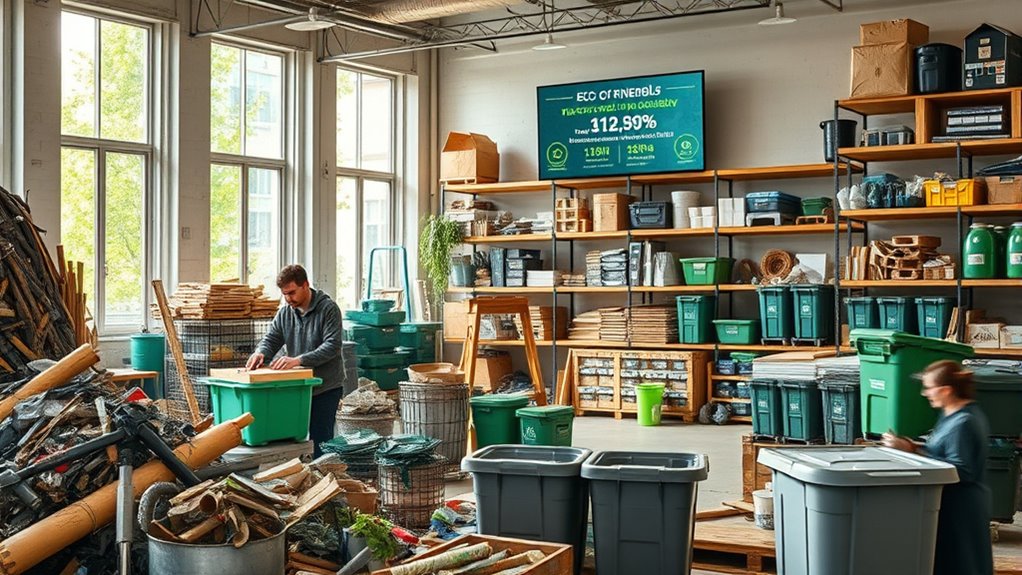
Implementing circular economy principles offers a strategic way to reduce waste and maximize resource efficiency. When you adopt this approach, you shift your focus from the traditional linear model—where products are made, used, and discarded—to a more sustainable cycle that emphasizes reuse, refurbishment, and recycling. This shift isn’t just about environmental benefits; it also makes good business sense. By minimizing waste, you lower disposal costs and reduce reliance on raw material extraction, which can be costly and environmentally damaging. Instead, you keep materials in use longer, extracting maximum value at each stage. This approach directly enhances resource efficiency, ensuring that every resource used is optimized and waste is kept to a minimum.
Adopting circular economy strategies reduces waste and boosts resource efficiency for sustainable, cost-effective business growth.
To make this happen, you need to rethink your supply chain and manufacturing processes. Start by identifying opportunities for waste reduction—an essential component of a circular economy. For example, you can redesign products to be easier to repair or upgrade, thereby extending their lifespan. You might also implement take-back schemes, where customers return used products for refurbishment or recycling. These initiatives help close the loop, keeping materials circulating within your system rather than ending up in landfills. The goal is to develop a system where waste becomes a resource in itself. When you view waste as a potential input for other processes, you release new avenues for resource efficiency and innovation. Additionally, advancements in advanced materials can significantly improve product durability and recyclability.
Furthermore, embracing circular economy principles involves collaboration across your entire value chain. You’ll need to work with suppliers, partners, and customers to create a cohesive system that supports reuse and recycling. For instance, sourcing sustainable materials or designing products with disassembly in mind can substantially improve waste management. Educating consumers on proper disposal and encouraging participation in reuse programs can also amplify your waste reduction efforts. As you implement these strategies, you’ll notice a decrease in waste generation and an increase in the efficient use of materials.
Ultimately, shifting to a circular economy requires a mindset shift—viewing waste not as a problem but as an opportunity. By continuously seeking ways to improve resource efficiency and reduce waste, you can build a resilient, sustainable operation. This not only benefits the environment but also enhances your brand reputation and competitiveness. Implementing circular economy principles is a forward-thinking move that aligns your business with the evolving expectations of consumers and regulators, ensuring your long-term success in a resource-constrained world.
Top picks for "implement circular economy"
Open Amazon search results for this keyword.
As an affiliate, we earn on qualifying purchases.
Frequently Asked Questions
How Can Small Businesses Adopt Circular Economy Practices Effectively?
You can adopt circular economy practices by analyzing your supply chain to identify waste and opportunities for reuse. Focus on improving resource efficiency by choosing sustainable materials and designing products for longevity or easy recycling. Partner with suppliers committed to circular principles, and educate your team on sustainable practices. Small steps like refurbishing products or recycling waste can substantially reduce environmental impact and create a more resilient, eco-friendly business model.
What Are the Main Challenges in Transitioning to a Circular Economy?
Getting your head around shifting to a circular economy is no small feat. The main challenges include managing waste effectively and embracing technological innovation. Waste management can be a real headache, requiring new systems and mindsets. Meanwhile, adopting innovative tech might seem intimidating but is essential for sustainable change. If you’re willing to roll up your sleeves and think outside the box, you can overcome these hurdles and turn challenges into opportunities.
How Does Circular Economy Impact Employment and Workforce Skills?
You’ll find that embracing a circular economy drives workforce transformation by creating new job opportunities and demands for innovative skills. It encourages skill development in areas like resource management, recycling, and product design, ensuring your workforce stays relevant. As companies shift toward sustainability, you’ll need to adapt by upgrading skills, fostering collaboration, and embracing lifelong learning to thrive in this evolving economic model.
What Role Do Consumers Play in Implementing Circular Principles?
You play a vital role in implementing circular principles through consumer awareness and recycling participation. For example, by choosing products made from recycled materials and properly recycling packaging, you support sustainability. Your informed decisions help reduce waste and promote resource reuse. When you stay aware of a product’s lifecycle and actively recycle, you contribute directly to a circular economy, making it more effective and encouraging companies to prioritize sustainable practices.
How Can Governments Incentivize Circular Economy Adoption?
Governments can incentivize circular economy adoption through policy incentives like tax breaks and grants that encourage sustainable practices. You should also promote public-private partnerships, which foster collaboration between businesses and authorities to develop innovative solutions. By creating a supportive regulatory environment and offering financial motivators, you help push industries toward circular models, making sustainable practices more accessible and attractive for everyone involved.
Conclusion
By adopting circular economy principles, you can substantially reduce waste—up to 80% of materials can be reused or recycled—saving costs and boosting sustainability. Embracing design for durability, repair, and recyclability not only meets consumer demand but also strengthens your business’s resilience. As more companies shift to these practices, you’ll stay ahead of regulations and contribute to a healthier planet. It’s a smart move toward long-term success and environmental impact.