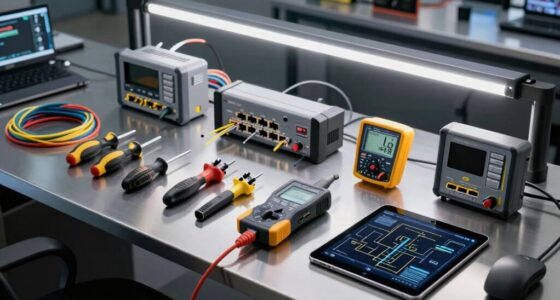
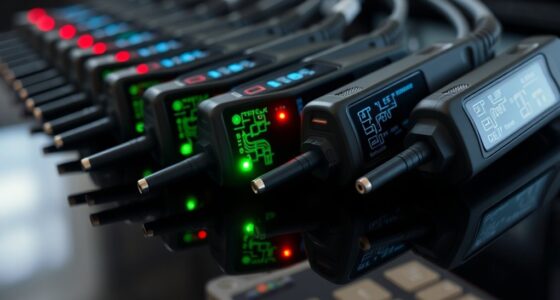
Cable inspection cameras offer a wireless, high-resolution solution for inspecting hard-to-reach areas across various industries like plumbing, electrical, and aerospace. They allow you to see clearly inside pipes, behind walls, or inside machinery without disassembly, improving safety and efficiency. Real-time streaming and versatile device compatibility make inspections faster and more accurate. To discover how these innovative tools can streamline your work and enhance safety, keep exploring the benefits they offer.
Key Takeaways
- Enable inspection of hard-to-reach areas in electrical, plumbing, aerospace, and industrial systems.
- Offer high-resolution, real-time images for accurate detection of issues like cracks or blockages.
- Improve safety by reducing disassembly, manual probing, and exposure to hazardous environments.
- Facilitate quick, efficient assessments, reducing downtime and speeding up maintenance processes.
- Support seamless sharing and documentation of inspection footage across devices and team members.

Ever wondered how professionals inspect hard-to-reach cables and tight spaces without dismantling entire systems? Cable inspection cameras make this possible by providing a reliable, efficient way to see into areas that are otherwise inaccessible. These tools are essential in industries like electrical maintenance, plumbing, and aerospace, where safety and accuracy are paramount. With the advancement of technology, modern inspection cameras now boast features like wireless connectivity and high camera resolution, making your inspections faster and more precise.
Wireless connectivity is a game-changer in cable inspection. Instead of dealing with bulky cables or limited data transfer options, you can connect the camera wirelessly to your smartphone, tablet, or inspection device. This means you can navigate tight spaces without the hindrance of tangled cords or limited mobility. Plus, wireless systems often come with real-time streaming capabilities, allowing you to see exactly what the camera is capturing on your device’s screen as you work. This immediate feedback speeds up decision-making and reduces downtime, especially when inspecting complex systems where every second counts. Additionally, wireless connectivity enables multiple team members to view the inspection simultaneously, which enhances collaboration and guarantees everyone stays informed about the condition of the cables or components being examined.
Wireless connectivity allows real-time streaming and seamless collaboration during cable inspections.
Camera resolution plays a vital role in the effectiveness of inspection cameras. Higher resolution cameras produce clearer, sharper images, making it easier to identify issues such as corrosion, cracks, or blockages. When you’re inspecting tiny or intricate components, a camera with a high megapixel count ensures you don’t miss critical details. This reduces the need for repeated inspections and helps you diagnose problems accurately the first time. Modern cameras often come with adjustable resolution settings, giving you control based on the complexity of the task. A good resolution also improves your ability to document findings with detailed photos or videos, providing valuable evidence for maintenance records or reports. Whether you’re checking electrical wiring in a cramped cabinet or inspecting the interior of a pipe, high camera resolution guarantees you get a clear view, even in dim or poorly lit environments.
In essence, combining wireless connectivity with high camera resolution makes cable inspection cameras highly effective tools. They enable you to access hard-to-reach areas quickly, view detailed images in real-time, and share findings effortlessly. This combination not only boosts your efficiency but also enhances safety by reducing the need for risky disassembly or manual probing. As technology continues to evolve, these features will become even more refined, offering you smarter, more reliable inspection solutions. Whether you’re a maintenance technician, engineer, or inspector, investing in a camera with excellent wireless capabilities and high resolution can dramatically improve your inspection processes.

Endoscope Camera with Light,1920P HD Borescope Tools with 8 Adjustable LED Lights, Endoscope with Semi-Rigid Snake Camera, IP67 Waterproof Inspection Borescope for iOS and Android-16.4ft Dual-Lens
1920P HD Resolution: Sewer camera with 7.9mm probe can inspect hard-to-reach places effortlessly. The 2.0MP HD endoscope can…
As an affiliate, we earn on qualifying purchases.
As an affiliate, we earn on qualifying purchases.
Frequently Asked Questions
What Industries Benefit Most From Cable Inspection Cameras?
You’ll find industrial sectors like manufacturing, utilities, and construction benefit most from cable inspection cameras. These devices offer essential maintenance solutions by allowing you to inspect hard-to-reach areas quickly and accurately. With their help, you can identify issues early, prevent costly repairs, and guarantee safety. Whether checking pipelines, wiring, or machinery, cable inspection cameras streamline maintenance tasks, saving you time and money while improving overall operational efficiency.
How Do Cable Inspection Cameras Improve Safety Protocols?
Think of cable inspection cameras as your safety shield. They help you identify potential hazards before they cause problems, ensuring safety compliance. By revealing hidden damages or blockages, you mitigate risks and prevent accidents. This proactive approach keeps workers safe and equipment running smoothly. Using cable inspection cameras makes your safety protocols more thorough, allowing you to address issues early and maintain a safer environment for everyone involved.
What Is the Typical Lifespan of a Cable Inspection Camera?
You can expect a cable inspection camera to last around 3 to 5 years with proper maintenance, depending on usage and build quality. Regular cleaning and careful handling enhance durability, while considering upgrade options can extend its lifespan. Keep an eye on wear and tear, and replace parts as needed to maintain performance. Investing in a high-quality camera initially can also improve its overall durability and value over time.
Are Cable Inspection Cameras Suitable for Underwater Applications?
Absolutely, cable inspection cameras are perfect for underwater applications! With advanced underwater imaging, you can perform subaquatic evaluation with incredible clarity, even in the deepest, murkiest waters. These cameras are specifically designed to withstand extreme pressure and moisture, making them ideal for underwater use. You’ll get detailed visuals of submerged cables, ensuring thorough inspections. Immerse yourself in your projects confidently, knowing your equipment can handle the toughest underwater environments!
How Do You Choose the Right Cable Inspection Camera for Specific Needs?
To select the right cable inspection camera, start by identifying your specific needs and use cases. Use selection criteria like camera length, resolution, and flexibility to narrow options. Conduct a feature comparison to weigh capabilities such as lighting, image clarity, and durability. Consider your environment—underwater, tight spaces, or high temperatures—and guarantee the camera meets these demands. This approach helps you find a model that offers the best performance for your tasks.

Teslong Inspection Camera, Dual Lens Borescope Camera with Light, NTS300 5" IPS Industrial Endoscope, 1080P Waterproof Flexible Mechanic Fiber Optic Snake Scope Cam for Wall Automotive Engine (16.5FT)
Dual Lens Inspection Camera: The Teslong NTS300 features a main lens and a side lens, each equipped with…
As an affiliate, we earn on qualifying purchases.
As an affiliate, we earn on qualifying purchases.
Conclusion
Using cable inspection cameras makes your inspection process faster and safer. Imagine discovering a hidden cable fault in a power plant before it causes a shutdown—that’s the power of this technology. Whether you’re inspecting tight spaces or complex wiring, these cameras give you clear insights without risking damage or injury. Embrace this tool to improve your maintenance routines, save time, and prevent costly failures. Your inspections become smarter, safer, and more efficient with cable inspection cameras.
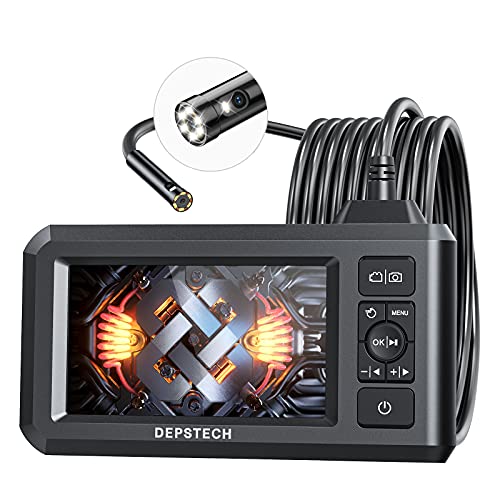
DEPSTECH Dual Lens Industrial Endoscope, 1080P Digital Borescope Inspection Camera, 7.9mm IP67 Waterproof Sewer Camera with 4.3" LCD Screen, 7 LED Lights, 16.5FT Semi-Rigid Cable, 32GB Card-Black
【See More with Dual Lens&Split Screen】: The DS300 inspection camera has dual-lens technology that allows you to switch…
As an affiliate, we earn on qualifying purchases.
As an affiliate, we earn on qualifying purchases.

Endoscope Camera with Light: 5" 1080P Dual-Lens Inspection Borescope Camera for Sewer – 16.4ft Waterproof Industrial Endoscope – Flexible Snake Bore Scope for Plumbing Automotive
5" HD SCREEN & DUAL-LENS FLEXIBILITY – This endoscope camera with light features a 4.3-inch HD screen with…
As an affiliate, we earn on qualifying purchases.
As an affiliate, we earn on qualifying purchases.