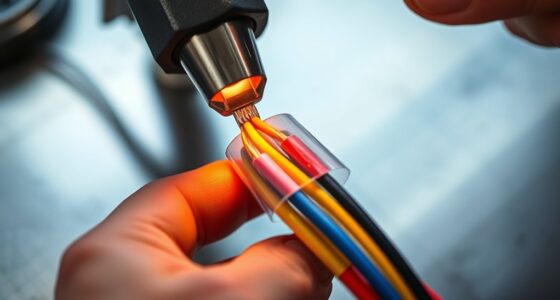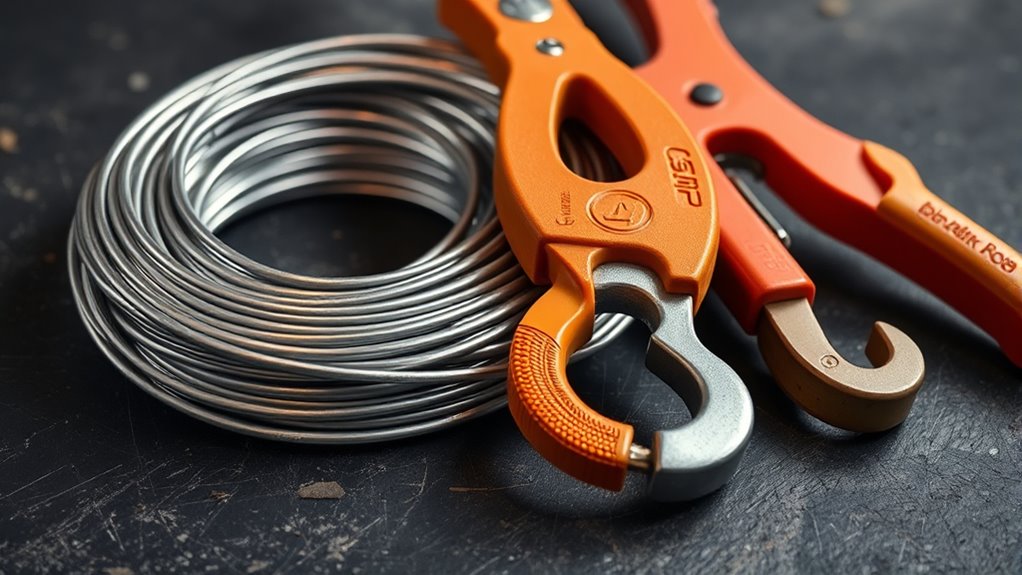

You need reliable tools to navigate conduits, to pull wires smoothly, and to prevent damage. Fish tapes and cable pulling tools serve these essential roles, helping you work efficiently and safely in tight spaces. Their design, materials, and techniques can make a significant difference in your projects. Understanding how to choose and use them correctly can lead to better results and fewer frustrations, but there’s more to learn about optimizing their use.
Key Takeaways
- Fish tape and cable pulling tools facilitate safe, efficient wiring through conduits, especially in tight or complex spaces.
- Made of durable materials like fiberglass or steel, designed for flexibility and ease of navigation around bends.
- Use specialized tools such as pulleys and grip gloves to pull wires with minimal damage and physical strain.
- Proper techniques include careful feeding, secure attachment, and lubrication to reduce friction and prevent cable damage.
- Advances focus on ergonomic designs and correct tool selection to ensure reliable, safe, and interference-free installations.
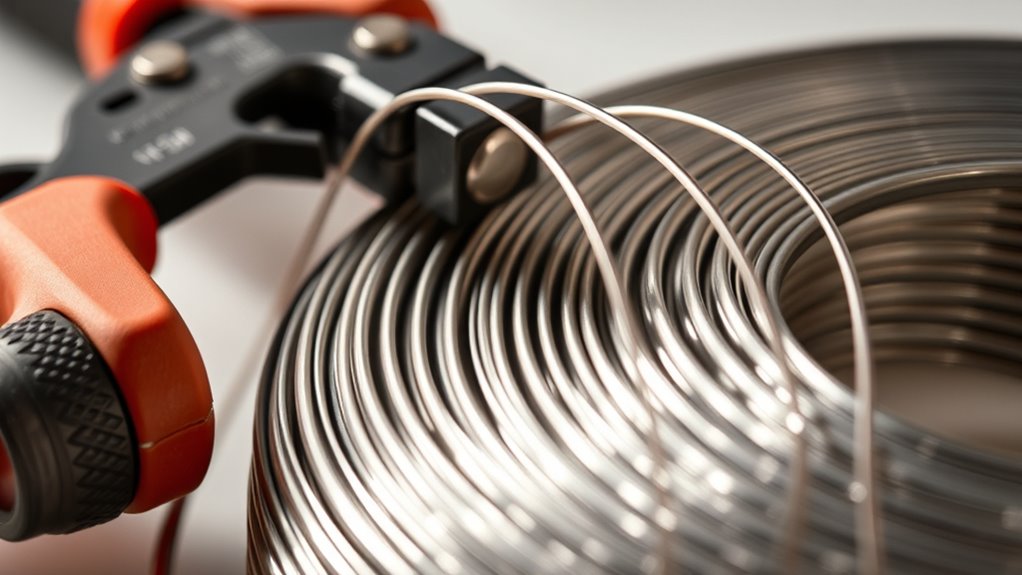
When installing or repairing electrical systems, fish tape and cable pulling tools are essential for maneuvering tight spaces and pulling wires efficiently. Whether you’re working in a residential, commercial, or industrial setting, these tools help you navigate conduits and reach hard-to-access areas. With the rise of wireless transmission technology, it’s easier than ever to coordinate your work and reduce the need for physical connections, but the actual installation still requires precision and skill. When pulling wires through conduit, you need reliable tools that can handle the bends and obstacles without damaging the cables. Fish tape, typically made of fiberglass or steel, allows you to locate and guide wires through conduit runs, especially where space is limited. Its flexible design helps you navigate around corners and tight bends, making conduit installation smoother and faster.
Cable pulling tools complement fish tape by providing the necessary force to pull wires through long or complicated conduit runs. They come in various forms, such as pulleys, grip gloves, and power-driven systems, all designed to reduce strain on you and prevent cable damage. Using these tools correctly guarantees that your wiring remains intact and undamaged, which is crucial for safety and performance. When working with wireless transmission systems, proper conduit installation becomes even more critical. Ensuring that cables are pulled cleanly and routed correctly prevents interference and maintains signal quality. These tools help you avoid kinks, nicks, or breaks that could compromise the system’s reliability.
In practice, you’ll often start by feeding the fish tape through the conduit, carefully guiding it past any bends or obstacles. Once the tape’s end emerges from the other side, you attach the cable securely and then use the pulling tools to draw the wire back through. For longer runs, you might employ a combination of fish tape and specialized cable pulling lubricants to reduce friction. Proper technique and the right tools make all the difference in avoiding cable damage and ensuring a smooth installation process. As technology advances, tools are becoming more ergonomic and efficient, helping you work faster and with less fatigue. Whether you’re installing new wiring for a building’s wireless network or updating existing conduit, having the right fish tape and cable pulling tools is imperative for a clean, safe, and effective installation.
Frequently Asked Questions
How Do I Prevent Fish Tape From Kinking During Use?
To prevent fish tape from kinking during use, you should practice proper cable routing techniques and perform regular fish tape maintenance. Always keep the tape straight and avoid forcing it through tight bends or obstructions. Use smooth, steady pulls and guide the tape carefully. Regularly inspect for damage or kinks and straighten any bends before reuse. This guarantees smoother operation and extends the lifespan of your fish tape.
What Safety Precautions Should I Follow When Using Cable Pulling Tools?
When using cable pulling tools, always wear personal protective equipment like gloves and safety glasses to prevent injuries. Follow electrical safety protocols by disconnecting power sources and inspecting tools for damage before use. Keep your workspace clear of hazards and ensure proper lighting. Be cautious of sharp edges and tension in cables. By prioritizing safety, you reduce risks and ensure a smooth, injury-free installation process.
Can Fish Tape Be Used for Underground Cable Installations?
Think of your fish tape as a guiding arrow through the underground conduit, leading your cable safely to its destination. Yes, you can use it for underground cable installations, but make certain it’s flexible enough to navigate bends and obstacles. Properly route your cable, avoiding sharp edges, and verify the conduit’s condition beforehand. With careful handling, your fish tape becomes a reliable tool for efficient underground cable routing.
What Are the Signs of Worn or Damaged Fish Tape?
You can spot worn or damaged fish tape by inspecting for signs like kinks, bends, or corrosion, which are common damages. Look for frayed or broken sections that could weaken its strength. During inspection tips, check the reel for smooth operation and signs of rust. If you notice difficulty pulling or uneven movement, it’s time to replace the tape to avoid snags or failures during use.
How Do I Choose the Right Cable Pulling Lubricant?
Picking the perfect cable pulling lubricant starts with understanding your needs. Focus on factors like friction reduction, compatibility with cable materials, and environmental conditions. For smooth, slip-free pulls, choose a lubricant specifically designed for cable lubrication that offers excellent lubrication and minimal residue. Always read labels carefully and select a lubricant that matches your project’s demands, ensuring easier pulls and preventing damage. Proper lubricant selection simplifies your cable installation tasks.
Conclusion
So, next time you’re wrestling with those stubborn wires, remember: your fish tape is basically your superhero sidekick—sliding through tight spaces while you stand back and take all the credit. With these trusty tools, you’ll turn chaotic conduit battles into smooth, professional installations. Because nothing says “expert electrician” like gently coaxing cables through the maze, all while imagining your fish tape as the brave knight saving the day from the evil clutches of tangled wires.