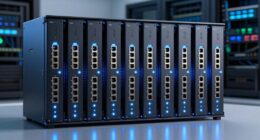
Managed PoE network switches combine network control with power for devices such as access points, cameras, and VoIP phones. My best overall pick is the NETGEAR GS308EP, a balanced small-network option with Gigabit ports and smart management; the TP-Link TL-SG1428PE stands out for larger deployments, while the NETGEAR GS305EP suits a compact setup. The main tradeoffs are port count, total PoE power, and how much configuration control you need. A larger switch can leave room to grow, but it may be more than a small installation needs. Continue reading for the full breakdown and guidance on matching a switch to your devices.

Get business pricing on networking and server gear
- Business-only prices and quantity discounts
- Tax-exempt purchasing
- Multiple users, one account, clear invoices
Key Takeaways
- The NETGEAR GS308EP is the strongest all-around fit for many small networks: it balances eight Gigabit PoE+ ports with smart management without jumping to a larger chassis.
- Port count separates the large-installation picks from compact choices. The TP-Link TL-SG1428PE and NETGEAR GS724TP provide room for many wired endpoints; the GS305EP is better suited to a short device list.
- “Managed” does not mean identical control. Several TP-Link Easy Smart and NETGEAR Smart Managed models emphasize approachable configuration, while buyers should verify that their required network features are supported.
- Uplinks and PoE budgets matter as much as port totals. A switch can have enough Ethernet ports but still fall short if its power budget cannot support devices running together or its uplinks constrain traffic.
- The TP-Link LS108GP is a notable simpler alternative, not a direct substitute for managed picks. Buyers who need VLAN or traffic controls should confirm its feature set before choosing it over the managed models.
| STEAMEMO 16-Port Managed PoE+ Ethernet Switch with Gigabit Uplinks |  | Best for High Port Count on a Budget of Bandwidth | Total ports: 19 | PoE ports: 16 x 100 Mbps PoE+ | Uplinks: 2 x Gigabit | VIEW LATEST PRICE | See Our Full Breakdown |
| NETGEAR GS308EP 8-Port Gigabit PoE+ Smart Managed Switch |  | Best for a Small Gigabit PoE+ Network | Ports: 8 Gigabit Ethernet | PoE: 8 PoE+ ports | Total PoE power budget: 62W | VIEW LATEST PRICE | See Our Full Breakdown |
| NETGEAR GS305EP 5-Port Gigabit Ethernet PoE+ Smart Managed Switch |  | Best Compact Managed PoE+ Switch | Ports: 5 Gigabit Ethernet | PoE+ ports: 4 | PoE power budget: 63W | VIEW LATEST PRICE | See Our Full Breakdown |
| NETGEAR GS316EP 16-Port Gigabit Ethernet PoE+ Managed Switch |  | Best for Growing Gigabit PoE Installations | Total ports: 16 | PoE Ethernet ports: 15 x 1 Gbps PoE+ | SFP port: 1 x 1G | VIEW LATEST PRICE | See Our Full Breakdown |
| TP-Link TL-SG108PE V3 8-Port Gigabit Easy Smart PoE Switch |  | Best for Basic Smart Controls and Plug-and-Play Setup | Ports: 8 Gigabit Ethernet | PoE ports: 4 | PoE standard: IEEE 802.3af | VIEW LATEST PRICE | See Our Full Breakdown |
| TP-Link TL-SG1428PE 24-Port Gigabit Easy Smart PoE+ Switch |  | Best for Larger PoE Deployments | Ports: 24 PoE+ Gigabit RJ45, 2 non-PoE Gigabit RJ45, 2 SFP | PoE standard: IEEE 802.3af/at | Maximum PoE per port: 30 W | VIEW LATEST PRICE | See Our Full Breakdown |
| TP-Link TL-SG1016PE 16-Port Gigabit Easy Smart PoE+ Switch |  | Best for Mixed PoE and Non-PoE Networks | Ports: 16 Gigabit RJ45 | PoE+ ports: 8 | PoE standard: IEEE 802.3af/at | VIEW LATEST PRICE | See Our Full Breakdown |
| NETGEAR GS110TP 10-Port Gigabit PoE+ Smart Managed Switch |  | Best for Silent Desktop or Wall-Mount Installs | Ports: 8 Gigabit Ethernet PoE+ and 2 1G SFP | Total PoE budget: 55 W | Maximum PoE per port: 30 W | VIEW LATEST PRICE | See Our Full Breakdown |
| NETGEAR GS310TPv2 10-Port Gigabit PoE+ Smart Managed Switch |  | Best for Light CLI Access in a Compact Switch | Listed port configuration: 8 × 1 Gbps Ethernet and 2 × 1G SFP; title states 10 ports | PoE+ ports: 8 | PoE budget: 55 W | VIEW LATEST PRICE | See Our Full Breakdown |
| TP-Link TL-SG1218MPE 18-Port Gigabit Easy Smart PoE+ Switch |  | Best Mid-Size Pick for Many PoE Devices | Ports: 18 total: 16 PoE+ Gigabit, 2 non-PoE Gigabit | SFP slots: 2 combo slots | PoE standard: IEEE 802.3af/at | VIEW LATEST PRICE | See Our Full Breakdown |
| TP-Link LS108GP 8-Port Gigabit PoE+ Ethernet Switch |  | Best for Simple, Long-Run PoE | Ports: 8 Gigabit RJ45 PoE+ ports | PoE standards: IEEE 802.3at/af | Maximum PoE power per port: 30W | VIEW LATEST PRICE | See Our Full Breakdown |
| NETGEAR GS724TP 26-Port Gigabit PoE+ Smart Managed Switch |  | Best for High Port Count with Fiber Uplinks | Model: GS724TP-300NAS | Ports: 26 total: 24 Gigabit Ethernet PoE+ ports and 2 1G SFP ports | PoE+ power budget: 190W | VIEW LATEST PRICE | See Our Full Breakdown |
| managed PoE network switch | Ports | Management |
|---|---|---|
| STEAMEMO 16-Port Managed PoE+ | — | Web interface, desktop software, mobile app; VLAN, QoS, DHCP snooping, port mirroring |
| NETGEAR GS308EP 8-Port Gigabit | 8 Gigabit Ethernet | VLAN, QoS, port monitoring, per-port PoE controls |
| NETGEAR GS305EP 5-Port Gigabit | 5 Gigabit Ethernet | VLAN, QoS, IGMP snooping, per-port PoE controls |
| NETGEAR GS316EP 16-Port Gigabi | — | VLAN, QoS, IGMP snooping, per-port PoE control, uninterrupted PoE |
| TP-Link TL-SG108PE V3 8-Port G | 8 Gigabit Ethernet | — |
| TP-Link TL-SG1428PE 24-Port Gi | 24 PoE+ Gigabit RJ45, 2 non-PoE Gigabit RJ45, 2 SFP | Easy Smart, web-based interface |
| TP-Link TL-SG1016PE 16-Port Gi | 16 Gigabit RJ45 | — |
| NETGEAR GS110TP 10-Port Gigabi | 8 Gigabit Ethernet PoE+ and 2 1G SFP | Smart managed, web GUI; optional NETGEAR Insight |
| NETGEAR GS310TPv2 10-Port Giga | — | Web-based and light CLI |
| TP-Link TL-SG1218MPE 18-Port G | 18 total: 16 PoE+ Gigabit, 2 non-PoE Gigabit | — |
| TP-Link LS108GP 8-Port Gigabit | 8 Gigabit RJ45 PoE+ ports | — |
| NETGEAR GS724TP 26-Port Gigabi | 26 total: 24 Gigabit Ethernet PoE+ ports and 2 1G SFP ports | — |
More Details on Our Top Picks
STEAMEMO 16-Port Managed PoE+ Ethernet Switch with Gigabit Uplinks
The STEAMEMO pairs 16 PoE+ ports with VLAN, QoS, remote management, and a fanless metal enclosure, making it a fit for installations that need to power many endpoints quietly. Its standout limitation is that the PoE ports are 100 Mbps, not Gigabit: that suits many cameras and phones, but can constrain faster access points or devices moving large files. Compared with the NETGEAR GS316EP, it offers one more PoE port and a stated larger power budget, but the GS316EP gives every PoE connection Gigabit speed and a 1G SFP port. There is also a specification conflict: the product data cites a 240W PoE budget while listing a 200W maximum elsewhere. I would verify the available power before planning a full load.
Pros:- 16 PoE+ ports provide broad device coverage
- VLAN, QoS, DHCP snooping, and remote management support network control
- Fanless metal case allows silent desktop or wall-mounted placement
- Can run in managed or unmanaged mode
Cons:- PoE access ports are limited to 100 Mbps
- The stated 240W PoE budget conflicts with a listed 200W maximum
- Only two Gigabit uplinks are specified, so uplink capacity is more limited than on some Gigabit-access alternatives
Best for: Small surveillance or phone deployments needing many PoE connections, where 100 Mbps per endpoint is sufficient and silent operation matters.
Not ideal for: Buyers connecting high-throughput Wi-Fi access points or needing unambiguous power capacity and Gigabit speed on every PoE port.
- Total ports:19
- PoE ports:16 x 100 Mbps PoE+
- Uplinks:2 x Gigabit
- SFP:1 x 1.25G
- Maximum power per PoE port:30W
- Stated total PoE budget:240W; product data also lists a 200W maximum
- Management:Web interface, desktop software, mobile app; VLAN, QoS, DHCP snooping, port mirroring
- Mounting and cooling:Desktop, wall, or rack; fanless metal case
Our verdict“Choose the STEAMEMO for a quiet, high-port-count camera or phone network, but confirm its usable PoE budget and accept 100 Mbps access ports.”
NETGEAR GS308EP 8-Port Gigabit PoE+ Smart Managed Switch
The GS308EP is a practical middle ground for a small office or home network: it gives you eight Gigabit PoE+ ports and useful controls such as VLANs, QoS, port monitoring, and per-port power management. Compared with the five-port NETGEAR GS305EP, it leaves room for more wired clients, but its 62W shared PoE budget is slightly lower than the GS305EP’s listed 63W. That makes total device demand—not just the number of ports—the key planning limit. Its fanless metal design suits quiet work areas, and desktop or wall mounting keeps placement flexible. I would favor it over the larger NETGEAR GS316EP when a compact eight-port setup is enough; the GS316EP is better for growing installs that need many more PoE endpoints.
Pros:- Eight Gigabit ports support faster wired devices
- VLAN, QoS, monitoring, and per-port PoE controls aid small-network management
- Fanless metal construction keeps operation quiet
- Desktop and wall-mount placement options
Cons:- The 62W PoE budget is shared across all eight ports
- No SFP uplink is listed
- The supplied voltage specification is listed as 2V and may be inaccurate
Best for: Home offices and small businesses connecting a handful of Gigabit access points, cameras, and VoIP phones with basic managed controls.
Not ideal for: Installations powering several high-draw devices or expecting to expand beyond eight Ethernet connections.
- Ports:8 Gigabit Ethernet
- PoE:8 PoE+ ports
- Total PoE power budget:62W
- Data transfer rate:16 Gbps
- Management:VLAN, QoS, port monitoring, per-port PoE controls
- Mounting:Desktop or wall mount
- Cooling and case:Fanless metal design
- Weight:1.1 kg
Our verdict“Pick the GS308EP for a quiet, managed eight-port Gigabit setup if your connected devices fit within its shared 62W PoE budget.”
NETGEAR GS305EP 5-Port Gigabit Ethernet PoE+ Smart Managed Switch
For a small corner of a network, the GS305EP combines four Gigabit PoE+ ports with VLAN, QoS, IGMP snooping, and per-port power controls in a compact, fanless design. Its 63W budget is notably generous for a five-port switch, although it remains a shared pool rather than 63W available to every device at once. Compared with the eight-port NETGEAR GS308EP, this model saves space and offers a similar listed PoE budget, but gives up three Ethernet ports—so it is less forgiving if cameras, phones, and access points are added later. The Gigabit connections also make it more suitable for faster endpoints than the 100 Mbps PoE ports on the STEAMEMO 16-Port. I would choose it for a deliberately small installation, not as a growth platform.
Pros:- Four Gigabit PoE+ ports support faster cameras and access points
- 63W shared PoE budget is substantial for a compact switch
- VLAN, QoS, IGMP snooping, and per-port power controls
- Fanless case supports quiet desktop or wall-mounted use
Cons:- Only five Ethernet ports total, including one non-PoE port
- The PoE budget is shared across connected devices
- No SFP uplink is listed
Best for: Remote workers or small-shop owners who need managed control for up to four PoE devices and have limited switch space.
Not ideal for: Buyers expecting to connect more than four PoE devices soon, or needing a larger port reserve for network expansion.
- Ports:5 Gigabit Ethernet
- PoE+ ports:4
- PoE power budget:63W
- Data transfer rate:1000 Mbps
- Management:VLAN, QoS, IGMP snooping, per-port PoE controls
- Mounting:Desktop or wall mount
- Cooling:Fanless
- Dimensions:6.2 x 4 x 1.1 in
Our verdict“Choose the GS305EP when space and Gigabit PoE matter more than port capacity or future expansion.”
NETGEAR GS316EP 16-Port Gigabit Ethernet PoE+ Managed Switch
The GS316EP is the strongest fit here for an installation that needs many Gigabit PoE connections without giving up managed traffic controls. It has 15 PoE+ ports, a 180W shared budget, and a 1G SFP port for a fiber connection—useful when the switch sits away from the main equipment room. Compared with the STEAMEMO 16-Port, it has one fewer PoE port and a lower stated total budget, but its PoE access links are Gigabit rather than 100 Mbps. VLANs, QoS, IGMP snooping, monitoring, and per-port power controls provide more useful network oversight than a basic unmanaged switch. The tradeoff is that there is only one SFP port, and the listed management set is focused on core small-network functions rather than a deep enterprise feature suite.
Pros:- 15 Gigabit PoE+ ports suit higher-throughput endpoints
- 180W total PoE budget supports a substantial device group
- 1G SFP port enables a fiber uplink
- VLAN, QoS, IGMP snooping, monitoring, and per-port PoE control
Cons:- Only one SFP port is included
- The listed management feature set focuses on core functions
- The 180W PoE budget is shared across devices
Best for: Small businesses or camera deployments that need up to 15 Gigabit PoE endpoints, managed traffic separation, and a fiber uplink option.
Not ideal for: Buyers needing more than one fiber connection, advanced enterprise switching features, or the highest stated PoE budget in this group.
- Total ports:16
- PoE Ethernet ports:15 x 1 Gbps PoE+
- SFP port:1 x 1G
- PoE power budget:180W
- Management:VLAN, QoS, IGMP snooping, per-port PoE control, uninterrupted PoE
- Mounting:Desktop or wall mount
- Case material:Metal
- Dimensions:11.26 x 4.02 x 1.06 in
Our verdict“Choose the GS316EP for a growing managed network that needs 15 Gigabit PoE connections and a single fiber uplink.”
TP-Link TL-SG108PE V3 8-Port Gigabit Easy Smart PoE Switch
The TL-SG108PE V3 suits buyers who want simple managed controls without moving to a larger switch or a more involved setup. Its eight Gigabit ports include four PoE ports, and the web interface adds VLANs, QoS, IGMP snooping, traffic monitoring, port mirroring, and cable diagnostics. Compared with the NETGEAR GS308EP, it offers only four PoE ports instead of eight, so it is a better match for a few powered devices alongside wired computers or printers. It also uses the 802.3af standard, not PoE+, which can rule it out for devices that require higher PoE power. Product data conflicts on the available PoE budget and port power, so I would check device requirements and confirm the exact power figures before planning a full installation.
Pros:- Eight Gigabit ports provide connections beyond the four powered ports
- Smart management includes VLAN, QoS, IGMP snooping, and port mirroring
- Cable diagnostics and traffic monitoring help with routine troubleshooting
- Fanless metal case and plug-and-play setup suit quiet, simple installations
Cons:- Four PoE ports use 802.3af rather than PoE+
- Listed PoE budget and port-power details conflict
- The 57W stated PoE budget is shared across the powered devices
Best for: Home offices and small teams that need four basic PoE connections plus Gigabit ports for wired computers and straightforward network segmentation.
Not ideal for: Buyers with PoE+ devices, multiple high-draw endpoints, or a need for a clearly specified power budget across all ports.
- Ports:8 Gigabit Ethernet
- PoE ports:4
- PoE standard:IEEE 802.3af
- Stated PoE budget:57W; product data contains conflicting power specifications
- Switching capacity:16 Gbps
- Management features:VLAN, QoS, IGMP snooping, rate limiting, traffic monitoring, port mirroring, cable diagnostics
- Case and cooling:Metal case, fanless
- Maximum power:75W
Our verdict“Choose the TL-SG108PE V3 for basic VLAN and traffic controls with four 802.3af devices, but not for PoE+ loads or uncertain power planning.”
TP-Link TL-SG1428PE 24-Port Gigabit Easy Smart PoE+ Switch
For a growing camera or access-point installation, the TL-SG1428PE offers more powered connections than the 16-port TL-SG1218MPE, while retaining two additional non-PoE ports for devices that do not need power from the switch. Its 250 W PoE budget gives a larger deployment more room to allocate power, and the two SFP slots provide fiber uplink options when copper runs are not suitable. VLAN, QoS, IGMP, and link aggregation controls add useful network management without requiring a more advanced management platform.
The tradeoff is its Easy Smart web interface, which covers common configuration needs but is less suited to buyers seeking extensive CLI controls. PoE Auto Recovery can reboot unresponsive devices, but requires configuration. Compared with the more compact NETGEAR GS110TP, this is a better fit for many endpoints, not quiet desktop placement.
Pros:- 24 PoE+ Gigabit ports support a larger number of powered devices.
- 250 W total PoE budget provides more capacity than the 55 W compact NETGEAR GS110TP.
- Two SFP slots and two additional non-PoE Gigabit ports offer flexible connectivity.
- VLAN, QoS, IGMP, link aggregation, and PoE Auto Recovery support common managed-network tasks.
Cons:- Easy Smart web management is less suited to buyers who need extensive CLI or advanced enterprise controls.
- PoE Auto Recovery requires configuration rather than working as a set-and-forget feature.
- Its 17.3-inch width makes it less appropriate for a small desktop or space-constrained installation.
Best for: Small businesses and installers connecting many PoE cameras, phones, or access points who also need fiber uplinks and basic managed controls.
Not ideal for: Home offices or small installations that need a silent, compact switch or advanced command-line management.
- Ports:24 PoE+ Gigabit RJ45, 2 non-PoE Gigabit RJ45, 2 SFP
- PoE standard:IEEE 802.3af/at
- Maximum PoE per port:30 W
- Total PoE budget:250 W
- Management:Easy Smart, web-based interface
- Management features:VLAN, QoS, IGMP, LAG, PoE Auto Recovery
- Dimensions:17.3 × 8.7 × 1.73 in
- Case and weight:Metal; 3.1 kg
Our verdict“Choose the TL-SG1428PE when you need 24 PoE+ ports and a 250 W budget, and skip it if compact size or advanced management matters more.”
TP-Link TL-SG1016PE 16-Port Gigabit Easy Smart PoE+ Switch
The TL-SG1016PE suits a network with a moderate number of powered devices and a larger set of ordinary wired connections: eight of its 16 Gigabit ports provide PoE+, leaving the other eight available for non-PoE equipment. That layout can avoid using powered ports for computers or printers, unlike the all-PoE-port layout of the NETGEAR GS310TPv2. VLANs, QoS, IGMP snooping, and web management cover the basics for organizing traffic, while the rack-mountable metal case suits a wiring cabinet.
Its headline power figures need care: the supplied information lists a 150 W PoE budget but also gives conflicting 110 W and 40 W figures. I would verify the applicable power limit before planning a device load. The eight-port PoE limit also makes this less flexible than the 16-PoE-port TL-SG1218MPE, even though the total port count is similar.
Pros:- Eight PoE+ ports are paired with eight non-PoE Gigabit ports for mixed device needs.
- VLAN, QoS, and IGMP snooping support practical traffic management.
- PoE Auto Recovery can reboot unresponsive powered devices.
- Metal, rack-mountable design suits a fixed wiring cabinet.
Cons:- Only half of the 16 ports support PoE+.
- Product information gives conflicting PoE power figures, complicating power planning.
- Three-year warranty is shorter than the limited lifetime warranty listed for the TL-SG1428PE.
Best for: Small offices or shops with up to eight PoE cameras, phones, or access points alongside several wired computers and printers.
Not ideal for: Installers who need PoE on most ports or cannot confirm the switch’s applicable total power limit before deployment.
- Ports:16 Gigabit RJ45
- PoE+ ports:8
- PoE standard:IEEE 802.3af/at
- Maximum PoE per port:30 W
- Stated PoE budget:150 W; product information also lists 110 W and 40 W figures
- Management features:Web-based management, VLAN, QoS, IGMP snooping, PoE Auto Recovery, port priority
- Dimensions:11.57 × 7.09 × 1.73 in
- Case, weight, and warranty:Metal; 3.9 lb; 3 years
Our verdict“Pick the TL-SG1016PE for a rack with a mix of powered and ordinary wired devices, but confirm its power specifications and skip it if you need more than eight PoE ports.”
NETGEAR GS110TP 10-Port Gigabit PoE+ Smart Managed Switch
The GS110TP is a strong fit when a small site needs managed PoE and a fiber uplink without the footprint or fan noise of a larger switch. Its fanless metal housing can sit on a desk or mount on a wall, while eight PoE+ Ethernet ports serve cameras, phones, or access points and two SFP ports provide fiber connections. VLAN controls and PoE scheduling add useful day-to-day management. Compared with the TP-Link TL-SG1428PE, it gives up port count and power capacity in exchange for a quieter, more compact installation.
The main constraint is the 55 W total PoE budget: although an individual port can support up to 30 W, the aggregate supply limits how many power-hungry devices it can run together. NETGEAR Insight offers remote management, but that service is subscription-based. This makes the GS110TP more compelling for a small, stable setup than for a larger site with expanding PoE demand.
Pros:- Fanless metal design supports silent desktop or wall-mounted placement.
- Eight PoE+ Ethernet ports serve powered endpoints.
- Two 1G SFP ports allow fiber uplinks.
- Web management includes VLANs and PoE scheduling.
Cons:- 55 W total PoE budget can limit the number of devices running near their maximum draw.
- NETGEAR Insight cloud management is subscription-based.
- Fewer total ports and less PoE capacity than the TP-Link TL-SG1428PE.
Best for: Home offices, small shops, and quiet workspaces needing managed PoE for a few devices plus fiber uplinks.
Not ideal for: Installers powering many high-draw devices or buyers who want cloud management without a subscription.
- Ports:8 Gigabit Ethernet PoE+ and 2 1G SFP
- Total PoE budget:55 W
- Maximum PoE per port:30 W
- Management:Smart managed, web GUI; optional NETGEAR Insight
- Features:VLAN, PoE scheduling, remote management
- Mounting and cooling:Desktop or wall mount; fanless
- Dimensions and weight:9.3 × 4 × 1.1 in; 1.3 lb
- Case material:Metal
Our verdict“Choose the GS110TP for a quiet, compact managed PoE installation with fiber uplinks, not for a growing or power-hungry device load.”
NETGEAR GS310TPv2 10-Port Gigabit PoE+ Smart Managed Switch
The GS310TPv2 targets buyers who want compact managed PoE with a little more configuration flexibility than a web-only interface. Alongside its web management, it offers light CLI access, plus VLAN and QoS features for shaping a modest network. Eight PoE+ ports and two dedicated SFP ports suit a small camera or access-point installation with a fiber uplink. Against the NETGEAR GS110TP, its clearest distinction is that added CLI option; both share a compact desktop or wall-mount form and a 55 W PoE budget.
That budget remains the limiting factor: the 30 W per-port maximum is not available across all eight ports at once under a 55 W aggregate ceiling. The supplied description also calls this a 10-port switch while listing only eight Ethernet ports and two SFP ports, so buyers should confirm how the interfaces fit their intended wiring. It is a niche choice for small networks, not a high-capacity alternative to the TL-SG1218MPE.
Pros:- Web management and light CLI access offer more configuration options than a web-only interface.
- Eight PoE+ ports and two dedicated 1G SFP ports support powered endpoints and fiber uplinks.
- VLAN and QoS features help organize and prioritize network traffic.
- Compact metal enclosure supports desktop or wall mounting.
Cons:- 55 W total PoE budget limits simultaneous power delivery to multiple high-draw devices.
- The description lists eight Ethernet ports despite the 10-port title, making the port arrangement worth verifying.
- Its small-switch capacity is far below the 16 PoE+ ports on the TP-Link TL-SG1218MPE.
Best for: Small-network administrators who want VLAN and QoS controls, fiber uplinks, and some CLI access in a compact switch.
Not ideal for: Buyers needing more than 55 W of PoE power, a large count of copper ports, or a clearly specified port layout without further verification.
- Listed port configuration:8 × 1 Gbps Ethernet and 2 × 1G SFP; title states 10 ports
- PoE+ ports:8
- PoE budget:55 W
- Management:Web-based and light CLI
- Features:VLAN and QoS
- Switch type:Managed, PoE, Layer 2/3 (as listed)
- Dimensions and weight:9.3 × 4.0 × 1.2 in; 0.61 kg
- Mounting and warranty:Desktop or wall mount; 3-year limited hardware warranty
Our verdict“Choose the GS310TPv2 if a compact switch with light CLI access matters more than PoE capacity, and verify the port layout before buying.”
TP-Link TL-SG1218MPE 18-Port Gigabit Easy Smart PoE+ Switch
The TL-SG1218MPE occupies the useful middle ground between compact eight-port PoE switches and the 24-PoE-port TL-SG1428PE. It has 16 PoE+ ports, two non-PoE Gigabit ports, and two combo SFP slots, making it suited to a business with many cameras or access points but no need for 24 powered connections. VLAN, QoS, IGMP snooping, and PoE Auto Recovery cover common management and maintenance tasks; the metal chassis is sized for a fixed network location.
Power planning needs attention: the information lists a 192 W PoE budget alongside a 250 W maximum-power figure, which are not interchangeable. Port-priority protection may also disable lower-priority ports once the available PoE budget is reached. Compared with the TL-SG1016PE, it gives PoE to twice as many ports, but its power figures and load limits deserve verification before a full deployment.
Pros:- 16 PoE+ ports provide more powered connections than the TL-SG1016PE.
- Two non-PoE Gigabit ports and two combo SFP slots add connectivity choices.
- VLAN, QoS, IGMP snooping, and PoE Auto Recovery support common management needs.
- Metal chassis and three-year warranty suit a fixed small-business deployment.
Cons:- Product information lists both a 250 W maximum-power figure and a 192 W PoE budget, which can confuse power planning.
- Port-priority overload protection may disable lower-priority devices when the PoE budget is reached.
- Easy Smart management is less suited to administrators seeking extensive CLI controls.
Best for: Small and midsize offices or camera installations needing around 16 managed PoE+ connections and fiber uplink options.
Not ideal for: Buyers who need an unambiguous power specification, advanced CLI management, or more than 16 PoE ports.
- Ports:18 total: 16 PoE+ Gigabit, 2 non-PoE Gigabit
- SFP slots:2 combo slots
- PoE standard:IEEE 802.3af/at
- Maximum PoE per port:30 W
- Listed PoE budget:192 W
- Maximum power:250 W
- Management features:Easy Smart web management, VLAN, QoS, IGMP snooping, PoE Auto Recovery
- Data transfer rate:36 Gbps
- Dimensions, weight, and warranty:17.3 × 7.1 × 1.7 in; 5.3 lb; 3 years
Our verdict“Choose the TL-SG1218MPE for a mid-size deployment that needs 16 PoE+ ports, but verify the usable PoE budget against your device load.”
TP-Link LS108GP 8-Port Gigabit PoE+ Ethernet Switch
The LS108GP fits buyers who need eight powered Gigabit ports and long cable runs, but it is unmanaged, so it does not meet the central need of a managed-switch roundup. Extend Mode supports transmission up to 820 feet, while PoE Auto Recovery can restart an unresponsive powered device without manual intervention. Those features suit basic camera or access-point installations where remote configuration and traffic controls are not required. By comparison, the NETGEAR GS308EP adds smart management in a similar compact port class, making it a better fit when control matters. The LS108GP’s fanless metal housing keeps operation quiet and supports desktop or wall mounting, but the stated PoE budget is inconsistent: the description says 65W, while an item highlight says 62W. I would verify available power before planning a full load.
Pros:- Eight Gigabit PoE+ ports provide data and power over one cable.
- Extend Mode supports transmission distances up to 820 feet.
- PoE Auto Recovery can reboot unresponsive powered devices.
- Fanless metal housing supports silent operation and desktop or wall mounting.
Cons:- Unmanaged operation lacks configuration controls expected from a managed PoE switch.
- The listed total PoE budget conflicts between 65W and 62W.
Best for: Small camera or access-point installations that need eight PoE+ ports, extended cable reach, and silent operation without configuration features.
Not ideal for: Buyers who need VLANs, traffic controls, or other managed-switch settings; the unmanaged design offers no configuration controls.
- Ports:8 Gigabit RJ45 PoE+ ports
- PoE standards:IEEE 802.3at/af
- Maximum PoE power per port:30W
- Total PoE power budget:65W stated; 62W in item highlight
- Extended PoE distance:Up to 820 ft
- Switch type:Unmanaged
- Cooling and case:Fanless metal housing
- Mounting:Desktop or wall mount
Our verdict“Choose the LS108GP for quiet, long-run PoE connections when you do not need management; pick the NETGEAR GS308EP instead if switch configuration is a requirement.”
NETGEAR GS724TP 26-Port Gigabit PoE+ Smart Managed Switch
The GS724TP is the lineup’s large-site option: 24 PoE+ Ethernet ports and a 190W power budget can serve many cameras, phones, and access points from one switch, while two 1G SFP ports provide fiber uplink options. Its smart management and included one-year NETGEAR Insight service give it more remote oversight than the unmanaged TP-Link LS108GP, which is a better fit only for simple, control-free deployments. Compared with smaller managed models such as the NETGEAR GS316EP, this switch offers more PoE ports and dedicated SFP connectivity, at the cost of taking up more installation space. The source lists desktop or rack mounting, but product details conflict on case material—plastic in the specifications versus metal in the description—and list 240V, which may not suit every site. Check both before installation.
Pros:- Twenty-four PoE+ ports support a high number of powered devices from one switch.
- The 190W PoE+ budget provides power for a multi-device installation.
- Two 1G SFP ports support fiber connectivity.
- Includes one year of NETGEAR Insight service and supports desktop or rack mounting.
Cons:- The listed 240V voltage may not suit every installation.
- Product details conflict on whether the case is plastic or metal.
- Its 24 PoE+ ports and mounting footprint may be excessive for smaller networks.
Best for: Small-business or campus network operators who need PoE+ for many endpoint devices, fiber uplinks, and smart management in a desktop- or rack-mounted switch.
Not ideal for: Small offices with only a handful of powered devices, or installations that cannot accommodate the listed 240V input or larger switch format.
- Model:GS724TP-300NAS
- Ports:26 total: 24 Gigabit Ethernet PoE+ ports and 2 1G SFP ports
- PoE+ power budget:190W
- Switch type:Smart managed
- Data transfer rate:1000 megabits per second
- Mounting:Desktop or rack mount
- Listed voltage:240V
- Included service:One year of NETGEAR Insight
Our verdict“Choose the GS724TP when you need a high PoE port count, SFP uplinks, and smart management, after confirming the power input and chassis details for your site.”
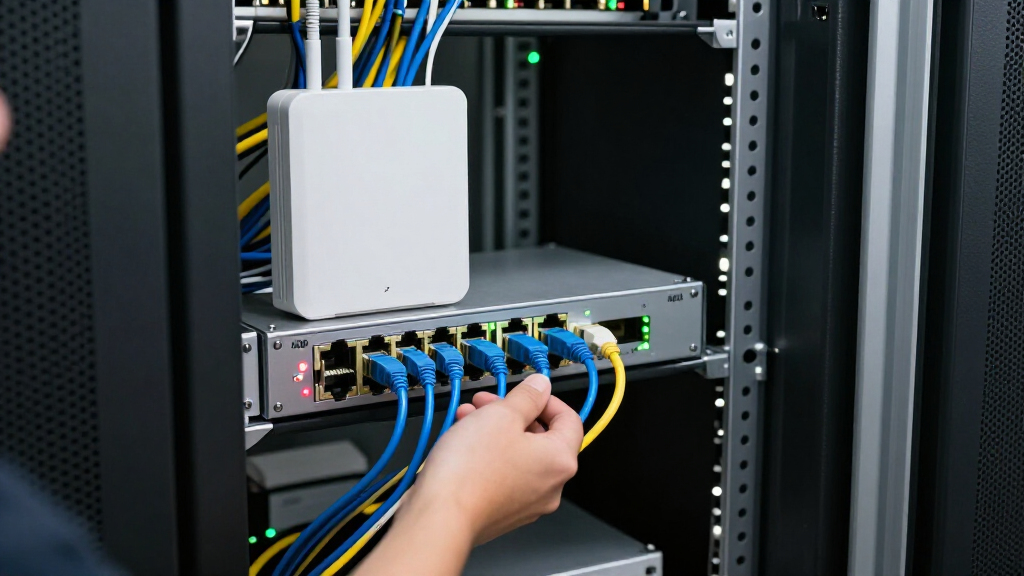
How We Picked
I compared these 12 switches around the decisions that shape a PoE installation: usable port count, Gigabit connectivity, PoE+ support and power budget, uplink options, management capabilities, and likely deployment size. I also considered how approachable the management tier is, since an easy-to-configure switch may suit a small office better than a model whose capabilities exceed the owner’s needs. Model names and port counts alone do not establish whether a unit can power every attached device at once, so buyers should check the manufacturer’s power-budget and feature specifications against their device list.
The ranking favors useful balance and clear fit over sheer port count. The GS308EP leads as a broadly suitable small-network choice; compact five-port equipment ranks for limited installations, while 16- to 26-port choices earn their place for expansion and higher endpoint density. Easy Smart and Smart Managed products are judged on their intended level of control rather than treated as full enterprise switches. The LS108GP is included as a simpler PoE option, with its management limitations called out so it is not confused with the managed alternatives.
Factors to Consider When Choosing Managed PoE Network Switches
Before choosing by port count, map the devices you will power and the controls you expect to use. These broader checks can prevent overspending on unused capacity or buying a switch that cannot support the network plan.
Count powered devices, then leave room to grow
List every camera, access point, phone, and other endpoint that will draw power from the switch. Add the wired devices that do not need PoE, because they still occupy ports. Leave spare ports for changes such as an extra camera or an additional access point, but avoid treating a large port count as useful by itself. A 24- or 26-port unit makes sense when the installation is dense or likely to expand; a compact switch is easier to match to a small, fixed setup. Remember that uplink ports may be reserved for connections to a router or another switch, so check how the manufacturer counts and describes them.
Check the PoE budget against simultaneous demand
PoE+ support on a port does not tell you how much power the entire switch can deliver across all ports at once. Compare the switch’s total PoE budget with the maximum draw of each connected device, not just its typical consumption. Cameras with heaters, PTZ movement, or infrared lighting and access points under heavy load may draw more than simple endpoint devices. Leave headroom so a device starting up or operating at full demand does not push the system past its limit. If the budget is tight, choosing a larger-capacity model or distributing devices across switches can be safer than assuming every port can supply its maximum simultaneously.
Match management features to the network you actually run
“Managed” covers a range of capabilities, and Smart Managed or Easy Smart labels do not guarantee the same feature set as a fully managed enterprise switch. Write down the controls you need, such as VLANs for separating cameras from office devices, link aggregation, traffic prioritization, or port monitoring. Then confirm those features in the exact model’s documentation and firmware details before buying. A simple interface can reduce setup friction for a small network, while restricted feature depth may become a problem when segmentation or troubleshooting needs grow. Paying for controls you will never configure is no better than discovering after installation that a required function is missing.
Plan uplinks and traffic paths, not just endpoint ports
Each switch needs a connection back to the router, core switch, or recorder, and that path carries traffic from many endpoints. Check the number and type of uplinks and consider whether their capacity fits the combined traffic of cameras, access points, and other devices. A switch with ample endpoint ports can still create a bottleneck if its uplink arrangement does not suit the rest of the network. For multi-switch installations, plan where traffic will aggregate and whether connections between switches need redundancy or extra bandwidth. Match the design to expected traffic rather than assuming every Gigabit port makes the whole network equally fast.
Choose a management style you can maintain
Management is useful only if someone can configure, document, and troubleshoot it. Consider who will set up the switch, whether remote administration matters, and how the network will be monitored when a device loses power or connectivity. A simpler smart interface may be a better fit for a small office or home installation than a feature-rich interface that nobody maintains. For a business network, check how configuration backups, firmware updates, and recovery are handled before deployment. Keep a record of VLAN assignments and port uses so a future change does not turn a manageable switch into a guessing game.
Account for installation space and future replacement
Port capacity is only useful if the switch fits the location and its cooling and cabling needs. Check dimensions, mounting options, power connection, ventilation requirements, and cable access before choosing a desktop or rack-oriented unit. Dense installations may benefit from consolidating devices, but a single large switch can also create a larger impact if it fails. Smaller switches can be placed near endpoint groups, though that approach adds uplinks, power supplies, and more devices to maintain. Choose a layout that suits the physical site and the person responsible for replacing or servicing equipment.
Frequently Asked Questions
Is a Smart Managed or Easy Smart switch enough for a camera network?
It can be enough when the network needs basic controls, such as separating cameras from other devices with VLANs, and the exact model supports those functions. Check the documentation for the specific VLAN, monitoring, and traffic features you plan to use; product labels alone are not a reliable feature checklist. Also confirm that the PoE budget can handle the cameras’ combined demand, including higher-draw operating modes. If the installation needs advanced access control, extensive monitoring, or more involved network policies, a more capable management tier may be a better fit. Keep the recorder and uplink capacity in the design as well, since camera traffic converges there.
How many PoE ports should I buy if I am adding devices over time?
Start with the devices you expect to install soon, then add spare ports for realistic near-term growth rather than buying the largest switch by default. Count non-PoE wired devices too, since they use the same endpoint ports. Also check whether adding endpoints will exceed the total power budget, even if open ports remain. For staged installations, a larger switch can simplify expansion, while separate smaller switches can make sense when devices sit in different locations. Compare the cost and upkeep of additional uplinks and power supplies against the convenience of a single unit.
Can every PoE+ port deliver its maximum power at the same time?
Not necessarily: the port-level PoE+ capability and the switch’s total power budget are different limits. The total budget is shared across powered devices, so maximum output on every port at once may not be available. Add the maximum power draw for the devices you plan to connect and compare that sum with the switch’s published budget. Leave margin for startup or higher-demand conditions rather than building a design that only works at typical draw. If the figures do not leave enough headroom, choose a higher-budget model or split the load across switches.
When is a simple PoE switch a better choice than a managed model?
A simple PoE switch can be a better fit when you need wired connectivity and power but do not need VLANs, traffic controls, or switch-level monitoring. The tradeoff is less ability to separate device groups or diagnose network behavior through the switch. In this roundup, the TP-Link LS108GP is the simpler alternative to evaluate, but buyers who require managed controls should verify its feature set before choosing it. If your network may soon add cameras, guest access points, or segmented office devices, selecting a managed model now may prevent an early replacement. Base the choice on specific controls you will use, not on the label alone.
Should I choose one large switch or several smaller PoE switches?
One large switch can simplify central management and reduce the number of devices and uplinks, which suits a concentrated installation. Several smaller units can place power closer to groups of cameras or access points, potentially reducing long cable runs, but they add configuration and maintenance work. Compare the uplink capacity between switches with the traffic those endpoints will generate. Consider what happens if a unit fails: a central switch may affect many devices, while a distributed design can limit the impact to one area. Physical placement, cable paths, power availability, and the person maintaining the network should decide the layout.
Conclusion
For a balanced small-network setup, I recommend the NETGEAR GS308EP as best overall; it sits between the compact GS305EP and the higher-port-count choices. For a small installation with only a few powered devices, the NETGEAR GS305EP is my best value-style fit, provided its port and power capacity match the plan. Buyers building a larger deployment should compare the TP-Link TL-SG1428PE and NETGEAR GS724TP as premium, higher-capacity candidates, checking management features and PoE budgets before deciding. For beginners, I would start with a manageable eight-port option such as the TP-Link TL-SG108PE V3 if its feature set covers the network’s needs. For a specific need—many endpoints in a smaller footprint—compare the TP-Link TL-SG1218MPE and NETGEAR GS316EP; choose only after confirming uplinks, fit, and total PoE demand. If you need only basic powered connections and no managed controls, assess the LS108GP separately rather than treating it as a full substitute.
Halloween Picks
halloween
As an affiliate, we earn on qualifying purchases.