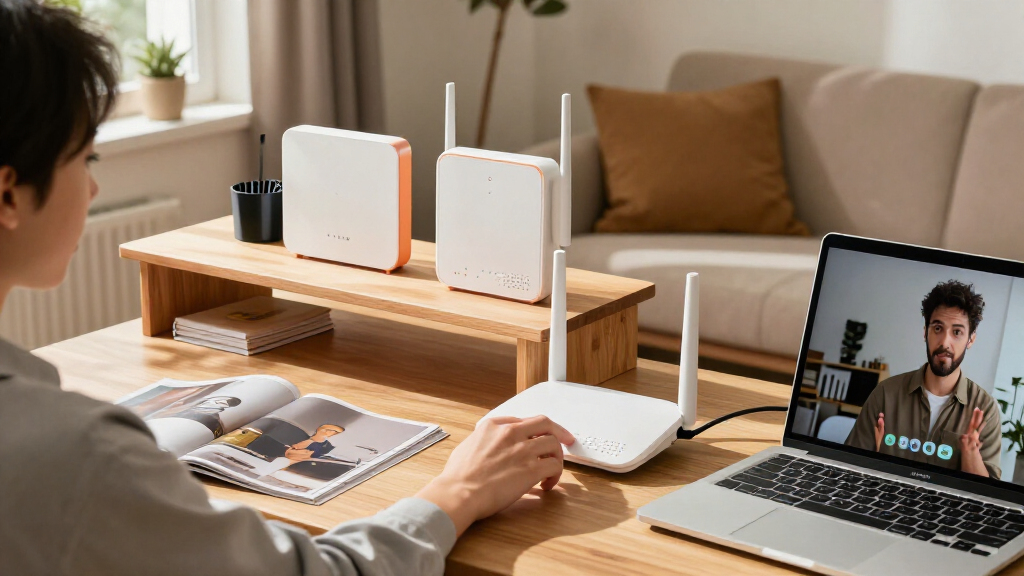

The best character WiFi routers pair a recognizable design with the coverage, speed, and features your household actually needs. My best overall pick is the Minions Kevin Wi-Fi 6E AXE5400, the only explicitly character-themed option here and a capable tri-band choice. For a more performance-focused alternative, the TP-Link Archer BE550 brings tri-band Wi-Fi 7, while the TP-Link Archer A6 keeps things simple with dual-band Wi-Fi for everyday use. The main tradeoff is clear: the character model stands out for theme, while most of the lineup prioritizes newer standards, ports, or straightforward value over character styling. Read on for the full comparison and help choosing the right fit.

Get business pricing on networking and server gear
- Business-only prices and quantity discounts
- Tax-exempt purchasing
- Multiple users, one account, clear invoices
Key Takeaways
- Minions Kevin is the clear character-first choice: it is the only named character model, and its Wi-Fi 6E tri-band design gives it more capability than a novelty-only router.
- Wi-Fi 7 options lead on newer networking features, not character design: the Archer BE550, BE400, BE230, and Nighthawk RS models are better fits when speed standards matter more than a themed exterior.
- Tri-band is the main step-up for busy homes: the Minions Kevin and Archer AXE75 offer an extra band, but buyers should confirm that their devices can use it before paying for the added flexibility.
- Entry-level Wi-Fi 5 routers suit basic needs, with limits: the Archer A6 and A54 can handle modest use, but newer Wi-Fi 6 and Wi-Fi 7 models offer more room for growing device counts.
- Model names do not settle the buying decision: match the exact router’s Wi-Fi generation, band count, ports, and home coverage needs rather than assuming a higher number means a better fit.
| TP-Link Archer BE230 BE3600 Dual-Band Wi-Fi 7 Router |  | Best Entry-Level Wi-Fi 7 Pick | Wi-Fi standard: Wi-Fi 7 (802.11be) | Bands: Dual-band: 2.4 GHz and 5 GHz; no 6 GHz | Maximum data rate: 3.6 Gbps | VIEW LATEST PRICE | See Our Full Breakdown |
| TP-Link AX4400 Wi-Fi 6 Dual-Band 6-Stream Router (Renewed) |  | Best Renewed High-Capacity Option | Model: AX4400 | Wi-Fi standard: Wi-Fi 6 | Bands: Dual-band | VIEW LATEST PRICE | See Our Full Breakdown |
| TP-Link Archer AX3000 Dual-Band Wi-Fi 6 Gigabit Router | 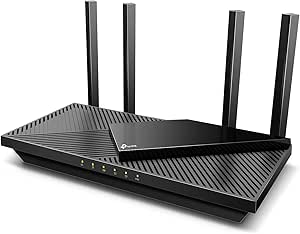 | Best for VPN Features | Wi-Fi generation: Wi-Fi 6 | Frequency bands: Dual-band: 2.4 GHz and 5 GHz | Maximum data rate: 2,976 Mbps | VIEW LATEST PRICE | See Our Full Breakdown |
| TP-Link Archer BE400 BE6500 Dual-Band Wi-Fi 7 Router |  | Best for Larger Homes | Wi-Fi standard: Wi-Fi 7 | Bands: Dual-band: 2.4 GHz and 5 GHz | Maximum combined bandwidth: 6.5 Gbps | VIEW LATEST PRICE | See Our Full Breakdown |
| TP-Link Archer A6 AC1200 Dual-Band Gigabit Wi-Fi Router |  | Best for Basic, Budget-Conscious Setups | Model: Archer A6 | Wireless standard: 802.11ac (Wi-Fi 5) | Frequency bands: 2.4 GHz and 5 GHz | VIEW LATEST PRICE | See Our Full Breakdown |
| Minions Kevin Wi-Fi 6E AXE5400 Tri-Band Router |  | Best Character Pick for Crowded Networks | Wi-Fi generation: Wi-Fi 6E | Wireless bands: 2.4GHz, 5GHz, and 6GHz | Combined theoretical speed: Up to 5.4Gbps | VIEW LATEST PRICE | See Our Full Breakdown |
| NETGEAR Nighthawk RAX36 AX3000 WiFi 6 Dual-Band Router |  | Best for Character-Free Practicality | Wi-Fi standard: Wi-Fi 6 (802.11ax) | Wireless speed: Up to 3Gbps | Frequency bands: Dual-band | VIEW LATEST PRICE | See Our Full Breakdown |
| TP-Link Archer BE550 Tri-Band Wi-Fi 7 Router |  | Best Premium Performance, Not Character Styling | Wi-Fi generation: Wi-Fi 7 | Frequency bands: Tri-band: 2.4GHz, 5GHz, and 6GHz | Maximum data rate: 9300Mbps | VIEW LATEST PRICE | See Our Full Breakdown |
| NETGEAR Nighthawk R6700AX WiFi 6 Router |  | Best Compact-Home Character Alternative | Wi-Fi generation: Wi-Fi 6 (802.11ax) | Frequency bands: 2.4GHz and 5GHz | Maximum speed: 1.8Gbps | VIEW LATEST PRICE | See Our Full Breakdown |
| TP-Link Archer A54 AC1200 Dual-Band Wi-Fi Router | 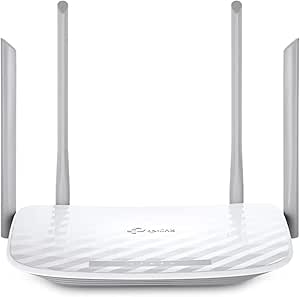 | Best Entry-Level Mesh-Ready Pick | Wi-Fi standard: Wi-Fi 5 (802.11ac) | Wireless bands: 2.4GHz and 5GHz | Maximum Wi-Fi speed: Up to 1200Mbps (867Mbps at 5GHz and 300Mbps at 2.4GHz) | VIEW LATEST PRICE | See Our Full Breakdown |
| NETGEAR Nighthawk RS90 Dual-Band WiFi 7 Router |  | Best Character WiFi 7 Starter | WiFi generation: WiFi 7 | Frequency bands: Dual-band: 2.4 GHz and 5 GHz | Maximum data transfer rate: Up to 3.6 Gbps | VIEW LATEST PRICE | See Our Full Breakdown |
| TP-Link Archer AX55 Pro AX3000 WiFi 6 Router |  | Best Value for Wired Flexibility | WiFi standard: WiFi 6 (802.11ax) | WiFi bands: Dual-band: 2.4 GHz and 5 GHz | Maximum wireless speed: Up to 2,976 Mbps | VIEW LATEST PRICE | See Our Full Breakdown |
| ASUS RT-AX1800S Dual-Band WiFi 6 Router |  | Best for Straightforward Home Setup | Wi-Fi generation: WiFi 6 (802.11ax) | Frequency bands: Dual-band | Maximum data transfer rate: Up to 1,800 Mbps | VIEW LATEST PRICE | See Our Full Breakdown |
| TP-Link Archer AXE75 AXE5400 Tri-Band Wi-Fi 6E Router |  | Best for a Less-Congested Band | Wi-Fi generation: Wi-Fi 6E | Frequency bands: Tri-band: 6 GHz, 5 GHz, 2.4 GHz | Maximum data transfer rate: Up to 5,400 Mbps | VIEW LATEST PRICE | See Our Full Breakdown |
| NETGEAR Nighthawk RS140 Dual-Band WiFi 7 Router |  | Best for High-Capacity WiFi 7 Homes | WiFi generation: WiFi 7 | Frequency bands: Dual-band: 2.4 GHz and 5 GHz | Maximum data rate: Up to 5 Gbps | VIEW LATEST PRICE | See Our Full Breakdown |
| character WiFi router | Antennas | Frequency bands |
|---|---|---|
| TP-Link Archer BE230 BE3600 Du | Four internal fixed antennas | — |
| TP-Link AX4400 Wi-Fi 6 Dual-Ba | — | — |
| TP-Link Archer AX3000 Dual-Ban | Four fixed external antennas | Dual-band: 2.4 GHz and 5 GHz |
| TP-Link Archer BE400 BE6500 Du | Six | — |
| TP-Link Archer A6 AC1200 Dual- | Four external fixed antennas | 2.4 GHz and 5 GHz |
| Minions Kevin Wi-Fi 6E AXE5400 | — | — |
| NETGEAR Nighthawk RAX36 AX3000 | — | Dual-band |
| TP-Link Archer BE550 Tri-Band | 6 | Tri-band: 2.4GHz, 5GHz, and 6GHz |
| NETGEAR Nighthawk R6700AX WiFi | — | 2.4GHz and 5GHz |
| TP-Link Archer A54 AC1200 Dual | 4 fixed external antennas | — |
| NETGEAR Nighthawk RS90 Dual-Ba | Four fixed antennas | Dual-band: 2.4 GHz and 5 GHz |
| TP-Link Archer AX55 Pro AX3000 | Four fixed antennas | — |
| ASUS RT-AX1800S Dual-Band WiFi | Four external antennas | Dual-band |
| TP-Link Archer AXE75 AXE5400 T | Eight fixed antennas | Tri-band: 6 GHz, 5 GHz, 2.4 GHz |
| NETGEAR Nighthawk RS140 Dual-B | — | Dual-band: 2.4 GHz and 5 GHz |
More Details on Our Top Picks
TP-Link Archer BE230 BE3600 Dual-Band Wi-Fi 7 Router
The Archer BE230 is my pick for buyers who want a current Wi-Fi generation without stepping up to a larger, higher-capacity model. Its Wi-Fi 7 features, including Multi-Link Operation and 4K-QAM, can help compatible devices make better use of the available connection, while two 2.5 Gbps ports give newer wired gear room beyond gigabit speeds. Compared with the Archer BE400, it covers less space and supports fewer devices, but its stated capacity of up to 60 devices and 2,000 square feet may suit a more modest home.
The tradeoff is that this is dual-band only, with no 6 GHz support, so it cannot offer the extra band found on tri-band options such as the Archer BE550. A separate modem is also required, and the coverage figure is not a guarantee for homes with thick walls or awkward layouts. I’d choose it for a straightforward Wi-Fi 7 upgrade, not for the broadest wireless capacity.
Pros:- Wi-Fi 7 features include Multi-Link Operation and 4K-QAM.
- Two 2.5 Gbps ports support faster wired connections.
- EasyMesh compatibility allows expansion with compatible devices.
- Tether app setup and management are available.
Cons:- No 6 GHz band, unlike tri-band Wi-Fi options such as the Archer BE550.
- A separate modem is required for internet service.
- Actual coverage and speeds depend on the home and connected devices.
Best for: Households upgrading to Wi-Fi 7 that want two 2.5 Gbps connections and have a moderate-sized home.
Not ideal for: Buyers who need 6 GHz Wi-Fi, coverage beyond the stated 2,000 square feet, or a router with a built-in modem.
- Wi-Fi standard:Wi-Fi 7 (802.11be)
- Bands:Dual-band: 2.4 GHz and 5 GHz; no 6 GHz
- Maximum data rate:3.6 Gbps
- Ports:One 2.5 Gbps WAN/LAN, one 2.5 Gbps LAN, three 1 Gbps LAN
- Coverage:Up to 2,000 sq. ft.
- Maximum devices:Up to 60
- Antennas:Four internal fixed antennas
- Mesh support:EasyMesh
Our verdict“Choose the Archer BE230 for a moderate-sized home that wants Wi-Fi 7 and 2.5 Gbps ports without the Archer BE400’s larger stated capacity.”
TP-Link AX4400 Wi-Fi 6 Dual-Band 6-Stream Router (Renewed)
The AX4400 is the lineup’s capacity-focused Wi-Fi 6 choice, with support for more than 200 devices and six streams backed by MU-MIMO and OFDMA. That makes it a plausible fit for a connected household with many phones, computers, and smart-home devices, while its USB 3.0 port adds media sharing and private-cloud possibilities. Compared with the Archer AX3000, it claims higher maximum throughput and a much larger device count, though the supplied details do not give a coverage figure to help size it for a particular home.
The main caveat is right in the name: this unit is renewed, so buyers should be comfortable choosing a renewed product rather than a new one. It also remains dual-band Wi-Fi 6, not Wi-Fi 7 like the Archer BE230, and HomeShield security services are described as premium without subscription details. I’d shortlist it for device-heavy homes that value its connection capacity and USB port more than the newest wireless standard.
Pros:- Stated support for more than 200 connected devices with MU-MIMO and OFDMA.
- Six antennas and Beamforming are designed to support broad coverage.
- USB 3.0 enables media sharing and private-cloud use.
- Tether app supports setup and management.
Cons:- Renewed condition may not suit buyers seeking a new router.
- No real-world coverage or performance details are provided.
- HomeShield premium-service terms are not specified.
Best for: Device-heavy households seeking a renewed Wi-Fi 6 router with stated support for over 200 devices and USB media sharing.
Not ideal for: Buyers who want a new unit, a published coverage estimate, Wi-Fi 7, or clear details on HomeShield service costs.
- Model:AX4400
- Wi-Fi standard:Wi-Fi 6
- Bands:Dual-band
- Streams:6
- Maximum speed:4,400 Mbps
- 5 GHz features:4T4R and HE160; up to 3.8 Gbps
- Device support:More than 200 devices
- USB port:One USB 3.0
- Condition:Renewed
Our verdict“Consider the renewed AX4400 if your priority is stated device capacity and USB sharing, but choose the Archer BE230 for Wi-Fi 7.”
TP-Link Archer AX3000 Dual-Band Wi-Fi 6 Gigabit Router
The Archer AX3000 earns a place for buyers who want a practical Wi-Fi 6 router with more than basic wireless access. Its VPN server and client support can suit people who want VPN functionality at the router level, while OFDMA and Beamforming are aimed at handling multiple devices and directing coverage through the home. Compared with the Archer A6, it offers Wi-Fi 6 and a higher stated combined data rate; compared with the Archer BE230, it gives up Wi-Fi 7 and 2.5 Gbps ports.
That makes this a sensible middle ground for households whose internet and wired equipment fit within gigabit networking. The four external antennas and HomeShield features add flexibility, though some security functions may require a premium service. A separate modem may be needed, as with the BE230 and BE400, so this is not an all-in-one internet gateway. I’d pick it for VPN-oriented Wi-Fi 6 use, rather than as a future-facing Wi-Fi 7 upgrade.
Pros:- VPN server and client features add network-level flexibility.
- OFDMA supports handling multiple connected devices.
- Four external antennas and Beamforming are designed to extend coverage.
- HomeShield includes network security and parental-control features.
Cons:- A separate modem is required for most internet providers.
- Some HomeShield security features are part of a premium service.
- Its Wi-Fi 6 and gigabit ports are less future-facing than the Archer BE230.
Best for: Households seeking Wi-Fi 6, gigabit Ethernet, and router-level VPN server and client features.
Not ideal for: Buyers who need Wi-Fi 7, 2.5 Gbps wired ports, or an included modem.
- Wi-Fi generation:Wi-Fi 6
- Frequency bands:Dual-band: 2.4 GHz and 5 GHz
- Maximum data rate:2,976 Mbps
- 5 GHz speed:2,402 Mbps
- 2.4 GHz speed:574 Mbps
- Antennas:Four fixed external antennas
- Ports:Five; LAN bandwidth up to 1 Gbps
- Security protocols:WPA2-Enterprise, WPA2-PSK, WPA3
Our verdict“Choose the Archer AX3000 if VPN features matter more than Wi-Fi 7 or multi-gigabit Ethernet.”
TP-Link Archer BE400 BE6500 Dual-Band Wi-Fi 7 Router
The Archer BE400 is the strongest fit here for a larger, device-rich home that wants Wi-Fi 7 without moving to a tri-band model. It is rated for up to 2,400 square feet and 90 devices, exceeding the Archer BE230’s stated coverage and capacity, and its six antennas accompany a claimed 6.5 Gbps of combined bandwidth. Two 2.5 Gbps Ethernet ports also give compatible wired equipment more headroom than the gigabit-only Archer AX3000.
Those advantages come with a notable limit: despite Wi-Fi 7, the BE400 is dual-band and has no 6 GHz band, unlike the tri-band Archer BE550. EasyMesh can help expand a compatible setup, but this router does not work with Deco mesh systems. A separate modem is required, too. I’d choose it over the BE230 when the larger stated capacity matters; I’d look at a tri-band alternative when an extra band is the priority.
Pros:- Rated for up to 2,400 sq. ft. and 90 connected devices.
- Wi-Fi 7 features include Multi-Link Operation, Multi-RUs, and 4K-QAM.
- Two 2.5 Gbps ports plus three 1 Gbps LAN ports support varied wired setups.
- Includes HomeShield, VPN support, and EasyMesh compatibility.
Cons:- Dual-band design has no 6 GHz support, unlike the Archer BE550.
- Not compatible with Deco mesh systems.
- A separate modem is required.
Best for: Families with a larger home, many connected devices, and compatible multi-gigabit wired equipment.
Not ideal for: Buyers who need 6 GHz Wi-Fi, Deco mesh compatibility, or a router with a built-in modem.
- Wi-Fi standard:Wi-Fi 7
- Bands:Dual-band: 2.4 GHz and 5 GHz
- Maximum combined bandwidth:6.5 Gbps
- Maximum 5 GHz speed:5,764 Mbps
- Coverage:Up to 2,400 sq. ft.
- Maximum connected devices:Up to 90
- Antennas:Six
- Ethernet ports:One 2.5 Gbps WAN/LAN, one 2.5 Gbps LAN, three 1 Gbps LAN
- Mesh compatibility:EasyMesh-compatible; not compatible with Deco mesh systems
Our verdict“Pick the Archer BE400 for a larger home that needs more stated capacity than the BE230, but not a 6 GHz band.”
TP-Link Archer A6 AC1200 Dual-Band Gigabit Wi-Fi Router
The Archer A6 is the uncomplicated pick for a household with everyday Wi-Fi needs and no immediate reason to pay for newer standards. Its four Gigabit LAN ports make it useful for wired devices, while four external antennas, Beamforming, and MU-MIMO offer practical support for distributing a connection around a typical home. Compared with the Archer AX3000, it is a more basic Wi-Fi 5 option with a lower maximum data rate; it also trails the Wi-Fi 7 Archer BE230 in wireless generation and wired-port speed.
Its appeal is simplicity, not headroom. The stated 1,167 Mbps maximum data rate and lack of Wi-Fi 6 or Wi-Fi 7 make it a weaker match for high-demand homes or buyers upgrading to faster internet service. OneMesh expansion requires a compatible extender, and most providers require a separate modem. I’d choose the A6 for basic browsing and streaming with wired connections, but skip it if long-term wireless capacity is the priority.
Pros:- Four Gigabit LAN ports accommodate wired devices.
- Four external antennas and Beamforming support home coverage.
- MU-MIMO is designed to serve multiple devices simultaneously.
- Includes WPA3 security and Access Point mode.
Cons:- Wi-Fi 5 and a 1,167 Mbps stated maximum rate offer less headroom than the Wi-Fi 6 Archer AX3000.
- A separate modem is required for most internet providers.
- OneMesh expansion requires a compatible extender.
Best for: Small households with everyday browsing and streaming needs that want several Gigabit Ethernet connections.
Not ideal for: Homes with demanding Wi-Fi use, many high-bandwidth devices, or buyers seeking Wi-Fi 6 or Wi-Fi 7.
- Model:Archer A6
- Wireless standard:802.11ac (Wi-Fi 5)
- Frequency bands:2.4 GHz and 5 GHz
- Maximum data rate:1,167 Mbps
- 2.4 GHz speed:Up to 300 Mbps
- 5 GHz speed:Up to 867 Mbps
- LAN ports:Four Gigabit Ethernet ports
- Antennas:Four external fixed antennas
- Modes:Router and Access Point
Our verdict“Choose the Archer A6 for a basic home network with useful wired ports, but step up to the Archer AX3000 for Wi-Fi 6.”
Minions Kevin Wi-Fi 6E AXE5400 Tri-Band Router
The Kevin-themed design gives this router more character than a standard black box, while its strongest practical distinction is tri-band Wi-Fi 6E. The 6GHz band can give compatible devices a less congested route than the dual-band NETGEAR Nighthawk R6700AX, and support for up to 128 devices suits a busy connected home. Its 2.5GbE WAN port and flexible router, access point, repeater, and compatible mesh modes add options for different network setups. The tradeoff is a sparse wired connection: the listed ports amount to a 2.5GbE WAN and just one Gigabit LAN port. The headline 5.4Gbps is a combined theoretical rate, not a promise to any one device. Choose it for the character styling and wireless flexibility, not for lots of wired hookups.
Pros:- Tri-band Wi-Fi 6E adds a 6GHz band for compatible devices.
- Supports up to 128 connected devices.
- 2.5GbE WAN port provides a faster wired internet connection option.
- Router, access point, repeater, and compatible mesh modes offer setup flexibility.
Cons:- Only one Gigabit LAN port is listed for wired devices.
- The 5.4Gbps figure is a combined theoretical wireless speed, not a per-device rate.
- The 6GHz band is useful only with compatible client devices.
Best for: Minions fans with 6GHz-capable devices who want a character-themed router for a crowded home network.
Not ideal for: Households with several wired PCs, consoles, or network storage devices; it lists only one Gigabit LAN port.
- Wi-Fi generation:Wi-Fi 6E
- Wireless bands:2.4GHz, 5GHz, and 6GHz
- Combined theoretical speed:Up to 5.4Gbps
- Maximum connected devices:128
- WAN port:2.5GbE
- LAN port:Gigabit Ethernet, 1Gbps
- Security:WPA3
- Operating modes:Router, access point, repeater, and compatible mesh node
Our verdict“Pick Kevin for character appeal and tri-band flexibility, but choose a router with more LAN ports if wired connections matter.”
NETGEAR Nighthawk RAX36 AX3000 WiFi 6 Dual-Band Router
This Nighthawk has no stated character artwork, so it suits a roundup shopper who values function over a themed shell. Compared with the Minions Kevin Wi-Fi 6E AXE5400, it gives up the 6GHz band and high device capacity, but offers four Gigabit Ethernet ports for consoles, TVs, or a desktop. Its stated coverage of up to 2,000 square feet and capacity for 25 devices make it a more modest fit than Kevin for a crowded household, while the 1.7 GHz quad-core processor and WPA3 add useful everyday credentials. The main catch is that this is a router, not a cable modem, and compatible internet service speeds are listed up to 1Gbps. I’d choose it when wired connections matter more than character styling or cutting-edge wireless bands.
Pros:- Four Gigabit Ethernet ports support several wired devices.
- Wi-Fi 6 wireless speeds are listed up to 3Gbps.
- Coverage is listed up to 2,000 square feet for up to 25 devices.
- WPA3 security and a 1.7 GHz quad-core processor are included.
Cons:- A separate cable modem is required for internet service.
- Compatible internet service speeds are listed up to 1Gbps.
- Dual-band Wi-Fi lacks the 6GHz option available on the Minions Kevin router.
Best for: Buyers who want a straightforward Wi-Fi 6 router with multiple wired ports and do not need character styling.
Not ideal for: Minions fans seeking a themed design, or households wanting 6GHz Wi-Fi and capacity well beyond 25 devices.
- Wi-Fi standard:Wi-Fi 6 (802.11ax)
- Wireless speed:Up to 3Gbps
- Frequency bands:Dual-band
- Coverage:Up to 2,000 sq. ft.
- Device capacity:Up to 25 devices
- Ethernet ports:4 × 1Gbps
- Security:WPA3
- Modem:Not included; requires a separate modem
Our verdict“Choose the RAX36 for four wired ports and practical Wi-Fi 6 coverage, not for character design or 6GHz support.”
TP-Link Archer BE550 Tri-Band Wi-Fi 7 Router
The Archer BE550 is the performance-led counterpoint to character routers: the supplied details emphasize advanced networking, not a character design. Its tri-band Wi-Fi 7, including 6GHz, and support for Multi-Link Operation and 320 MHz channels give compatible newer devices room to take advantage of current wireless features. Five 2.5Gbps Ethernet ports are a clear step up from the Minions Kevin router’s single listed Gigabit LAN port, making the BE550 a stronger fit for multi-device wired setups. EasyMesh, app management, and VPN client and server support add flexibility beyond raw speed. Those features come with practical caveats: most internet providers require a separate modem, and speed depends on the network and client devices. I’d pick this for advanced connectivity, not for shoppers whose priority is a recognizable character-themed router.
Pros:- Tri-band Wi-Fi 7 includes 6GHz and supports Multi-Link Operation and 320 MHz channels.
- One 2.5Gbps WAN and four 2.5Gbps LAN ports support multi-gig wired connections.
- EasyMesh compatibility can help extend coverage with compatible equipment.
- Includes VPN client and server support, WPA3, and app-based management.
Cons:- A separate modem is usually required for internet service.
- Actual wireless speeds depend on the network environment and connected devices.
- Its premium networking focus does not provide the character-themed appeal of the Minions Kevin router.
Best for: Buyers with Wi-Fi 7 devices and multi-gig wired equipment who want advanced network features rather than character styling.
Not ideal for: Shoppers focused on a character design, or households whose devices and internet service cannot make use of Wi-Fi 7 or multi-gig ports.
- Wi-Fi generation:Wi-Fi 7
- Frequency bands:Tri-band: 2.4GHz, 5GHz, and 6GHz
- Maximum data rate:9300Mbps
- Band speeds:5760Mbps (6GHz), 2880Mbps (5GHz), 574Mbps (2.4GHz)
- Ethernet ports:1 × 2.5Gbps WAN, 4 × 2.5Gbps LAN
- Antennas:6
- Security:WPA2, WPA3, HomeShield
- Features:EasyMesh, VPN client and server, Access Point Mode, Guest Mode, QoS
Our verdict“Choose the BE550 for Wi-Fi 7 features and multi-gig ports; skip it if character styling is the main reason for buying.”
NETGEAR Nighthawk R6700AX WiFi 6 Router
The R6700AX is another plain-looking alternative for buyers who would rather keep the router unobtrusive than make it a character-themed focal point. Against the NETGEAR Nighthawk RAX36, it has a lower listed maximum speed and smaller stated coverage—1.8Gbps and up to 1,500 square feet, versus 3Gbps and up to 2,000 square feet. In return, it still provides four Gigabit LAN ports, WPA3, automatic firmware updates, and app or browser setup for a smaller network of up to 20 devices. That puts it below the Minions Kevin router for device capacity and band choice, since it lacks 6GHz. A separate modem or gateway is required, and the listed coverage can shrink with walls and interference. It makes sense for a compact home that wants uncomplicated Wi-Fi 6 rather than character styling.
Pros:- Wi-Fi 6 supports listed speeds up to 1.8Gbps.
- Four Gigabit LAN ports accommodate wired devices.
- WPA3, guest networking, and automatic firmware updates are included.
- Setup and management work through the Nighthawk app or a web browser.
Cons:- A separate modem or gateway with an RJ45 Ethernet port is required.
- Listed coverage is limited to up to 1,500 square feet and may fall with walls or interference.
- Supports up to 20 devices and lacks the 6GHz band found on the Minions Kevin router.
Best for: People in smaller homes who want a basic Wi-Fi 6 network, several wired connections, and app-based setup.
Not ideal for: Large or device-heavy households, or character fans who want a router with a visible themed design.
- Wi-Fi generation:Wi-Fi 6 (802.11ax)
- Frequency bands:2.4GHz and 5GHz
- Maximum speed:1.8Gbps
- Coverage:Up to 1,500 sq. ft.
- Connected devices:Up to 20
- Ethernet ports:4 Gigabit LAN ports and 1 Gigabit WAN port
- Security:WPA2, WPA3, automatic firmware updates, guest network
- Internet service requirement:Separate modem or gateway with an RJ45 Ethernet port
Our verdict“Pick the R6700AX for a small home and straightforward Wi-Fi 6, but choose Kevin for character appeal, 6GHz, or higher device capacity.”
TP-Link Archer A54 AC1200 Dual-Band Wi-Fi Router
The Archer A54 is a basic, character-free option for buyers who want a modest router with app management and room to expand. Its Wi-Fi 5 and 1,000-square-foot coverage target lighter use than the Wi-Fi 6 NETGEAR Nighthawk R6700AX, while four external antennas, Beamforming, and EasyMesh compatibility offer useful setup flexibility. WPA3 and parental controls add practical network tools, but the wired side is the bigger constraint: its Fast Ethernet LAN ports top out at 10/100Mbps, well below the Gigabit ports on the R6700AX or the 2.5Gbps connections on the Archer BE550. It also has no 6GHz band and requires a separate modem. I’d choose the A54 for a small, modest-use network that values simple management over modern Wi-Fi performance or a character look.
Pros:- Four external antennas and Beamforming support wireless coverage.
- EasyMesh compatibility allows expansion with compatible equipment.
- Includes WPA3, parental controls, and guest networking.
- TP-Link Tether app supports setup and network management.
Cons:- Wi-Fi 5 is an older standard than the Wi-Fi 6 used by the Nighthawk R6700AX.
- Fast Ethernet LAN ports are limited to 10/100Mbps.
- A separate modem is required, and there is no 6GHz band.
Best for: Small households with modest internet needs that want app-based controls, parental controls, and EasyMesh compatibility.
Not ideal for: Homes with gigabit internet, wired gaming PCs, or newer devices that need Wi-Fi 6 or 6GHz.
- Wi-Fi standard:Wi-Fi 5 (802.11ac)
- Wireless bands:2.4GHz and 5GHz
- Maximum Wi-Fi speed:Up to 1200Mbps (867Mbps at 5GHz and 300Mbps at 2.4GHz)
- Coverage:Up to 1,000 sq. ft.
- Antennas:4 fixed external antennas
- Ethernet ports:5 total; 4 Fast Ethernet LAN ports
- LAN port bandwidth:10/100Mbps
- Features:Access Point mode, EasyMesh, Beamforming, guest network, parental controls, IPv6
- Modem:Required separately
Our verdict“Choose the A54 for a small, modest-use network with app controls, but avoid it if gigabit wired speeds or newer Wi-Fi matter.”
NETGEAR Nighthawk RS90 Dual-Band WiFi 7 Router
I’d pick the Nighthawk RS90 for a household that wants a current WiFi 7 platform without moving to a more demanding tri-band setup. Its claimed 3.6 Gbps maximum speed, support for up to 50 devices, and coverage estimate of 2,000 square feet suit busy homes, while the 2.5 Gig WAN port leaves room for a faster internet plan. Compared with the Nighthawk RS140, the RS90 has lower stated speed, coverage, and device capacity, but still offers four LAN ports rather than three. That can matter if a character-themed router setup also needs wired connections for a console, TV, or desktop. The tradeoff is that this is a plain standalone router, not a character-styled design, and it needs a separate modem or gateway. NETGEAR Armor also becomes subscription-based after its trial.
Pros:- WiFi 7 with a stated maximum speed of 3.6 Gbps
- Four Gigabit LAN ports for wired home devices
- 2.5 Gig WAN port supports faster internet service
- App-based management and WPA2/WPA3 security
Cons:- Requires a separate modem or gateway for internet access
- NETGEAR Armor protection requires a subscription after the 30-day trial
- Coverage claims can be reduced by walls, floors, and interference
Best for: Households upgrading to WiFi 7 that want four wired LAN connections and have a compatible modem or gateway already.
Not ideal for: Buyers seeking a visibly character-themed router, a modem-router combination, or the higher capacity and speed claims of the RS140.
- WiFi generation:WiFi 7
- Frequency bands:Dual-band: 2.4 GHz and 5 GHz
- Maximum data transfer rate:Up to 3.6 Gbps
- Coverage:Up to 2,000 sq. ft.
- Supported devices:Up to 50
- WAN port:One 2.5 Gig Ethernet
- LAN ports:Four 1 Gigabit Ethernet
- Antennas:Four fixed antennas
- Security protocols:WPA2, WPA3
Our verdict“Choose the RS90 for a WiFi 7 upgrade with four wired ports, but pick the RS140 if you need its higher stated capacity and coverage.”
TP-Link Archer AX55 Pro AX3000 WiFi 6 Router
The Archer AX55 Pro makes sense when wired connectivity matters more than having the newest WiFi generation. Its two 2.5 Gbps ports give this WiFi 6 router more flexibility for a fast broadband connection and a wired device than the ASUS RT-AX1800S, which has Gigabit ports only. Dual-band speeds reach a stated 2,976 Mbps combined, with OFDMA and MU-MIMO helping manage several active devices. EasyMesh compatibility also gives buyers a way to extend coverage later, though the additional extender is sold separately. Compared with the WiFi 7 Nighthawk RS90, this Archer gives up the newer standard but still offers a practical feature set for homes that are not ready to replace compatible WiFi 6 devices. It needs a modem for most providers, and its character appeal is limited to the product’s name rather than a character design.
Pros:- Two 2.5 Gbps ports offer flexible faster wired connections
- OFDMA and MU-MIMO support multiple connected devices
- EasyMesh compatibility allows later coverage expansion
- Includes VPN support and HomeShield security features
Cons:- A modem is required for most internet providers
- EasyMesh expansion requires a separately purchased compatible device
- Uses WiFi 6 rather than the newer WiFi 7 standard
Best for: WiFi 6 households that want multiple faster-than-Gigabit wired connections, VPN features, and the option to expand with EasyMesh.
Not ideal for: Buyers who specifically want a character-illustrated router or want WiFi 7 rather than a WiFi 6 model.
- WiFi standard:WiFi 6 (802.11ax)
- WiFi bands:Dual-band: 2.4 GHz and 5 GHz
- Maximum wireless speed:Up to 2,976 Mbps
- 5 GHz speed:Up to 2,402 Mbps
- 2.4 GHz speed:Up to 574 Mbps
- Ports:One 2.5 Gbps WAN/LAN, one 2.5 Gbps LAN, three 1 Gbps LAN
- Antennas:Four fixed antennas
- Mesh compatibility:EasyMesh
- Security protocols:WPA, WPA2, WPA3
Our verdict“Choose the AX55 Pro if you want strong wired-port flexibility on WiFi 6 and do not need a character-themed exterior or WiFi 7.”
ASUS RT-AX1800S Dual-Band WiFi 6 Router
I’d steer buyers toward the ASUS RT-AX1800S when a simple WiFi 6 setup and familiar wired connections matter more than headline speed. It combines four external antennas with MU-MIMO and OFDMA, features intended to manage traffic from multiple devices more efficiently. Four Gigabit LAN ports make it practical for a TV, console, or desktop, and AiProtection Classic, parental controls, and Instant Guard VPN add useful network-management options. The Archer AX55 Pro is the stronger choice for faster-than-Gigabit wired links, while the RT-AX1800S keeps its appeal in its straightforward set of essentials and AiMesh compatibility. Its 1,800 Mbps maximum rate is lower than the AX55 Pro’s, and actual coverage and speed depend on the home and connected devices. Like the other routers here, it does not provide a character-themed shell.
Pros:- Four external antennas and WiFi 6 traffic-management features
- Four Gigabit LAN ports plus one Gigabit WAN port
- Includes AiProtection Classic and parental controls
- AiMesh compatibility and Instant Guard VPN support
Cons:- Maximum stated data rate is lower than the Archer AX55 Pro
- All Ethernet ports are Gigabit rather than multi-gigabit
- Real-world coverage and speed vary with the home environment and devices
Best for: Small households that want an approachable WiFi 6 router with parental controls, basic security tools, and several Gigabit wired ports.
Not ideal for: Homes with multi-gigabit wired devices or buyers who need a character design, WiFi 7, or the AX55 Pro’s faster ports.
- Wi-Fi generation:WiFi 6 (802.11ax)
- Frequency bands:Dual-band
- Maximum data transfer rate:Up to 1,800 Mbps
- Ethernet ports:One Gigabit WAN, four Gigabit LAN
- Antennas:Four external antennas
- Installed RAM:256 MB
- Security:AiProtection Classic, WPA-Enterprise, WPA2-Enterprise
- Features:MU-MIMO, OFDMA, parental controls, VPN, AiMesh compatibility
Our verdict“Pick the RT-AX1800S for a straightforward WiFi 6 home network with useful controls, not for multi-gigabit ports or character styling.”
TP-Link Archer AXE75 AXE5400 Tri-Band Wi-Fi 6E Router
The Archer AXE75 stands apart from the dual-band picks by adding a 6 GHz band alongside 5 GHz and 2.4 GHz. That extra band can give compatible WiFi 6E devices another place to connect, which is useful in homes where the usual bands are crowded. Its stated combined speed reaches 5,400 Mbps, and VPN server and client functions, WPA3, and EasyMesh add flexibility beyond basic routing. Compared with the dual-band Nighthawk RS90, this TP-Link offers more bands but uses WiFi 6E instead of WiFi 7; device compatibility will determine whether the 6 GHz option pays off. Its LAN bandwidth is listed at 1,000 Mbps, so the wireless headline does not translate into multi-gigabit wired ports. A modem is needed for most providers, and this router is not character-styled despite its position in a character-router roundup.
Pros:- Tri-band WiFi 6E adds a 6 GHz connection option
- EasyMesh compatibility supports future coverage expansion
- VPN server and client support
- Includes WPA3 security and HomeShield features
Cons:- A modem is required for most internet providers
- Listed LAN port bandwidth is 1,000 Mbps
- The 6 GHz band is most useful with compatible client devices
Best for: Homes with compatible WiFi 6E devices that want tri-band connections, VPN options, and EasyMesh expansion.
Not ideal for: Buyers whose devices do not support 6 GHz, who need multi-gigabit LAN ports, or who want an actual character-themed router.
- Wi-Fi generation:Wi-Fi 6E
- Frequency bands:Tri-band: 6 GHz, 5 GHz, 2.4 GHz
- Maximum data transfer rate:Up to 5,400 Mbps
- Band speeds:6 GHz: 2,402 Mbps; 5 GHz: 2,402 Mbps; 2.4 GHz: 574 Mbps
- Processor:1.0 GHz dual-core CPU
- RAM:512 MB
- Antennas:Eight fixed antennas
- LAN port bandwidth:1,000 Mbps
- Mesh compatibility:EasyMesh
Our verdict“Choose the AXE75 if your devices support 6 GHz and you want tri-band flexibility, but skip it if multi-gigabit wired networking is a priority.”
NETGEAR Nighthawk RS140 Dual-Band WiFi 7 Router
Among these five, the Nighthawk RS140 has the strongest stated wireless capacity: up to 5 Gbps, coverage of 2,250 square feet, and support for as many as 80 devices. That makes it a better fit than the RS90 for a larger, device-heavy household seeking WiFi 7, though both are dual-band routers and neither replaces a modem. The RS140 has one fewer LAN port than the RS90, with three Gigabit LAN connections, so buyers with several wired devices may prefer its sibling. A 2.5 Gig WAN port, WPA3 security, and automatic firmware updates round out its practical strengths. The chief compromise is that its higher wireless figures do not guarantee faster service in every home: walls, interference, client hardware, and the internet plan can all limit results. NETGEAR Armor also requires a subscription after its trial.
Pros:- WiFi 7 with a stated maximum data rate of 5 Gbps
- Coverage estimate reaches 2,250 sq. ft. and supports up to 80 devices
- 2.5 Gig WAN port supports a fast internet connection
- WPA3 security and automatic firmware updates
Cons:- Requires a separate modem or gateway with an Ethernet port
- Three Gigabit LAN ports are fewer than the RS90 provides
- NETGEAR Armor requires a subscription after the 30-day trial
Best for: Larger or device-dense households upgrading to WiFi 7 that want higher stated coverage and capacity than the RS90.
Not ideal for: Buyers who need four wired LAN ports, do not have a separate modem or gateway, or want a character-themed router body.
- WiFi generation:WiFi 7
- Frequency bands:Dual-band: 2.4 GHz and 5 GHz
- Maximum data rate:Up to 5 Gbps
- Coverage:Up to 2,250 sq. ft.
- Maximum connected devices:Up to 80
- WAN port:One 2.5 Gig Ethernet
- LAN ports:Three 1 Gigabit Ethernet
- Processor:Quad-core 2.0 GHz
- Security protocol:WPA3
Our verdict“Choose the RS140 for a WiFi 7 home that needs its higher stated device capacity and coverage, and choose the RS90 if you need an extra LAN port.”

How We Picked
I ranked these routers by how well they answer the specific promise of a character WiFi roundup: delivering recognizable character styling without asking buyers to ignore the network underneath. That puts the Minions Kevin Wi-Fi 6E first for its explicit character identity paired with tri-band Wi-Fi 6E. Because the other listed products are conventional router models, I compared them on the practical alternatives they offer: Wi-Fi generation, band count, stated class, and suitability for basic or busier home networks. I did not treat a newer Wi-Fi label alone as proof of better real-world coverage.
After character relevance, I favored a useful balance of capability and ease of matching the router to a household. The Archer BE550 ranks as the strongest performance-oriented alternative, while simpler dual-band models make more sense for routine browsing and streaming. I also weighed the drawbacks: older standards can age sooner, renewed hardware calls for careful condition and warranty checks, and tri-band or Wi-Fi 7 may go underused if client devices and internet service cannot take advantage of them. The ordering reflects these distinct buyer needs rather than treating every router as an interchangeable upgrade.
Factors to Consider When Choosing Best Character WiFi Routers
Character styling is only one part of the choice: the right router should fit your home, devices, and plans for upgrading. I would settle the practical requirements first, then decide whether the character-led option or a conventional model better serves them.
Decide Whether the Character Design Is a Must-Have
In this lineup, the Minions Kevin is the only product explicitly identified with a character, so shoppers who want a themed router have a narrow choice. If the character look is the main reason for buying, check product photos, dimensions, and placement details before ordering; a router may be visible in a shared room, but it still needs an open spot for its signal. If styling is a nice extra rather than a requirement, compare the conventional models on network features instead of assuming they offer equivalent themed designs. Avoid buying a plain router based on the hope that character accessories or a matching shell are included. The practical tradeoff is between a clearly themed pick and a wider set of performance-focused alternatives.
Match the Wi-Fi Generation to Your Devices
A router’s Wi-Fi standard helps indicate its feature generation, but it does not guarantee a dramatic speed increase for every household. Wi-Fi 7 models such as the Archer BE550 make more sense when you have compatible newer devices or plan to keep the router for several years. Wi-Fi 6 options can be a sensible middle ground for mixed, everyday device collections, while Wi-Fi 5 models suit less demanding networks. Check the Wi-Fi capabilities of your phones, computers, televisions, and consoles before paying extra for a standard most of them cannot use. Your internet plan, home layout, and device limits also affect performance, so a new router cannot fix every bottleneck.
Choose Dual-Band or Tri-Band Based on Network Load
Dual-band routers cover the needs of many homes with routine browsing, calls, and streaming. A tri-band router adds another band that can give compatible devices and busy networks more room, but it is not automatically faster for every connected product. The Minions Kevin and Archer AXE75 offer tri-band Wi-Fi 6E, while the Archer BE550 adds tri-band Wi-Fi 7. Before stepping up, consider how many devices are active at once and whether your important clients support the relevant bands. A common mistake is paying for extra wireless capacity when the home has few devices or the internet connection is the limiting factor.
Check Coverage and Placement Before Chasing Speed
Router class and Wi-Fi generation do not tell the whole story about coverage: walls, floors, neighboring networks, and placement all shape the signal your devices receive. Put the router in a central, open location rather than hiding it in a cabinet or placing it at the far end of the home. If one room consistently struggles, a more powerful single router may not solve the problem as well as a network designed to extend coverage. Compare your home’s layout and dead zones with the product’s stated capabilities, and check whether a candidate supports the setup you intend to use. Character styling can influence placement, but ventilation and an unobstructed position should still guide where the router goes.
Treat Ports and Wired Connections as Part of the Buy
Wireless specs can draw attention away from the devices that work best over Ethernet. A desktop computer, game console, television, or network storage device may benefit from a wired connection for consistency, and the router’s port selection affects how many can connect directly. Compare port details for the exact model rather than inferring them from a family name or a Wi-Fi speed label. If the router will sit near several wired devices, count those connections before buying; adding a separate switch can work, but it adds equipment and setup. For a household that relies mainly on wireless, port differences may matter less than band support and placement.
Weigh Upgrade Headroom Against Simplicity
Paying more for a newer standard can make sense when you plan to replace devices soon or want a router to serve through several upgrade cycles. It is less compelling if your current devices, internet plan, and usage are modest; a straightforward Wi-Fi 6 model may be a better match. Renewed products such as the TP-Link AX4400 Renewed need an extra check of seller condition, return terms, and warranty, since the listing’s renewed status changes the purchase risk. Older Wi-Fi 5 options can remain adequate for basic use, but they leave less room for future needs. Choose headroom you have a reason to use, not a standard simply because it is the newest on the list.
Frequently Asked Questions
Is the Minions Kevin router the only character-themed option in this roundup?
Yes. Of the 15 products listed, the Minions Kevin Wi-Fi 6E is the only model identified by a character name and theme. The remaining routers are conventional TP-Link, NETGEAR, and ASUS models, so they may suit shoppers who care more about networking features than appearance. If the character design is non-negotiable, check that the exact listing and included hardware match the themed product you want. If it is optional, compare the other routers on Wi-Fi generation, bands, and ports instead.
Should I choose the Minions Kevin Wi-Fi 6E router or a Wi-Fi 7 model?
Choose based on what matters most: the Kevin model combines the roundup’s character identity with tri-band Wi-Fi 6E, while the Wi-Fi 7 models focus on newer wireless standards. A Wi-Fi 7 router is a stronger match if you own compatible devices or plan to add them soon. The themed router may be a better fit if character styling matters and your current devices do not need Wi-Fi 7. Neither standard guarantees better coverage in every home, so placement and layout still matter.
Is a tri-band router worth choosing if most of my devices are older?
Not necessarily. Older devices may not support the additional band, which means they will not benefit directly from that part of a tri-band design. The extra band can still help organize a busy network when you have compatible clients, but the benefit depends on how many devices are active and how they connect. If your household has modest network demands, a capable dual-band model may be a more sensible match. Check your device specifications before treating tri-band as a must-have.
Can I buy a Wi-Fi 7 router if my internet plan is not especially fast?
Yes, but the newer standard may provide less immediate value if your internet connection is the main speed limit. A Wi-Fi 7 router can still be useful for local network traffic or as preparation for newer devices and a future service upgrade. For ordinary browsing and streaming, a Wi-Fi 6 model may already fit your needs. Compare the extra features with your actual plans rather than assuming the newest standard will make your internet service faster. Also confirm that your client devices support the router’s newer features.
What should I check before buying the renewed TP-Link AX4400?
Read the listing carefully to confirm the router’s condition, included accessories, return window, and warranty coverage. Renewed products can offer a different ownership risk from new hardware, so verify who handles support if the unit arrives with a fault. Check that the exact model and power supply are included, and review whether its Wi-Fi features match your needs. Compare those terms with a new router before deciding that the renewed listing is the better choice. The router’s stated specifications alone do not describe its condition or after-purchase support.
Conclusion
For a character-led router with useful networking capability, I recommend the Minions Kevin Wi-Fi 6E as the best overall and best choice for specific character needs. The TP-Link Archer A6 is my best value-style pick for shoppers who want straightforward everyday Wi-Fi without paying for newer standards, while the TP-Link Archer BE550 is the best premium alternative for buyers prioritizing tri-band Wi-Fi 7. For beginners, I would favor a simple dual-band Wi-Fi 6 model such as the Archer AX3000 over a more feature-heavy option they may not use. Choose the Kevin if the theme is the point, a basic Wi-Fi 6 model if you want an uncomplicated network, or the BE550 if you have compatible devices and want newer wireless features; if character styling is optional, compare the conventional models against your home and device needs first.