For long conduit runs, the best cable pulling lubricant should reduce friction over distance, suit the cable and conduit, and be practical to apply along the route. My best overall pick is Ideal Electrical Aqua-Gel II for buyers who want a gel format in a manageable container; Ideal Yellow 77 stands out when a larger bucket suits repeated or crew-scale work, while Gardner Bender Super-Slick offers a squeeze-bottle alternative that dries clear. The main tradeoffs are application format, cleanup, compatibility, and quantity, not simply which product has the biggest package. A lubricant that works for one cable type or installation may not suit another, so check manufacturer guidance before choosing. Read on for the full comparison and a guide to matching lubricant to your run.

Get business pricing on networking and server gear
- Business-only prices and quantity discounts
- Tax-exempt purchasing
- Multiple users, one account, clear invoices
Key Takeaways
- Container size shapes the work: Aqua-Gel II and other quart-size options are easier to handle for occasional pulls, while Ideal Yellow 77 and Klein 51017 are gallon-format choices for larger or repeated jobs.
- Clear-drying products address cleanup concerns: Gardner Bender Poly-Gel and Super-Slick are positioned for buyers who value a clear-drying formula, but that feature alone does not establish cable compatibility.
- Gel and wax are different application choices: The lineup includes both gel-style products and Klein wax lubricants; match the consistency to the cable, conduit, and application method rather than assuming one format suits every long run.
- Specialized needs can outweigh package size: Poly-Gel lists fiber-optic cable insulation among its intended uses, while the other products should be checked against their own specifications and cable-maker guidance.
- A multipack only pays off with repeat use: Klein 56117 supplies six quart bottles, which can help organize ongoing work but is less practical when a single job is all that is planned.
| Gardner Bender 79-201 Poly-Gel Cable-Pulling Lubricant, 28° – 200°F, Dries Clear, Conduit & Fiber-Optic Cable Insulation, Squeeze Bottle, Blue |  | Best for Fiber-Optic Runs | Container type: Bottle | Liquid volume: 1 quart | Viscosity: 70,000–110,000 cps at 10 rpm | VIEW ON AMAZON | See Our Full Breakdown |
| Ideal Electrical Aqua-Gel II Pulling Lubricant, 32 fl. oz. |  | Best for Broad Cable-Jacket Compatibility | Container type: Squeeze bottle | Liquid volume: 1 quart / 32 fl. oz. | Material: Polymer | VIEW ON AMAZON | See Our Full Breakdown |
| Ideal Electrical Clearglide Pulling Lubricant, 1 Qt |  | Best for Fast, Clean Pulls | Container type: Bottle | Liquid volume: 1 quart | Material: Polymer | VIEW ON AMAZON | See Our Full Breakdown |
| Ideal Electrical Yellow 77 Wire Pulling Lubricant, 1-Gallon Bucket, Model 31-351 |  | Best for Long, High-Volume Runs | Container type: Pail | Liquid volume: 1 gallon | Material: Wax | VIEW ON AMAZON | See Our Full Breakdown |
| Klein Tools 51010 Wax Lubricant, 1-Quart Squeeze Bottle |  | Best Compact Wax Option | Container type: Squeeze bottle | Liquid volume: 946 ml | Material: Synthetic wax | VIEW ON AMAZON | See Our Full Breakdown |
| 3M Wire Pulling Lubricant Gel WL-QT, 1 Quart |  | Best for Broad Cable Compatibility | Viscosity: Medium to high | Compatible material: Cable jacket materials | Liquid volume: 1 quart | VIEW ON AMAZON | See Our Full Breakdown |
| Klein Tools 51017 Pulling Lubricant, 1 Gallon | 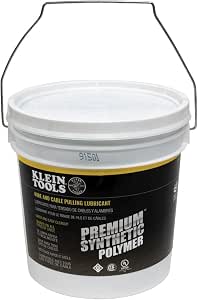 | Best for High-Volume Long Runs | Container type: Pail | Viscosity: Medium to high | Temperature range: 20°F to 140°F | VIEW ON AMAZON | See Our Full Breakdown |
| Gardner Bender 79-401 Super-Slick Cable Pulling Lubricant, 1 Qt. Squeeze Bottle |  | Best for Wide Temperature Swings | Container type: Squeeze bottle | Liquid volume: 1 quart | Compatible material: All cable types | VIEW ON AMAZON | See Our Full Breakdown |
| Klein Tools 51028 Clear Lubricant, 1-Quart Squeeze Bottle |  | Best for Finished Interiors | Brand: Klein Tools | Model number: 51028 | Volume: 1 quart | VIEW ON AMAZON | See Our Full Breakdown |
| Klein Tools 56117 Wax Lubricant, 1-Quart Squeeze Bottle, 6-Pack |  | Best for Long-Lasting Lubrication | Container type: Squeeze bottle | Viscosity: Medium | Compatible material: Cable jackets | VIEW ON AMAZON | See Our Full Breakdown |
| cable pulling lubricant for long run | Container type | Liquid volume | Material | Item weight |
|---|---|---|---|---|
| Gardner Bender 79-201 Poly-Gel | Bottle | 1 quart | Polyurethane | — |
| Ideal Electrical Aqua-Gel II P | Squeeze bottle | 1 quart / 32 fl. oz. | Polymer | 2.3 lb |
| Ideal Electrical Clearglide Pu | Bottle | 1 quart | Polymer | 2.2 lb |
| Ideal Electrical Yellow 77 Wir | Pail | 1 gallon | Wax | 7.4 lb |
| Klein Tools 51010 Wax Lubrican | Squeeze bottle | 946 ml | Synthetic wax | 1 kg |
| 3M Wire Pulling Lubricant Gel | — | 1 quart | — | 2.2 pounds |
| Klein Tools 51017 Pulling Lubr | Pail | 1 gallon | Blend | 8.8 pounds |
| Gardner Bender 79-401 Super-Sl | Squeeze bottle | 1 quart | — | 2 pounds |
| Klein Tools 51028 Clear Lubric | Squeeze bottle | — | Silicone | — |
| Klein Tools 56117 Wax Lubrican | Squeeze bottle | 1 quart per bottle | Synthetic wax | — |
More Details on Our Top Picks
Gardner Bender 79-201 Poly-Gel Cable-Pulling Lubricant, 28° – 200°F, Dries Clear, Conduit & Fiber-Optic Cable Insulation, Squeeze Bottle, Blue
For long pulls involving fiber-optic cable, this water-based gel pairs broad cable-use guidance with a clear, non-conductive film after drying. Its stated working range of -28°F to 200°F gives it an advantage when job conditions vary, while the quart bottle is a manageable amount for crews that do not need a gallon pail. Compared with Ideal Yellow 77, Poly-Gel is the clearer fit when fiber-optic insulation and simple cleanup matter more than a wax formula’s long-lasting adhesion. The tradeoff is that long-run performance depends on applying enough lubricant along the route; the bottle does not provide a pump, and the supplied data does not specify a maximum run length. Check jacket compatibility for the cable in hand before committing to a pull.
Pros:- Described for conduit and fiber-optic cable insulation
- Water-based, non-toxic formula is easier to clean up than a wax lubricant
- Dries to a clear, non-conductive film
- Stated operating range spans -28°F to 200°F
Cons:- Quart bottle may require replenishment on extended or repeated long runs
- Manual application can be labor-intensive without a pump
- Temperature range does not cover conditions beyond its stated limits
Best for: Installers pulling fiber-optic or conduit cable who want a water-based lubricant, clear dry film, and a quart-sized container.
Not ideal for: Crews handling very long, high-friction pulls who need a large-volume pail or a pump-ready application setup.
- Container type:Bottle
- Liquid volume:1 quart
- Viscosity:70,000–110,000 cps at 10 rpm
- Material:Polyurethane
- Recommended uses:Electrical, conduit, and fiber-optic cable insulation
- Temperature range:-28°F to 200°F
Our verdict“Choose Poly-Gel for fiber-optic and conduit pulls where a clear-drying water-based gel and broad stated temperature range matter more than bulk capacity.”
Ideal Electrical Aqua-Gel II Pulling Lubricant, 32 fl. oz.
Aqua-Gel II suits crews who need a familiar water-based option for utility pulls across most cable jacket types. Its polymer formula is described as reducing friction and tension, a useful aim when a long route puts more resistance on the pull. It is non-toxic and non-flammable, and cleanup is easier than with wax-based choices such as Ideal Yellow 77. The important exception is composite rubber jackets, which are not compatible; this makes checking the cable specification part of the decision, not an afterthought. Compared with Ideal ClearGlide, Aqua-Gel II has broader stated jacket coverage but lacks ClearGlide’s explicit all-jacket compatibility claim. The one-quart squeeze bottle also calls for repeated manual application on lengthy jobs unless a pump is used.
Pros:- Designed to reduce friction and tension during cable pulls
- Compatible with most cable jacket types other than composite rubber
- Non-toxic and non-flammable
- Water-based formula is described as easy to clean up
Cons:- Not suitable for composite rubber cable jackets
- Quart bottle may be limiting across multiple long runs
- Manual application may take extra time without a pump
Best for: Electrical and communication installers pulling long runs with common cable jackets who value water-based cleanup and can confirm jacket compatibility.
Not ideal for: Crews pulling composite-rubber-jacketed cable or seeking a bulk container for repeated long-distance installations.
- Container type:Squeeze bottle
- Liquid volume:1 quart / 32 fl. oz.
- Material:Polymer
- Compatible materials:Most cable jacket types except composite rubber
- Item weight:2.3 lb
- Model number:76426
Our verdict“Pick Aqua-Gel II for long utility pulls with compatible cable jackets when easy cleanup matters more than gallon-scale supply.”
Ideal Electrical Clearglide Pulling Lubricant, 1 Qt
ClearGlide is the speed-oriented pick here: its high-lubricity polymer formula is intended to support fast electrical and data-cable pulls, and the clear liquid helps keep application visible without leaving a conspicuous residue. The product data lists compatibility with all cable jacket types, a broader claim than Aqua-Gel II, which excludes composite rubber. That range can simplify stocking when a crew handles varied cable. The caveat for long runs is controlled evaporation: it may be better suited to shorter pulls than a route where lubricant must remain effective over extended handling. Unlike Ideal Yellow 77, it is not presented as a long-lasting wax with strong adhesion. Its quart bottle is also less practical than a gallon pail for repeated, high-volume work.
Pros:- High lubricity is intended to support fast cable pulls
- Listed as compatible with all cable jacket types
- Clear polymer formula is suited to tidy application
- Described as non-toxic and suitable for indoor and outdoor use
Cons:- Controlled evaporation may limit suitability for long runs
- Quart container provides less supply than a gallon pail
- Specific use is electrical and data communication cable installation
Best for: Data and electrical installers prioritizing fast pulls, clear application, and a single lubricant for varied cable jacket types.
Not ideal for: Crews tackling extended runs where slow drying and long-lasting adhesion are more important than quick, clean application.
- Container type:Bottle
- Liquid volume:1 quart
- Material:Polymer
- Compatible materials:All cable jacket types
- Item weight:2.2 lb
- Model number:31-388
Our verdict“Choose ClearGlide for fast, clean pulls across varied cable types, but favor Ideal Yellow 77 when a long route calls for longer-lasting adhesion.”
Ideal Electrical Yellow 77 Wire Pulling Lubricant, 1-Gallon Bucket, Model 31-351
Yellow 77 earns the long-run role through two practical advantages: wax-based adhesion designed to last along a cable route and a one-gallon pail that gives crews more lubricant on hand than the quart bottles in this group. Its stated temperature stability also suits jobs where conditions vary. Compared with ClearGlide, which is positioned for fast pulls but has controlled evaporation, Yellow 77 is the more compelling choice when staying power and supply volume lead the decision. There are compatibility limits: the product is not suitable for low-density polyethylene or semi-conducting jackets, so verify the cable construction before use. The pail is less convenient to carry and apply than a squeeze bottle, and wax cleanup may be less straightforward than with water-based gels.
Pros:- Wax formula is described as offering long-lasting adhesion for long pulls
- One-gallon pail provides more supply than quart-sized options
- Stated to remain stable across a wide temperature range
- Can be applied by hand or brush
Cons:- Not suitable for low-density polyethylene or semi-conducting jackets
- Pail is heavier and less convenient to carry than a squeeze bottle
- Manual application may be slower than a pump-based setup
Best for: Electrical crews making extended or repeated pulls who want a gallon of adhesive wax lubricant and have confirmed the cable jacket is compatible.
Not ideal for: Installers working with low-density polyethylene or semi-conducting jackets, or those who need a compact bottle for occasional jobs.
- Container type:Pail
- Liquid volume:1 gallon
- Material:Wax
- Form:Liquid, wax
- Item weight:7.4 lb
- Model number:31-351
- Recommended uses:Cable pulling and fishing; electrical wiring installations
Our verdict“Choose Yellow 77 for compatible cable on extended or repeated electrical runs where adhesion and gallon capacity outweigh portability.”
Klein Tools 51010 Wax Lubricant, 1-Quart Squeeze Bottle
Klein’s 51010 puts a synthetic wax formula in a quart squeeze bottle, making it the portable alternative to Ideal Yellow 77’s one-gallon pail. Its described clingability and slow drying can help keep lubricant on the cable during a long pull, while the bottle gives an installer more direct control than a bucket. The product data lists polyethylene compatibility, and the description says it works with most cable jackets; I would still check the specific jacket rather than assume universal compatibility. Compared with Aqua-Gel II, this wax option emphasizes cling and slow drying rather than water-based cleanup. That persistence can be useful on extended routes, but the smaller volume means it is less suited to repeated crew-scale pulls, and wax may take more effort to clean away.
Pros:- Synthetic wax is described as clingy and slow-drying
- Quart squeeze bottle is easier to carry and handle than a gallon pail
- Product data lists polyethylene compatibility
- Non-staining formula supports cleaner application
Cons:- Quart capacity is limited for repeated or crew-scale long runs
- Wax may be harder to clean up than water-based lubricants
- Description limits the application focus to electrical and utility work
Best for: Electricians handling occasional long pulls who want a portable squeeze bottle with a slow-drying, clingy wax formula.
Not ideal for: Crews completing many long runs in succession or installers who prioritize water-based cleanup and a large-volume container.
- Container type:Squeeze bottle
- Liquid volume:946 ml
- Material:Synthetic wax
- Compatible material:Polyethylene
- Item weight:1 kg
- Recommended application:Electrical and utility applications
Our verdict“Choose Klein 51010 when portability and wax cling matter on occasional long pulls, but choose Yellow 77 for greater volume across repeated runs.”
3M Wire Pulling Lubricant Gel WL-QT, 1 Quart
For long runs involving different cable jackets, the 3M WL-QT is a flexible choice: its medium-to-high-viscosity gel and stated compatibility across cable jacket materials make it suited to varied electrical pulls. Its low-friction formula supports easier movement through conduit, while the quart container is practical for a crew that wants manageable handling rather than a gallon pail. Compared with the Klein Tools 51017, 3M is a smaller-volume option with a narrower stated temperature ceiling, so it is less compelling for repeated large jobs or hotter conditions. It is described as easy to apply and clean, but its 20°F–110°F operating range calls for attention on cold or warm jobsites. I would choose it for mixed-cable work within that range, not as a universal industrial lubricant.
Pros:- Compatible with a wide range of cable types and jacket materials
- Low-friction gel helps reduce pulling resistance
- Quart volume is easier to manage than a gallon pail
- Described as non-staining and easy to clean up
Cons:- Stated temperature range is narrower than Klein Tools 51017’s 20°F–140°F range
- A quart may run short on repeated or especially long pulls
- Industrial-use positioning may be excessive for occasional household work
Best for: Electricians handling varied cable jacket types on moderate-length conduit runs in temperatures between 20°F and 110°F.
Not ideal for: Crews doing repeated high-volume pulls or working outside the stated temperature range; the quart size and limited operating range may not fit those jobs.
- Viscosity:Medium to high
- Compatible material:Cable jacket materials
- Liquid volume:1 quart
- Item weight:2.2 pounds
- Temperature range:20°F to 110°F
- Form:Translucent gel
- Certifications:UL listed and CSA certified
Our verdict“Choose the 3M WL-QT for varied cable jackets and manageable job quantities, provided your work stays within its stated temperature range.”
Klein Tools 51017 Pulling Lubricant, 1 Gallon
Among these options, the Klein Tools 51017 makes the strongest case when a crew expects many pulls: its one-gallon pail reduces the need to restock compared with the quart-size 3M WL-QT or Gardner Bender Super-Slick. The medium-to-high-viscosity gel clings to wires and conduit, which can help keep lubricant where it is needed during a long feed rather than requiring frequent reapplication. Its 20°F–140°F range also gives it more temperature headroom than the 3M. The tradeoff is handling: an 8.8-pound pail and sticky gel suit professional work better than a small repair, and careful application matters if keeping the site clean is a priority. I would favor this for repeated electrical, telecom, or data pulls, while occasional users may prefer a quart squeeze bottle.
Pros:- One-gallon volume suits repeated pulls and reduces refill interruptions
- Gel clings to wires and conduit during handling
- Compatible with various cable jackets
- 20°F–140°F operating range exceeds the stated range of the 3M WL-QT
Cons:- The 8.8-pound pail is less convenient to carry and apply than a quart squeeze bottle
- Gel consistency can create mess without controlled application
- Large volume may be excessive for occasional or small-scale jobs
Best for: Professional electrical, telecommunications, and data crews handling repeated or long conduit pulls that call for gallon-scale supply.
Not ideal for: DIY users doing a one-off pull or working in tight, finished spaces where a heavy pail and gel application can be awkward.
- Container type:Pail
- Viscosity:Medium to high
- Temperature range:20°F to 140°F
- Liquid volume:1 gallon
- Item weight:8.8 pounds
- Material:Blend
- Warranty:1 year
Our verdict“Pick the Klein Tools 51017 when long runs are part of regular, high-volume work and a gallon pail is practical for your crew.”
Gardner Bender 79-401 Super-Slick Cable Pulling Lubricant, 1 Qt. Squeeze Bottle
The Gardner Bender 79-401 earns a distinct place for jobs exposed to a broad range of temperatures: its stated 28°F–200°F range reaches much higher than the Klein Tools 51017 and 3M WL-QT. Microbead technology is described as reducing friction to support longer pulls with less tension, making the formula particularly relevant when cable resistance is a concern. Its squeeze bottle also offers more controlled application than the gallon-size Klein pail. That convenience comes with a capacity limit: the one-quart bottle may not be enough for a crew doing multiple long runs in succession. The 28°F lower bound also leaves it less suited to freezing conditions than Klein Tools 51028, which is described as stable in hot and freezing environments. I would choose this for variable but non-freezing sites where temperature headroom matters.
Pros:- Stated operating range extends from 28°F to 200°F
- Microbead technology is designed to reduce friction on longer pulls
- Squeeze bottle allows controlled application
- Compatible with all cable types according to the product data
Cons:- One-quart capacity may require replenishment during repeated long runs
- 28°F lower limit excludes freezing-site work
- The stated temperature range still needs to be checked against actual job conditions
Best for: Electricians and DIY installers pulling cable in sites with substantial temperature variation, especially where a controlled squeeze-bottle application is useful.
Not ideal for: Crews working in freezing conditions or making many long pulls in sequence; its stated lower limit is 28°F and the bottle holds only one quart.
- Container type:Squeeze bottle
- Liquid volume:1 quart
- Compatible material:All cable types
- Temperature range:28°F to 200°F
- Flash point:200°F
- Viscosity grade:5W-20
- Item weight:2 pounds
- Model number:79-401
Our verdict“Choose Gardner Bender Super-Slick for long pulls in warm or highly variable conditions, but not for freezing work or sustained high-volume use.”
Klein Tools 51028 Clear Lubricant, 1-Quart Squeeze Bottle
When a long pull passes through a finished building, visible residue can matter almost as much as friction. The Klein Tools 51028 is a clear, non-toxic silicone-based lubricant described as non-staining on carpets and walls, making it a better fit for occupied interiors than the gel-based Klein Tools 51017. The squeeze bottle also offers more precise placement than that product’s gallon pail. Its stated temperature stability in both hot and freezing environments is useful where conditions vary, although the data gives no exact temperature limits to compare directly with Gardner Bender Super-Slick’s 28°F–200°F range. One quart is convenient to handle but less suited to repeated high-volume pulls, and the slow-drying formula may call for careful cable handling. I would put it ahead of bulk gel when protecting finished surfaces is the priority.
Pros:- Clear formulation is described as non-staining on carpets and walls
- Non-toxic formula and easy cleanup suit finished work areas
- Squeeze bottle supports controlled application
- Described as temperature stable in hot and freezing environments
Cons:- One-quart volume is less practical than the gallon Klein Tools 51017 for repeated pulls
- Slow-drying formula may require careful handling
- Product data does not provide exact temperature limits
Best for: Datacom and electrical installers making conduit pulls through finished homes, offices, or other spaces where staining and cleanup are concerns.
Not ideal for: Crews prioritizing bulk supply for repeated long runs or those who need a specified numerical temperature range before selecting a lubricant.
- Brand:Klein Tools
- Model number:51028
- Volume:1 quart
- Weight:0.95 kg
- Material:Silicone
- Container type:Squeeze bottle
- Compatible materials:Cable jackets
- Origin:Made in USA
Our verdict“Choose Klein Tools 51028 when a long pull runs through finished interiors and clean, low-visibility application matters more than bulk capacity.”
Klein Tools 56117 Wax Lubricant, 1-Quart Squeeze Bottle, 6-Pack
For crews who want a coating that stays on the cable during a long feed, the Klein Tools 56117 stands out for its synthetic-wax formula and medium viscosity. The product data describes the lubrication as long-lasting, which may suit extended pulls better than relying on repeated application from a small bottle. Compared with the clear, silicone-based Klein Tools 51028, this is the more coating-focused option, but it gives up that product’s stated non-staining appeal for finished interiors. The listed six-pack provides multiple quart bottles for stocking a crew, though the pack size and wax-based material may not suit every application or jobsite cleanup preference. Its stated compatibility is with cable jackets, and the product is intended for electrical wire and cable pulling. I would select it when lasting slip matters more than a clear formula.
Pros:- Synthetic-wax formula is described as providing long-lasting lubrication
- Medium viscosity supports application as a coating on cable jackets
- Product data states compatibility with most cable jackets
- Six-bottle pack gives crews multiple quart containers
Cons:- Synthetic wax may not suit every cable or jobsite application
- Less suited than Klein Tools 51028 to work where a clear, non-staining formula is preferred
- Intended for electrical wire and cable pulling rather than general-purpose lubrication
Best for: Electrical crews handling extended cable pulls who want a medium-viscosity synthetic-wax coating and multiple quart bottles on hand.
Not ideal for: Installers working through finished interiors where clear, non-staining cleanup is a priority, or buyers whose application does not suit synthetic wax.
- Container type:Squeeze bottle
- Viscosity:Medium
- Compatible material:Cable jackets
- SAE J300 viscosity grade:20W
- Liquid volume:1 quart per bottle
- Material:Synthetic wax
- Number of items:6
- Made in:USA
Our verdict“Choose Klein Tools 56117 when sustained lubrication and a multi-bottle supply matter more than a clear formula or broad-use flexibility.”

How We Picked
I compared these ten lubricants through the specific demands of long cable pulls: the stated use and compatibility, product format, package size, cleanup information, and how practical each option looks for a single job versus recurring work. I gave more weight to clear, relevant use information and a workable format than to volume alone; a gallon container is not automatically a better choice if it is cumbersome or more than the job needs. I also treated wax, gel, and squeeze-bottle formats as distinct choices because application and handling can affect how smoothly a crew works along a lengthy route.
The order reflects how broadly useful each product appears for this use case, balanced against its tradeoffs. Aqua-Gel II leads as a straightforward gel-format pick in a manageable size; larger packages rank well for sustained use, while clear-drying or specialized options serve more specific priorities. The products are not interchangeable by name alone: I recommend confirming the lubricant manufacturer’s stated compatibility with the cable jacket and conduit, then following the cable maker’s instructions before a pull.
| cable pulling lubricant for long run | Container type | Material |
|---|---|---|
| Gardner Bender 79-201 Poly-Gel | Bottle | Polyurethane |
| Ideal Electrical Aqua-Gel II P | Squeeze bottle | Polymer |
| Ideal Electrical Clearglide Pu | Bottle | Polymer |
| Ideal Electrical Yellow 77 Wir | Pail | Wax |
| Klein Tools 51010 Wax Lubrican | Squeeze bottle | Synthetic wax |
| 3M Wire Pulling Lubricant Gel | — | — |
| Klein Tools 51017 Pulling Lubr | Pail | Blend |
| Gardner Bender 79-401 Super-Sl | Squeeze bottle | — |
| Klein Tools 51028 Clear Lubric | Squeeze bottle | Silicone |
| Klein Tools 56117 Wax Lubrican | Squeeze bottle | Synthetic wax |
Factors to Consider When Choosing Cable Pulling Lubricant For Long Runs
A long pull magnifies small choices: application access, the number of bends, crew pace, and cleanup can matter as much as the lubricant container. I use these broader checks to narrow the options before selecting a product.
Match the lubricant to both cable and conduit
Start with the cable jacket and conduit materials, not the lubricant’s general label. A product described for wire pulling may still have specific compatibility limits, and a long run leaves more surface area exposed to the lubricant. Check the lubricant maker’s technical information alongside the cable manufacturer’s installation guidance. Do not assume that a product suitable for one jacket, such as a general electrical cable, is suitable for fiber-optic cable or another specialty cable. When guidance conflicts or is unclear, ask the manufacturers before the pull rather than finding out after the cable is in place.
Plan application around the route, not just the entry point
On a long run, lubricant needs to reach the cable where friction builds, including bends and changes in direction. A container that is easy to squeeze or dispense can be more useful than a larger package that is awkward to position. Before starting, identify accessible points along the route and agree on how the crew will apply lubricant as the pull progresses. A common mistake is to put a large amount only at the conduit entrance and expect it to carry through every bend. Follow the product instructions for application; do not improvise with extra lubricant if the pull remains difficult.
Choose package size for job frequency and handling
A quart bottle is often easier to control for a one-off job, while a gallon container can make sense for repeated pulls or a crew that can use the contents appropriately. Multipacks can help keep supplies available across several work areas, but only when ongoing demand justifies storing multiple containers. Consider where the product will be kept, how it will be carried to the worksite, and whether the container can be dispensed neatly in tight spaces. Buying a larger format solely because the run is long confuses volume with performance. Pick the size that supports the application plan and expected use.
Treat cleanup and drying claims as practical factors
Cleanup matters when cable, conduit ends, nearby finishes, or work areas must remain tidy. A product described as drying clear may suit installations where visible residue is a concern, but that claim does not mean there is no residue or that cleanup is unnecessary. Check the product instructions for drying behavior and any cleanup method before work begins. Avoid choosing by color or appearance alone: compatibility and handling instructions still come first. If several pulls are planned, consider how residue may affect subsequent work and how the crew will manage containers and application tools.
Account for bends, fill, and pulling equipment
Lubricant cannot compensate for an overloaded conduit, an unsuitable pulling setup, or a route with excessive resistance. Cable count, conduit size, bend quantity, and pull length all affect the force needed to move cable. Review the installation plan and applicable cable and conduit guidance before treating lubricant as the fix for a difficult route. A frequent mistake is to keep increasing pulling force when the real issue is an obstruction, poor alignment, or an unsuitable pull plan. If the route is demanding, assess the full setup and use appropriate pulling equipment and safe work practices.
Pay for the format and fit you will actually use
Higher volume or a specialized label is useful only when it matches the job. A wax product may suit a buyer seeking that format, while a gel or squeeze bottle may be easier to meter along an accessible run; compare instructions rather than relying on a broad assumption about which consistency is superior. For occasional work, a manageable container can reduce waste and simplify storage. For recurring work, a larger container or multipack may be more practical if the product remains within its stated storage conditions and the crew can use it correctly. The best choice is the one that meets compatibility requirements and fits the route, workflow, and usage pattern.
Frequently Asked Questions
Should I choose a gallon container for a long cable pull?
Not automatically: run length does not determine how much lubricant a job needs by itself. Cable type, conduit size, bends, application method, and the product’s instructions all affect usage. A gallon format can suit recurring work or a crew handling several pulls, while a quart may be easier to control on a one-time job. Estimate needs from the manufacturer’s directions and your installation plan rather than buying by run length alone. Do not use more than directed to compensate for a route or setup problem.
Can I use the same pulling lubricant for fiber-optic cable and ordinary wire?
Do not assume that one lubricant is suitable for both. Check the product’s stated cable applications and verify them against the fiber or cable manufacturer’s installation instructions. Gardner Bender Poly-Gel specifically lists fiber-optic cable insulation among its described uses, but that does not replace confirmation for a particular cable. Jacket materials and installation requirements vary, and an incompatible product could create a problem that is hard to address after the cable is pulled. When documentation is unclear, confirm with the manufacturers before use.
Is wax or gel better for a long conduit run?
Neither format is universally better; the right choice depends on the product instructions, cable compatibility, route, and how the crew will apply it. Gel products offer a different handling format from the Klein wax options in this roundup, so compare how each is dispensed and used for the specific installation. A long run also makes access to bends and intermediate application points important. Do not choose by consistency alone or treat format as a substitute for a properly planned pull. Follow the product maker’s directions for the cable and conduit in use.
Does a clear-drying lubricant leave no residue?
No. A clear-drying description indicates an appearance or drying characteristic, not a guarantee that the product leaves no residue or requires no cleanup. Gardner Bender Poly-Gel and Super-Slick are described as drying clear, which may be useful where visible residue is a concern. Read each product’s instructions for drying and cleanup details, and consider the work area and later installation steps. Avoid letting a cleanup preference override cable compatibility or application requirements. If residue could affect connected equipment or a finish, ask the relevant manufacturer for guidance.
When does a six-pack make more sense than buying one quart?
A multipack is more practical when several crews, work areas, or repeated jobs will use the product and separate containers help with distribution. Klein 56117 packages six quart bottles, while a single quart is easier to justify for occasional work or an uncertain future workload. Before selecting the multipack, consider storage conditions, product instructions, and whether the quantity can be used appropriately. Multiple bottles do not improve pulling performance on their own. If the lubricant is for one project, a smaller order may be simpler to manage.
Conclusion
For a broad-purpose starting point, I would choose Ideal Electrical Aqua-Gel II as the best overall option in a manageable gel format. Best value for repeat work depends on actual usage: Ideal Yellow 77 or Klein 51017 makes more sense when a gallon container fits the crew’s workload, while a quart is the more practical choice for occasional jobs. For buyers prioritizing a clear-drying description, Gardner Bender Super-Slick is the standout; Poly-Gel is the more specific pick when its listed fiber-optic application matches the installation. Beginners may find a squeeze-bottle quart easier to handle than a larger container, but should still check compatibility and instructions before starting. Choose Klein 56117 for ongoing work that benefits from six separate bottles, and choose a Klein wax option only when its format and guidance suit the cable and route. My final recommendation is to match the lubricant to the cable first, then pick the container and format that fit the crew and pull plan.
Fall Picks
fall essentials
As an affiliate, we earn on qualifying purchases.