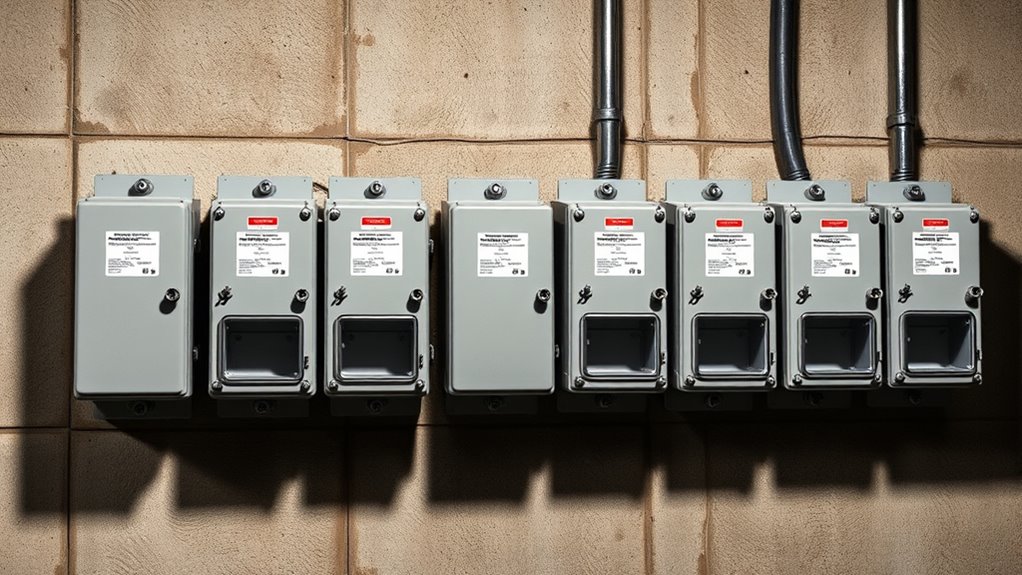

Choosing an explosionproof junction box is less about picking the toughest-looking enclosure and more about matching its documented protection and wiring layout to the actual site. My strongest starting points are the UL-certified four-entry aluminum box for buyers who need stated certification and 3/4-inch NPT ports, the GUP215 conduit box for installations that benefit from multiple hubs, and the 20 x 20 x 15 cm IP66 enclosure when extra room and outdoor protection matter most. Those strengths are not interchangeable: a control station with an emergency-stop button is a different purchase from a junction enclosure, while a compact box cannot offer the wiring capacity of a larger model.

Get business pricing on networking and server gear
- Business-only prices and quantity discounts
- Tax-exempt purchasing
- Multiple users, one account, clear invoices
I ranked these options by the information supplied about hazardous-location suitability, protection, material, entry configuration, and practical fit. The main tradeoff is documented certification versus general product claims: only one listing here explicitly states UL certification. I also weigh size against installation burden, since a large cast-metal enclosure can be awkward to mount and a mini box can run out of working room. Buyers should verify that the product’s certification, markings, conduit fittings, and installation method match their local code and the classified location before purchase.
Key Takeaways
- Best-documented choice: The four-entry, 3/4-inch NPT aluminum box is the only listing that explicitly states UL certification for C1D1 and C2D1; verify its label and suitability for the exact site.
- Best for flexible conduit routing: The GUP215 lists multiple hubs and plugs, but its hub arrangement and conduit-size compatibility need checking before you plan a run.
- Best for a larger outdoor enclosure: The 20 x 20 x 15 cm cast-aluminum model specifies IP66 protection and offers more room than the compact mini box.
- Best for a small wiring task: The 80 x 76 x 60 mm mini box is easier to fit into a tight space, though its listed cable range and small interior limit its use.
- Control versus junctioning: The push-button model includes an emergency-stop button but lacks detailed electrical ratings, so it should not be treated as a general-purpose junction box without confirming its role.
| Explosion Proof Junction Box, 3/4” NPT x 4, UL Certified for C1D1 & C2D1 |  | Best Overall — clearest certification and port details | Material: Die-casting aluminum | Certification claim: UL Certified for C1D1 & C2D1; verify product documentation | Cable entries: 4 | VIEW ON AMAZON | See Our Full Breakdown |
| GUP215 Conduit Junction Box, Explosion Proof |  | Best for multiple conduit connections | Material: Feraloy iron alloy | Capacity: 29 cubic inches | Dimensions: 4.06 x 4.06 x 4.13 inches | VIEW ON AMAZON | See Our Full Breakdown |
| Outdoor Waterproof Explosion-Proof Electrical Junction Box 20x20x15cm |  | Best for larger outdoor wiring space | Material: Die-cast aluminum alloy | Protection level: IP66 | Dimensions: 20 x 20 x 15 cm | VIEW ON AMAZON | See Our Full Breakdown |
| Explosion Proof Mini Metal Box 3.15x3x2.36 inch (80x76x60mm) |  | Best Compact — for a small, defined wiring task | Material: Aluminum | Exterior size: 3.15 x 3 x 2.36 inches (80 x 76 x 60 mm) | Interior size: 2.9 x 2.8 x 2.1 inches | VIEW ON AMAZON | See Our Full Breakdown |
| DIY Metal Push Button Control Box Explosion-Proof Waterproof Junction Box Emergency Start Reset Electric (2P Reset) |  | Best for a control point with an emergency-stop button | Material: ABS and metal | Listed features: Explosion-proof, anti-corrosion, waterproof, and high-temperature resistant | Included component: Emergency-stop push button | VIEW ON AMAZON | See Our Full Breakdown |
| explosionproof junction box | Material | Weight |
|---|---|---|
| Explosion Proof Junction Box | Die-casting aluminum | — |
| GUP215 Conduit Junction Box | Feraloy iron alloy | 4.7 pounds |
| Outdoor Waterproof Explosion-P | Die-cast aluminum alloy | 1,500 g |
| Explosion Proof Mini Metal Box | Aluminum | 0.38 kg |
| DIY Metal Push Button Control | ABS and metal | 593 g |
More Details on Our Top Picks
Explosion Proof Junction Box, 3/4” NPT x 4, UL Certified for C1D1 & C2D1
This is my leading pick for a buyer who needs a conventional hazardous-location junction enclosure and wants more concrete selection information than a generic explosionproof claim. The listing states UL certification for C1D1 and C2D1, four 3/4-inch NPT entries, die-cast aluminum, and IP66 protection. Those details make it easier to compare against a wiring plan: four ports support several conduit approaches, and the included sealing plugs can close unused entries when installed as directed.
Compared with the GUP215, this box gives a simpler, explicit port count and size, while the GUP215 offers a more varied hub layout. It also gives a buyer more evidence to check than the large 20 cm enclosure, whose supplied specifications do not state a certification. Still, the listing’s certification language should be confirmed on the actual product markings and documentation; I would not assume that a product claim alone settles suitability for every classified location. Its four-entry limit and metal weight also call for planning, and it may be excessive for a simple, nonhazardous connection.
Pros:- Listing explicitly states UL certification for C1D1 and C2D1
- Four 3/4-inch NPT ports make the entry layout easy to plan
- IP66 protection is specified for dust and water exposure
- Includes four sealing plugs for unused entries
Cons:- Four entries may restrict more complex wiring layouts
- Die-cast metal adds weight compared with a compact enclosure
- The buyer still needs to verify markings and application suitability
Best for: Industrial buyers who need four 3/4-inch NPT conduit entries and want an explicitly stated UL certification claim to verify against their site requirements.
Not ideal for: Anyone who needs more than four entries, a small low-profile enclosure, or documentation that has not been confirmed for the exact application.
- Material:Die-casting aluminum
- Certification claim:UL Certified for C1D1 & C2D1; verify product documentation
- Cable entries:4
- Port size:3/4-inch NPT
- Protection:IP66; listing also states NEMA 4X
- Included components:4 sealing plugs
Our verdict“I rank this first for its combination of stated certification, defined NPT ports, and IP66 protection, provided the actual documentation matches the installation.”
GUP215 Conduit Junction Box, Explosion Proof
The GUP215 is the most conduit-oriented choice in this group. Its feraloy iron alloy body, rain-tight enclosure with a neoprene gasket, and multiple hubs and plugs suit a fixed installation where several runs need to meet. The listing describes several hub configurations, including six hubs with three plugs or ten hubs with seven plugs, and gives a 29-cubic-inch capacity. That flexibility may be more useful than the four fixed 3/4-inch NPT entries on the UL-claimed aluminum model when the layout calls for more connection points.
The tradeoff is that the hub details need careful confirmation. The product information also describes four top hubs, two bottom hubs, and one side hub, which does not neatly resolve the alternative hub counts. I would check the exact supplied configuration and conduit sizes before laying out a job. At 4.7 pounds, it is heavier than the mini enclosure and needs suitable support. Compared with the larger IP66 aluminum box, this model emphasizes conduit hubs and rain-tight construction rather than a stated IP rating. The supplied details do not name a certification standard, so buyers should verify markings and hazardous-location approval instead of relying on the product title alone.
Pros:- Feraloy iron alloy body with a powder-coated finish
- Multiple hubs and plugs support varied conduit layouts
- Rain-tight enclosure uses a neoprene gasket
- 29-cubic-inch capacity is stated
Cons:- Hub-count descriptions need clarification before planning
- Heavy body can complicate mounting
- The supplied information does not identify a certification standard or IP rating
Best for: Installers who need a rugged conduit junction box with several hub locations and can confirm the exact hub configuration before ordering.
Not ideal for: Buyers who require a clearly stated certification standard, a confirmed IP rating, low weight, or a particular conduit size not verified in the listing.
- Material:Feraloy iron alloy
- Capacity:29 cubic inches
- Dimensions:4.06 x 4.06 x 4.13 inches
- Weight:4.7 pounds
- Finish:Powder coated
- Hubs and plugs:Listed as 6 hubs and 3 plugs or 10 hubs and 7 plugs; confirm configuration
- Enclosure:Rain-tight with neoprene gasket
Our verdict“I would choose the GUP215 over a fixed-port box when multiple conduit routes are the priority, but only after confirming hubs, sizes, and certification for the installation.”
Outdoor Waterproof Explosion-Proof Electrical Junction Box 20x20x15cm
When a compact junction box would leave too little working room, this 20 x 20 x 15 cm cast-aluminum enclosure has the most generous stated dimensions among the conventional boxes here. Its IP66 rating is a useful point of comparison for outdoor dust and water exposure, and the listing describes explosion-proof outlets plus wall-mounted and floor-standing installation options. I would shortlist it for an industrial lighting, control, or power-facility application where enclosure space matters more than a small footprint.
Compared with the UL-claimed four-port model, this enclosure offers more stated volume and installation flexibility, but the supplied specifications do not identify the number or size of entries or state a certification standard. That makes it harder to match to a conduit plan or verify for a classified area. The 1.5 kg weight also means the mounting surface and fasteners need attention; it is substantially less convenient than the mini box in a cramped location. I would not let the IP66 rating stand in for hazardous-location certification: buyers need to confirm the actual markings and approval details before installation.
Pros:- Larger 20 x 20 x 15 cm enclosure than the mini option
- IP66 rating is specified
- Cast aluminum construction is described as corrosion resistant
- Listing describes wall-mounted and floor-standing installation
Cons:- Entry count and port sizes are not stated in the supplied specifications
- No certification standard is identified in the supplied details
- 1.5 kg weight calls for solid mounting support
Best for: Industrial buyers who need a larger outdoor enclosure and value a stated IP66 rating, subject to confirming hazardous-location certification and entry details.
Not ideal for: Installers who need specified NPT port sizes, a documented certification standard in the supplied information, or a small and lightweight enclosure.
- Material:Die-cast aluminum alloy
- Protection level:IP66
- Dimensions:20 x 20 x 15 cm
- Weight:1,500 g
- Installation options:Wall-mounted or floor-standing, per listing
- Listed applications:Outdoor lighting, industrial control, communication equipment, and power facilities
Our verdict“I rank this as the larger outdoor choice, but its entry layout and hazardous-location documentation need verification before it can be specified.”
Explosion Proof Mini Metal Box 3.15x3x2.36 inch (80x76x60mm)
This mini box earns its place through size rather than capacity. At 80 x 76 x 60 mm, it is the easiest conventional enclosure here to fit into a tight space, and its stated 4–8 mm cable range helps set expectations for the wiring it can accept. Aluminum construction and surface mounting make it a plausible option for a small connection where a larger enclosure would be cumbersome.
That compactness is also the hard limit. Its inner dimensions are smaller still, so there is less room for conductors, terminations, and service access than in the 20 cm outdoor model or either conduit-focused metal box. The listing says waterproof and weatherproof but gives no IP rating or certification standard in the supplied specifications. It also notes that correct sealing is required to retain water protection. Compared with the four-entry NPT box, this model is easier to place but provides less defined conduit flexibility. I would select it only after confirming the cable fit, internal working space, sealing method, and hazardous-location approvals for the job.
Pros:- Compact 80 x 76 x 60 mm exterior suits restricted spaces
- Aluminum body is described as corrosion resistant
- Surface-mount format is straightforward to plan around
- Cable range of 4–8 mm is stated
Cons:- Small interior limits conductor and termination space
- No IP rating or certification standard is specified in the supplied details
- Seal quality and installation affect its stated weather protection
Best for: Buyers with a genuinely small wiring connection, limited mounting space, and cable that fits the stated 4–8 mm range.
Not ideal for: Installers who need several conduit entries, generous wiring room, a stated IP rating, or certification details established by the supplied listing.
- Material:Aluminum
- Exterior size:3.15 x 3 x 2.36 inches (80 x 76 x 60 mm)
- Interior size:2.9 x 2.8 x 2.1 inches
- Mounting type:Surface mount
- Cable range:4–8 mm diameter
- Weight:0.38 kg
- Color:Grey
Our verdict“I recommend this only for a small, carefully measured connection where compact size matters more than port capacity or documented protection details.”
DIY Metal Push Button Control Box Explosion-Proof Waterproof Junction Box Emergency Start Reset Electric (2P Reset)
This product is different from the other four: it is described as a push-button control box with an emergency-stop button, rather than a plain enclosure for joining conductors. That makes it a more relevant candidate for a machine or industrial control point where an operator needs a physical stop control. Its ABS-and-metal construction, rubber seal, and stated waterproof and anti-corrosion features point toward harsh-use applications, while its lower listed weight of 593 g may simplify mounting compared with the larger cast-metal boxes.
The key drawback is missing electrical detail. The listing provides no detailed voltage, current, contact, or hazardous-location certification information, so I would not rank it alongside the UL-claimed four-entry junction box for a wiring enclosure specification. Compared with the GUP215, it has a specific control function but does not offer a stated multi-hub conduit layout. It may also be bulkier than a standard push-button assembly. Buyers should confirm what “2P Reset” means for the actual control circuit and check the product’s markings and ratings before connecting it to equipment.
Pros:- Includes an emergency-stop push button
- ABS and metal construction with a stated rubber seal
- Listing describes waterproof, anti-corrosion, and high-temperature resistance
- 593 g listed weight is lighter than the large metal enclosures
Cons:- Detailed voltage, current, and contact ratings are not supplied
- Certification standard is not identified in the supplied information
- Control-box format may not suit ordinary junction wiring
Best for: Industrial buyers looking for a control-station-style enclosure with an emergency-stop button, after confirming electrical ratings and site approval.
Not ideal for: Anyone seeking a general-purpose junction box, a specified NPT entry arrangement, or verifiable certification and electrical ratings from the supplied details.
- Material:ABS and metal
- Listed features:Explosion-proof, anti-corrosion, waterproof, and high-temperature resistant
- Included component:Emergency-stop push button
- Weight:593 g
- Model:HSPTR
- Part number:HSPTR
Our verdict“I would choose this for a verified emergency-stop control application, not as a substitute for a fully specified hazardous-location junction enclosure.”

How We Picked
I compared the five listings as hazardous-location enclosures, not as interchangeable metal boxes. I gave more weight to details a buyer can verify in the supplied information: an explicit certification claim, stated protection rating, enclosure material, dimensions, cable-entry format, and included plugs or controls. The four-entry NPT model ranks first because it combines a stated UL certification with clear port sizing and IP66 protection. The GUP215 follows for its multiple conduit hubs and weather-resistant construction, though its supplied description does not provide an explicit certification standard or a clearly resolved hub-size specification.
After those, I ranked the large IP66 enclosure ahead of the mini box because it offers more internal space and names industrial use cases, while the mini has a distinct advantage only when compact size is the priority. The push-button control box has a separate job: its emergency-stop control may suit a control point, but missing electrical ratings make it harder to assess as a junction enclosure. I did not infer certification, hazardous-area class, cable capacity, or compatibility where the listing does not state it. Product claims are not a substitute for checking the nameplate, installation instructions, local requirements, and advice from a qualified electrician.
| explosionproof junction box | Material |
|---|---|
| Explosion Proof Junction Box | Die-casting aluminum |
| GUP215 Conduit Junction Box | Feraloy iron alloy |
| Outdoor Waterproof Explosion-P | Die-cast aluminum alloy |
| Explosion Proof Mini Metal Box | Aluminum |
| DIY Metal Push Button Control | ABS and metal |
Factors to Consider When Choosing Explosionproof Junction Box
I would start with the site classification and wiring plan, then compare box dimensions and entry hardware. An enclosure described as explosionproof is not automatically suitable for every hazardous location, and an IP or rain-tight claim addresses different conditions from a hazardous-location approval. Treat each as a separate check.
Confirm the hazardous-location approval
Before comparing body material or size, identify the classified area and the protection required by the local electrical code. Look for a product nameplate and manufacturer documentation that state the relevant certification, class, division or zone, and conditions of use. In this lineup, the four-entry aluminum model is the only one whose supplied description explicitly claims UL certification for C1D1 and C2D1. That is a useful distinction, not a reason to skip verification. The GUP215 and other products still require their own approval details to be checked. Ask a qualified electrician or the authority responsible for the installation when the markings do not clearly match the site.
Separate hazardous-location approval from water protection
IP66 describes an enclosure’s stated resistance to dust and powerful water jets; it does not, by itself, establish explosionproof certification. The large outdoor box and four-entry box both list IP66, while the GUP215 is described as rain-tight with a neoprene gasket. The mini box is called waterproof and weatherproof but has no IP rating in the supplied details. Match the water-protection information to exposure such as rain, washdown, dust, or sheltered indoor use, and separately confirm hazardous-location suitability. Seals, plugs, and correct installation matter: an unused entry left open can undermine enclosure protection.
Match entries to the conduit plan
Port type and count determine whether an enclosure fits the planned wiring route. The UL-claimed aluminum model gives a clear baseline of four 3/4-inch NPT entries; the GUP215 lists multiple hubs and plugs, but its descriptions show more than one configuration, so confirm exactly what arrives and which conduit sizes fit. The larger 20 cm box does not state entry count or size in the supplied specifications. The mini box lists a 4–8 mm cable range, which is not the same as a specified NPT conduit port. Draw the planned entries before ordering, including capped ports and room for fittings, rather than assuming that two products described as junction boxes connect the same way.
Choose enough room without overloading the mounting point
Small boxes save space but can leave little room to bend conductors, make terminations, or return later for maintenance. The mini enclosure is the clear compact option; the 20 x 20 x 15 cm box gives more stated exterior room, while the GUP215 supplies a 29-cubic-inch capacity. Compare usable interior dimensions with conductor count and installation requirements, not just the outside measurements. Weight matters too: the large box weighs 1.5 kg and the GUP215 weighs 4.7 pounds, so mounting surfaces and fasteners need to support the load. A compact design is not a bargain if the wiring will not fit safely.
Decide whether you need a junction box or a control station
The emergency-stop model should not be treated as a direct substitute for a plain junction enclosure. It includes a push button and may fit a control-point application, but the supplied description lacks detailed electrical ratings and a named certification standard. The other four listings are presented mainly as enclosure options for wiring or conduit connections. Confirm the device’s circuit function, contact ratings, enclosure approval, and installation instructions before connecting it. If the requirement is simply to house splices, prioritize a box with a suitable internal volume, compatible entries, and verifiable hazardous-location documentation.
Frequently Asked Questions
What should I verify before buying an explosionproof junction box?
I would verify the exact hazardous-area classification, product certification and nameplate, allowable installation conditions, entry type and size, enclosure capacity, and environmental protection. Check that the box, fittings, plugs, and sealing method work together as an approved assembly for the intended location. If the listing does not provide the documentation needed to confirm those details, request it from the manufacturer or consult a qualified electrician before specifying the product.
Does an IP66 rating mean a box is explosionproof?
No. IP66 describes stated protection against dust and powerful water jets; it does not establish that an enclosure is certified for a hazardous atmosphere. The 20 cm outdoor enclosure and the four-entry aluminum model both list IP66, but buyers still need to verify the applicable hazardous-location certification and conditions of use. Treat water resistance and explosionproof approval as separate requirements.
Which option has the clearest conduit-entry details?
The four-entry aluminum model gives the clearest fixed layout in the supplied information: four 3/4-inch NPT ports and four sealing plugs. The GUP215 may offer more hub positions, but its listed configurations need clarification, including the exact count and compatible conduit sizes. The large outdoor model does not specify its entry layout, and the mini box gives a cable diameter range rather than a stated NPT arrangement.
Is the emergency-stop push-button model a regular junction box?
I would treat it first as a control box because the listing describes an emergency-stop push button. It may not fit a basic splice-enclosure job, and its supplied information does not give detailed electrical ratings or a named certification standard. Confirm the control’s function, contact ratings, hazardous-location approval, and wiring instructions before choosing it for an industrial control circuit.
Can I install these boxes outdoors without checking the seals?
No. Outdoor claims and ratings depend on using the enclosure, fittings, plugs, gasket, and mounting method as specified. A missing or incorrectly installed plug can compromise protection, and a weather-resistant description does not prove suitability for every exposure. Check the manufacturer’s installation instructions and confirm both the environmental rating and hazardous-location approval for the complete installation.
Conclusion
For buyers who need the clearest stated combination of hazardous-location and wiring information, I would start with the four-entry UL-claimed aluminum box, then confirm its markings and documentation for the site. If the job involves several conduit routes, the GUP215 is the more flexible layout candidate, provided its exact hub configuration and approvals check out. Choose the 20 cm IP66 enclosure when outdoor protection and additional space lead the brief, but verify its unspecified entries and certification. For a small connection in a tight space, the mini box makes the most sense only when its limited interior is enough. I would reserve the push-button model for a verified emergency-stop control role rather than general junction work. For every option, match the actual product documentation to the classified location and installation plan before purchase.
Fall Picks
fall essentials
As an affiliate, we earn on qualifying purchases.