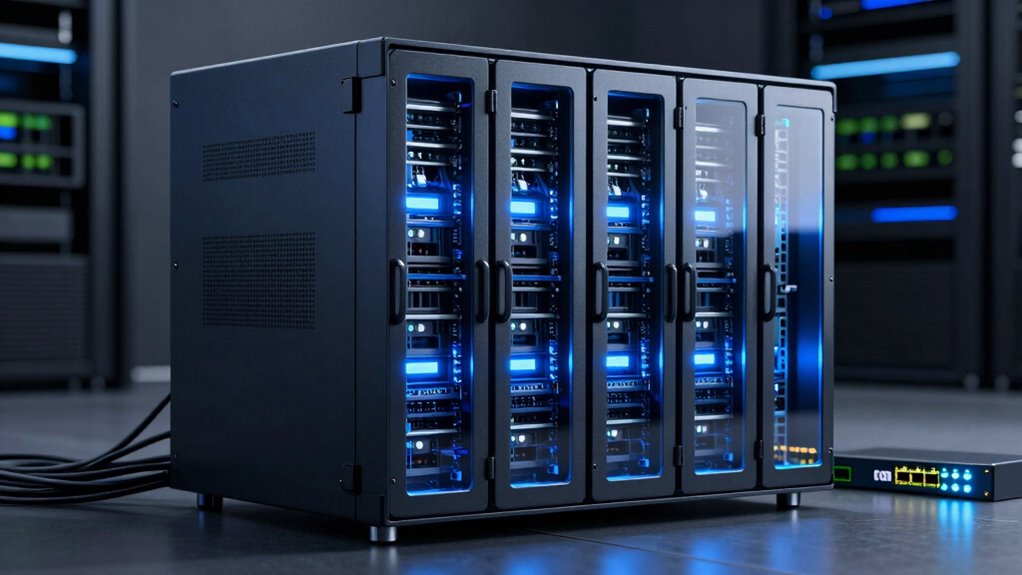

For users needing reliable, high-speed data access, selecting a network attached storage (NAS) for 10GbE becomes a key decision. The QNAP TS-832PXU-4G stands out as the best overall due to its robust performance and expandability, making it ideal for demanding environments. The Ugreen DXP4800 Plus offers excellent value for small teams and families, while the LincStation N2 provides a versatile DIY option for tech-savvy users. These choices reflect the main tradeoffs: balancing speed, capacity, usability, and cost. Keep reading for a detailed breakdown to find the best fit for your specific needs.

Get business pricing on networking and server gear
- Business-only prices and quantity discounts
- Tax-exempt purchasing
- Multiple users, one account, clear invoices
Key Takeaways
- High-speed 10GbE connectivity is the core feature that separates these NAS options from traditional models.
- Rackmount solutions like the QNAP TS-832PXU-4G excel in performance and scalability for business environments.
- Smaller, more affordable models such as the Ugreen DXP4800 Plus suit home users and small teams without sacrificing key features.
- Expandability options, including M.2 NVMe slots and multiple drive bays, are critical for future-proofing.
- Build quality and software ecosystem significantly impact long-term usability and maintenance.
| UGREEN DXP4800 Plus 4-Bay NAS for Families, Creators & Small Teams |  | Best Overall for Flexibility and Power | Digital Storage Capacity: 144 TB | Hard Disk Interface: Serial ATA | Connectivity Technology: Ethernet, HDMI, SATA, USB | VIEW ON AMAZON | See Our Full Breakdown |
| QNAP TS-832PXU-4G 8-Bay High-Speed SMB Rackmount NAS with Dual 10GbE and 2.5GbE Ports |  | Best for SMBs Requiring Rackmount Reliability | Processor: AnnapurnaLabs Alpine AL324 64-bit ARM Cortex-A57 | RAM: 4GB DDR4, expandable to 16GB | Drive Bays: 8 x 3.5-inch SATA | VIEW ON AMAZON | See Our Full Breakdown |
| QNAP TS-932PX-4G 5+4 Bay High-Speed NAS with Dual 10GbE and 2.5GbE Ports |  | Best for Flexible Storage and Data Protection | Number of Bays: 5+4 | Network Ports: 2 x 10GbE SFP+, 2 x 2.5GbE | USB Ports: 3 x USB 3.2 Gen 1 | VIEW ON AMAZON | See Our Full Breakdown |
| UGREEN NAS DXP4800 Pro 4-Bay for IT Professionals, Developers & Power Users |  | Best for Power Users and IT Professionals | Processor: Intel Core i3-1315U | RAM: 8GB DDR5, expandable to 96GB | Storage Capacity: 144TB | VIEW ON AMAZON | See Our Full Breakdown |
| UGREEN NAS DXP6800 Pro 6-Bay File Server for Teams and Small Businesses |  | Best for Large Storage and Business Scalability | Digital Storage Capacity: 208 TB | Hard Disk Interface: Serial ATA-600 | Data Transfer Rate: 2500 MB/s | VIEW ON AMAZON | See Our Full Breakdown |
| LincStation N2 6-Bay NAS Server with Intel N100, 16GB RAM, 10GbE, 2x SATA, 4x M.2 NVMe, DIY NAS for Plex, Docker, Private Cloud, Unraid Starter License Included, Diskless |  | Best for Versatile DIY Enthusiasts and Small Offices | Processor: Intel N100, 4-core, up to 3.4GHz | Memory: 16GB LPDDR5 RAM | Storage Bays: 2x SATA, 4x M.2 NVMe | VIEW ON AMAZON | See Our Full Breakdown |
| Synology DS1525+ 5-Bay Diskless NAS Server for Video Editing and Production |  | Best for High-Speed Media Editing and Collaborative Workflows | Number of Bays: 5 | Maximum Storage Capacity: 300TB | Network Speed: 10GbE | VIEW ON AMAZON | See Our Full Breakdown |
| UGREEN NAS DXP8800 Plus 8-Bay Business NAS |  | Best for Large-Scale Business and Heavy Data Workloads | Hard Disk Interface: SATA | Connectivity Technology: Ethernet, HDMI, SATA, USB | Processor: 12th Gen Intel Core i5, 10-core | VIEW ON AMAZON | See Our Full Breakdown |
| network attached storage for 10gbe user | Processor |
|---|---|
| UGREEN DXP4800 Plus 4-Bay NAS | Intel 5-Core CPU |
| QNAP TS-832PXU-4G 8-Bay High-S | AnnapurnaLabs Alpine AL324 64-bit ARM Cortex-A57 |
| QNAP TS-932PX-4G 5+4 Bay High- | — |
| UGREEN NAS DXP4800 Pro 4-Bay f | Intel Core i3-1315U |
| UGREEN NAS DXP6800 Pro 6-Bay F | — |
| LincStation N2 6-Bay NAS Serve | Intel N100, 4-core, up to 3.4GHz |
| Synology DS1525+ 5-Bay Diskles | — |
| UGREEN NAS DXP8800 Plus 8-Bay | 12th Gen Intel Core i5, 10-core |
More Details on Our Top Picks
UGREEN DXP4800 Plus 4-Bay NAS for Families, Creators & Small Teams
This model stands out for its impressive combination of large storage capacity, high-speed data transfer, and versatile features like Docker and virtual machines. Compared to the UGREEN DXP6800 Pro, it offers a more balanced mix of performance and usability for smaller setups, while still supporting demanding multimedia workflows. The main tradeoff is that drives are not included, adding to initial costs, and its wired-only Ethernet limits wireless flexibility. However, its 8GB DDR5 RAM and 1250 MB/s transfer speeds make it well-suited for families and creators who need reliable, fast, and expandable storage in a home or small office environment.
Pros:- Massive storage capacity up to 144TB for extensive data needs
- Fast transfer speeds with 10GbE and USB ports
- Supports Docker, virtual machines, and AI photo organization
Cons:- Hard drives are sold separately, increasing initial investment
- Supports only wired Ethernet, no Wi-Fi support
Best for: Families, creators, and small teams needing high capacity and advanced features in a secure, wired setup
Not ideal for: Users seeking wireless connections or a plug-and-play experience without additional drive costs
- Digital Storage Capacity:144 TB
- Hard Disk Interface:Serial ATA
- Connectivity Technology:Ethernet, HDMI, SATA, USB
- Processor:Intel 5-Core CPU
- Network Ports:1x 10GbE, 1x 2.5GbE
- RAM:8GB DDR5
Our verdict“This NAS offers a powerful, expandable solution for demanding multimedia and data management in small-scale environments.”
QNAP TS-832PXU-4G 8-Bay High-Speed SMB Rackmount NAS with Dual 10GbE and 2.5GbE Ports
The QNAP TS-832PXU-4G excels in high-speed network connectivity with dual 10GbE and 2.5GbE ports, making it ideal for SMBs that need robust data transfer. Compared to the UGREEN DXP4800 Plus, its rackmount design and expandable RAM (up to 16GB) cater specifically to business environments with space and performance demands. It lacks included drives, which is typical but requires additional investment, and its setup can be complex for users unfamiliar with enterprise devices. This NAS makes the most sense for SMBs looking for a reliable, scalable network storage solution that can handle multiple data streams simultaneously.
Pros:- High-speed network connectivity with multiple 10GbE and 2.5GbE ports
- Expandable RAM up to 16GB for better multitasking
- Reliable rackmount form factor suited for server rooms
Cons:- No included drives, additional purchase needed
- Setup complexity for less technical users
Best for: Small and medium-sized businesses that need rackmount durability and high network throughput
Not ideal for: Home users or beginners who prefer simple, plug-and-play NAS solutions
- Processor:AnnapurnaLabs Alpine AL324 64-bit ARM Cortex-A57
- RAM:4GB DDR4, expandable to 16GB
- Drive Bays:8 x 3.5-inch SATA
- Ethernet Ports:2 x 2.5GbE, 2 x 10GbE SFP+
Our verdict“This NAS offers fast, scalable network storage tailored to SMBs with demanding data environments and rackmount needs.”
QNAP TS-932PX-4G 5+4 Bay High-Speed NAS with Dual 10GbE and 2.5GbE Ports
The QNAP TS-932PX-4G combines five 3.5-inch and four 2.5-inch bays, offering flexible storage configurations for various needs. Its dual 10GbE SFP+ ports provide rapid data transfer, similar to the UGREEN DXP4800 Plus but with a focus on data security features like snapshots and backups. Compared to the larger DXP4800, it’s more compact but requires a higher level of technical skill to fully leverage its features. Its power consumption may be higher due to multiple network ports, but it’s an excellent choice for users who prioritize data integrity and flexible storage options in a smaller footprint.
Pros:- Flexible storage with five 3.5-inch and four 2.5-inch bays
- Dual 10GbE ports support high-speed transfers
- Advanced snapshot and backup features
Cons:- Requires technical knowledge to set up and manage
- Additional costs for drives
Best for: Users needing flexible bay configurations and advanced data protection in a compact form
Not ideal for: Complete beginners or those seeking a straightforward, plug-and-play NAS
- Number of Bays:5+4
- Network Ports:2 x 10GbE SFP+, 2 x 2.5GbE
- USB Ports:3 x USB 3.2 Gen 1
- Drive Compatibility:3.5-inch and 2.5-inch SATA
Our verdict“This NAS is ideal for users who need versatile storage and strong data protection in a manageable, high-speed network device.”
UGREEN NAS DXP4800 Pro 4-Bay for IT Professionals, Developers & Power Users
The UGREEN DXP4800 Pro emphasizes high performance with an Intel Core i3 processor, extensive RAM, and support for virtualization, making it suitable for demanding workflows. Compared to the DXP4800 Plus, it’s more focused on power users who need enterprise-grade security, AI features, and VMs. Its large storage capacity up to 144TB and support for RAID configurations cater to professionals managing large datasets. While its setup may be complex and it commands a higher price, this NAS delivers serious processing power for users who require a versatile, secure, and expandable platform for technical workloads.
Pros:- High-performance hardware with Intel Core i3 and up to 96GB RAM
- Supports virtualization and AI-powered features
- Large storage capacity with flexible RAID options
Cons:- Complex setup requiring technical expertise
- Higher price for advanced features and expandability
Best for: IT professionals, developers, and power users requiring high performance and advanced features
Not ideal for: Home users or less tech-savvy individuals seeking simple storage solutions
- Processor:Intel Core i3-1315U
- RAM:8GB DDR5, expandable to 96GB
- Storage Capacity:144TB
- Network Ports:10GbE + 2.5GbE
Our verdict“This NAS offers a robust platform for technical professionals demanding high processing power and enterprise-grade capabilities.”
UGREEN NAS DXP6800 Pro 6-Bay File Server for Teams and Small Businesses
The UGREEN DXP6800 Pro is designed to meet enterprise needs, offering up to 208TB of storage and dual 10GbE ports for rapid data transfer. Its 12th Gen Intel Core i5 processor ensures smooth multitasking and high throughput, making it suitable for demanding business environments. Compared to the 8-bay QNAP TS-832PXU-4G, it provides a larger capacity and more powerful processing, but at the expense of requiring compatible drives and a wired-only setup. It’s best suited for organizations with significant data storage needs and the technical resources to manage a larger, more complex system.
Pros:- Massive storage capacity up to 208TB
- High-speed dual 10GbE network ports
- Powerful 12th Gen Intel Core i5 processor ensures performance
Cons:- Drive disks are not included, additional purchases required
- Supports only wired Ethernet and requires compatible drives
Best for: Small to medium businesses needing massive capacity and high-speed data transfer
Not ideal for: Home users or organizations without technical support for enterprise-grade hardware
- Digital Storage Capacity:208 TB
- Hard Disk Interface:Serial ATA-600
- Data Transfer Rate:2500 MB/s
- Network Connectivity:Dual 10GbE
Our verdict“This NAS provides extensive storage and high throughput, ideal for demanding business applications with adequate technical resources.”
LincStation N2 6-Bay NAS Server with Intel N100, 16GB RAM, 10GbE, 2x SATA, 4x M.2 NVMe, DIY NAS for Plex, Docker, Private Cloud, Unraid Starter License Included, Diskless
The LincStation N2 stands out for its high-speed 10GbE connectivity and flexible storage options, including SATA and NVMe slots, making it ideal for users who want a customizable, high-performance NAS. Compared to the Ugreen NAS DXP8800 Plus, it offers a more compact design but requires more technical setup, as it is diskless and needs drives added separately. Its inclusion of an Unraid starter license provides excellent flexibility for media, virtualization, or private cloud use, though this flexibility demands familiarity with NAS configuration. The N2’s robust hardware supports continuous operation and multiple workloads, but its reliance on user-installed drives means setup complexity can be a barrier for less experienced users.
Pros:- Supports 10GbE network for fast data transfers
- Flexible storage options with SATA and NVMe slots
- Includes Unraid OS starter license for versatile management
- Compact, well-ventilated design suitable for continuous use
Cons:- Requires technical knowledge for initial setup
- Diskless design means drives must be purchased separately
Best for: Tech-savvy small business owners or enthusiasts who want a customizable, high-speed NAS for media, virtualization, or private cloud projects.
Not ideal for: Users seeking a plug-and-play setup or those uncomfortable with building or configuring storage hardware, as this model requires technical knowledge.
- Processor:Intel N100, 4-core, up to 3.4GHz
- Memory:16GB LPDDR5 RAM
- Storage Bays:2x SATA, 4x M.2 NVMe
- Network:10GbE Ethernet port
- Connectivity:USB-C (10G), USB 3.2 Gen2, HDMI 2.0, 3.5mm audio
- Warranty:2 years
Our verdict“This NAS suits experienced users needing a customizable, fast network storage solution for demanding applications.”
Synology DS1525+ 5-Bay Diskless NAS Server for Video Editing and Production
The Synology DS1525+ excels in environments where high-speed network performance and large storage capacity are essential, supporting transfer speeds up to 1,181 MB/s and expandable storage up to 300TB. Compared with the Ugreen NAS DXP8800 Plus, it offers fewer bays but emphasizes speed and enterprise-level support, making it ideal for professional video editing and media workflows. Its 10GbE capability ensures smooth handling of 4K and 8K footage over the network, though its complex setup and need for additional drives for maximum capacity can be a hurdle for less experienced users. The device’s robust build and enterprise warranty make it suitable for mission-critical applications, but its higher cost and setup complexity limit its appeal to novices.
Pros:- Supports high-speed data transfer for 4K/8K editing
- Expandable storage up to 300TB
- Designed for multiple users and workflows
- Includes enterprise support and warranty
Cons:- Requires additional drives for full capacity
- Complex setup for beginners
Best for: Professional video editors and media teams needing fast, scalable storage with seamless collaboration capabilities.
Not ideal for: Small offices or casual users who don’t require such high transfer speeds or extensive storage expansion, as its complexity and cost are significant factors.
- Number of Bays:5
- Maximum Storage Capacity:300TB
- Network Speed:10GbE
- Warranty:3 years
- Support:Enterprise support
Our verdict“This NAS is best suited for media professionals needing fast, scalable storage with advanced collaboration features.”
UGREEN NAS DXP8800 Plus 8-Bay Business NAS
The UGREEN NAS DXP8800 Plus offers a high-capacity, enterprise-grade solution with 8 bays and dual 10GbE ports, making it suitable for demanding business environments. Compared with the Synology DS1525+, it provides even larger raw capacity and supports RAID configurations for data protection, but it requires users to purchase drives separately, adding to the initial cost. Its 12th Gen Intel Core i5 processor and 8GB DDR5 RAM deliver solid performance for multiple concurrent user operations, virtual machines, or backups, though its wired-only connectivity and complex setup may deter smaller or less technical users. Its broad feature set makes it ideal for large studios, IT teams, and data-intensive operations, but it’s overkill for small offices or casual users.
Pros:- Massive storage capacity up to 272TB
- Dual 10GbE ports for rapid data transfer
- Supports various RAID levels for data security
- Powerful 12th Gen Intel Core i5 processor
Cons:- Drives are sold separately, increasing initial cost
- Supports wired Ethernet only, no Wi-Fi
Best for: Large businesses, data centers, or media production teams that need high capacity, fast network throughput, and advanced security features.
Not ideal for: Small offices or casual users who prioritize Wi-Fi or simpler setups, as this model is hardware-intensive and requires technical expertise.
- Hard Disk Interface:SATA
- Connectivity Technology:Ethernet, HDMI, SATA, USB
- Processor:12th Gen Intel Core i5, 10-core
- Memory:8GB DDR5 RAM
- Maximum Storage Capacity:272TB
- Supported RAID Levels:JBOD, Basic, RAID0, RAID1, RAID5, RAID6, RAID10
Our verdict“This NAS is ideal for large-scale operations demanding high capacity and fast network speeds, with a focus on enterprise features.”

How We Picked
These NAS units were evaluated based on their performance with 10GbE connections, ease of setup, build quality, expandability, and value for money. We prioritized models that deliver consistent high-speed data transfer rates and support multiple users simultaneously. Devices offering a good balance of features and affordability ranked higher, but premium options were also included for users requiring maximum performance. Our ranking reflects which models provide the best overall experience for 10GbE users in different scenarios, from small offices to professional studios.Factors to Consider When Choosing Network Attached Storage For 10gbe Users
Choosing the right NAS for 10GbE use involves understanding several key factors that can impact performance, reliability, and ease of use. Beyond raw speed, consider expandability, software ecosystem, and future-proofing. Making the wrong choice can lead to bottlenecks or early obsolescence, especially in demanding environments. Here are the most important factors to evaluate before purchasing.Performance and Connectivity
For 10GbE users, the primary concern is ensuring the NAS can fully leverage the high-speed network. Look for models with dual 10GbE ports or support for link aggregation to maximize throughput. It’s also important that the device can sustain high transfer speeds over long periods without throttling, especially during large file transfers or backups. Avoid models with only gigabit Ethernet if your workflow demands high bandwidth, as this creates a bottleneck despite other high-end features.
Expandability and Scalability
Future growth is often overlooked but can be critical. Check if the NAS has multiple drive bays, M.2 NVMe slots, or expansion ports for adding SSDs and additional drives later. Support for RAID configurations ensures data redundancy, which is vital for business use. Over time, your storage needs will grow, so selecting a model that can scale without replacing the entire unit saves both time and money.
Ease of Use and Software Ecosystem
A user-friendly interface and reliable software are essential for minimizing setup time and ongoing maintenance. Consider models with intuitive management interfaces, good mobile apps, and active community or vendor support. Software features like snapshot backups, remote access, and integrated apps for media or virtualization can significantly enhance productivity. A more complex system might offer more features but can also increase the learning curve and potential troubleshooting time.
Build Quality and Design
Durability and noise levels matter, especially if the NAS is placed in shared or office environments. Look for sturdy enclosures, proper ventilation, and low noise operation. Compact models might sacrifice some expandability or thermal management but could be more suitable for home setups. Conversely, rackmount units prioritize airflow and cooling, which is important for sustained high-performance use.
Price and Total Cost of Ownership
While higher-priced models often deliver better performance and features, evaluating the total cost—including drives, accessories, and ongoing maintenance—is wise. Budget models may be tempting but could lack future-proofing or necessary performance. Conversely, premium units might offer extended warranties and better support, reducing long-term costs. Balance your immediate budget with anticipated future needs to avoid premature upgrades or replacements.
Frequently Asked Questions
Can I use a 10GbE NAS with my existing gigabit network?
Technically, yes, but you’ll be limited by your network’s speed. The NAS will operate at gigabit speeds unless you upgrade your network infrastructure to 10GbE switches and cabling. To fully benefit from a 10GbE NAS, investing in compatible networking hardware is necessary, which can be a significant upfront cost but offers substantial long-term performance gains for data-heavy workflows.
Is it better to choose a rackmount or desktop NAS for 10GbE?
Rackmount NAS units generally provide higher performance, better airflow, and more scalability, making them suitable for professional environments or larger teams. Desktop models tend to be more compact, easier to set up, and more affordable, fitting well in home or small office settings. Your choice should depend on your space, budget, and performance needs—rackmounts excel in demanding tasks, while desktops serve lighter workloads efficiently.
How important are M.2 NVMe slots in a NAS for 10GbE use?
M.2 NVMe slots add significant value for caching or expanding storage performance, especially when handling large files or running virtual machines. They help reduce latency and improve overall throughput, but not all NAS units include them. If your workflow involves intensive data access or media editing, opting for a model with NVMe support can provide noticeable benefits, though it may come at a higher price.
Should I prioritize capacity or performance when choosing a NAS?
This depends on your specific needs; if you handle large media files or backups, capacity might take precedence. However, for real-time editing, virtualization, or heavy multi-user access, performance becomes critical. Ideally, choose a model that balances both, providing enough storage for your current needs while supporting high-speed data transfer to prevent bottlenecks. Planning for future growth helps avoid early obsolescence.
What is the typical lifespan of a 10GbE NAS device?
Most NAS units are designed to last between 3 to 5 years, depending on usage and build quality. Regular firmware updates, proper cooling, and physical care can extend the lifespan. Investing in a higher-end model often means better durability and longer support life, which can be worthwhile if you rely heavily on your storage system for critical tasks. Planning for eventual upgrades ensures your setup remains current and efficient.
Conclusion
The best overall pick, QNAP TS-832PXU-4G, balances high performance with expandability and is ideal for demanding business environments. For those prioritizing value, the Ugreen DXP4800 Plus offers solid features at a more accessible price point, perfect for small teams or home use. If you need cutting-edge performance and maximum scalability, the LincStation N2 provides a flexible DIY platform for advanced users. Beginners and smaller setups should consider models with simpler interfaces and lower upfront costs, while professional users seeking maximum throughput will lean toward rackmount solutions. Your choice should align with your current needs and future growth plans, ensuring your investment remains relevant over time.
Halloween Picks
halloween
As an affiliate, we earn on qualifying purchases.