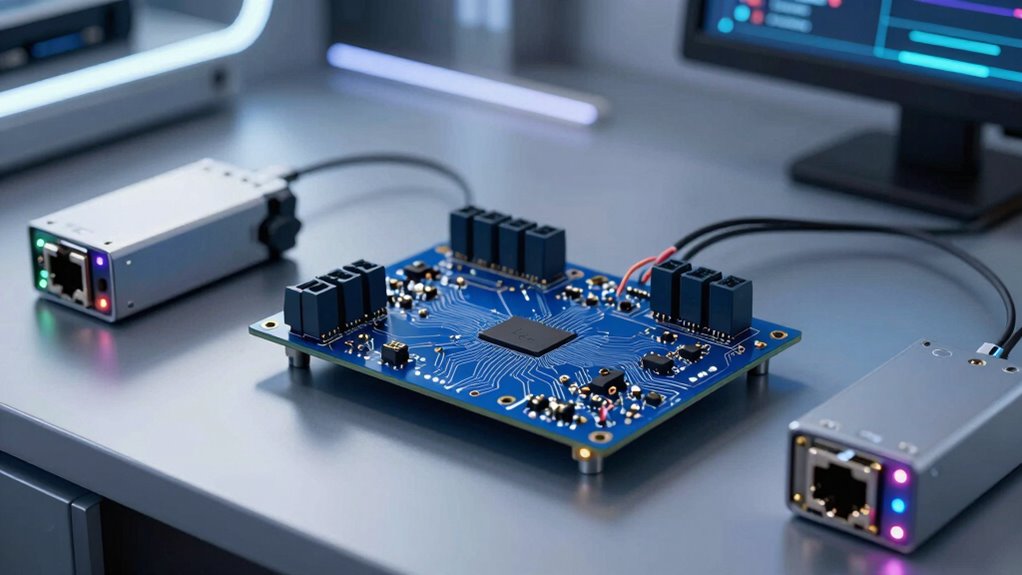

When searching for smart relays with Ethernet for automation, the key factors include reliable connectivity, ease of integration, and scalability. The Rebooter Relays 2-Channel WiFi & Ethernet Smart Relay stands out as the best overall thanks to its versatility and straightforward setup. For those prioritizing power metering, the Shelly Pro 4PM offers advanced monitoring capabilities. Meanwhile, the Bewinner Ethernet Control 16-Channel Relay Board provides extensive output options for larger automation setups. Each option presents tradeoffs, such as complexity versus user-friendliness, or feature depth versus price. Keep reading for a detailed breakdown to find the best fit for your automation projects.

Get business pricing on networking and server gear
- Business-only prices and quantity discounts
- Tax-exempt purchasing
- Multiple users, one account, clear invoices
Key Takeaways
- Top picks excel in connectivity stability and ease of remote control.
- The best options balance feature set with user-friendly setup processes.
- Scalability varies significantly; some relays support dozens of channels, others focus on core functions.
- Power metering and advanced protocols like Modbus are features for more complex automation needs.
- Price and build quality are key differentiators, influencing long-term reliability.


More Details on Our Top Picks
Rebooter Relays 2-Channel WiFi & Ethernet Smart Relay Board, RJ45 Remote Switch for Device Rebooting, Automation, IoT Control, 12V/24V Input
This 2-channel relay stands out for users needing straightforward remote reboot capabilities for routers, modems, or cameras. Compared to the Shelly Pro 4PM, it offers a more focused solution without energy monitoring, making it simpler but less versatile for energy management. Its Ethernet and WiFi connectivity support flexible placement, yet it’s limited to low-voltage applications, which might restrict broader automation tasks. The labeled terminals facilitate wiring, and its compact design allows easy mounting, making it ideal for network maintenance setups. However, it requires network configuration and is not suitable for high-voltage or industrial use. Best suited for small-scale network device management where simplicity and remote control are key.
Pros:- Flexible control via WiFi or Ethernet
- Supports remote rebooting of network devices
- Labeled terminals for easy wiring
- Compact and mountable design
Cons:- Limited to low-voltage applications
- Requires network setup for operation
Best for: IT professionals or hobbyists needing remote reboot for network gear in small setups
Not ideal for: Industrial automation or energy monitoring applications, due to its limited feature set and voltage restrictions
- Number of channels:2
- Connectivity:WiFi and Ethernet (RJ45)
- Input voltage:12V/24V
- Terminals:NC/COM/NO
- Mounting:Mountable enclosure
Our verdict“This relay is perfect for users who want a straightforward, network-controlled switch for device rebooting without additional automation complexity.”
LAN Ethernet Controller Module with 2-Way Relay, Delay Switch, DC 5V-24V, Expandable to 8 Outputs
This industrial-grade relay module supports remote internet control and can expand up to 8 outputs, making it highly adaptable for larger automation projects. Unlike the Shelly Pro 4PM, it does not include energy metering but excels in industrial reliability and multi-channel control. Its support for active high relay operation means it needs proper configuration, and the limited detailed documentation could pose challenges for new users. Its rugged design and visual indicators make troubleshooting straightforward, yet it demands some technical skill for setup. Ideal for industrial or industrial-like automation tasks requiring multiple relays and reliable operation.
Pros:- Supports network configuration and remote control
- Expandable to 8 outputs for versatile applications
- Visual indicators for easy monitoring
- Industrial-grade reliability
Cons:- Requires active high relay operation
- Configuration may be complex and needs technical knowledge
Best for: Industrial automation engineers or advanced hobbyists managing multi-device control in industrial environments
Not ideal for: Home automation enthusiasts seeking plug-and-play solutions, due to its technical complexity
- Supply Voltage:DC 5V-24V
- Maximum Switching Voltage:24 volts
- Operation Mode:Automatic
- Number of channels:Visual indicators, high reliability
- Dimensions:70 x 50mm
Our verdict“This relay module fits well for technical users who need a reliable, expandable control system for industrial or large-scale automation projects.”
Shelly Pro 4PM Wi-Fi & LAN 4-Channel Smart Relay with Power Metering
The Shelly Pro 4PM offers four channels with high current capacity and built-in power meters, making it stand out for energy-conscious automation. In contrast to the simpler Rebooter relay, it provides detailed energy monitoring and scripting capabilities, suitable for comprehensive energy management. Its DIN rail mounting inside breaker boxes suits more permanent installations, but the setup is more complex and requires professional installation. Compatibility with voice assistants enhances its usability, yet its single-phase design limits its application in three-phase industrial environments. This pick is best for users seeking integrated energy monitoring within a home or small commercial automation system.
Pros:- Supports remote control and automation via app and voice
- Built-in power meters for energy tracking
- Easy DIN rail installation inside breaker panels
- Supports scripting for energy efficiency
Cons:- Requires professional installation
- Limited to single-phase applications
Best for: Homeowners or small business owners wanting detailed energy data and automation control in a single device
Not ideal for: Industrial environments needing multi-phase control or simple reboot functions, due to its complexity and intended purpose
- Connectivity:Wi-Fi & LAN
- Channels:4
- Current per channel:16A
- Total capacity:40A
- Power metering:Yes
- Mounting:DIN Rail
Our verdict“Ideal for energy-aware users wanting integrated control and monitoring within a smart home or commercial setting.”
Bewinner Ethernet Control 16-Channel Relay Board – RJ45, IP On-Off Output Relay for Smart Home
This 16-channel Ethernet relay board offers extensive control capabilities, suitable for complex smart home or industrial automation setups. Unlike the 4-channel Shelly Pro 4PM, it supports a higher number of devices simultaneously, making it ideal for centralized control hubs. Its web server interface allows easy management from any device connected to the network, but it demands careful network configuration and technical knowledge. Its reliance solely on Ethernet limits flexibility if Wi-Fi control is desired. Overall, it’s a powerful option for large-scale automation but less user-friendly for casual users.
Pros:- Supports control of 16 devices over network
- Web server interface for broad device access
- Compatible with LAN and WAN connections
Cons:- Requires network setup and configuration
- Limited to Ethernet connectivity only
Best for: System integrators or automation specialists managing multiple devices across large networks
Not ideal for: Casual DIY users or homeowners seeking plug-and-play solutions, due to setup complexity
- Channels:16
- Interface:RJ45
- Control:Remote via LAN/WAN
- Application:Smart home automation
- Control Protocols:Web server interface
Our verdict“This relay board is suited for advanced users needing extensive device control within a wired Ethernet environment.”
8-Channel Ethernet Relay Module with Modbus Protocol and PoE Support
This high-reliability relay module supports Modbus RTU and TCP, making it a strong choice for industrial automation where communication protocol flexibility matters. Its PoE support simplifies installation by reducing wiring needs, and onboard optocoupler isolation enhances safety and noise immunity. Compared to the other relays in this list, its focus on industrial standards and extensive protocol support makes it less suitable for home use, but perfect for industrial or high-reliability projects. The setup process is more involved, requiring technical knowledge and detailed configuration, which could be a barrier for casual users.
Pros:- Supports multiple protocols including MQTT and Modbus
- PoE support reduces wiring complexity
- Optocoupler isolation for safety
- High-quality relay contacts with reliable ratings
Cons:- Requires technical setup and protocol configuration
- Limited user documentation available
Best for: Industrial control engineers or automation professionals needing protocol versatility and high-reliability Ethernet control
Not ideal for: Home or hobbyist users seeking simple, plug-and-play relays, due to its complexity and industrial focus
- Number of channels:8
- Communication protocols:Modbus RTU/Modbus TCP
- Power input:DC 7~36V, PoE
- Relay contact rating:≤10A 250VAC/30VDC
- Features:MQTT support, optocoupler isolation
- Enclosure:ABS rail-mount
Our verdict“This relay module targets users with technical expertise requiring robust, protocol-diverse industrial automation solutions.”
2-Way Relay Board, DC 5V-24V, 2 Relays, Ethernet Controller Module with Cloud Remote Control
This relay board stands out for its support of internet-based remote control via cloud, making it ideal for applications where quick, remote access is crucial. Compared to the 8-Channel Relay Module, it offers fewer relays in the basic setup but compensates with cloud connectivity and an expandable relay count up to 8. However, its reliance on active high signals and potential for shipment variability can introduce setup challenges. The module’s indicator lights provide immediate status feedback, which is helpful for monitoring. It’s best suited for users needing remote management of a few devices with future expansion in mind.
Pros:- Supports internet-based remote control via cloud
- Expandable to 8 relay outputs for multiple device control
- Includes relay status indicator lights for easy monitoring
Cons:- Requires active high signals for operation
- Random shipment of different module types may cause compatibility issues
Best for: Small to medium-sized automation projects requiring remote access and relay expansion.
Not ideal for: Users seeking a fully wireless or standalone control system without cloud dependence.
- Supply Voltage:DC 5V-24V
- Size:70 x 50mm / 2.8 x 2in
- Weight:50g / 1.8oz
- Number of Relays:2 (expandable to 8)
- Control Type:Active High
- Features:Ethernet control, cloud remote access, password protection, relay status indicator
Our verdict“This pick is best for users who prioritize remote cloud control with expandable relay capacity for moderate automation needs.”
Smart Relay for Home Automation and Control, WiFi Connectivity, Compatible with NR1US
This relay offers a flexible choice for integrated smart home automation, supporting WiFi, Ethernet, and 4G connections. Compared to the Shelly 1 Mini Gen3, it provides multiple connectivity options and compatibility with Z-Wave and Zigbee, making it more adaptable for complex integrations. Its support for IFTTT and scheduling enhances automation capabilities, though it can be somewhat complex for beginners to set up. The industrial-grade components promise reliable operation even in demanding environments, ideal for users with existing smart home ecosystems needing a unified control platform.
Pros:- Supports multiple connectivity options including WiFi, Ethernet, and 4G
- Compatible with Z-Wave, Zigbee, and WiFi for flexible integration
- Advanced automation features like IFTTT and scheduling
Cons:- Setup complexity may challenge beginners
- Full functionality depends on compatible smart home systems
Best for: Home automation enthusiasts with existing protocols seeking a multi-connection, reliable relay.
Not ideal for: Beginners or users without existing smart home infrastructure who prefer plug-and-play solutions.
- Connectivity:WiFi, Ethernet, 4G
- Compatibility:Z-Wave, Zigbee, WiFi
- Automation Support:IFTTT, Scheduling
- Operating Temperature:-40 to 85°C
- Endurance:Over 100,000 cycles
Our verdict“Ideal for users needing a multi-protocol, industrial-grade relay that integrates seamlessly into existing smart environments.”
Shelly 1 Mini Gen3 WiFi & Matter Smart Relay Switch, 1-Channel 8A, Compatible with Alexa, Home Assistant, SmartThings & Google Home
The Shelly 1 Mini Gen3 excels in tight installations, offering a compact form factor with support for WiFi and Matter, making it easy to incorporate into a variety of smart home setups. Compared with larger relay modules, its single-channel design limits complexity but simplifies installation. Its compatibility with major platforms like Alexa, Google Home, and Home Assistant provides broad control options, suitable for controlling lights or small appliances. However, its single channel and lack of built-in backup mean it’s less suited for larger or critical automation systems.
Pros:- Compact size fits into tight or waterproof housings
- Supports multiple smart platforms including Alexa and Google Home
- Reliable 8A load capacity for typical small device control
Cons:- Limited to 1 channel, not suitable for complex setups
- Requires DIY skills for installation
Best for: DIY enthusiasts installing smart switches in small or confined spaces for simple automation tasks.
Not ideal for: Projects requiring multiple channels or high load capacities, as it supports only 8A at 240V.
- Channel:1
- Load Capacity:8A
- Voltage:240 VAC
- DC Voltage:30 VDC
- Connectivity:WiFi & Matter
- Warranty:3 years
Our verdict“Best suited for small-scale, space-constrained DIY automation projects with straightforward control needs.”
8 Channel Relay Module, Wired Ethernet RJ45 IP Remote Control Board for Smart Home and Industrial Automation
This 8-channel relay module is designed to control multiple devices reliably over wired Ethernet, making it suitable for industrial or large smart home setups. Compared with the 2-Way Relay Board, it offers more channels and a dedicated wired connection, which enhances stability and reduces interference. Its high load capacity of 10A supports heavy-duty appliances, and its installation flexibility allows for wall mounting and complex wiring. However, it demands more technical setup and a wired network connection, limiting mobility. This makes it ideal for environments where wired reliability outweighs convenience.
Pros:- Supports remote control via wired Ethernet for stability
- Controls 8 devices independently with high load capacity of 10A
- Flexible installation with a wide input voltage range and protective cover
Cons:- Requires wired network connection, not wireless
- Complex setup may need technical knowledge
Best for: Industrial automation or large smart home systems requiring stable, wired control of multiple high-load devices.
Not ideal for: Small-scale or wireless-only setups where wiring complexity and installation effort are concerns.
- Connector Type:Usb_2_0
- Contact Type:Metal
- Current Rating:10 A
- Mounting Type:Wall Mount
- Operation Mode:Automatic
- Size:145x90x40mm
Our verdict“Perfect for environments demanding reliable wired control of multiple high-power devices with a focus on stability over mobility.”
How We Picked
These products were selected based on their connectivity reliability, ease of use, build quality, scalability, and value for money. We prioritized options that can seamlessly integrate into existing automation systems via Ethernet, with an emphasis on those supporting standard protocols and remote control features. Ranking was influenced by user reviews, feature depth, and compatibility with popular automation platforms. Our goal was to highlight options suitable for both beginners and advanced users, ensuring a range of choices across different budgets and technical requirements.Factors to Consider When Choosing Smart Relays With Ethernet For Automation
Choosing the right smart relay with Ethernet involves weighing several important factors. Compatibility with your existing automation system and protocols can save headaches later, while scalability determines how many devices you can control from a single relay. Ease of setup and user interface are critical for quick deployment, especially if you’re new to automation. Consider power handling and channel count to match your specific application, whether it’s a small home project or an industrial setup. Finally, evaluating build quality and future-proof features helps ensure your investment remains reliable over time.Connectivity and Protocol Support
For reliable automation, your relay must support stable Ethernet connections and compatible protocols like Modbus, TCP/IP, or MQTT. These ensure seamless communication across your network and with your automation platform. Some relays also support Wi-Fi or cloud control, providing additional flexibility but potentially adding complexity. Choosing a device with robust network features minimizes downtime and simplifies remote management, especially important in industrial or large-scale deployments.
Scalability and Channel Count
The number of channels directly impacts how many devices or circuits you can control simultaneously. Smaller projects might only need 2 to 4 channels, while larger systems benefit from 8, 16, or more. Be cautious of relays that claim high channel counts but lack clear documentation or robust performance at scale. Scaling up later can be costly or technically complex, so select a relay that aligns with your current needs but also allows future expansion.
Ease of Installation and User Interface
A straightforward setup process can make or break your experience. Look for relays with clear instructions, accessible configuration interfaces, and support for common automation platforms. Some models include mobile apps or web portals, which simplify remote control and troubleshooting. Overly complex devices may require technical expertise, increasing deployment time and potential for errors.
Power Handling and Output Capacity
Ensure the relay can handle the voltage and current of your connected devices. Overloading can cause failures or safety hazards. For industrial applications, high-current relays or those supporting PoE (Power over Ethernet) can be advantageous. For home use, smaller relays with rated capacities are usually sufficient, but always verify specifications to match your load requirements.
Build Quality and Future Proofing
Durability matters for long-term reliability, especially in industrial or outdoor settings. Look for relays with solid construction, good heat dissipation, and protective enclosures. Features like firmware updates and compatibility with new protocols add value by extending the device’s lifespan. Investing in higher-quality units can prevent frequent replacements and reduce maintenance costs over time.
Frequently Asked Questions
Can these relays be integrated with popular home automation platforms?
Many of these relays support integration with common platforms like Alexa, Google Home, Home Assistant, and SmartThings. Compatibility often depends on whether the relay offers open APIs or supports standard protocols like MQTT or REST. For seamless integration, check the manufacturer’s documentation and user reviews to confirm platform support and ease of setup. This flexibility makes them suitable for both DIY enthusiasts and professional installations.
Are these relays suitable for industrial environments?
Some relays in this list, especially those with higher channel counts and robust build quality, are designed for industrial applications. Features like high current ratings, enclosure protection, and support for protocols like Modbus are indicators of suitability. However, always verify the specifications for temperature ranges, ingress protection, and compliance with industry standards before deploying in harsh environments to ensure reliability and safety.
What is the typical setup process for these Ethernet relays?
Most relays require connecting to your network via Ethernet, configuring IP settings, and integrating with your automation platform. Many include web interfaces or mobile apps for simplified configuration. Advanced models might support scripting or API access for custom automation. The process usually involves assigning network parameters, setting relay actions, and testing connectivity, which can range from straightforward to complex depending on the device’s sophistication.
How do I choose a relay with the right channel count for my project?
Assess your current control needs and consider future expansion. For small projects, 2 to 4 channels are often enough, but larger systems may require 8, 16, or more. Remember that more channels can increase complexity and cost, so balance your current requirements with potential growth. Also, verify that the relay can handle the load on each channel to avoid performance issues or damage.
Should I prioritize cheaper relays or invest in premium models?
While lower-cost relays can be suitable for simple or experimental setups, investing in higher-quality, premium models often pays off in reliability, durability, and feature set. Premium relays typically support better protocols, have longer lifespans, and include advanced features like power metering or extensive channel support. Consider your project’s scale and criticality—spending more upfront can reduce maintenance costs and downtime later.
Conclusion
For small home automation projects where ease of use and affordability matter, the Rebooter Relays 2-Channel WiFi & Ethernet Smart Relay makes an excellent choice. Professionals or larger deployments requiring extensive control and monitoring should consider the Shelly Pro 4PM for its power metering and robust connectivity. Those seeking industrial-grade reliability might lean toward relays with higher channel counts and protocol support, like the 8 Channel Relay Module with Modbus Protocol. Beginners should prioritize user-friendly interfaces, while advanced users need scalability and protocol flexibility. Match your specific automation needs with these insights to find the best relay for 2026.
Halloween Picks
halloween
As an affiliate, we earn on qualifying purchases.