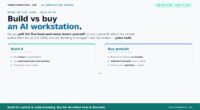
TL;DR
IdeaClyst is a local-first tool that acts as an AI-powered war room, pressure-testing your ideas through structured debate, discovery, and clear plans. It helps founders make smarter decisions faster, saving time and money.
A war room for your next idea
The build isn’t the hard part anymore — conviction is. Knowing which idea deserves the next six months, and being able to defend it. Most founders answer with gut feel and optimistic math. That’s hope wearing a blazer. IdeaClyst replaces it with a process.
The most expensive decision is what to build
The single most valuable thing a tool can do is talk you out of the wrong six months. The numbers make the case better than any pitch.
Three tools in one — on your own machine
Strip away the framing and IdeaClyst is three things at once, all running locally with nothing leaving your laptop.
An AI council
Pressure-tests an idea you bring it — advisors who argue on purpose.
A discovery engine
Finds ideas you didn’t know to look for by hunting real demand signals.
A founder’s workspace
Carries winners from “interesting” all the way to “ready to build.”
Advisors who disagree on purpose
Not one confident, agreeable answer — a structured five-step deliberation where models play different roles and turn on their own work. The disagreement is the feature.
The five-step deliberation
A council that leads with the bad news surfaces the objections you’d otherwise find the expensive way, on month five.
Product strategy
Who’s it for, what’s the wedge, why now, what’s the business model.
Technical architecture
What would it actually take to build — and where’s the risk.
Critique pass
The council turns on its own work. Where’s the hand-waving? What kills this?
Second, independent critique
A different voice, a different angle — so blind spots don’t survive.
Final synthesis
Everything into one coherent founder packet: strategy, architecture, validation, plan.
When IdeaClyst cites a source, it actually fetched it
The hard departure from “ask an AI what it thinks of my startup.” It runs in a strict, real-data-only mode — if it can’t gather genuine evidence, it says so plainly rather than inventing a plausible paragraph.
Confidence with receipts
No fabricated statistics, no imaginary competitors, no made-up citations. The packet survives a skeptical co-founder or a sharp investor because the reasoning has receipts.
Market research first
Scouts the landscape before the council reasons about anything.
Competitor read
Real positioning, pricing signals, feature claims — differentiation vs. reality.
Validation with links
Not “talk to customers” — concrete signals & sources you can click.
From the blank page to build-ready
Evaluation is half the problem; the blank page is the other half. And a plan is worthless if it dies in a tab you never reopen.
Bring a space, not an idea
“AI for accountants,” “tools for indie game studios” — plus your goal and real capacity. It hunts demand signals across HN, Reddit, Product Hunt, GitHub, pricing pages.
- An honest market read — leads with the bad news when a space is hard
- An opportunity map — high pain, thin competition
- Ranked candidates — wedge, who pays, effort, risk, confidence
- each with KILL CRITERIA — when to walk away
A home and a forward path
Every promising idea gets carried forward, with every artifact in plain files on your disk.
- Validation tooling — sprint board, interview list, evidence browser
- Founder profile — a personal-fit lens; same discovery, different advice
- Build workspaces — funnel, personas, landing draft, version history
- “Build this idea” → a PRD + task queue, ready for a coding agent
Key Takeaways
- IdeaClyst creates a structured debate environment—like a war room—that rigorously tests your ideas before building.
- Its AI council stages disagreements, critiques, and synthesizes plans grounded in live web research, reducing risky assumptions.
- Using IdeaClyst can cut months of research and save thousands, helping you make smarter, faster decisions.
- It’s ideal for solo founders, nonprofits, and teams who need clarity and conviction in their ideas.
- Remember, no tool replaces real customer conversations—use IdeaClyst as a decision booster, not the only voice.
![Express Schedule Free Employee Scheduling Software [PC/Mac Download]](https://m.media-amazon.com/images/I/41yvuCFIVfS._SL500_.jpg)
Express Schedule Free Employee Scheduling Software [PC/Mac Download]
- User-friendly drag & drop interface: Simple shift planning
- Manage time-off and leave: Add sick leave, breaks, holidays
- Email schedules to employees: Send schedules directly via email
As an affiliate, we earn on qualifying purchases.
As an affiliate, we earn on qualifying purchases.
Why a War Room for Your Ideas Matters More Than Ever
In today’s fast-paced startup world, speed is only part of the equation. The real edge comes from clarity and conviction. A war room creates a focused space where your team can pressure-test ideas without distractions. It’s like a battle plan—every weakness exposed, every assumption challenged.
Imagine sitting around a virtual table with your team, debating whether to build that new feature or pivot. The clarity you gain is priceless. According to CB Insights, 42% of startup failures happen because of ‘no market need.’ A dedicated war room like IdeaClyst helps you avoid that trap by rigorously questioning your assumptions before diving in. It forces you to confront the tradeoffs—such as investing time versus risk of failure, or speed versus thoroughness—so you can make more informed, balanced decisions. This environment reduces the chance of costly missteps and builds a culture of critical thinking that’s vital in high-stakes scenarios.

The Top 60 Decision Making Tools For Startups: An Illustrated Guidebook
As an affiliate, we earn on qualifying purchases.
As an affiliate, we earn on qualifying purchases.
How IdeaClyst Turns Your Idea Into a Debate-Driven Strategy
IdeaClyst isn’t just a brainstorming app. It’s a three-in-one engine: an AI council, a discovery tool, and a founder’s workspace. When you bring an idea—say, a new SaaS feature—it immediately gets evaluated by multiple AI models, each playing a different role.
First, it assesses product-market fit: who’s the target, why now, and how it fits into your business. Next, it analyzes technical feasibility and risk. Then, it launches a critique pass—each model challenges the idea, pointing out flaws or gaps. Finally, it synthesizes all feedback into a clear, actionable plan you own on your disk. It’s like having a team of devil’s advocates sitting around your laptop.
This process matters because it forces you to see your idea through multiple lenses—technical, market, strategic—and confronts blind spots that might otherwise go unnoticed. The iterative critique helps you weigh tradeoffs, such as speed versus quality or innovation versus risk, ensuring your plan is balanced and well-founded before moving forward. You can learn more about creating effective war rooms for your projects.
As an affiliate, we earn on qualifying purchases.
The Council: Disagreeing AI Advisors That Find Flaws Fast
The heart of IdeaClyst is its AI council—five structured steps where models debate and critique. Instead of one AI giving a single thumbs-up, you get a democratic fight of ideas. This structured disagreement exposes assumptions, reveals biases, and uncovers hidden flaws that might not surface in a single analysis. Each step pushes the idea further, encouraging tradeoffs and deeper scrutiny.
For example, during a product strategy debate, one AI might highlight market risks, while another questions technical feasibility. This back-and-forth forces you to confront conflicting priorities—speed versus robustness, innovation versus stability—and understand the implications of each choice. The process not only improves the quality of your plan but also helps you recognize potential pitfalls early, saving you from costly errors down the line.
A founder in Silicon Valley told me this process saved her from building a feature nobody wanted—saving over $100,000 in engineering costs—and it did so by revealing that her initial assumption about customer demand was flawed. This kind of rigorous critique can be the difference between a successful launch and a costly flop.

anlab™ Air Formaldehyde (HCHO) DIY Test Kit – Used for Air Quality Testing, Detector Used for Home, Residential, Business, Hotel, Hospital, School, Furniture, Auto (Pack of 1)
- Wide Application Areas: Suitable for homes, offices, hotels, hospitals, and more
- Single-Use Kit: One kit per room or auto needed
- Easy to Use: Follow 6 simple steps after ventilation
As an affiliate, we earn on qualifying purchases.
As an affiliate, we earn on qualifying purchases.
Grounded in Real Research, Not Just Model Vibes
Many AI tools flirt with confidence but lack real evidence. IdeaClyst stands out by grounding its council in live web research. It pulls current data, trends, and market signals—ensuring your idea isn’t just a hunch but backed by real-world facts. To see how this works, visit IdeaClyst for a demo.
For example, if you propose an app for remote team management, IdeaClyst checks the latest remote work trends, competitor moves, and user demands. It then critiques your assumptions with this up-to-date info, making your plan more resilient. This approach is crucial because it reduces the risk of pursuing ideas based on outdated or cherry-picked data, which can lead to failed pivots or missed opportunities. By integrating live research, the system helps you identify genuine market needs and avoid the trap of hype-driven decisions, fostering a more realistic and actionable strategy.
Want to see how it works? Visit IdeaClyst for a demo or check out insights from Thorsten Meyer’s AI blog.
Your Own Idea War Room: How It Fits Into Your Workflow
Most founders juggle multiple ideas without a clear way to prioritize. IdeaClyst becomes your personal war room, where ideas come in, get debated, and emerge with a clear plan. It’s especially handy in early-stage startups or solo projects.
Here’s a simple process you can follow: Learn more about building effective war rooms for your ideas.
- Input your ideas into IdeaClyst as short summaries
- Let the AI council run its debate and critique
- Review the final synthesis—an actionable plan
- Prioritize based on the strength of the critique
This process helps you understand the tradeoffs involved in each decision—such as speed versus depth or risk versus reward—so you can choose the most promising path with confidence. It’s like having a mini board of advisors on your laptop, guiding you through complex decisions with structured debate and evidence-based insights.
What Makes IdeaClyst Different From Ordinary Brainstorming
Brainstorming is fun, but it’s often shallow—ideas bounce around without real critique. IdeaClyst elevates this by forcing disagreement, structured debate, and evidence-based critique. It’s like transforming your casual brainstorm into a fierce strategic session.
Compared to traditional tools, it offers:
- Structured disagreement between models
- Grounded research from live web data
- Clear, versioned plans stored locally
This shift from vague ideas to evidence-backed plans drastically improves your chances of success, because it ensures your decisions are based on facts and robust reasoning rather than assumptions or hype. By making critique an integral part of the process, it helps you identify flaws early and iterate faster, ultimately leading to better, more resilient strategies.
Who Should Use IdeaClyst — And Why It Works for Everyone
IdeaClyst isn’t just for startups. It’s perfect for solo founders, nonprofit teams, or innovation groups in larger companies. If you need to make high-stakes decisions quickly and confidently, this tool is your secret weapon.
For example, non-profit organizers planning a new community project can use it to vet ideas, find hidden risks, and build a solid plan—all on their own laptop. It’s about making smarter choices without waiting for endless meetings or external consultants. The ability to rapidly simulate debates and critique helps organizations of all sizes identify weaknesses early, so they can pivot or refine their approach before investing heavily.
Real Results: How IdeaClyst Has Saved Time and Money
Many early adopters report saving months of research and thousands of dollars. One SaaS founder used IdeaClyst to evaluate five new features, cutting their development cycle by 30%. Another used it to reject a bad idea early, saving over $50,000 in engineering costs.
More importantly, these results demonstrate how rigorous critique reduces the risk of pursuing unviable ideas. By identifying flaws early, teams can focus their resources on the most promising options, increasing the likelihood of success. Over time, this disciplined approach to idea validation creates a culture of smarter decision-making that minimizes waste and maximizes return on investment.
Risks and Limits: When a War Room Might Overreach
While powerful, a war room isn’t magic. It can become overrigid or lead to analysis paralysis if you rely on it for every tiny decision. Overuse might cause you to second-guess your instincts or delay action, which can be detrimental in fast-moving situations. Additionally, structured debate cannot replace the nuanced understanding gained through conversations with customers or stakeholders. It’s a tool to inform decisions, not replace human judgment entirely.
Using IdeaClyst effectively requires awareness of its limits. Prioritize high-impact ideas and avoid over-dependence—use it as a supplement to, not a substitute for, real-world testing and customer feedback. Recognizing when to step back and trust your intuition is crucial; the tool should empower you, not trap you in endless debate or false confidence.