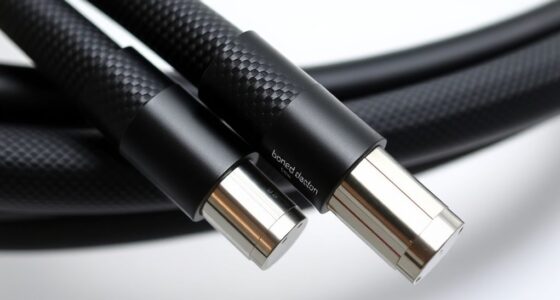
Copper-clad aluminum (CCA) cables are usually best avoided for critical or high-current applications because they have higher electrical resistance and lower durability compared to pure copper wires. Their lower conductivity means more voltage drops and heat buildup, which can cause long-term problems. While they may save you money and weight for simple, short-distance tasks, you’ll want to take into account their limitations before use—if you want to understand why, keep exploring further.

Get networking and server gear delivered free — and shop member deals
- Fast, free delivery on millions of items
- Access to Prime Big Deal Days deals on October 6–7
- Prime Video, Amazon Music and more included
Key Takeaways
- CCA cables have higher resistance than pure copper, increasing voltage drops and heat in high-current or long-distance applications.
- They are suitable for low-current, short-distance use but generally not recommended for high-power needs.
- Variability in copper coating quality can lead to durability issues, peeling, or failure over time.
- Proper gauge sizing is crucial; CCA requires thicker wiring to match copper’s current capacity, affecting installation.
- For critical or high-performance wiring, pure copper cables are safer and more reliable than CCA alternatives.

Copper‑Clad Aluminum (CCA) cables combine the lightweight and cost-effective properties of aluminum with the conductivity and durability of copper. If you’re considering using these cables for your electrical projects, it’s important to understand how their wire gauge and electrical conductivity impact performance. CCA cables typically have a larger wire gauge compared to pure copper cables to compensate for aluminum’s lower conductivity. This means that a CCA wire might need to be thicker to deliver the same current capacity as a copper wire of a smaller gauge. For example, a 12-gauge copper wire might be equivalent to a 10-gauge CCA wire in terms of current-carrying capacity, but this isn’t always consistent across all manufacturers. As a result, you need to pay close attention to the specific wire gauge ratings and ensure they meet your project’s requirements.
Electrical conductivity is a vital factor here. Copper has excellent conductivity, which allows it to transmit electricity efficiently with minimal resistance. Aluminum, and by extension CCA, has lower electrical conductivity, meaning more resistance and heat generation at higher currents. When you use CCA cables, you’re getting a compromise: lower cost and lighter weight at the expense of increased resistance. This can lead to voltage drops over longer distances, decreasing overall efficiency. If your project involves high-current applications or long cable runs, relying on CCA might not be the best choice because these issues can cause overheating or reduce the lifespan of your wiring.
It’s also essential to consider the quality and construction of the CCA cable you select. Not all CCA wires are created equal; some might have a thin copper cladding that can peel or break over time, especially under mechanical stress or repeated flexing. The durability of the wire’s copper coating directly affects electrical conductivity and overall longevity. If you decide to go with CCA, ensure that the cable’s specifications clearly state the copper content and adhere to safety standards. Additionally, high-quality insulation can help prevent corrosion and mechanical damage, extending the cable’s lifespan.
copper clad aluminum electrical cable
As an affiliate, we earn on qualifying purchases.
As an affiliate, we earn on qualifying purchases.
Frequently Asked Questions
Are CCA Cables Suitable for Outdoor or Harsh Environments?
CCA cables aren’t ideal for outdoor or harsh environments because they lack sufficient weather resistance and mechanical durability. Exposure to moisture, extreme temperatures, or physical stress can cause the outer coating to deteriorate, leading to potential electrical failures. If you need reliable performance outdoors, consider using pure copper cables, which are designed to withstand tough conditions and provide better long-term durability.
How Do CCA Cables Compare in Cost to Pure Copper Cables?
Are CCA cables really cheaper than pure copper? Absolutely. You’ll find the cost comparison favors CCA cables because they use less copper, making them more budget-friendly initially. If cost savings are your main goal, CCA might seem attractive. But, keep in mind, their lower durability and higher potential for issues could cost you more in the long run. So, consider your budget considerations carefully before choosing.
Can CCA Cables Be Used for High-Power or High-Current Applications?
You can use CCA cables for high-power or high-current applications, but they have limited power capacity and heat tolerance compared to pure copper cables. CCA wires are more prone to overheating under heavy loads, risking damage or failure. If your project demands consistent high power, it’s better to choose pure copper cables for safety, durability, and reliable performance. Always assess your current and heat requirements before opting for CCA.
What Are the Safety Considerations When Using CCA Cables?
Think of using CCA cables as walking a tightrope—if you ignore safety, the risk of fire hazards increases. Always check insulation integrity and avoid overloading, as poor insulation can cause shorts and sparks. Regular inspections are crucial, especially in high-current setups, to prevent faults. Remember, compromised insulation or damaged cables can lead to dangerous fires, so prioritize proper installation and maintenance to keep yourself safe.
Do CCA Cables Meet Industry Standards and Certifications?
You should know that CCA cables often don’t fully meet industry standards or certification compliance. Many certifications require strict testing for safety and durability, which CCA cables may not consistently pass due to their aluminum core. While some CCA cables claim compliance, it’s essential to verify specific certifications like UL or CSA. Always check manufacturer documentation to guarantee the cables meet recognized standards before use.
As an affiliate, we earn on qualifying purchases.
Conclusion
So, next time you see those shiny copper-clad aluminum cables, think twice. Sure, they might look like the real deal, but don’t be fooled—underneath, they’re just aluminum pretending to be copper. Avoid the headache, the risk of corrosion, and the potential fire hazards. After all, who wouldn’t want a cable that’s more about illusion than safety? Sometimes, the cheapest choice ends up costing you the most—literally.
As an affiliate, we earn on qualifying purchases.
As an affiliate, we earn on qualifying purchases.
Fall Picks
fall essentials
As an affiliate, we earn on qualifying purchases.