Among the best Netgear routers in this roundup, I’d start with the Nighthawk RS300 for its mix of WiFi 7 speed and coverage, while the RS500 suits larger homes and the RS90 offers a simpler entry into WiFi 7. The right choice depends on your internet plan, home layout, connected devices, and whether you need a separate router or a modem-router combo. Higher advertised speeds don’t automatically mean faster internet, especially if your modem or service plan is the bottleneck. Older WiFi 6 models may still fit smaller households, while premium WiFi 7 models prioritize capacity and coverage. Read on for the full comparison and guidance on which tradeoffs matter most.

Get networking and server gear delivered free — and shop member deals
- Fast, free delivery on millions of items
- Access to Prime Big Deal Days deals on October 6–7
- Prime Video, Amazon Music and more included
Key Takeaways
- The RS300 is the balanced WiFi 7 pick: Its listed 9.3 Gbps speed and coverage up to 2,500 sq. ft. put it between entry-level models such as the RS90 and higher-capacity options such as the RS500.
- Coverage and speed rise together across the WiFi 7 lineup, but needs should guide the upgrade: The RS600 and RS700S list the largest coverage and speed figures; many homes won’t benefit unless their internet plan and devices can use that capacity.
- The RS140 and RS150 share the same listed speed and coverage: Their specifications alone don’t establish a performance difference, so buyers should compare exact ports, features, and model details before choosing.
- Modem-router combos solve a different problem: The C7000 and CAX30 combine a cable modem with Wi-Fi, which may simplify equipment but makes compatibility with the internet provider a key part of the decision.
- Older WiFi 6 routers remain relevant for modest needs: The R6700AX, RAX36, and RAX41 can suit simpler networks, but their listed coverage and speed figures trail the WiFi 7 options in this roundup.
| NETGEAR Nighthawk WiFi 7 Router RS140, Up to 2,250 sq ft, 5 Gbps |  | Best for Straightforward WiFi 7 Coverage | WiFi standard: WiFi 7 | Maximum stated speed: 5 Gbps | Coverage: Up to 2,250 sq ft | VIEW LATEST PRICE | See Our Full Breakdown |
| NETGEAR Nighthawk WiFi 7 Router RS150, Up to 2,250 sq ft, 5 Gbps |  | Best for Built-In Network Upkeep | WiFi standard: WiFi 7 | Maximum stated speed: 5 Gbps | Coverage: Up to 2,250 sq ft | VIEW LATEST PRICE | See Our Full Breakdown |
| NETGEAR Nighthawk WiFi 7 Router RS300, Up to 2,500 sq ft, 9.3 Gbps |  | Best Tri-Band Balance | WiFi standard: WiFi 7 | Maximum stated speed: 9.3 Gbps | Bands: Tri-band | VIEW LATEST PRICE | See Our Full Breakdown |
| NETGEAR Nighthawk WiFi 7 Router RS500, Up to 3,000 sq ft, 12 Gbps |  | Best for Large Homes and Multi-Gig Wiring | WiFi standard: WiFi 7 | Maximum stated speed: Up to 12 Gbps | Bands: Tri-band (2.4 GHz, 5 GHz, 6 GHz) | VIEW LATEST PRICE | See Our Full Breakdown |
| NETGEAR Nighthawk RS300 Tri-Band WiFi 7 Router, Wireless Speed Up to 9.3 Gbps, Covers Up to 2500 Sq. Ft., Black – Certified Refurbished | 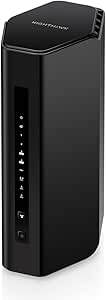 | Best Refurbished Tri-Band Option | Condition: Certified refurbished | WiFi generation: WiFi 7 | Maximum stated wireless speed: Up to 9.3 Gbps | VIEW LATEST PRICE | See Our Full Breakdown |
| NETGEAR Nighthawk WiFi 7 Router RS600, Up to 3,300 sq ft, 18 Gbps |  | Best for Large, Device-Heavy Homes | WiFi generation: WiFi 7 | Frequency bands: Tri-band | Maximum wireless speed: 18Gbps | VIEW LATEST PRICE | See Our Full Breakdown |
| NETGEAR Nighthawk WiFi 6 Router (RAX36) – AX3000, Dual-Band, 3Gbps Wireless Speed, Covers 2,000 sq. ft., Supports 25 Devices, Built-in VPN, USB 3.0, Gaming |  | Best WiFi 6 Pick for VPN and USB | WiFi technology: WiFi 6 | Wireless speed: AX3000, up to 3Gbps | Coverage: Up to 2,000 sq ft | VIEW LATEST PRICE | See Our Full Breakdown |
| Netgear Nighthawk WiFi 7 Router RS700S – Up to 3,500 sq ft, 19 Gbps | 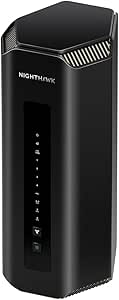 | Best Premium WiFi 7 Router | WiFi standard: WiFi 7 | Frequency bands: Tri-band: 2.4GHz, 5GHz, and 6GHz | Maximum speed: 19Gbps | VIEW LATEST PRICE | See Our Full Breakdown |
| NETGEAR Nighthawk WiFi 6 Router R6700AX, Up to 1,500 sq ft, 1.8 Gbps |  | Best for Smaller Homes | WiFi standard: WiFi 6 | Maximum speed: 1.8Gbps | Coverage: Up to 1,500 sq ft | VIEW LATEST PRICE | See Our Full Breakdown |
| Netgear Nighthawk WiFi 6 Router AX3600 Dual-Band RAX41 |  | Best WiFi 6 Upgrade for a Mid-Size Home | WiFi technology: WiFi 6 (802.11ax) | Frequency bands: Dual-band | Maximum speed: 3.45Gbps | VIEW LATEST PRICE | See Our Full Breakdown |
| NETGEAR Nighthawk C7000 Cable Modem and WiFi 5 Router Combo |  | Best for Simple Cable Setups | Model: C7000 | Modem standard: DOCSIS 3.0 | WiFi standard: WiFi 5 (AC1900) | VIEW LATEST PRICE | See Our Full Breakdown |
| NETGEAR Nighthawk WiFi 7 Router RS90, Up to 2,000 sq ft, 3.6 Gbps |  | Best Entry to WiFi 7 | WiFi standard: Dual-band WiFi 7 | Maximum WiFi speed: Up to 3.6 Gbps | Coverage: Up to 2,000 sq ft | VIEW LATEST PRICE | See Our Full Breakdown |
| NETGEAR Nighthawk WiFi 7 Router, Up to 2,500 sq ft, 9.3 Gbps | | Best for High-Capacity WiFi 7 | WiFi standard: Tri-band WiFi 7 | Bands: 2.4 GHz, 5 GHz, and 6 GHz | Maximum WiFi speed: Up to 9.3 Gbps | VIEW LATEST PRICE | See Our Full Breakdown |
| NETGEAR Nighthawk WiFi 7 Router RS200, Up to 2,500 sq ft, 6.5 Gbps | | Best Dual-Band WiFi 7 for Larger Homes | WiFi standard: Dual-band WiFi 7 | Maximum WiFi speed: Up to 6.5 Gbps | Coverage: Up to 2,500 sq ft | VIEW LATEST PRICE | See Our Full Breakdown |
| NETGEAR Nighthawk CAX30 DOCSIS 3.1 Cable Modem and WiFi 6 Router – AX2700, 2.7 Gbps |  | Best Cable Modem-Router Upgrade | Model: CAX30 | Modem standard: DOCSIS 3.1 | WiFi standard: WiFi 6 | VIEW LATEST PRICE | See Our Full Breakdown |
| Netgear router | Coverage | WiFi standard | Device capacity | Ethernet ports |
|---|---|---|---|---|
| NETGEAR Nighthawk WiFi 7 Route | Up to 2,250 sq ft | WiFi 7 | Up to 80 devices | 3 x 1 Gig |
| NETGEAR Nighthawk WiFi 7 Route | Up to 2,250 sq ft | WiFi 7 | Up to 80 devices | 3 x 1 Gigabit |
| NETGEAR Nighthawk WiFi 7 Route | Up to 2,500 sq ft | WiFi 7 | Up to 100 devices | — |
| NETGEAR Nighthawk WiFi 7 Route | Up to 3,000 sq ft | WiFi 7 | — | 1 x 2.5 G WAN, 1 x 2.5 G LAN, 3 x 1 G LAN |
| NETGEAR Nighthawk RS300 Tri-Ba | Up to 2,500 sq ft | — | — | 2 x 2.5 Gbps, 2 x 1 Gbps |
| NETGEAR Nighthawk WiFi 7 Route | Up to 3,300 sq ft | — | Up to 150 devices | 4, including 10Gbps WAN and LAN |
| NETGEAR Nighthawk WiFi 6 Route | Up to 2,000 sq ft | — | Up to 25 devices | 4 x 1Gbps |
| Netgear Nighthawk WiFi 7 Route | Up to 3,500 sq ft | WiFi 7 | Up to 200 devices | — |
| NETGEAR Nighthawk WiFi 6 Route | Up to 1,500 sq ft | WiFi 6 | Up to 20 devices | 4 Gigabit LAN and 1 Gigabit WAN |
| Netgear Nighthawk WiFi 6 Route | Up to 2,250 sq ft | — | Up to 25 devices | 4 |
| NETGEAR Nighthawk C7000 Cable | — | WiFi 5 (AC1900) | — | 4 Gigabit LAN |
| NETGEAR Nighthawk WiFi 7 Route | Up to 2,000 sq ft | Dual-band WiFi 7 | Up to 50 devices | — |
| NETGEAR Nighthawk WiFi 7 Route | Up to 2,500 sq ft | Tri-band WiFi 7 | Up to 100 devices | 2 x 2.5 Gigabit LAN and 2 x 1 Gigabit LAN |
| NETGEAR Nighthawk WiFi 7 Route | Up to 2,500 sq ft | Dual-band WiFi 7 | Up to 80 devices | — |
| NETGEAR Nighthawk CAX30 DOCSIS | Up to 2,000 sq ft | WiFi 6 | — | 4 Gigabit Ethernet |
More Details on Our Top Picks
NETGEAR Nighthawk WiFi 7 Router RS140, Up to 2,250 sq ft, 5 Gbps
The Nighthawk RS140 is a sensible pick for households ready to move to WiFi 7 without stepping up to the larger speed claims and tri-band design of the RS300. Its stated 5 Gbps wireless speed, coverage up to 2,250 square feet, and support for up to 80 devices suit everyday streaming, gaming, and smart-home traffic. A 2.5 Gig WAN port also gives compatible internet plans room beyond standard gigabit, while three 1 Gig Ethernet ports handle wired devices. The Nighthawk app keeps setup and management accessible. The tradeoff is that this is a dual-band-class offering rather than the RS300’s tri-band option, so buyers with heavier concurrent demands may prefer the RS300. Coverage is not a guarantee through every floor plan, and NETGEAR Armor requires a subscription after its free trial.
Pros:- WiFi 7 with stated speeds up to 5 Gbps
- Coverage rated for up to 2,250 square feet
- 2.5 Gig WAN port supports compatible faster-than-gigabit internet plans
- Nighthawk app simplifies setup and network management
Cons:- Fewer wireless bands than the tri-band RS300
- Three 1 Gig Ethernet ports may limit wired-device flexibility
- NETGEAR Armor requires a subscription after the free trial
Best for: Households with up to 80 connected devices that want WiFi 7, app-based setup, and coverage for a typical medium-to-large home.
Not ideal for: Owners of large multi-story homes or households with demanding simultaneous wireless traffic who would benefit more from a mesh system or the RS300’s tri-band design.
- WiFi standard:WiFi 7
- Maximum stated speed:5 Gbps
- Coverage:Up to 2,250 sq ft
- Device capacity:Up to 80 devices
- WAN port:1 x 2.5 Gig
- Ethernet ports:3 x 1 Gig
- Provider compatibility:Most cable, fiber, DSL, and satellite providers
Our verdict“Choose the RS140 for app-managed WiFi 7 coverage and a 2.5 Gig WAN port without paying for the RS300’s higher-speed tri-band capability.”
NETGEAR Nighthawk WiFi 7 Router RS150, Up to 2,250 sq ft, 5 Gbps
The Nighthawk RS150 pairs WiFi 7 speeds up to 5 Gbps with coverage rated for 2,250 square feet and capacity for up to 80 devices. Its strongest case against the similar RS140 is the listed quad-core 2.0 GHz processor and built-in security features with automatic updates, which may appeal to buyers who want routine network upkeep handled with less attention. Both models offer a 2.5 Gig WAN connection and three 1 Gig Ethernet ports, so the RS150 is not a major step up in stated speed or coverage. It also needs a separate modem or gateway, and some provider equipment may need bridge-mode configuration. Like the RS140, it is not a cure for dead zones in a sprawling home; add mesh coverage if the floor plan exceeds its reach.
Pros:- WiFi 7 with stated speeds up to 5 Gbps
- Quad-core 2.0 GHz processor
- Automatic updates and built-in security features
- 2.5 Gig WAN port alongside three 1 Gig Ethernet ports
Cons:- Requires a separate modem or gateway for internet access
- Some provider gateways may require bridge-mode setup
- Coverage and stated speed are similar to the RS140 rather than a major upgrade
Best for: Buyers replacing a router who want WiFi 7, automatic updates, and capacity for a busy household while keeping a separate modem or gateway.
Not ideal for: Anyone seeking an all-in-one modem-router, or buyers expecting a substantial speed or coverage upgrade over the RS140.
- WiFi standard:WiFi 7
- Maximum stated speed:5 Gbps
- Coverage:Up to 2,250 sq ft
- Device capacity:Up to 80 devices
- Processor:Quad-core 2.0 GHz
- Ethernet ports:3 x 1 Gigabit
- WAN port:1 x 2.5 Gigabit
Our verdict“Pick the RS150 over the RS140 if its listed processor and automatic-update features matter more to you than a meaningful jump in speed or coverage.”
NETGEAR Nighthawk WiFi 7 Router RS300, Up to 2,500 sq ft, 9.3 Gbps
The Nighthawk RS300 is the balanced step-up for buyers whose connected household has outgrown the RS140 and RS150’s dual-band-class 5 Gbps offerings. Its tri-band WiFi 7 design and stated speed up to 9.3 Gbps give compatible devices more capacity to share, while coverage rises to 2,500 square feet and support reaches 100 devices. That makes it a better fit for busy homes with several people streaming, gaming, or using smart-home gear at once. The 2.5 Gig WAN port adds a fast wired connection for a compatible service plan, but the listed ports are less generous than the RS500’s mix of 2.5 Gig WAN and LAN connections. The RS300 needs a separate modem or gateway, and NETGEAR Armor becomes subscription-based after its trial.
Pros:- Tri-band WiFi 7 with stated speeds up to 9.3 Gbps
- Supports up to 100 devices
- Coverage rated for up to 2,500 square feet
- 2.5 Gig WAN port and WPA3 security
Cons:- Requires a separate modem or gateway
- Only one 2.5 Gig port is listed, compared with the RS500’s multi-gig WAN and LAN ports
- NETGEAR Armor requires a paid subscription after its trial
Best for: Busy households with WiFi 7 devices, several simultaneous high-bandwidth users, and a need for tri-band capacity without moving to the RS500.
Not ideal for: Buyers with basic networking needs who will not benefit from tri-band capacity, or those seeking multiple multi-gig wired ports.
- WiFi standard:WiFi 7
- Maximum stated speed:9.3 Gbps
- Bands:Tri-band
- Coverage:Up to 2,500 sq ft
- Device capacity:Up to 100 devices
- Ports:2.5 Gig WAN, two 1 Gig LAN; four ports total
- Processor:Quad-core 2.0 GHz
- Security:WPA3, Advanced Router Protection
Our verdict“Choose the RS300 for tri-band capacity and support for up to 100 devices when the RS140 or RS150 feels too limited for your household’s traffic.”
NETGEAR Nighthawk WiFi 7 Router RS500, Up to 3,000 sq ft, 12 Gbps
Among these five picks, the Nighthawk RS500 is the strongest match for a large home and a fast wired setup. It claims up to 12 Gbps across three bands and coverage up to 3,000 square feet, exceeding the RS300’s 9.3 Gbps and 2,500-square-foot ratings. More practically for wired networks, it has both a 2.5 Gig WAN and a 2.5 Gig LAN port, plus three 1 Gig LAN ports; the RS300 lists only one 2.5 Gig WAN port. Six antennas round out its hardware, but neither that count nor the coverage figure guarantees signal through every wall or floor. The RS500’s higher capacity makes less sense for modest internet plans or smaller homes, and mesh may still be needed in difficult layouts. NETGEAR Armor also involves a subscription after its trial.
Pros:- Tri-band WiFi 7 with stated speeds up to 12 Gbps
- Coverage rated for up to 3,000 square feet
- 2.5 Gig WAN and 2.5 Gig LAN ports
- Three additional 1 Gig LAN ports for wired devices
Cons:- Higher stated capacity may go unused with slower plans or older devices
- Coverage may not reach every area in large or multi-story layouts
- NETGEAR Armor requires a subscription after its trial
Best for: Owners of larger homes with a compatible multi-gig internet plan, several WiFi 7 devices, and wired equipment that can use a 2.5 Gig LAN port.
Not ideal for: People in smaller homes on standard-speed plans who will not use its additional coverage, wireless capacity, or multi-gig wired connections.
- WiFi standard:WiFi 7
- Maximum stated speed:Up to 12 Gbps
- Bands:Tri-band (2.4 GHz, 5 GHz, 6 GHz)
- Coverage:Up to 3,000 sq ft
- Ethernet ports:1 x 2.5 G WAN, 1 x 2.5 G LAN, 3 x 1 G LAN
- Antenna count:6
- Compatibility:Most cable, fiber, DSL, and satellite internet providers
- Security:NETGEAR Armor, Advanced Router Protection
Our verdict“Choose the RS500 over the RS300 if you need its larger coverage rating and second multi-gig port for wired equipment.”
NETGEAR Nighthawk RS300 Tri-Band WiFi 7 Router, Wireless Speed Up to 9.3 Gbps, Covers Up to 2500 Sq. Ft., Black – Certified Refurbished
This certified refurbished RS300 offers the same core appeal as the new RS300: tri-band WiFi 7, stated wireless speeds up to 9.3 Gbps, and coverage rated for 2,500 square feet. Its listed port mix is more specific than the new RS300 listing, with two 2.5 Gbps ports and two 1 Gbps ports, a useful arrangement for fast wired devices. The main reason to pick it over the new RS300 is its refurbished status and included one-year NETGEAR Armor subscription, not a different speed tier. That status also brings more uncertainty around warranty coverage and condition, so buyers who prioritize a straightforward new-device purchase should choose the new RS300 instead. It still requires a separate modem, and its stated coverage may not suit every home layout.
Pros:- Tri-band WiFi 7 with stated speeds up to 9.3 Gbps
- Coverage rated for up to 2,500 square feet
- Two 2.5 Gbps and two 1 Gbps Ethernet ports
- Includes a one-year NETGEAR Armor subscription
Cons:- Certified refurbished status may come with limited warranty coverage
- Requires a separate modem for internet service
- Does not offer a stated speed or coverage advantage over the new RS300
Best for: A buyer comfortable purchasing certified refurbished who wants tri-band WiFi 7 and two 2.5 Gbps ports for a home network.
Not ideal for: Buyers who want a new router, prefer the clearest warranty terms, or need a modem built into the router.
- Condition:Certified refurbished
- WiFi generation:WiFi 7
- Maximum stated wireless speed:Up to 9.3 Gbps
- Bands:Tri-band
- Coverage:Up to 2,500 sq ft
- Ethernet ports:2 x 2.5 Gbps, 2 x 1 Gbps
- Security:WPA3; one-year NETGEAR Armor subscription
- Dimensions:9.8 x 5.9 x 4 in
Our verdict“Choose this refurbished RS300 if you want the RS300’s tri-band feature set and accept the condition and warranty tradeoffs of a refurbished unit.”
NETGEAR Nighthawk WiFi 7 Router RS600, Up to 3,300 sq ft, 18 Gbps
The RS600 is the right step up when a busy household needs more room for simultaneous streaming, gaming, calls, and smart-home traffic. Its tri-band WiFi 7 design, claimed 3,300-square-foot coverage, and support for up to 150 devices give it a stronger capacity focus than the WiFi 6 RAX41, which is rated for 25 devices. It also has a 10Gbps WAN and LAN connection for compatible wired gear or fast internet service. The RS700S reaches farther on paper, with 3,500 square feet, 19Gbps, and capacity for 200 devices, so it is the more ambitious choice for the largest households. The RS600’s tradeoffs are its separate-modem requirement and the potential need to configure a gateway in bridge mode; continued Armor protection also requires a subscription.
Pros:- Tri-band WiFi 7 with a stated maximum speed of 18Gbps
- Coverage rated for up to 3,300 square feet
- Supports up to 150 connected devices
- Includes a 10Gbps WAN and LAN connection
Cons:- Requires a separate modem or gateway for internet service
- Some modem-router gateways may need bridge mode configuration
- NETGEAR Armor requires a paid subscription after the 30-day trial
Best for: Large households with many connected devices, a compatible modem or gateway, and WiFi 7 phones or computers that can use the newer standard.
Not ideal for: Small households with basic internet needs, or buyers who want a single modem-router unit and do not need WiFi 7 capacity.
- WiFi generation:WiFi 7
- Frequency bands:Tri-band
- Maximum wireless speed:18Gbps
- Coverage:Up to 3,300 sq ft
- Device capacity:Up to 150 devices
- Ethernet ports:4, including 10Gbps WAN and LAN
- Processor:Quad-core 2.0GHz
- Security:WPA3; NETGEAR Armor includes a 30-day free trial
Our verdict“Choose the RS600 if you need WiFi 7 capacity for a large, device-heavy home but do not need the RS700S’s higher stated coverage and device limit.”
NETGEAR Nighthawk WiFi 6 Router (RAX36) – AX3000, Dual-Band, 3Gbps Wireless Speed, Covers 2,000 sq. ft., Supports 25 Devices, Built-in VPN, USB 3.0, Gaming
The RAX36 suits buyers who want a capable WiFi 6 router without stepping up to the newer WiFi 7 models in this roundup. Its AX3000 rating, coverage of up to 2,000 square feet, and support for 25 devices put it in the same general household range as the RAX41, while the built-in VPN support and USB 3.0 port give it useful connectivity options the RAX41’s listed specs do not call out. That makes the RAX36 a more distinctive fit for someone who values VPN access or wants a USB connection. It is still a dual-band router, though, and its device capacity is far below the RS600’s 150-device claim. The router also needs a separate cable modem, so buyers replacing an all-in-one gateway will need another piece of equipment.
Pros:- AX3000 WiFi 6 speed rating of up to 3Gbps
- Built-in VPN support
- USB 3.0 port for additional connectivity
- Four 1Gbps Ethernet ports
Cons:- Requires a separate cable modem for internet access
- Supports up to 25 devices, far fewer than the RS600
- Dual-band WiFi 6 lacks the extra band and newer standard of the WiFi 7 picks
Best for: WiFi 6 households with up to 25 devices that want built-in VPN support, USB 3.0, and wired Ethernet ports.
Not ideal for: Buyers with a large, device-heavy home who want WiFi 7, or anyone seeking a router with an integrated cable modem.
- WiFi technology:WiFi 6
- Wireless speed:AX3000, up to 3Gbps
- Coverage:Up to 2,000 sq ft
- Device capacity:Up to 25 devices
- Ethernet ports:4 x 1Gbps
- Frequency bands:Dual-band
- VPN:Built-in VPN support
- USB:USB 3.0
Our verdict“Pick the RAX36 if WiFi 6 is sufficient and VPN or USB connectivity matters more to you than the greater capacity of the RS600.”
Netgear Nighthawk WiFi 7 Router RS700S – Up to 3,500 sq ft, 19 Gbps
Among these five options, the RS700S has the highest stated speed, coverage, and device capacity: up to 19Gbps, 3,500 square feet, and 200 devices. That makes it the premium choice for a large home where many people and connected devices compete for network capacity. Compared with the RS600, it adds 200 square feet of claimed coverage, 1Gbps of stated maximum speed, and room for 50 more devices. A 10Gbps WAN port can also connect to a compatible high-speed internet plan, while the Nighthawk app manages setup. Those headline figures do not guarantee faster service: results depend on the internet plan, placement, and clients, and the RS700S needs a separate modem. Its Armor security trial is temporary, and some modem-router combinations may require bridge mode.
Pros:- Highest listed WiFi speed in this group at up to 19Gbps
- Coverage rated for up to 3,500 square feet
- Supports up to 200 devices
- 10Gbps WAN port and Nighthawk app management
Cons:- Requires a separate modem for internet service
- Maximum speeds depend on the internet plan and client devices
- NETGEAR Armor requires a paid subscription after its 30-day trial
Best for: Households with a large footprint, many connected devices, compatible WiFi 7 clients, and a high-speed internet plan that can make use of its capacity.
Not ideal for: Small homes, households with few connected devices, or buyers whose internet plan and devices cannot make use of a premium WiFi 7 router.
- WiFi standard:WiFi 7
- Frequency bands:Tri-band: 2.4GHz, 5GHz, and 6GHz
- Maximum speed:19Gbps
- Coverage:Up to 3,500 sq ft
- Device capacity:Up to 200 devices
- WAN port:1 x 10Gbps
- LAN ports:4 x 1Gbps
- Management:Nighthawk app for iOS and Android
- Security:NETGEAR Armor with a 30-day free trial; automatic firmware updates
Our verdict“Choose the RS700S when your large household can benefit from its highest stated capacity; for slightly lower capacity, the RS600 is the more restrained WiFi 7 alternative.”
NETGEAR Nighthawk WiFi 6 Router R6700AX, Up to 1,500 sq ft, 1.8 Gbps
The R6700AX is the simplest fit here for a smaller home with everyday WiFi 6 needs. Its 1.8Gbps maximum speed and coverage rating of up to 1,500 square feet are more modest than the RAX36’s 3Gbps and 2,000-square-foot figures, but that lower ceiling may be a sensible match for a smaller household rather than unused capacity. It supports up to 20 devices and has four Gigabit LAN ports plus a Gigabit WAN port for wired connections. The Nighthawk app keeps setup straightforward, and WPA3 is listed for network security. The tradeoff is limited reach: buyers with multiple floors or a larger home should look at the RAX36, while households seeking WiFi 7 and much higher device capacity are better served by the RS600 or RS700S.
Pros:- WiFi 6 with a stated maximum speed of 1.8Gbps
- Coverage rated for up to 1,500 square feet
- Supports up to 20 devices
- Includes four Gigabit LAN ports and one Gigabit WAN port
Cons:- Coverage and device capacity are lower than the RAX36
- May not reach reliably across larger or multi-story homes
- Continued NETGEAR Armor security requires a subscription after the trial
Best for: People in apartments or smaller homes who want a straightforward WiFi 6 router for up to 20 devices and a few wired connections.
Not ideal for: Families with a larger or multi-story home, more than 20 connected devices, or WiFi 7 equipment that needs a newer router.
- WiFi standard:WiFi 6
- Maximum speed:1.8Gbps
- Coverage:Up to 1,500 sq ft
- Device capacity:Up to 20 devices
- Ethernet ports:4 Gigabit LAN and 1 Gigabit WAN
- Setup and management:Nighthawk app
- Security protocol:WPA3
Our verdict“Choose the R6700AX for a smaller home and a modest WiFi 6 setup; move up to the RAX36 if you need more stated speed, coverage, or device capacity.”
Netgear Nighthawk WiFi 6 Router AX3600 Dual-Band RAX41
The RAX41 offers a useful middle ground for a two- or three-bedroom home that needs more reach and speed than the R6700AX but does not need a WiFi 7 router. Its 3.45Gbps stated maximum speed and 2,250-square-foot coverage rating exceed the RAX36’s listed 3Gbps and 2,000 square feet, while both are rated for up to 25 devices. The RAX41 uses WiFi 6 with four antennas and a 1.5GHz triple-core processor, giving it a better fit for households juggling gaming, streaming, and calls across several rooms. Its dual-band design is less advanced than the tri-band RS600 and RS700S, and those WiFi 7 models list much higher device capacity. Buyers should also check whether their devices support WiFi 6 before paying for the extra headroom.
Pros:- WiFi 6 speed rating of up to 3.45Gbps
- Coverage rated for up to 2,250 square feet
- Supports up to 25 devices
- Four antennas and a 1.5GHz triple-core processor
Cons:- Dual-band WiFi 6 lacks the additional band and newer standard of the RS600 and RS700S
- Compatible WiFi 6 devices are needed to take advantage of the newer standard
- May offer more capacity than small households need
Best for: Households in a two- or three-bedroom home that want a WiFi 6 step up from basic coverage for gaming, streaming, and video calls.
Not ideal for: Small households with light network use, buyers looking for tri-band WiFi 7, or homes that need capacity beyond 25 devices.
- WiFi technology:WiFi 6 (802.11ax)
- Frequency bands:Dual-band
- Maximum speed:3.45Gbps
- Coverage:Up to 2,250 sq ft
- Device capacity:Up to 25 devices
- Processor:1.5GHz triple-core
- Ethernet ports:4
- Security protocol:WPA3
- Antenna count:4
Our verdict“Choose the RAX41 for a mid-size home that wants stronger stated WiFi 6 speed and coverage than the R6700AX without moving to WiFi 7.”
NETGEAR Nighthawk C7000 Cable Modem and WiFi 5 Router Combo
The Nighthawk C7000 suits cable customers who want one box for both modem and WiFi rather than a separate router and modem. Its DOCSIS 3.0 modem supports specified plans up to 800 Mbps with Xfinity and up to 500 Mbps with Cox, while AC1900 WiFi provides a practical fit for everyday streaming and connected devices. Compared with the newer CAX30, the C7000 uses WiFi 5 and DOCSIS 3.0, so it is the less capable choice for newer devices and faster cable service. That older standard can still make sense when the existing plan fits its limits and reducing equipment clutter matters more than a WiFi upgrade. The tradeoff is strict: it works with US cable internet only, needs ISP activation, and does not support bundled voice service.
Pros:- Combines a DOCSIS 3.0 modem and router in one device
- Four Gigabit LAN ports support wired devices
- Nighthawk app offers setup and management
- Includes WPA/WPA2, firewall, and DoS protection
Cons:- Limited to US cable internet and incompatible with bundled voice service
- WiFi 5 and DOCSIS 3.0 trail the CAX30’s newer standards
- Requires ISP activation after setup
Best for: Cable subscribers with a compatible Xfinity or Cox plan who want a single device for basic home WiFi and modem service.
Not ideal for: Fiber, DSL, satellite, or cable voice customers, and households upgrading to faster WiFi that would benefit more from the CAX30’s DOCSIS 3.1 and WiFi 6.
- Model:C7000
- Modem standard:DOCSIS 3.0
- WiFi standard:WiFi 5 (AC1900)
- Maximum WiFi speed:Up to 1.9 Gbps
- Supported cable plans:Up to 800 Mbps with Xfinity; up to 500 Mbps with Cox
- Ethernet ports:4 Gigabit LAN
- USB port:1 USB 2.0
- Security:WPA/WPA2, double firewall, and DoS protection
Our verdict“Choose the C7000 if your compatible cable plan fits its speed limits and you value a single modem-router over newer WiFi standards.”
NETGEAR Nighthawk WiFi 7 Router RS90, Up to 2,000 sq ft, 3.6 Gbps
The Nighthawk RS90 is the straightforward pick for buyers who want WiFi 7 without stepping up to the higher speed and tri-band capability of the 9.3 Gbps Nighthawk WiFi 7 router. Its stated 3.6 Gbps wireless capacity and coverage up to 2,000 square feet suit a typical multi-room home, while a 2.5 Gigabit WAN port can connect to a faster-than-gigabit internet service. Four additional Gigabit LAN ports give wired devices dedicated connections, though none is a multi-gig LAN port. Unlike the modem-router CAX30, the RS90 is a standalone router and needs a separate modem or gateway. Its two-band design also offers less capacity headroom than a tri-band WiFi 7 model, and the stated coverage may not reach reliably through every large or obstructed layout.
Pros:- WiFi 7 support provides a newer wireless platform
- 2.5 Gigabit WAN port supports a multi-gig internet connection
- Four Gigabit LAN ports provide wired connections for home devices
- Works with most cable, fiber, DSL, and satellite providers when paired with compatible service equipment
Cons:- Requires a separate modem or gateway
- Dual-band design has less capacity headroom than the tri-band 9.3 Gbps WiFi 7 option
- Coverage is specified for up to 2,000 square feet, so larger homes may need mesh equipment
Best for: Households moving to WiFi 7 with a compatible modem, a service plan that can use a 2.5 Gigabit WAN port, and coverage needs within roughly 2,000 square feet.
Not ideal for: Buyers who need a built-in cable modem, multi-gig wired LAN, or the greater capacity and stated coverage of a tri-band WiFi 7 model.
- WiFi standard:Dual-band WiFi 7
- Maximum WiFi speed:Up to 3.6 Gbps
- Coverage:Up to 2,000 sq ft
- Device capacity:Up to 50 devices
- WAN port:1 x 2.5 Gigabit
- LAN ports:4 x 1 Gigabit
- Provider compatibility:Most cable, fiber, DSL, and satellite providers
- Security:NETGEAR Armor and automatic firmware updates
Our verdict“Pick the RS90 for a standalone, dual-band WiFi 7 upgrade in a moderate-size home when its 2.5 Gigabit WAN port matches your service.”
NETGEAR Nighthawk WiFi 7 Router, Up to 2,500 sq ft, 9.3 Gbps
This tri-band WiFi 7 Nighthawk is the strongest fit here for a busy home where many devices compete for wireless capacity. Its third band, including 6 GHz WiFi, gives compatible newer devices another place to connect, while the listed support for up to 100 devices and 2,500 square feet exceeds the RS90’s 50-device and 2,000-square-foot figures. Two 2.5 Gigabit LAN ports also give wired equipment more flexibility than the RS90, which has a 2.5 Gigabit WAN port but Gigabit LAN ports. The tradeoff is that this is still a router, not a modem, and its 9.3 Gbps figure is a combined wireless maximum rather than a promise of a single device’s speed. Buyers with fewer devices may find the dual-band RS200 a better match.
Pros:- Tri-band WiFi 7 includes 2.4 GHz, 5 GHz, and 6 GHz bands
- Listed capacity of up to 100 devices
- Two 2.5 Gigabit LAN ports support faster wired connections
- USB 3.0 port adds a wired USB connection
Cons:- Requires a separate modem or gateway
- The 9.3 Gbps maximum is not a single-device speed guarantee
- NETGEAR Armor security features may require a subscription after the trial
Best for: Households with many connected devices, WiFi 7-capable phones or computers, and a need for tri-band coverage across a home up to the stated 2,500 square feet.
Not ideal for: Smaller households with few connected devices, or cable customers seeking an all-in-one modem-router rather than separate equipment.
- WiFi standard:Tri-band WiFi 7
- Bands:2.4 GHz, 5 GHz, and 6 GHz
- Maximum WiFi speed:Up to 9.3 Gbps
- Coverage:Up to 2,500 sq ft
- Device capacity:Up to 100 devices
- Ethernet ports:2 x 2.5 Gigabit LAN and 2 x 1 Gigabit LAN
- Additional wired connection:1 USB 3.0 port and multi-gig WAN port
- Processor:Quad-core 2.0 GHz
Our verdict“Choose this tri-band model over the RS90 or RS200 when device count and extra wireless capacity matter more than a simpler dual-band setup.”
NETGEAR Nighthawk WiFi 7 Router RS200, Up to 2,500 sq ft, 6.5 Gbps
The Nighthawk RS200 offers a middle ground for buyers who want WiFi 7 and broad stated coverage without choosing the tri-band 9.3 Gbps model. It lists coverage up to 2,500 square feet and support for as many as 80 devices, making it better suited to a larger, moderately busy home than the RS90, whose stated coverage is 2,000 square feet. Its dual-band design is simpler than the tri-band model, but it has less wireless capacity for demanding households and lacks the 6 GHz band. A 2.5 Gbps WAN port can connect to multi-gig internet service; its three Gigabit LAN ports are not multi-gig, so wired devices won’t get that same port speed. It also needs a separate modem or gateway, unlike the all-in-one CAX30.
Pros:- WiFi 7 with stated coverage up to 2,500 square feet
- Supports up to 80 devices
- 2.5 Gbps WAN port can connect to multi-gig internet service
- USB 3.0 port and MU-MIMO and OFDMA support
Cons:- Dual-band design lacks the 6 GHz band found on the tri-band 9.3 Gbps model
- Three LAN ports are Gigabit rather than multi-gig
- Requires a separate modem or gateway; some gateways may need bridge mode
Best for: Households seeking WiFi 7 coverage across a larger home, with a moderate number of devices and a compatible separate modem or gateway.
Not ideal for: Homes with many demanding WiFi clients that can benefit from tri-band capacity, or buyers who need multi-gig LAN ports or an integrated cable modem.
- WiFi standard:Dual-band WiFi 7
- Maximum WiFi speed:Up to 6.5 Gbps
- Coverage:Up to 2,500 sq ft
- Device capacity:Up to 80 devices
- WAN port:1 x 2.5 Gbps
- LAN ports:3 x 1 Gbps
- Processor:Quad-core 2.0 GHz
- USB port:1 USB 3.0
Our verdict“Choose the RS200 for WiFi 7 and broad stated coverage in a larger home if dual-band capacity and Gigabit LAN ports meet your needs.”
NETGEAR Nighthawk CAX30 DOCSIS 3.1 Cable Modem and WiFi 6 Router – AX2700, 2.7 Gbps
The Nighthawk CAX30 is the more future-ready all-in-one pick for compatible cable households: its DOCSIS 3.1 modem and WiFi 6 move beyond the C7000’s DOCSIS 3.0 and WiFi 5, while keeping the modem and router together. That combination can simplify a cable setup and gives newer WiFi 6 devices a more capable connection. Four Gigabit Ethernet ports cover wired essentials, but there is no listed multi-gig LAN port, so it is less flexible for multi-gig wired networking than the standalone RS200. It is also limited to compatible US cable providers, including Xfinity, Spectrum, and Cox; fiber and DSL customers should choose a separate router such as the RS90 instead. ISP activation is required, and the stated AX2700 maximum is not a guarantee of real-world device speeds.
Pros:- Combines a DOCSIS 3.1 cable modem and WiFi 6 router
- WiFi 6 offers a newer wireless standard than the C7000’s WiFi 5
- Four Gigabit Ethernet ports support wired devices
- Nighthawk app supports setup and network management
Cons:- Compatible only with specified US cable providers, not fiber, DSL, or satellite
- Requires ISP activation after setup
- No listed multi-gig LAN port for faster wired devices
Best for: Xfinity, Spectrum, or Cox cable subscribers who want a WiFi 6 router and DOCSIS 3.1 modem in one device.
Not ideal for: Fiber, DSL, satellite, or bundled-voice subscribers, and buyers who need WiFi 7 or multi-gig LAN connections.
- Model:CAX30
- Modem standard:DOCSIS 3.1
- WiFi standard:WiFi 6
- Maximum WiFi speed:AX2700, up to 2.7 Gbps
- Coverage:Up to 2,000 sq ft
- Ethernet ports:4 Gigabit Ethernet
- Provider compatibility:Xfinity, Spectrum, and Cox
- Security:WPA3, firewall, and DoS protection
Our verdict“Choose the CAX30 over the older C7000 if you have compatible cable service and want an all-in-one modem-router with WiFi 6.”
How We Picked
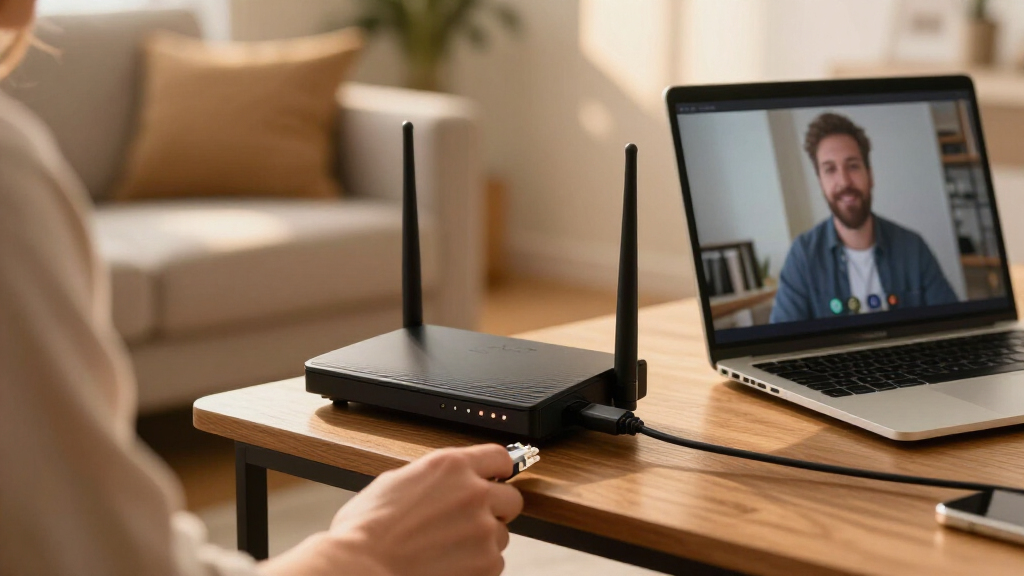
I compared these 15 Netgear models by the decisions that most affect a home network: Wi-Fi generation, listed speed and coverage, router-only versus modem-router design, and the likely fit for different home sizes and device loads. I treated advertised speed and coverage as comparison figures, not guarantees; actual results depend on a home’s layout, interference, connected devices, internet service, and client hardware. I also separated cable modem combos from standalone routers because they solve different setup problems.
The order favors versatility first, then specialized advantages. The RS300 leads as a balanced WiFi 7 choice, while models with greater listed speed and coverage move up for larger or more demanding networks. More modest WiFi 7 and WiFi 6 models suit narrower needs rather than replacing the higher-capacity picks for every buyer. Where product names or listed specifications don’t make a clear distinction—such as the RS140 and RS150—I would not infer a performance advantage without confirming the exact hardware and feature set.
| Netgear router | WiFi standard |
|---|---|
| NETGEAR Nighthawk WiFi 7 Route | WiFi 7 |
| NETGEAR Nighthawk WiFi 7 Route | WiFi 7 |
| NETGEAR Nighthawk WiFi 7 Route | WiFi 7 |
| NETGEAR Nighthawk WiFi 7 Route | WiFi 7 |
| NETGEAR Nighthawk RS300 Tri-Ba | — |
| NETGEAR Nighthawk WiFi 7 Route | — |
| NETGEAR Nighthawk WiFi 6 Route | — |
| Netgear Nighthawk WiFi 7 Route | WiFi 7 |
| NETGEAR Nighthawk WiFi 6 Route | WiFi 6 |
| Netgear Nighthawk WiFi 6 Route | — |
| NETGEAR Nighthawk C7000 Cable | WiFi 5 (AC1900) |
| NETGEAR Nighthawk WiFi 7 Route | Dual-band WiFi 7 |
| NETGEAR Nighthawk WiFi 7 Route | Tri-band WiFi 7 |
| NETGEAR Nighthawk WiFi 7 Route | Dual-band WiFi 7 |
| NETGEAR Nighthawk CAX30 DOCSIS | WiFi 6 |
Factors to Consider When Choosing Best Netgear Routers
Netgear’s lineup spans newer standalone routers, older WiFi 6 models, and cable modem combos, so choosing well starts with matching the equipment to your home rather than chasing the biggest speed figure. I’d check these factors before deciding, especially if you’re replacing more than one piece of network equipment.
Match Wi-Fi generation to the devices you own
A WiFi 7 router can serve newer phones and computers, but older devices connect using the Wi-Fi standards they support. That means an upgrade may not transform every device at once. Think about which devices need the most reliable connection, such as work computers, game systems, or streaming equipment, and how soon you expect to replace them. If most of your household’s devices are older and your internet plan is modest, a WiFi 6 model may be a more sensible fit than paying for WiFi 7 capacity you can’t use yet. Avoid choosing by generation name alone; check client support and wired port needs as well.
Treat coverage figures as a starting point, not a floor plan
Manufacturers’ coverage estimates can help compare models, but they do not account for every wall, floor, or source of interference in a particular home. A router’s placement often matters as much as moving up one model tier: a central, open location can outperform a more powerful unit tucked in a cabinet. Long, narrow homes and multi-story layouts may be harder to cover than homes with the same square footage on one level. Before buying the largest router, consider whether a better location or a mesh system would solve the actual dead-zone problem. Do not assume a higher coverage number guarantees strong signal in every room.
Compare advertised speeds with your internet plan
Router speed figures describe wireless capacity under suitable conditions; they are not a promise that your internet connection will run at that rate. If your service plan is slower, moving from an RS300 to a much faster model may have little effect on ordinary downloads. A higher-capacity router can still help when many devices are active at once or when local traffic moves between compatible devices, but the benefit depends on the whole network. Check whether your computer or console supports the router’s faster wireless features, too. Paying for headroom makes more sense when your plan, devices, and household use can all take advantage of it.
Decide whether you want a router or a cable modem combo
The C7000 and CAX30 combine a cable modem and Wi-Fi router, while the other listed models are standalone routers. A combo may reduce the number of devices and power supplies, but it also ties your modem choice to that unit. Confirm your internet provider supports the exact modem model and service tier before buying; compatibility can vary by provider and plan. If you already rent or own a modem, a standalone router may be the simpler replacement. Also weigh future flexibility: separate equipment can be easier to replace one piece at a time.
Check wired connections and home-network needs
Wireless speed is only part of a router’s usefulness. A desktop computer, console, network storage drive, or wired access point may make Ethernet ports more relevant than another jump in advertised Wi-Fi speed. The RAX36 listing, for example, calls out USB 3.0 and built-in VPN support, features that may matter to some buyers but should be checked against the exact use case and software requirements. Don’t assume every Nighthawk model includes the same ports or capabilities. Compare the manufacturer’s detailed specifications before choosing based on a family resemblance in the product name.
Buy for the household you have, with sensible headroom
A router should handle the number and type of devices your household uses, but the largest model isn’t automatically the best fit. For a small household with ordinary browsing and streaming, an entry-level WiFi 7 or WiFi 6 router may leave room to grow without excess capacity. Larger households with frequent simultaneous video calls, gaming, and high-resolution streaming may benefit from more headroom. If your needs are likely to change, focus on standards and connections you expect to use rather than vague future-proofing claims. This keeps an upgrade tied to a real need instead of a specification race.
Frequently Asked Questions
Should I choose the RS300 or pay more for an RS500, RS600, or RS700S?
I’d choose the RS300 if its listed coverage of up to 2,500 sq. ft. and 9.3 Gbps align with your home and internet plan. The RS500, RS600, and RS700S list greater speed and coverage, making them more relevant for larger homes or networks with heavier simultaneous use. Those figures don’t guarantee better service in every room, and your devices must support the router’s capabilities to benefit. Check your floor plan, broadband speed, and client devices before stepping up. If those factors don’t call for extra capacity, the higher-tier model may add little practical value.
Are the RS140 and RS150 meaningfully different if both list 5 Gbps and 2,250 sq. ft.?
The specifications provided here show the same listed speed and coverage, so they do not establish a clear performance distinction. I would compare the exact model pages for ports, supported features, hardware revisions, and included software before choosing between them. Product names can be close while details differ, and a listing may omit information that matters to your setup. If the details remain alike, choose based on the verified feature set and availability from a seller you trust. Don’t assume the model number alone identifies a faster or better-equipped router.
Can a WiFi 7 router improve my connection if my internet plan is slower?
It can improve wireless capacity within your home, but it cannot raise the speed supplied by your internet provider. You may see a benefit if several devices use the network at once or if newer devices transfer data locally, but ordinary internet speed tests remain limited by your plan and other network conditions. Older phones and computers also won’t gain WiFi 7 features simply by connecting to a WiFi 7 router. Check whether your current router is the bottleneck before upgrading. If it isn’t, a faster model may not change the activities you notice day to day.
Should I buy the C7000 or CAX30 combo instead of a separate router?
A combo can simplify a cable setup by putting the modem and router in one device, but it only works if your provider supports that exact modem for your plan. A separate router is a better fit if you already have a modem you want to keep or prefer to replace modem and Wi-Fi equipment independently. The C7000 pairs cable modem capability with WiFi 5, while the CAX30 lists DOCSIS 3.1 and WiFi 6, so they differ in wireless generation as well as model details. Check provider compatibility and plan requirements before buying either. Also confirm that the combo has the connections and wireless coverage your home needs.
Is a refurbished RS300 a good alternative to a new RS300?
The refurbished RS300 has the same listed WiFi 7 speed and coverage as the RS300 specification in this roundup, so its appeal depends on the condition, included accessories, return policy, and warranty attached to the specific listing. I’d verify those terms before comparing it with a new unit. A refurbished product can be a reasonable choice when its seller clearly documents its condition and support. If you need predictable warranty coverage or want to avoid uncertainty about prior use, the new model may be the safer fit. Compare exact hardware and included items rather than assuming every refurbished listing is identical.
Conclusion
For most buyers looking for a standalone WiFi 7 router, I’d choose the RS300 as the best overall because its listed speed and coverage make a balanced middle ground in this lineup. The RS90 is my entry-level WiFi 7 pick for smaller homes and lighter needs, while the RS140 or RS150 may suit buyers seeking a modest step up—after checking their exact feature differences. For larger homes or busier networks, the RS500, RS600, or RS700S offer greater listed capacity, with the RS700S at the highest listed figures here. The RS300 refurbished model is a value-minded option if the listing’s condition, warranty, and return terms work for you. Beginners who want straightforward standalone Wi-Fi can start with a lower-capacity router; buyers replacing a cable modem and router together should check provider compatibility for the CAX30 or C7000 first. If your needs are modest, the WiFi 6 R6700AX, RAX36, or RAX41 can still fit; choose based on the exact coverage, ports, and features your household will use.
Fall Picks
fall essentials
As an affiliate, we earn on qualifying purchases.