
TL;DR

Get business pricing on networking and server gear
- Business-only prices and quantity discounts
- Tax-exempt purchasing
- Multiple users, one account, clear invoices
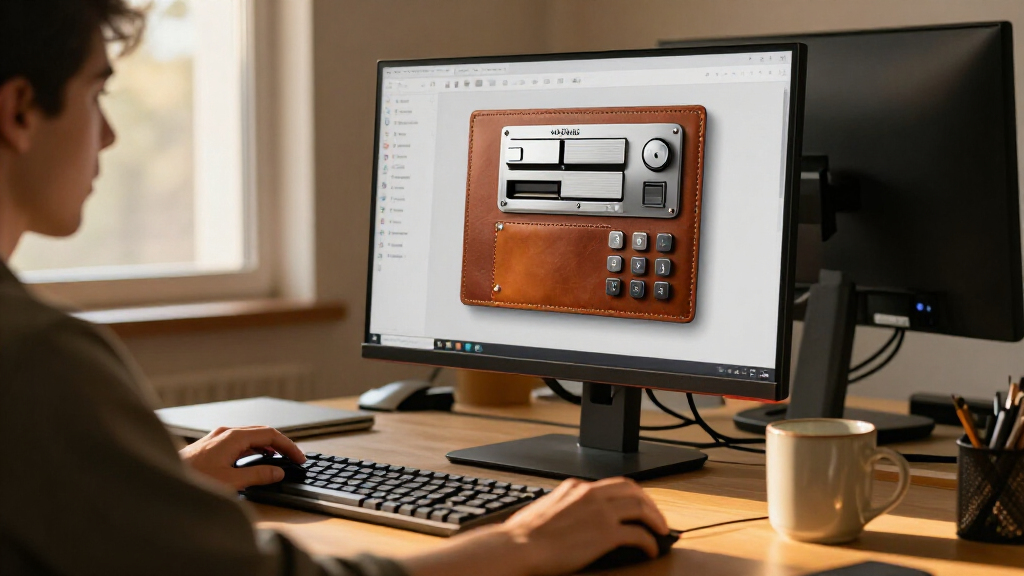
DEsk is a new beta desktop environment for Linux that presents apps and system controls as objects on a realistically rendered desk. Its first public release includes installation scripts for several Linux distributions; the project warns that the software is still developing and may have rough edges.
The DEsk project has published the first public release of a beta desktop environment for Linux that turns the screen into a realistically rendered desk. Built for Wayland, DEsk represents windows as paper, the dock as a drawer and system controls as a machine built into the desk, with installation scripts supplied for several Linux distributions.
The project describes DEsk as realistic skeuomorphism: interface elements are drawn to resemble physical objects, including their materials, shadows and lighting. App windows appear on cream-colored sheets of paper. Hovering over a paper corner exposes controls to fold, unfold or discard a window, corresponding to minimizing, maximizing or closing it. A drawer acts as the dock, while apps are organized in binders on a bookshelf.
Other features include a notification post box, a desk calendar and memo pad, and a control panel with network, Bluetooth, volume and brightness controls. The room is rendered with GPU ray tracing using GLES 3, with a CPU-based renderer available as a fallback. The project says the room is rendered on the first login and then cached for each screen size; initial rendering may take longer without a GPU.
Install scripts are listed for Debian 13, Ubuntu 24.04 and 26.04, Arch Linux, and Fedora 43 and 44, as well as some distributions based on them. The installer displays the proposed software and asks for confirmation, according to the project. The release page identifies v0.1 as the first public release and also lists v0.1.2 beta; the developer says the software remains in beta and advises users to expect rough edges and changes.
A Desktop Built Around Physical Metaphors
DEsk offers a different approach to the desktop interface: instead of presenting windows, launchers and settings as conventional panels and icons, it arranges them as objects on a simulated work surface. That may appeal to Linux users interested in experimental interface design or a more tactile visual style. It also makes the project a notable example of how a Wayland desktop can depart from familiar desktop conventions.
The practical trade-off is not yet clear. Rendering a detailed scene, particularly on the CPU fallback, could affect startup time or performance on some hardware. The project’s stated first-login delay and beta status are relevant for anyone considering it as a daily desktop. No independent performance testing or broad user evaluation is provided in the supplied release material.
Linux desktop environment Skeuomorphic design
As an affiliate, we earn on qualifying purchases.
As an affiliate, we earn on qualifying purchases.
From DeskWM to DEsk
The project was previously called DeskWM and is now named DEsk, a combination of “desktop environment” and “desk.” The developer says the name came from the Reddit community. Commands have also changed to names such as desk, desk-session and desk-settings; existing DeskWM settings, data and environment variables are said to carry over automatically.
The release notes describe v0.1 as the first public release and mention fixes and an installer for Fedora. The repository also provides documentation for building and running the desktop, including running it in a window. The project says it is used daily on the author’s machines, but that is a developer report rather than an independent assessment of stability or compatibility.
“This is its first release: expect rough edges and changes.”
— DEsk project release page
Wayland Linux desktop customization
As an affiliate, we earn on qualifying purchases.
As an affiliate, we earn on qualifying purchases.
Performance and Compatibility Still Need Testing
The release information does not provide independent benchmarks for GPU or CPU performance, memory use, power consumption or responsiveness on different hardware. It also does not establish how well DEsk works across the full range of Wayland applications, graphics drivers, screen setups or accessibility needs. The project describes multi-screen behavior, but the supplied information does not include test results across devices.
DEsk’s developer says the software has been carefully checked and is used daily on their machines; that does not establish stability for other users. The release notes and beta label leave open how quickly bugs will be fixed, which features may change, and whether the listed installers will remain current. Users can report bugs and suggest features through the project’s Discord server, according to the release page.
As an affiliate, we earn on qualifying purchases.
Further Beta Releases and User Reports
The project’s release page lists v0.1.2 beta and directs users to its release notes for version details. Users who install DEsk can report problems through the project’s support channels; those reports and subsequent releases will help clarify compatibility and stability. The release information does not give a timetable for a stable version or specify a date for the next release.
For people who want to try it, the project says to download a release, run the installation script for the relevant distribution, then select DEsk at the login screen. Its early status means users should review the installer’s proposed changes and expect that the interface and software may continue to change.
Linux desktop notification post box
As an affiliate, we earn on qualifying purchases.
As an affiliate, we earn on qualifying purchases.
Key Questions
What is DEsk?
DEsk is a beta desktop environment for Linux designed for Wayland. It represents windows and system functions as objects arranged on a simulated desk.
Which Linux distributions have installation scripts?
The project lists scripts for Debian 13, Ubuntu 24.04 and 26.04, Arch Linux, and Fedora 43 and 44, and names several related distributions as supported by those scripts. Users should check the project’s current instructions before installing.
Does DEsk require a GPU?
The room uses GLES 3 GPU rendering when available, but the project says a CPU tracer is provided as a fallback. It warns that the first rendering takes longer without a GPU.
Is DEsk a stable release?
No. The project labels DEsk beta and says users should expect rough edges and changes. It does not provide independent stability or performance results.
What happened to DeskWM settings?
The developer says existing DeskWM settings and data carry over automatically, along with the related environment variables, despite the project’s change of name and command names.
Source: hn
Halloween Picks
halloween
As an affiliate, we earn on qualifying purchases.