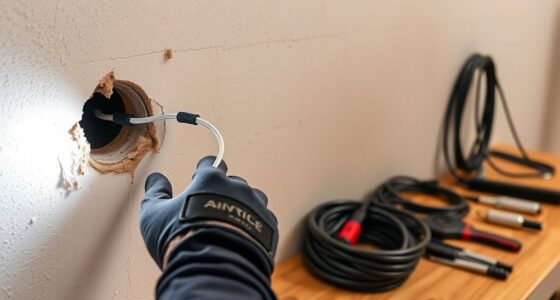
Many assume that pulling long cable runs is straightforward, but in reality, improper techniques can cause serious damage. If you want to avoid costly repairs and ensure a smooth installation, it’s essential to understand the best practices that safeguard both the cable and your project’s integrity. Curious how to do it right without risking damage? Keep these tips in mind to help you get the job done safely and efficiently.
Key Takeaways
- Inspect and plan the route thoroughly to identify and address potential hazards before pulling the cable.
- Use proper tools like pulling grips, lubricants, and flexible conduits to minimize friction and prevent damage.
- Anchor the cable securely at the start and guide it smoothly through conduit with appropriate equipment.
- Monitor tension closely with gauges and stop immediately if signs of strain or damage appear.
- Handle the cable carefully during final installation to avoid sharp bends, dropping, or unnecessary stress.
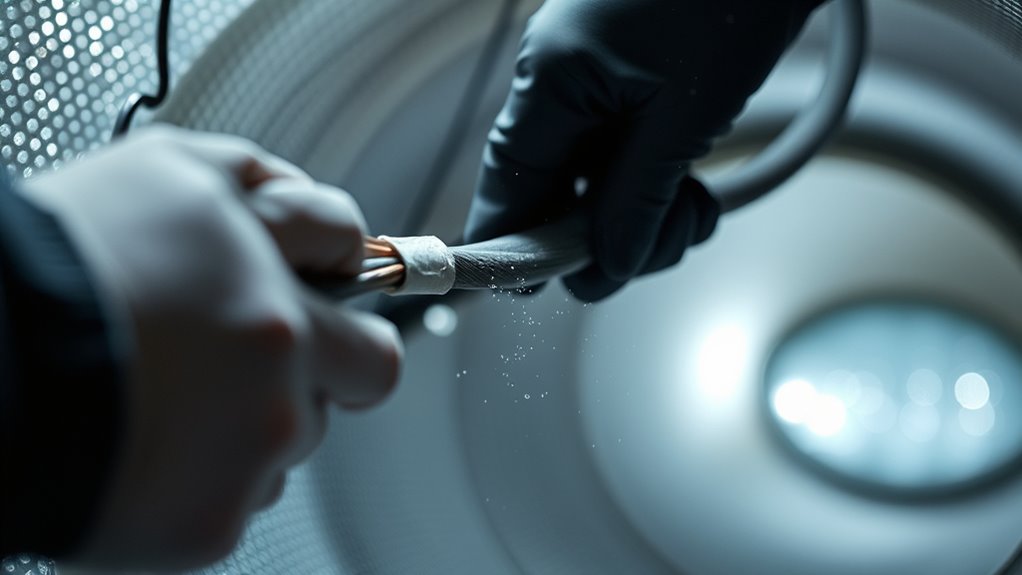
Pulling long cable runs can be challenging, but with the right techniques, you can prevent damage and guarantee a smooth installation. The key is to prioritize cable protection from start to finish. Before you begin, inspect the entire route for potential hazards like sharp edges, existing obstructions, or tight bends. Using proper pulling techniques is essential to avoid unnecessary stress on the cable. Always choose the right equipment, such as pulling grips and lubricants, to reduce friction and distribute pulling force evenly across the cable.
Prioritize cable protection and proper techniques for smooth, damage-free long cable installations.
When you start pulling, ensure that the cable is properly anchored at the source to prevent sudden jerks that could cause internal damage. Using a fish tape or cable puller can help guide the cable smoothly through conduit or ducts, minimizing the risk of snags or kinks. Don’t yank or force the cable through tight spaces; instead, maintain gentle, steady pressure. If resistance increases, stop and reevaluate the route or consider using additional lubricants to ease the process. Applying cable protection measures, like flexible conduit or protective sleeves, adds an extra layer of safeguard, especially in areas with sharp bends or rough surfaces.
Throughout the pull, monitor the cable’s path closely. If you notice any signs of strain or damage, halt the operation immediately. Reassess the pulling setup—perhaps the route needs to be better supported or the conduit needs smoothing out. It’s also wise to use a tension gauge to keep track of the force applied, ensuring you stay within safe limits for your cable type. When pulling long distances, take regular breaks to avoid overheating or fatigue of the pulling equipment, which can lead to mishaps or damage. Additionally, understanding the contrast ratio of your cables or equipment can help you identify potential issues with signal quality during installation.
Once the cable reaches its destination, carefully unload it without dropping or bending it sharply. Properly securing and organizing the cable prevents accidental damage during the final stages of installation. Remember, patience and attention to detail during each phase are critical for maintaining cable integrity. Employing the right pulling techniques combined with effective cable protection strategies ensures your long cable runs stay intact and function reliably over time. By adhering to these principles, you minimize the risk of costly repairs and maximize the longevity of your installation.
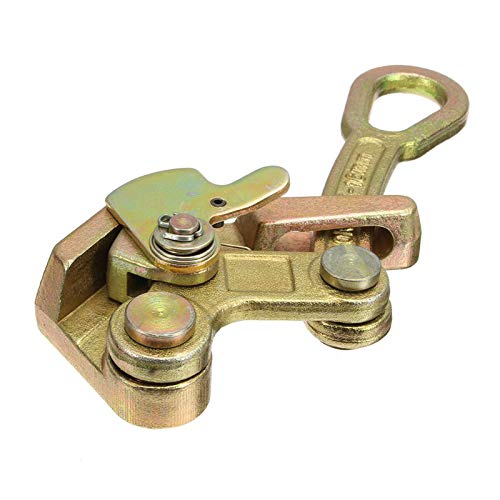
Wogoboo Cable Grip Wire Gripper Steel Cable Puller Tool for Wire Rope,Pulling 4408 Lbs(2 Ton)
High Quality -Made of carbon steel,structure compact,special heat treatment.This clamp is durable,stable and high strength.
As an affiliate, we earn on qualifying purchases.
As an affiliate, we earn on qualifying purchases.
Frequently Asked Questions
What Tools Are Best for Pulling Long Cables Safely?
You should use cable lubricants to reduce friction and make pulling easier, preventing damage. A strong pull string or fish tape helps guide the cable smoothly through conduits. Always inspect your tools before starting, and apply gentle, steady pressure while pulling. Using these techniques guarantees your long cable runs stay intact and damage-free, making the process safer and more efficient for you.
How Do Temperature Variations Affect Cable Pulling?
Temperature variations can considerably impact your cable pulling process. As temperatures fluctuate, thermal expansion occurs, causing the cable to expand or contract, which may increase tension during installation. Additionally, extreme heat or cold can lead to insulation degradation, weakening the cable’s protective layer. To prevent damage, you should consider temperature conditions, allow cables to acclimate, and use proper tension during pulling to accommodate thermal changes.
Can I Use Existing Conduits for Longer Cable Runs?
You can often reuse existing conduits for longer cable runs, but don’t assume they’re perfect. Check conduit compatibility first—some might be too narrow or damaged, risking a cable catastrophe. Be aware of cable length limitations, as pulling too much through a single conduit can cause severe stress on the cable. If in doubt, consult a professional or consider upgrading to make certain your setup remains safe and reliable.
What Are Common Signs of Cable Damage During Installation?
During installation, you might notice cable insulation damage or irregularities, which indicate stress or abrasion. Signs include cracking, cuts, or exposed wires. Excessive pulling tension can cause internal damage that isn’t visible externally but risks future failure. Always monitor tension levels and inspect insulation carefully as you pull, stopping immediately if you see damage or feel resistance, to prevent further harm and confirm the cable’s longevity.
How Do I Prevent Cable Kinking or Twisting?
Ever wonder how to keep your cable from kinking or twisting? You should manage cable tension carefully and use protective sleeves to reduce stress during installation. Keep the cable straight and avoid sharp bends, as these can cause damage. Using a pulley system helps distribute weight evenly, preventing twists. Regularly check for signs of strain, and don’t rush—taking your time guarantees your cable stays intact and functions smoothly.

KLEIN TOOLS 51015 Pulling Lubricant, Made in USA, Premium Synthetic Polymer Wire and Cable Pulling Lubricant, 1-Quart Squeeze Bottle
ALL PURPOSE LUBRICANT: Excellent for electrical and telecommunications and data applications
As an affiliate, we earn on qualifying purchases.
As an affiliate, we earn on qualifying purchases.
Conclusion
By following these tips, you guarantee your cable runs stay safe and intact, just like a seasoned engineer in the age of steam. Plan your route carefully, use the right tools, and handle the cable gently at every step. Remember, patience and preparation are key—don’t rush like a runaway train. With a little diligence, you’ll have a reliable, long-lasting installation that would make even Nikola Tesla proud.

CrocSee 25ft – 1/2 inch Flame Retardant Split Wire Loom Tubing with Installation Tool – Flexible Wire Covers Cord Protectors – Black
Inner Diameter: 1/2 Inch | Length: 25 Feet | Material: Thick & flame retardant POLYPROPYLENE (PP), raw material…
As an affiliate, we earn on qualifying purchases.
As an affiliate, we earn on qualifying purchases.
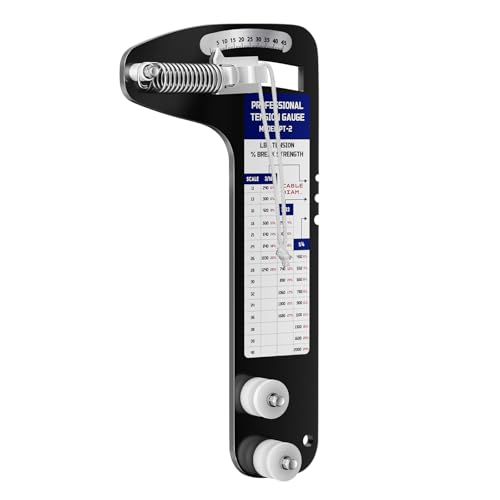
Hazztoll Sailboat Rigging Tension Gauge- PT-2 Professional Hands-Free Force Gauge, Wire Rope Standing Rigging for 3/16, 7/32, and 1/4 in Cable Diameter, 2000 lbs
±5% Precision for Rigging & Cables: Get accurate tension readings (±5%) in pounds (lbs) for 3/16", 7/32", and…
As an affiliate, we earn on qualifying purchases.
As an affiliate, we earn on qualifying purchases.