When planning a network setup, accurately estimating the cable length and materials you’ll need is vital to avoid shortages or excess. You’ll want to carefully assess your layout, account for bends and environmental factors, and choose the right connectors. Using measurement tools or planning software can make this process more precise. But determining the right amount of cable isn’t just about measurement—understanding how to add a buffer for future adjustments can save you time and money later on.
Key Takeaways
- Map device locations and planned routing paths to determine exact cable lengths needed.
- Account for connector sizes, terminations, and slack to ensure proper fit and future flexibility.
- Include a 10-15% buffer in your estimate for obstacles, adjustments, and unforeseen needs.
- Choose appropriate cable types based on environmental conditions and installation complexity.
- Use measurement tools or software to visualize layout, verify distances, and refine material requirements.
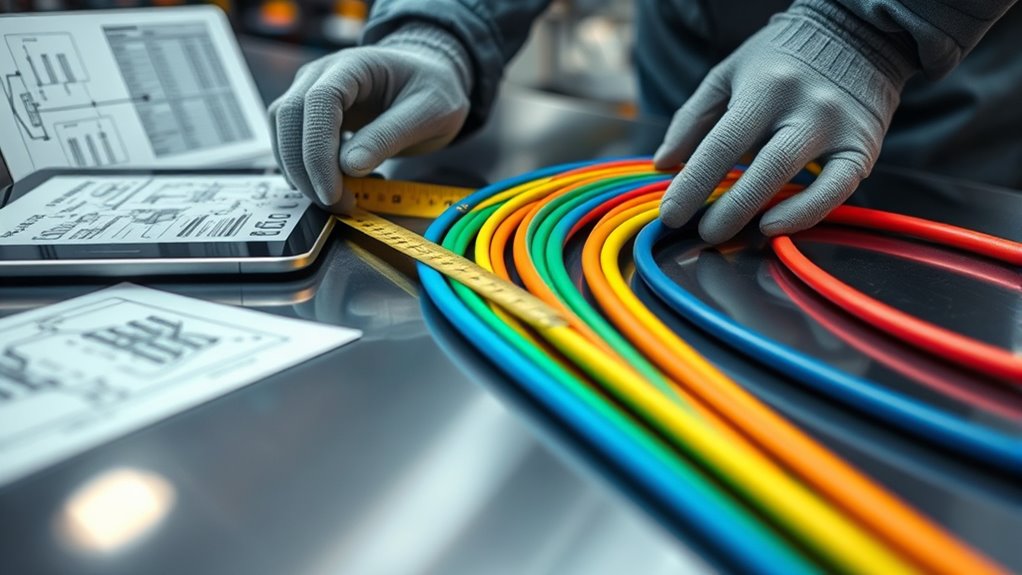
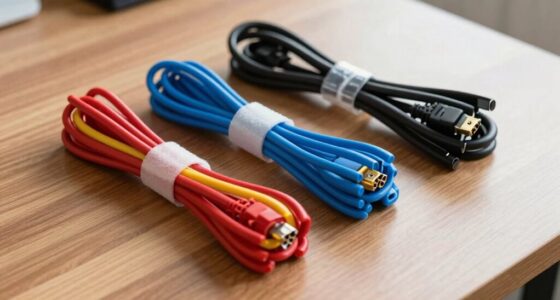
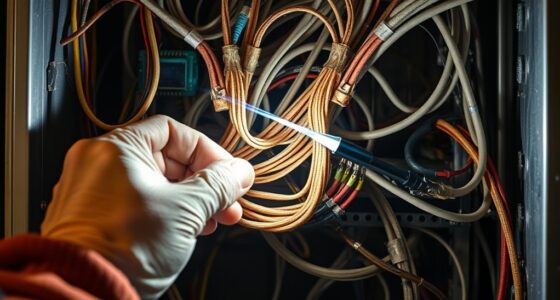
Accurately estimating cable length and material requirements is essential for efficient installation and cost management. When planning your project, paying close attention to cable management ensures you use the right amount of cable without waste or shortages. Proper planning helps prevent clutter, reduces interference, and makes future adjustments easier. To achieve this, start by assessing the layout and identifying the path your cables will follow. Map out the distances between devices, outlets, and connection points, factoring in any bends or turns. This way, you get a realistic estimate of the cable length needed, avoiding overestimation that leads to excess waste or underestimation that causes delays.
Careful planning of cable routes ensures accurate length estimates, reducing waste and preventing installation delays.
Understanding connector types plays a crucial role in this process. Different connectors, such as RJ45, HDMI, or fiber optic connectors, have specific size and compatibility requirements. Knowing which connector types you’ll need allows you to account for additional cable length needed for proper terminations and connections. For example, some connectors require more slack to facilitate secure connections and future maintenance. When estimating, include extra length for connectors to prevent tight or strained connections, which can compromise performance or damage the cable over time.
Additionally, consider the type of cable you’re using. Rigid cables like thick Ethernet cables may require more careful routing, while flexible cables can navigate tight spaces more easily. The environment also influences your estimate—installations in walls, ceilings, or outdoor settings might need longer runs, protective sheathing, or extra slack for adjustments. Always account for these variables to avoid shortfalls during installation.
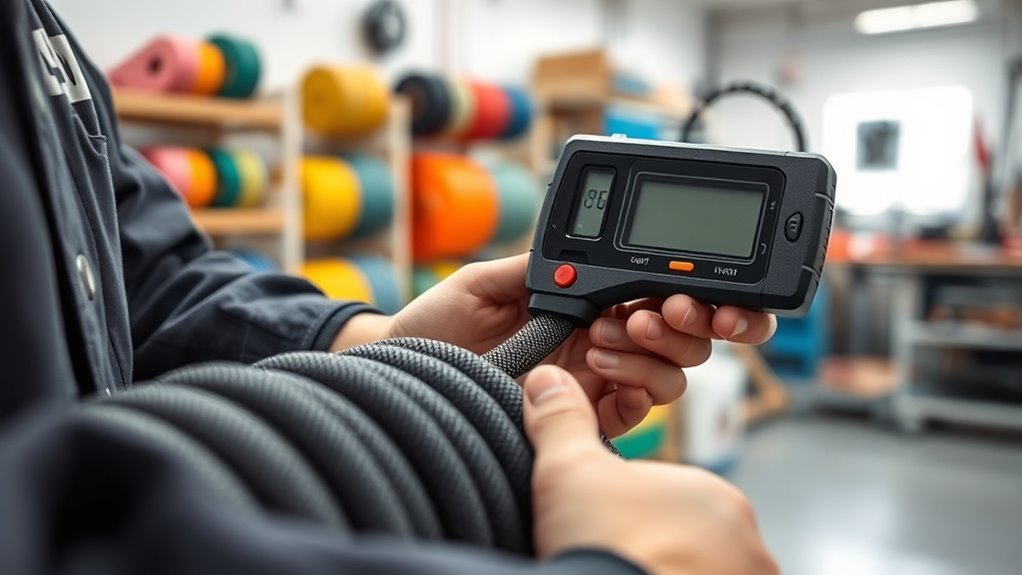
To refine your estimates, use tools like measurement tapes and planning software that simulate cable runs. These tools can help visualize the cable path, making it easier to include necessary slack and avoid miscalculations. When buying materials, it’s wise to purchase a little extra cable—typically 10-15% more than your calculated needs—to cover unforeseen obstacles or future changes. This buffer helps prevent costly delays and ensures you have enough cable for proper management.
Furthermore, understanding the importance of cable length estimation and its impact on system performance can help you plan more effectively and avoid costly rework. Finally, remember that effective cable management isn’t just about length; it’s also about how you organize and secure the cables. Properly managing cables during installation reduces the risk of damage, simplifies troubleshooting, and keeps your setup neat and functional. By carefully estimating your cable lengths and understanding connector types, you set a strong foundation for a successful, efficient installation that minimizes costs and maximizes performance.

Nettbe 60 PCS 6 Inches Reusable Cable Ties, Adjustable Cord Straps Wire Organizer Cord Wrap and Hook Loop Cable Management
- Reusable nylon cable ties: Made from durable, eco-friendly nylon
- Versatile cable organizer: Wraps all types of loose cords
- Multi-use application: Suitable for home, office, garage, outdoors
As an affiliate, we earn on qualifying purchases.
Frequently Asked Questions
How Do Environmental Factors Affect Cable Length Estimation Accuracy?
Environmental considerations, like temperature, humidity, and exposure to elements, can substantially impact your cable length estimation accuracy. These factors cause cables to expand, contract, or degrade over time, leading to installation challenges. You need to account for potential environmental influences during planning to guarantee your cable runs are precise. Ignoring these considerations might result in cables being too short or too long, complicating installation and compromising system performance.
What Tools Are Best for Measuring Cable Requirements Precisely?
You should use digital calipers and laser distance meters for precise cable measurements. Digital calipers are excellent for measuring small distances accurately, while laser distance meters quickly cover longer spans with high precision. Combining these tools allows you to determine cable lengths reliably, reducing errors. Always calibrate your devices before use, and take multiple measurements to guarantee consistency, especially when environmental factors like temperature or obstacles could affect accuracy.
How to Account for Future Expansion When Estimating Cable Quantities?
Think of planning cable quantities like planting a garden—you want room for growth. To account for future expansion, include expansion allowances and safety margins in your estimates. Add extra length to your current needs to cover potential upgrades, new devices, or rerouting. This proactive approach guarantees you’re not caught short later, keeping your system flexible and ready for growth without the need for costly rework.
Are There Industry Standards for Cable Length Safety Margins?
Yes, industry guidelines recommend including a standard safety margin in cable lengths to account for installation variations and future needs. Typically, you should add 10-15% to the calculated cable length, depending on your project’s complexity. Following these industry standards guarantees you have enough cable for secure connections and future expansion, reducing the risk of shortages or rework. Always refer to relevant codes and manufacturer recommendations for specific safety margins.
How Does Cable Type Influence Material Cost Calculations?
Think of cable type as the foundation of your project; it directly influences your material costs. You’ll consider cable insulation and conductor materials because different types, like copper or aluminum, vary in price. High-quality insulation adds to costs, but it guarantees safety and durability. So, your choice affects your budget, with premium cables costing more but offering better performance, while standard types save money but might compromise longevity.

SOULWIT 50Pcs Self Adhesive Cable Management Clips - Black
- Easy to Use: Stick, open tab, insert cables, close
- Premium Material: Eco-friendly Polyamide66, anti-static, durable
- Universal Adhesion: Works on desks, walls, wood, metal, ceramics
As an affiliate, we earn on qualifying purchases.
Conclusion
So, there you have it—your foolproof plan to avoid ending up with a mountain of unused cables or desperately scrambling for that one missing foot. With a little planning, measurement, and a dash of overconfidence, you’ll master the art of perfect cable estimation. Because nothing screams “professional” quite like running out of cable mid-installation or wasting a fortune on extras. Happy wiring, and may your cables always fit just right—no matter how much you’ve *guessed*!
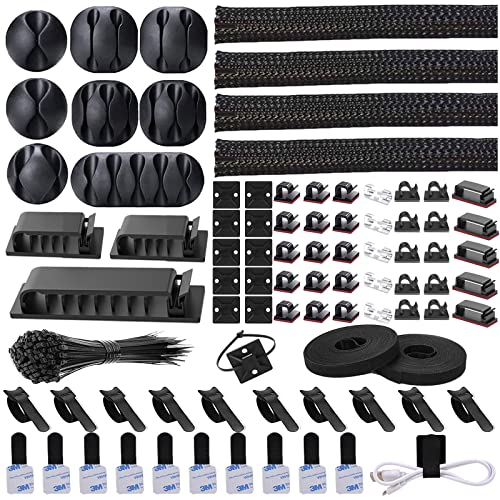
N NOROCME 192 PCS Cable Management Kit 4 Wire Organizer Sleeve
- Complete Cable Management Kit: Includes sleeves, ties, clips, and mounts
- Multiple Cable Clips: 6 types, 46 eco-friendly clips in two colors
- Durable Materials: Sturdy, high-quality components for long-lasting use
As an affiliate, we earn on qualifying purchases.

Cable Organizing and Bundler Tool,24-Hole Cable Dresser for Data Center, Server Rooms and Machine Room Wire Management and Organizer, Perfect for Cable Management(CAT5, CAT6)
- Supports up to 24 cables: Organize multiple cables simultaneously
- Easy to use and customize: Supports 10 variable combinations with 12 holes each
- Open angle for quick access: 90-degree open angle for easy cable removal
As an affiliate, we earn on qualifying purchases.