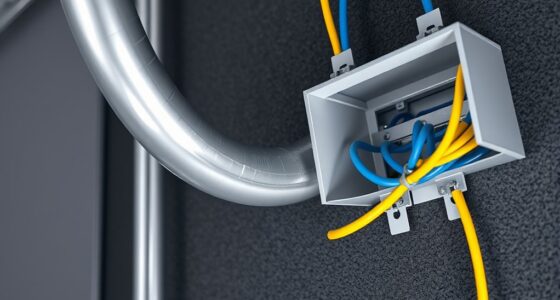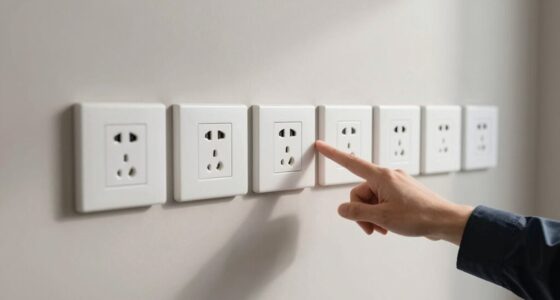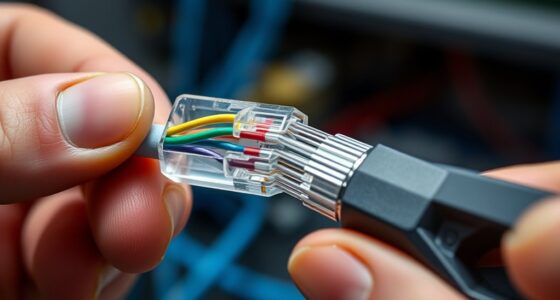
To choose better cable routes in finished spaces, plan paths along edges, corners, or behind furniture to keep cables out of sight and avoid high-traffic areas. Use clips, raceways, or sleeves to secure and hide wires, ensuring they stay safe and organized. Leave some slack for easy access and future upgrades. Paying attention to safety, aesthetics, and accessibility will create a clean, clutter-free environment. Keep exploring for more tips to optimize your cable setup seamlessly.

Get business pricing on networking and server gear
- Business-only prices and quantity discounts
- Tax-exempt purchasing
- Multiple users, one account, clear invoices
Key Takeaways
- Identify existing pathways like corners, baseboards, or ceilings to discreetly hide and support cables.
- Avoid high-traffic areas to reduce tripping hazards and accidental disconnections.
- Use cable clips, raceways, or sleeves to secure and conceal wires along walls or furniture.
- Plan cable lengths carefully to prevent slack, clutter, and potential damage.
- Incorporate aesthetic solutions like painted raceways for a neat, integrated appearance.
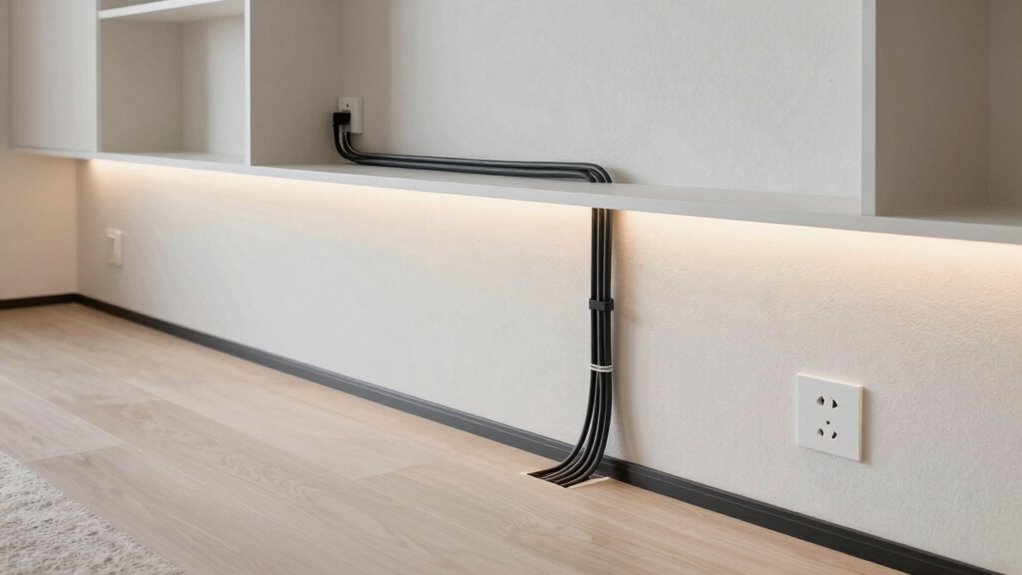
Have you ever struggled with tangled cables or discovered that your wiring isn’t as efficient as it could be? If so, you’re not alone. Choosing better cable routes in finished spaces can make a significant difference in how your environment looks, functions, and feels. Good wire management isn’t just about aesthetics; it’s about creating a safer, more organized space where cables don’t pose hazards or become a hassle to maintain. When planning your cable routes, start by evaluating your space carefully. Look for existing pathways, such as baseboards, ceilings, or walls, that can hide or support your cables. Avoid running wires across high-traffic areas where they could be tripped over or accidentally pulled. Instead, opt for routes along edges or corners, where they’re less likely to be disturbed.
Safety considerations are paramount. You want to guarantee cables are not stretched tight or pinched behind furniture, which can cause damage over time. Use cable clips or conduit to secure wires along walls and avoid loose hanging cables that can become a hazard. If you’re running cables through walls or ceilings, make sure to follow local building codes and use proper connectors and protectors. Avoid overloading power strips or outlets, and always keep power cords away from water sources or damp areas to prevent electrical hazards. Proper wire management not only keeps things neat but also reduces the risk of accidental damage or fire. Being aware of water damage prevention techniques can further protect your cables and connected devices from moisture-related hazards. Additionally, understanding cable insulation properties can help you select the right materials for different environments. Considering environmental factors such as temperature and humidity can also influence your choice of cable routing and protective measures.
When choosing routes, think about accessibility. You might want to leave some cables easily accessible for future upgrades or troubleshooting, but hide others behind furniture or inside walls for a cleaner look. If you’re dealing with multiple devices, consider using cable sleeves or raceways that can be painted to match your decor. These solutions help maintain a sleek appearance while keeping wires organized and out of sight. Also, measure your cables thoroughly before installation to avoid excess slack, which can create clutter or trip hazards. Use cable ties or Velcro straps to bundle related wires together, preventing tangling and making maintenance easier. Planning your cable routes carefully can help maximize space efficiency and enhance the overall aesthetic of your finished space.
cable raceways for wall mounting
As an affiliate, we earn on qualifying purchases.
As an affiliate, we earn on qualifying purchases.
Frequently Asked Questions
How Do I Identify Existing Hidden Cables Before Rerouting?
You identify existing concealed wiring by carefully inspecting walls, ceilings, and floors for signs like outlets, switches, or covers. Use a stud finder with a wire detection feature or a non-contact voltage tester to locate hidden cables safely. Always follow safety precautions—turn off power before probing and avoid drilling or cutting without confirming cable locations. This guarantees you prevent damage and stay safe while rerouting cables.
What Tools Are Best for Cable Routing in Finished Walls?
For effective cable management and wall penetrations, use a stud finder with a deep scanning feature, a wire detector, and a laser measure. A multimeter helps identify live wires, while a drywall saw or rotary tool creates precise wall openings. These tools guarantee safe, accurate routing, minimize damage, and keep your finished space neat. Always double-check for hidden cables before making any penetrations, ensuring safety and ease.
How Can I Minimize Damage to Finished Surfaces During Cable Installation?
To minimize damage to finished surfaces, opt for surface mounting options like conduit covers or cable raceways, which protect your walls while concealing cables neatly. Carefully measure and plan your routes to avoid unnecessary drilling, and use tools like drywall saws or fish tapes for precise cable concealment. Taking these steps guarantees your space stays tidy and damage-free, while maintaining a professional look.
Are There Specific Cable Types Recommended for Certain Spaces?
Yes, you should select cable types based on your space’s needs. For example, use shielded Ethernet cables with proper insulation to prevent signal interference in high-electrical activity areas. For audio or video, opt for cables with excellent insulation to avoid cross-talk. In finished spaces, choose cables with durable insulation to protect against damage. Matching the cable type to your environment guarantees peak performance and reduces potential issues related to signal interference or damage.
How Do I Ensure Compliance With Building Codes When Rerouting Cables?
Think of building codes as the map guiding your wiring journey. To stay compliant, you need to check local regulations and follow manufacturer instructions for cable management systems. Consider wireless alternatives to reduce clutter and code concerns. Document your rerouting process thoroughly, and if unsure, consult a professional or building inspector. This way, your cable routes stay safe, legal, and neat, avoiding costly detours or penalties.
cable clips for organized wiring
As an affiliate, we earn on qualifying purchases.
As an affiliate, we earn on qualifying purchases.
Conclusion
As you finalize your cable routes, remember that the best paths often reveal themselves through a mix of planning and chance—like finding a hidden draft or a forgotten conduit. Trust your instincts and stay flexible, because sometimes the most seamless solutions come from unexpected turns. In the end, the perfect cable route isn’t just about efficiency; it’s about creating a space where everything flows naturally, almost as if it was meant to be there all along.
As an affiliate, we earn on qualifying purchases.
As an affiliate, we earn on qualifying purchases.
Columbus Day / Indigenous Peoples' Day Picks
long weekend sales
As an affiliate, we earn on qualifying purchases.