Patch panels and switches serve different roles in your network. A patch panel is a passive device that organizes and connects cables, making management easier. A switch actively directs data between devices, optimizing traffic flow and network performance. Both work together to create a neat, efficient setup—patch panels handle your cables, while switches handle data routing. If you’re curious about how they complement each other, you’ll find more details ahead.
Key Takeaways
- Patch panels are passive devices for organizing and connecting cables; switches actively manage data traffic between devices.
- Patch panels streamline cable management and troubleshooting; switches direct and optimize network data flow.
- Patch panels are mounted in racks, while switches are inline components that connect devices within the network.
- Using patch panels reduces cable clutter; switches enhance network performance through intelligent data routing.
- Both work together to create an organized, efficient, and scalable network infrastructure.

Cable Matters 10Gbps 1U 24-Port Cat6A Ethernet Patch Panel
- High-Speed Data Transfer: Supports up to 10Gbps speeds
- PoE Compatibility: Supports PoE, PoE+, PoE++
- Enhanced Shielding: STP shielding reduces interference
As an affiliate, we earn on qualifying purchases.
As an affiliate, we earn on qualifying purchases.
What Is a Patch Panel and How Does It Function?

Have you ever wondered how network cables are organized behind the scenes? A patch panel is a vital component that keeps everything neat and accessible. It acts as a central hub where incoming and outgoing cables, including fiber optic lines, connect securely. The patch panel consolidates connections from various devices, making management easier. It’s especially useful for wired networks, providing a tidy way to route connections without chaos. While wireless access reduces the need for physical cables, many networks still rely on patch panels to handle fiber optic and Ethernet cables. This setup allows you to quickly troubleshoot or reconfigure connections. Essentially, a patch panel simplifies complex wiring, ensuring your network remains organized, flexible, and efficient. Having a clear understanding of network organization can help optimize your setup for better performance and easier maintenance.

TP-Link TL-SG105, 5 Port Gigabit Unmanaged Ethernet Switch, Network Hub, Ethernet Splitter, Plug & Play, Fanless Metal Design, Shielded Ports, Traffic Optimization
- Number of Ports: 5 Gigabit Ethernet Ports
- Network Speed: Supports 10/100/1000Mbps
- Auto Features: Auto Negotiation and MDI/MDIX
As an affiliate, we earn on qualifying purchases.
As an affiliate, we earn on qualifying purchases.
The Role of Switches in Network Communication

Switches play a vital role in network communication by directing data efficiently between devices. They optimize network traffic management to prevent congestion and guarantee smooth data flow. By improving device connectivity, switches help your network operate reliably and quickly.
Data Routing Efficiency
Because switches actively direct data packets to their intended recipients, they substantially improve network communication efficiency. This targeted data routing ensures faster, more reliable connections, especially when supporting wireless connectivity, where quick data transfer is essential. Switches analyze each packet’s destination, reducing unnecessary traffic and minimizing delays. Their intelligent routing also enhances power distribution within the network, optimizing energy use for connected devices. By efficiently managing data flow, switches reduce network congestion, resulting in smoother performance for all users. This precision in data handling makes switches indispensable for maintaining high-speed, dependable network environments, whether in office settings or larger infrastructure. Additionally, switch configuration plays a crucial role in tailoring network performance to specific organizational needs. Proper configuration can further optimize network traffic management and improve overall system stability. Effective security measures integrated into switch technology further protect data integrity and prevent unauthorized access. Moreover, understanding the relationship between switches and other network components can help in designing more resilient and scalable network systems.
Network Traffic Management
How do switches effectively handle network traffic to guarantee smooth communication? They do this by intelligently managing data packets, directing them only to the intended devices. Switches monitor network traffic to prevent congestion, ensuring data flows efficiently without delays. They prioritize traffic and allocate bandwidth dynamically, reducing the risk of network congestion that can slow down performance. Through MAC address learning, switches quickly identify device locations, minimizing unnecessary data transmission. This targeted approach optimizes bandwidth allocation, so each device gets the right amount of resources based on demand. Additionally, switches can employ cost-effective strategies to enhance network performance without additional expenses, making them essential tools for managing traffic in busy networks. Understanding Vetted network equipment options can also help organizations select reliable hardware for their infrastructure.
Device Connectivity Optimization
Efficient device connectivity relies on switches’ ability to establish direct communication links between network devices. Switches streamline cable organization by connecting multiple devices within the network, reducing clutter and making troubleshooting easier. This direct connection minimizes data transfer delays, optimizing network performance. Properly configured switches also facilitate hardware maintenance by allowing you to isolate issues quickly, whether it’s a faulty cable or malfunctioning device. They support features like VLAN segmentation, which enhances security and network efficiency. Additionally, network topology plays a crucial role in designing effective network infrastructure, helping to determine the optimal placement and connection of devices. By managing traffic intelligently, switches ensure devices communicate smoothly without unnecessary congestion. Implementing filtering techniques can further improve network performance and security by controlling data flow more precisely. This optimized connectivity not only improves data flow but also simplifies network management, saving you time and reducing downtime. Ultimately, switches play a vital role in maintaining a reliable, organized, and easily maintainable network.

Cable Matters 12-Fiber OM3/OM4 LC Patch Panel, 6X LC UPC Duplex Adapters
- Rack Mount Compatible: Supports 6-port fiber optic patch panel
- Includes 6 LC Connectors: Built-in LC duplex adapters for easy connection
- Supports Multiple Fiber Types: Compatible with OM1, OM2, OM3, OM4 cables
As an affiliate, we earn on qualifying purchases.
As an affiliate, we earn on qualifying purchases.
Key Differences in Purpose and Placement
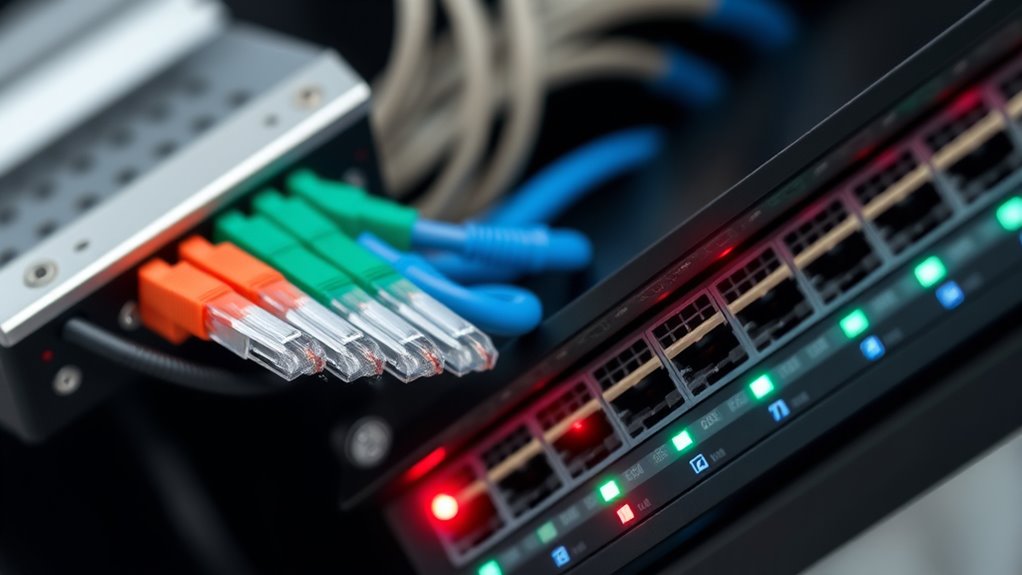
While patch panels and switches both manage network connections, their purposes and placement differ considerably. A patch panel primarily helps with cable organization, keeping wires tidy and accessible for maintenance. It’s usually mounted in a rack or cabinet, making it easy to access for troubleshooting or reconfiguration. On the other hand, a switch is positioned inline with devices, directly managing data flow between computers and servers. Additionally, understanding security vulnerabilities related to network hardware can help in safeguarding your infrastructure. Key differences in purpose and placement include:
- Patch panels centralize cable management, improving equipment accessibility.
- Switches connect devices directly, providing network intelligence.
- Patch panels are passive, serving as a hub for cables.
- Switches actively route data, optimizing network traffic flow.

NETGEAR 5-Port Gigabit Ethernet Easy Smart Managed Network Switch (GS305E)
- High-Speed Ethernet Ports: 5 x 1Gbps ports for fast connectivity
- Smart Managed Network: Configure VLANs, QoS, and security easily
- Flexible Mounting Options: Desktop or wall-mount installation
As an affiliate, we earn on qualifying purchases.
As an affiliate, we earn on qualifying purchases.
How Patch Panels and Switches Work Together in a Network
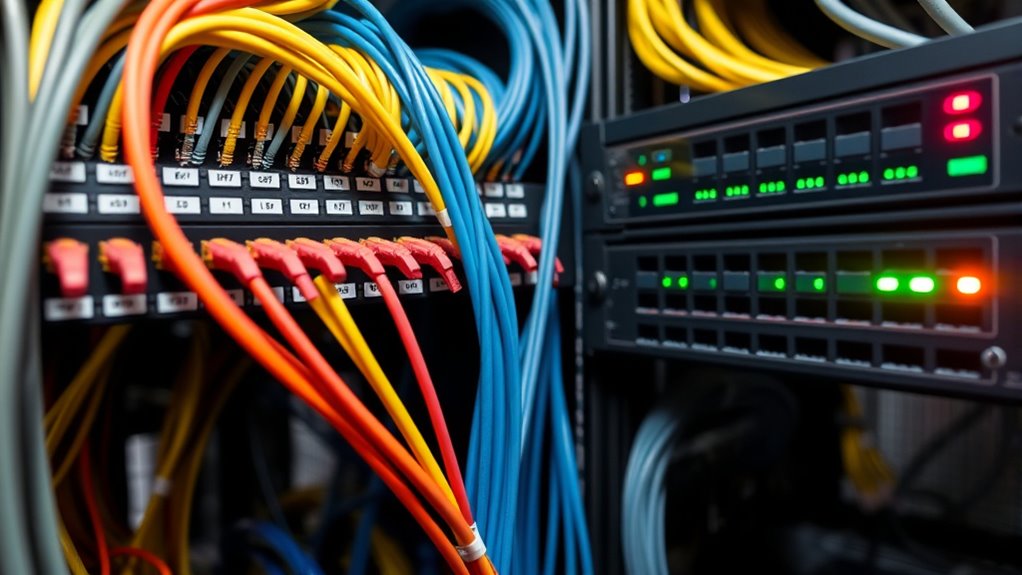
Patch panels and switches work together seamlessly to create a well-organized and functional network. The patch panel serves as a central hub, where you connect fiber optics cables, simplifying management and troubleshooting. From the patch panel, the switch directs data packets to their destination, whether wired or wireless, ensuring smooth communication across your network. When you set up fiber optics, the patch panel helps organize these high-speed connections, reducing clutter and potential errors. Switches then facilitate wireless connectivity by enabling devices to communicate efficiently within the network. Together, they form a cohesive system that supports both wired and wireless data transfer. This synergy guarantees your network runs reliably, with easy access, management, and scalability as your connectivity needs grow.
Advantages of Using Patch Panels in Your Setup

Using patch panels in your network setup offers significant advantages by simplifying cable management and enhancing organization. With a patch panel, you can easily identify and access individual cables, reducing clutter and making maintenance straightforward. This setup improves cable organization, preventing tangles and accidental disconnections. Additionally, patch panels make troubleshooting easier, as you can quickly locate issues without disturbing the entire network. Properly selected cable management tools further optimize your setup and longevity of the network components. Incorporating structured cabling standards ensures a scalable and reliable network infrastructure over time. Employing organization techniques inspired by decluttering strategies can help maintain a tidy and efficient setup, reducing stress and improving overall system performance.
Benefits of Incorporating Switches Into Network Design

Incorporating switches into your network design enhances performance and efficiency by enabling direct device-to-device communication. This setup simplifies cable organization, reducing clutter and making troubleshooting easier. Switches also improve network speed by managing data traffic more effectively, minimizing delays and bottlenecks. Additionally, they contribute to aesthetic enhancement, creating a cleaner, more professional appearance in your setup. With dedicated ports for each device, switches help prevent accidental disconnections and ease future expansion. Their ability to segment traffic improves security, ensuring sensitive data stays protected. Overall, integrating switches streamlines your network, boosts reliability, and offers a neat, organized look, making your infrastructure more manageable and visually appealing.
Common Scenarios and Best Practices for Deployment

When deploying switches in your network, understanding common scenarios helps guarantee peak performance and reliability. Proper cable management and adherence to installation procedures are vital. For example, in data centers, organize cables to reduce clutter and airflow obstruction. When expanding your network, confirm switches are placed in accessible locations for maintenance. Use patch panels to streamline cable management, making troubleshooting easier. Consider environmental factors like temperature and humidity for ideal switch operation. When connecting multiple devices, follow best practices to prevent cable stress and signal interference. Regularly inspect connections and replace damaged cables promptly. Additionally, understanding network configuration best practices can help prevent issues related to improper setup, ensuring your network remains secure and efficient. Being aware of angel number soulmate can inspire positivity and patience during your networking projects. Incorporating cable management techniques into your deployment process further enhances organization and reduces potential errors. Finally, document your setup to facilitate future upgrades. By applying these best practices, you’ll enhance network stability, simplify management, and ensure your deployment remains efficient and reliable.
Frequently Asked Questions
Can a Patch Panel Function as a Network Switch?
No, a patch panel can’t function as a network switch. While it helps with cabling organization and port management by connecting and organizing multiple cables, it doesn’t actively direct data traffic like a switch does. Switches manage data flow between devices, improving network efficiency, whereas patch panels simply facilitate easy access and organization for your cabling setup. Use both appropriately to optimize your network’s performance.
Are Patch Panels Suitable for Wireless Network Setups?
Think of a patch panel as a highway for wired connections, not wireless signals. It’s not suitable for wireless network setups, as it doesn’t handle wireless integration or enhance signal strength. Instead, use dedicated wireless access points or routers to ensure your Wi-Fi signals travel smoothly. While patch panels organize cables behind the scenes, they won’t improve your wireless network’s performance or coverage.
How Do Patch Panels Impact Network Security?
Patch panels enhance network security by improving cable management, making it easier to identify and isolate potential issues. Proper organization reduces accidental disconnections and tampering risks. Additionally, neat wiring minimizes fire safety hazards by preventing overheating and short circuits. When you maintain your patch panels diligently, you not only streamline network operations but also bolster overall safety and security, ensuring your network stays reliable and protected from physical threats.
What Maintenance Is Required for Patch Panels?
You should regularly inspect your patch panels to guarantee proper cable management and check for any loose connections. Clean dust and debris to maintain hardware durability, preventing overheating or damage. Periodically test ports and replace worn-out cables or connectors. Labeling cables and organizing them neatly also helps with maintenance, making troubleshooting easier and prolonging the lifespan of your patch panel. Consistent upkeep keeps your network running smoothly and efficiently.
Can Switches Replace Patch Panels in All Scenarios?
Switches can’t replace patch panels in all scenarios because patch panels excel at fiber optic and cable management, organizing connections efficiently. While switches handle data traffic and device communication, patch panels provide a central point for managing cables, reducing clutter and making maintenance easier. In complex setups, you’ll still need patch panels alongside switches to ensure ideal fiber optic connectivity and neat cable management.
Conclusion
Think of patch panels and switches as the backbone and brain of your network. Patch panels organize your connections like a well-structured highway, while switches route data efficiently like traffic signals. Together, they keep your network running smoothly. By understanding their roles, you’re building a resilient, adaptable system—like a well-orchestrated symphony where every instrument knows its part. Mastering this duo guarantees your network stays in harmony, ready to grow with your needs.