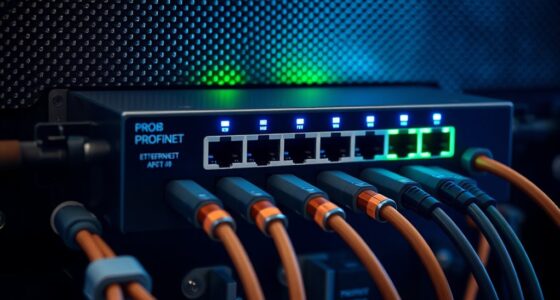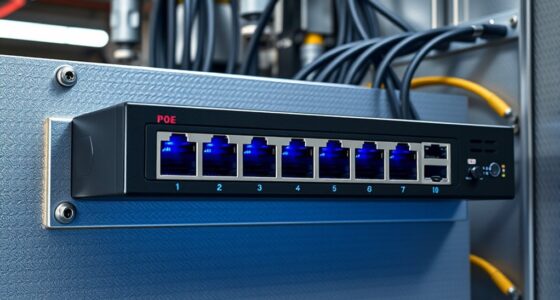

Implementing fiber optics in industrial control systems can substantially improve data transmission reliability and speed, especially in challenging environments. Their immunity to electromagnetic interference and ability to cover long distances make them an attractive choice. But understanding how they enhance operational safety and system performance requires a closer look at their unique advantages and potential challenges. Exploring these aspects could reveal ways to optimize your control setups more effectively.
Key Takeaways
- Provides reliable, high-speed data transmission immune to electromagnetic interference.
- Enables precise, real-time sensing of temperature, pressure, and strain.
- Offers environmental resilience, reducing maintenance in harsh industrial conditions.
- Enhances security with difficult-to-tap signals and supports higher bandwidths.
- Facilitates extensive coverage and integration of advanced control systems across large areas.

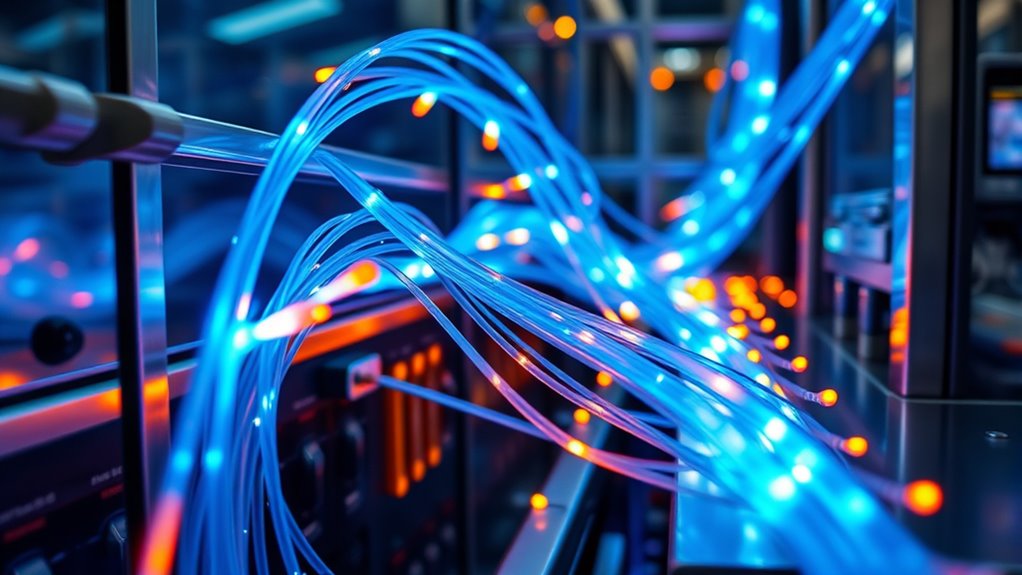
Have you ever wondered how industrial control systems achieve such reliable and high-speed data transmission? The secret often lies in fiber optic technology. Unlike traditional metal cables, fiber optic sensors use thin strands of glass or plastic to transmit data as pulses of light. This method markedly enhances signal transmission reliability, which is vital for industrial environments where precision and safety are paramount. When you install fiber optics in your control systems, you benefit from immunity to electromagnetic interference, ensuring that signals stay clear even amidst heavy machinery and electrical noise. This robustness minimizes data loss and errors, providing a consistent and dependable flow of information.
Fiber optic technology ensures reliable, high-speed data transmission in industrial control systems, immune to electromagnetic interference and environmental challenges.
Fiber optic sensors are particularly effective because they can detect changes in temperature, pressure, and strain with high accuracy. These sensors convert physical phenomena into optical signals, which travel through the fiber with minimal attenuation. As a result, you get real-time data that is both precise and stable, allowing for better control and quicker response times. The technology’s ability to operate over long distances without degradation means your control system can cover expansive industrial sites without sacrificing signal integrity. This is a major advantage in manufacturing plants, power stations, or pipelines, where reliable data transmission across extensive areas is essential.
Furthermore, fiber optics excel in environments where traditional wiring might fail. Harsh conditions like extreme temperatures, moisture, or chemical exposure don’t affect fiber optic sensors the way they do electrical cables. This resilience translates into fewer maintenance issues and lower operational costs over time. When you rely on fiber optic sensors, you’re also reducing the risk of signal interference that can cause disruptions or inaccuracies. For critical control applications, this reliability can be the difference between safe operation and costly downtime.
Another key benefit is security. Because fiber optic signals are difficult to tap into without detection, your data remains secure from cyber threats or unauthorized access. This added layer of security is essential for safeguarding sensitive industrial processes. Plus, fiber optic systems tend to be lightweight and flexible, making installation easier and less disruptive to existing infrastructure. They also support higher bandwidths, so you can transmit large volumes of data rapidly, supporting advanced control algorithms and real-time analytics. Incorporating diverse designs and innovative materials further enhances their adaptability to various industrial needs.

FS-N18 Fiber Optic Sensor,HD LED Dual Digital Display Optical Fiber Amplifier,Long-Distance Optical Communications Diffuse Induction Photoelectric Switch (English Instruction Manual)
【Modle】The FS-N18 fiber-optic amplifier provides ultra-stable performance and smart tuning for high-speed, reliable detection for standard or demanding…
As an affiliate, we earn on qualifying purchases.
As an affiliate, we earn on qualifying purchases.
Frequently Asked Questions
How Does Fiber Optics Compare to Traditional Wiring in Terms of Cost?
Fiber optics generally cost more upfront than traditional wiring due to higher material and installation expenses. However, the cost comparison shifts over time because fiber optics offer lower maintenance and fewer replacements thanks to their durability and immunity to interference. You might spend more initially, but in the long run, fiber optics can save you money through reduced downtime and maintenance costs, making them a cost-effective choice for industrial control systems.
Are Fiber Optic Cables Resistant to Industrial Chemical Exposure?
Like a knight’s armor standing strong, fiber optic cables offer excellent chemical resistance and durability against industrial chemicals. You won’t have to worry about corrosion or degradation when exposed to harsh substances, making them ideal for demanding environments. Their resilience guarantees reliable data transmission over time, even in challenging conditions. So, if durability and chemical resistance matter to you, fiber optics are a smart choice for industrial control systems.
What Are the Maintenance Requirements for Fiber Optic Networks?
You need to regularly check your fiber optic network to guarantee ideal fiber optic durability. Follow a consistent maintenance schedule that includes inspecting for physical damage, cleaning connectors, and testing signal strength. Keep records of inspections and repairs to identify potential issues early. Proper maintenance helps prevent downtime, extends the lifespan of your system, and maintains high performance, ensuring your industrial control network remains reliable and efficient.
Can Fiber Optics Support Wireless Industrial Control Systems?
Think of fiber optics as the backbone, holding up a bridge to wireless integration. Yes, fiber optics can support wireless industrial control systems by providing a stable, high-speed connection that guarantees signal reliability. They serve as a reliable conduit for transmitting data to wireless devices, reducing interference and boosting performance. This setup helps you maintain seamless control, even in challenging environments, making your industrial system both resilient and adaptable.
How Do Fiber Optics Handle Electromagnetic Interference in Industrial Environments?
Fiber optics handle electromagnetic interference exceptionally well because they are immune to it. You don’t need electromagnetic shielding, which can be bulky and costly, as fiber optic cables inherently resist electrical noise. This preserves signal integrity, ensuring your control systems operate smoothly and reliably even in harsh industrial environments with high electromagnetic interference. So, fiber optics provide a resilient solution, maintaining clear, interference-free communication essential for industrial automation.

FLYPROFiber- LC to LC Outdoor Armored Fiber Patch Cable, OM3 Uniboot Fiber Optic Cable Cord LSZH 10GB/40GB Multimode Duplex 50/125um, Length Options:10m-300m, OD-5mm, LSZH-100Meter(328ft)
Rugged Outdoor Durability: The outdoor-rated construction of this cable features a UV-resistant and weatherproof jacket, ensuring long-lasting performance…
As an affiliate, we earn on qualifying purchases.
As an affiliate, we earn on qualifying purchases.
Conclusion
By choosing fiber optics for your industrial control systems, you’re opening a future where reliability and security shine brighter than ever. Think of fiber optics as the backbone of your operations, silently supporting every command and measurement. As you embrace this technology, remember: in the vast, complex world of industry, fiber optics are the steady lighthouse guiding you through the storm. With them, your control system’s performance becomes not just robust, but unstoppable.

Fiber Optic Sensors: An Introduction for Engineers and Scientists
As an affiliate, we earn on qualifying purchases.
As an affiliate, we earn on qualifying purchases.

Fiber-Optic Communication Systems (Wiley Series in Microwave and Optical Engineering)
As an affiliate, we earn on qualifying purchases.
As an affiliate, we earn on qualifying purchases.