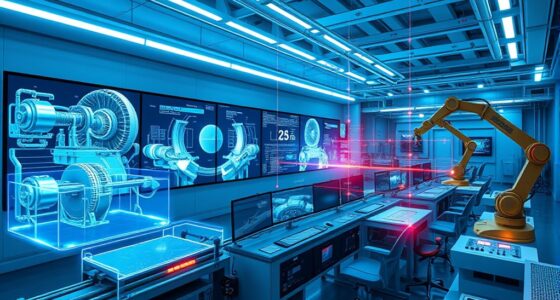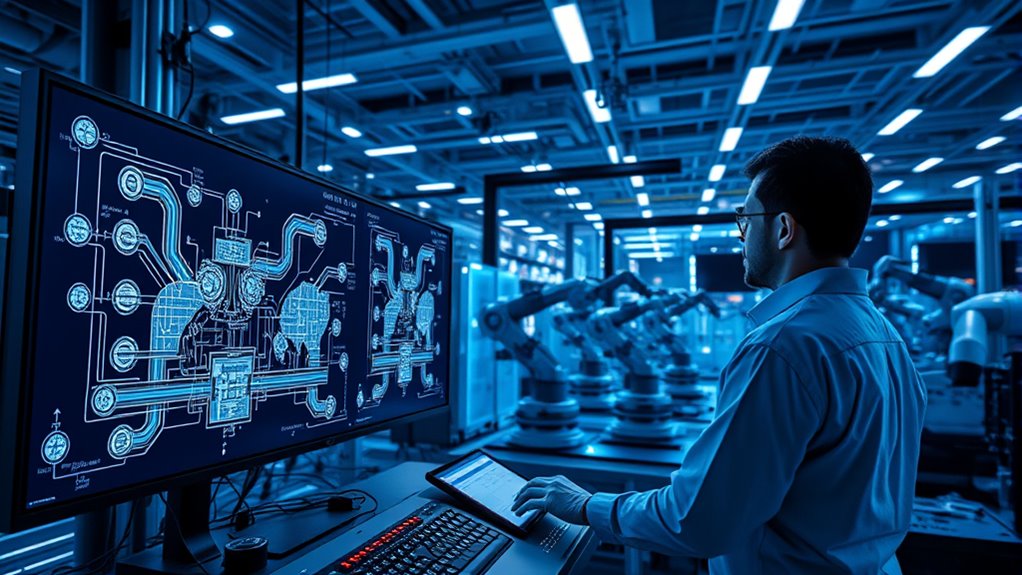

Imagine a network where every second counts, like a finely tuned orchestra playing in perfect harmony. Time-Sensitive Networking (TSN) makes this possible by ensuring machines and sensors communicate with pinpoint accuracy. As manufacturing becomes more complex, understanding how TSN creates a reliable, synchronized environment is essential. What’s behind this technology’s ability to keep production lines running smoothly and why should you care?

Get business pricing on networking and server gear
- Business-only prices and quantity discounts
- Tax-exempt purchasing
- Multiple users, one account, clear invoices
Key Takeaways
- TSN enables deterministic, low-latency communication crucial for synchronized manufacturing processes.
- It ensures reliable data transfer, minimizing delays and jitter in real-time industrial networks.
- TSN integrates seamlessly with existing Ethernet infrastructure, supporting scalable, future-proof manufacturing setups.
- It enhances equipment coordination, reducing downtime and optimizing production line efficiency.
- TSN supports Industry 4.0 by providing stable, synchronized communication for interconnected manufacturing systems.

In modern manufacturing, ensuring that critical data reaches its destination without delay is essential for maintaining efficiency and quality. Time-sensitive networking (TSN) plays a pivotal role in achieving this goal by providing reliable, deterministic communication over standard Ethernet infrastructure. When your manufacturing processes rely on precise coordination between machines and systems, industrial synchronization becomes crucial. TSN enables this synchronization by ensuring that data packets are delivered with minimal latency and consistent timing, which is vital for seamless operations. With real-time data transmitted accurately and promptly, you can coordinate complex tasks, reduce errors, and optimize overall productivity.
Ensuring timely data delivery with TSN enhances manufacturing efficiency and process synchronization.
By implementing TSN, you gain the ability to synchronize diverse equipment, from robotic arms to sensors, creating a unified, real-time view of your production line. This level of industrial synchronization ensures that every component operates in harmony, minimizing downtime and preventing bottlenecks. When machines communicate in real time, you can quickly respond to issues, adjust parameters, and make informed decisions on the fly. This rapid data exchange not only enhances operational agility but also improves product quality by maintaining strict control over manufacturing conditions.
The key advantage of TSN is its capacity to deliver deterministic performance over existing Ethernet networks. Unlike traditional networks, which can suffer from unpredictable delays and jitter, TSN guarantees that critical data arrives within specified time frames. This predictability is essential for safety-critical applications and for synchronizing time-sensitive tasks. As a result, your manufacturing environment becomes more reliable and resilient to network disruptions, ensuring continuous production flow.
Furthermore, TSN supports the integration of various industrial protocols and devices, making it adaptable to diverse manufacturing setups. You don’t need to overhaul your entire network infrastructure to benefit from its capabilities. Instead, TSN can be layered onto your existing Ethernet backbone, providing a scalable and future-proof solution. This flexibility allows you to upgrade incrementally, ensuring your operations stay ahead in a competitive market.
Additionally, leveraging a stable and high-performance network is critical to fully realizing the benefits of TSN, as network stability directly influences synchronization accuracy and overall system reliability. Ultimately, adopting TSN enhances your ability to maintain tight control over manufacturing processes through improved industrial synchronization and real-time data communication. This leads to shorter cycle times, higher product quality, and greater operational transparency. As manufacturing continues to evolve with Industry 4.0 principles, leveraging TSN ensures your systems remain interconnected, responsive, and optimized — all while supporting the demands of modern, time-sensitive production environments.
industrial Ethernet switches with TSN support
As an affiliate, we earn on qualifying purchases.
As an affiliate, we earn on qualifying purchases.
Frequently Asked Questions
How Does TSN Impact Overall Manufacturing System Scalability?
TSN enhances your manufacturing system’s scalability by reducing network latency and improving device interoperability. As you add more devices, TSN ensures real-time data transfer remains seamless, preventing bottlenecks. This consistent performance allows you to expand your network without sacrificing speed or reliability. With TSN, your system adapts easily to growth, maintaining synchronization across devices and enabling efficient scaling of manufacturing processes.
What Are the Maintenance Requirements for Tsn-Enabled Networks?
You need to regularly check network redundancy to make certain of continuous operation and promptly address any faults. Firmware updates are essential to keep your TSN-enabled network secure and functioning efficiently; schedule these updates during planned maintenance windows to minimize disruptions. Additionally, monitor network performance and verify redundancy settings after updates. Proper maintenance helps prevent downtime, enhances reliability, and keeps your manufacturing system running smoothly with TSN technology.
Can TSN Integrate With Existing Industrial Automation Protocols?
Yes, TSN can integrate with existing industrial automation protocols by ensuring protocol compatibility. You’ll need to verify that TSN-enabled devices support legacy protocols like EtherNet/IP or PROFINET. By focusing on seamless integration, you can maintain your current systems while benefiting from TSN’s real-time capabilities. This approach reduces disruptions, allowing you to upgrade your network gradually without replacing all your legacy equipment at once.
What Are the Cost Implications of Implementing TSN?
Implementing TSN is like planting a seed; it requires an upfront investment but promises growth. You’ll need to evaluate hardware upgrades, software updates, and training costs in your cost analysis. While initial expenses might seem high, the ROI considerations include improved network reliability and reduced downtime. Overall, the investment can be justified by long-term efficiency gains and enhanced production quality, making TSN a cost-effective choice for modern manufacturing.
How Does TSN Handle Network Security Concerns?
You can enhance your network security with TSN by implementing robust cybersecurity measures, such as firewalls and intrusion detection systems. Additionally, data encryption guarantees sensitive information stays protected during transmission, preventing unauthorized access. TSN’s precise timing and synchronization also help detect anomalies quickly, reducing vulnerabilities. Combining these strategies, you strengthen your network’s defenses, ensuring reliable and secure communication across your manufacturing environment.
deterministic industrial networking devices
As an affiliate, we earn on qualifying purchases.
As an affiliate, we earn on qualifying purchases.
Conclusion
Just like a maestro guides an orchestra to harmony, TSN orchestrates your manufacturing processes with precision and reliability. It guarantees every machine, sensor, and controller plays its part on cue, creating a symphony of seamless, real-time communication. Embracing TSN means stepping into a future where downtime is minimized, quality is maximized, and your operations run smoothly—through the lens of the gods of technology that once shaped our world, your factory can achieve legendary efficiency.
real-time Ethernet protocol adapters
As an affiliate, we earn on qualifying purchases.
As an affiliate, we earn on qualifying purchases.
industrial sensors compatible with TSN
As an affiliate, we earn on qualifying purchases.
As an affiliate, we earn on qualifying purchases.
Halloween Picks
halloween
As an affiliate, we earn on qualifying purchases.