
Protecting your networking gear from power surges doesn’t have to be complex or expensive, but it does require some careful planning. By understanding simple DIY methods, you can improve your setup’s resilience against voltage spikes and surges. The key is knowing which equipment to use and how to install it properly. Curious about the best ways to safeguard your devices without breaking the bank? Let’s explore some practical steps you can take.
Key Takeaways
- Use grounded outlets and verify grounding with a tester before connecting networking equipment.
- Install a dedicated surge protector with high joule ratings and EMI/RFI filtering for optimal device safety.
- Add a grounding rod if setting up a custom networking station to improve overall grounding.
- Avoid daisy-chaining multiple power strips; instead, use a single, high-quality surge protector.
- Regularly inspect and replace surge protectors after surges or signs of wear to maintain protection.
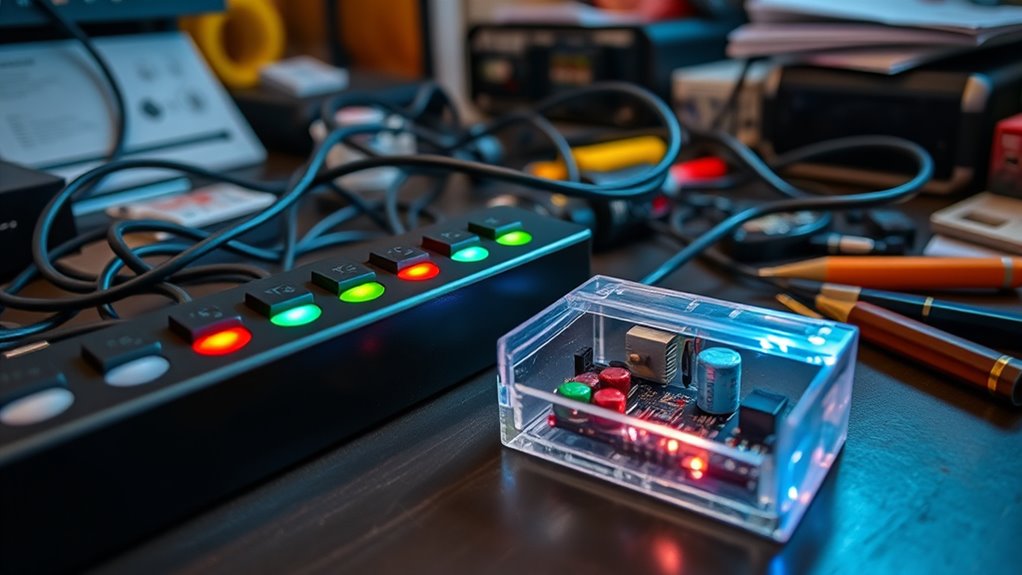
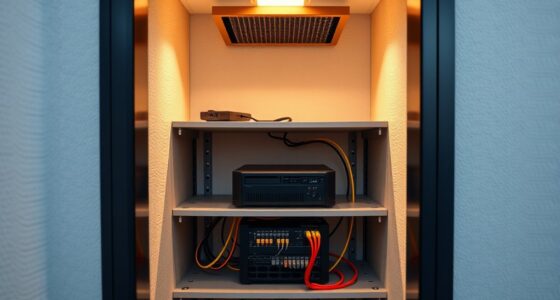
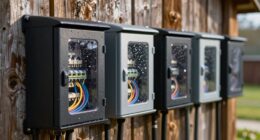
Ever wondered how to safeguard your networking gear from unexpected power surges? Protecting your devices is essential, especially since a sudden spike can damage expensive equipment or cause data loss. One effective DIY approach involves understanding grounding techniques and choosing the right power strip options. Grounding techniques are crucial because they provide a safe path for excess electrical energy to dissipate into the earth, reducing the risk of surge damage. You can improve your grounding by connecting your equipment to grounded outlets or installing grounding rods if you’re setting up a dedicated networking station. Ensuring your outlets are properly grounded is a simple yet vital step; if you’re unsure, you can test your outlets with a simple outlet tester or consult an electrician. Proper grounding helps keep voltage levels stable and prevents dangerous surges from reaching your devices. Additionally, using electric dirt bikes with robust electrical systems can help you understand the importance of reliable surge protection in high-performance setups.
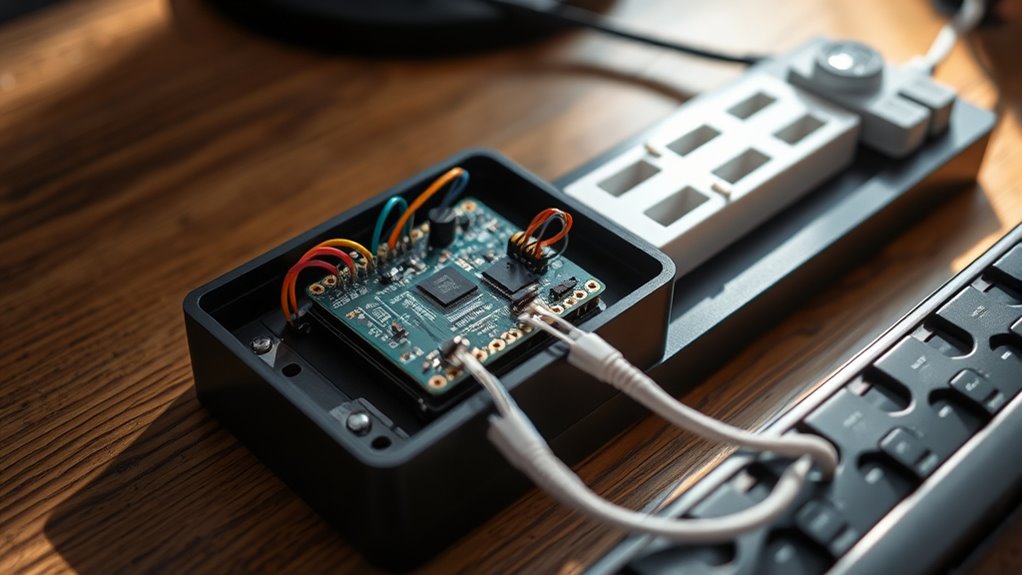
When it comes to power strip options, not all strips are created equal. Many cheap power strips lack surge protection, so investing in a high-quality surge protector is worth it. Look for power strips that have built-in surge suppression rated in joules; higher ratings typically mean better protection. Some power strips also include additional features such as EMI/RFI noise filtering, which can improve the performance and longevity of your networking gear. Make sure the power strip you choose has a grounded plug and multiple outlets to accommodate all your devices. Position the power strip close to your equipment and avoid daisy-chaining multiple strips together, as this can compromise safety and reduce surge protection effectiveness.
In addition to selecting a suitable power strip, consider using extension cords with built-in surge protection if your setup requires it. Always verify that the extension cord is rated for the power load of your networking equipment. Properly managing cable organization is also important—keep cords tidy and avoid running them across high-traffic areas to prevent damage and accidental disconnection. Regularly inspect your surge protectors for damage or wear, replacing them if they’ve been subjected to a surge or show signs of deterioration. Remember, no surge protector can guarantee complete safety, but combining good grounding techniques with reliable power strip options greatly reduces your risk. Staying proactive about these measures ensures your networking gear remains safe, operational, and protected from unforeseen electrical events.

Power Strip,SUPERDANNY 5000 Joules Surge Protector with 13 AC Outlets 2 USB-A & 2 USB-C PD 20W Fast Charging Heavy Duty 14AWG/3C Industrial Grade Extension Cord for Workbench Home Office Black
Heavy Duty Power Strip: SUPERDANNY 15A/1875W heavy duty power strip features 13 widely-spaced outlets and 4 fast-charging USB…
As an affiliate, we earn on qualifying purchases.
As an affiliate, we earn on qualifying purchases.
Frequently Asked Questions
Can I Use Household Surge Protectors for Networking Equipment?
You can use household surge protectors for networking equipment, but be cautious. Make sure they provide adequate electrical safety and surge protection specifically rated for sensitive electronics. Not all household protectors are equal, so check the joule rating and clamping voltage. For maximum safety, choose a surge protector designed for networking gear. This way, you safeguard your devices against power surges and maintain electrical safety in your home setup.
What Is the Average Lifespan of a DIY Surge Protector?
Think of your DIY surge protector as a sturdy bridge; its lifespan depends on component durability and environmental factors. Typically, it lasts around 3 to 5 years, but exposure to heat, moisture, or power surges can shorten this. Regularly check for signs of wear and replace it when components show aging. Proper maintenance and a stable environment help extend your surge protector’s effective life, keeping your networking gear safe.
Are There Specific Surge Protection Ratings for Networking Gear?
Yes, there are specific surge protection ratings for networking gear, which follow surge protection standards and electrical safety regulations. These ratings, like Joules and clamping voltage, help you determine how well a protector shields your equipment from power surges. When choosing or building your DIY setup, guarantee it meets these standards to keep your networking gear safe. Always verify the ratings and regulations to ensure reliable protection.
How Do I Test if My DIY Surge Protector Is Working Properly?
You can test your DIY surge protector by using testing equipment designed for surge protection devices. First, guarantee proper grounding methods are in place to maximize effectiveness. Connect the tester according to the manufacturer’s instructions and simulate a surge or use a test socket. If the tester indicates the surge protector responds correctly, it’s working properly. Regular testing helps confirm your device’s protective capabilities and keeps your networking gear safe.
Is It Safe to Modify Existing Electrical Outlets for Surge Protection?
You shouldn’t modify existing outlets for surge protection because it can compromise electrical safety and lead to dangerous situations. While it might seem like a simple fix, altering outlets without proper knowledge risks fire hazards and electrical shocks. Instead, invest in certified surge protectors or professionally installed outlets. Protect your network gear safely and ensure your home remains secure by avoiding risky outlet modifications.

StarTech.com Flat Plug 6-Outlet Heavy Duty Industrial Power Strip 125V/15A with Surge Protector, EMI/RFI Isolation, Mountable PDU, 8ft/2.4m Extension Power Cord, NEMA 5-15P/R, TAA
6 OUTLET POWER STRIP: Built-in 8ft. (2.4m) NEMA 5-15P Power Cord; 6x NEMA 5-15R Outlets; 125V Max. Input/Output;…
As an affiliate, we earn on qualifying purchases.
As an affiliate, we earn on qualifying purchases.
Conclusion
By investing in proper surge protection, you’re safeguarding your valuable networking gear from unexpected voltage spikes. While it might seem simple to plug into any outlet, a well-grounded, high-quality surge protector offers peace of mind and reliability. Don’t let a surge catch you off guard—think of it as a small investment for big protection. After all, in a world full of surprises, your network shouldn’t be one of them.

Klein Tools RT110 Outlet Tester, AC Electrical Receptacle Tester for North American Outlets
CLEAR LIGHT SEQUENCE: Outlet tester's light sequence indicates correct/incorrect wiring, ensuring easy identification of wiring issues
As an affiliate, we earn on qualifying purchases.
As an affiliate, we earn on qualifying purchases.

Ethernet Surge Protector / 2.5 Gigabit PoE++ 150W / Gas Discharge Tube + Silicon Avalanche Diode/Mounting Ears/Shielded RJ45 Lightning Suppressor/LAN Network Arrestor /2500 Mbps/Tupavco TP325
Ethernet Surge Protector for 2.5 Gigabit GbE PoE/High PoE++ (HPoE) 2500 Mbps LAN Ethernet Network
As an affiliate, we earn on qualifying purchases.
As an affiliate, we earn on qualifying purchases.