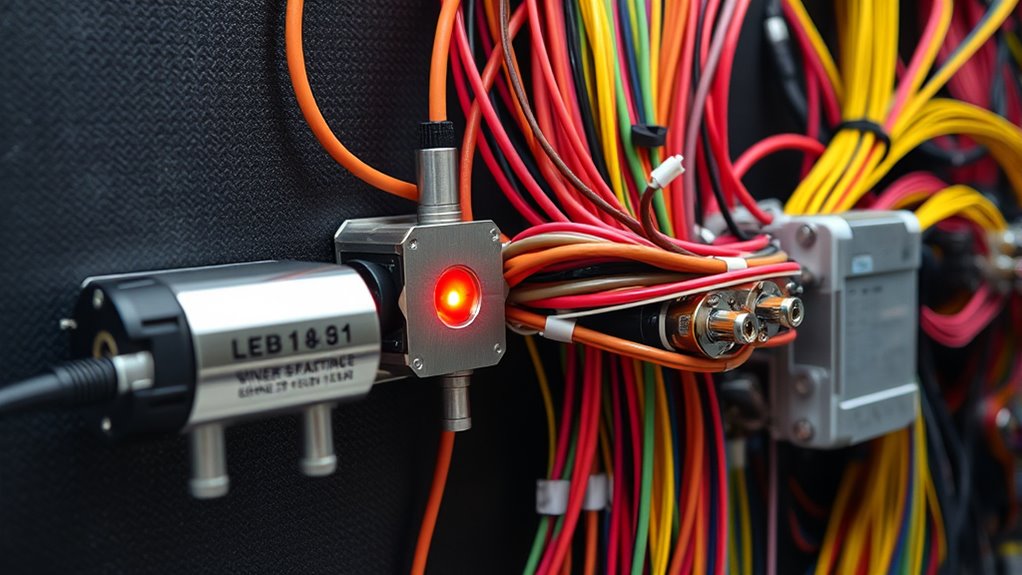

When wiring industrial sensors and actuators, your goal is to guarantee reliable operation and safety. Proper installation requires attention to detail, such as following manufacturer instructions and choosing the right cables. Small mistakes can lead to system failures or damage, making it essential to understand best practices. The key to long-term performance lies in your ability to get the wiring right the first time—so, what are the critical steps to achieve this?

Get business pricing on networking and server gear
- Business-only prices and quantity discounts
- Tax-exempt purchasing
- Multiple users, one account, clear invoices
Key Takeaways
- Follow manufacturer guidelines for wiring, connectors, and enclosures to ensure proper sensor and actuator installation.
- Verify voltage, current, and protocol compatibility between sensors, actuators, and control systems before wiring.
- Use shielded, properly grounded cables and organized wiring layouts to minimize noise and signal interference.
- Conduct thorough testing of connections, voltages, and signals to ensure system reliability before powering up.
- Maintain neat wiring with color codes or labels for easy maintenance and troubleshooting.
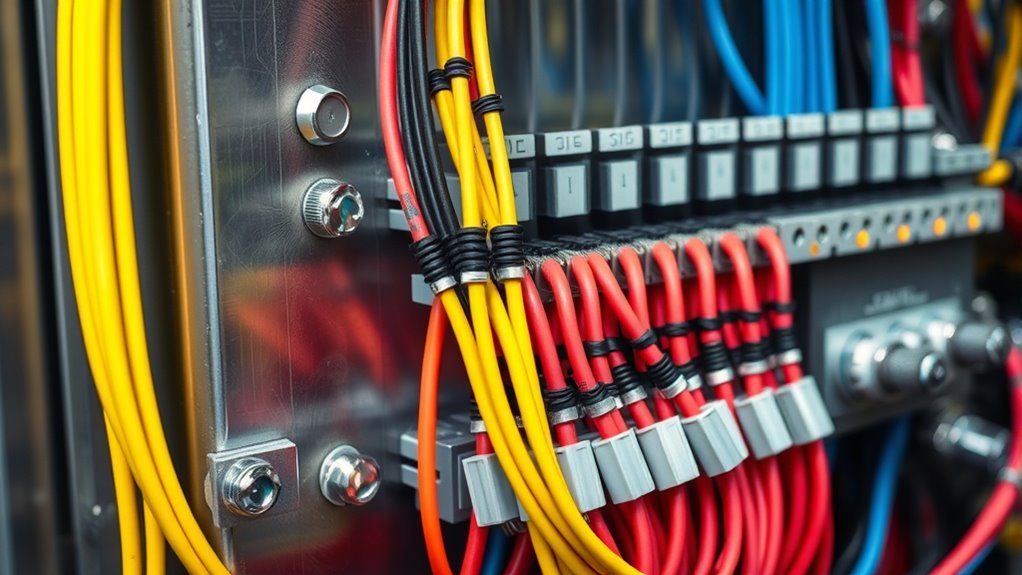
Have you ever wondered how industrial sensors and actuators reliably communicate and operate within complex systems? The key lies in proper wiring, which ensures seamless data transfer and smooth operation. When setting up these components, sensor installation becomes a vital step. You need to pay attention to how sensors are mounted and wired, ensuring they are positioned correctly for accurate readings. Proper sensor installation not only improves system performance but also reduces downtime caused by faulty connections or misaligned sensors. You should carefully follow manufacturer guidelines for wiring, making sure to use the right cables, connectors, and protective enclosures. This helps prevent signal interference, corrosion, or damage caused by environmental factors. Additionally, understanding and applying principles of electrical safety during wiring can prevent accidents and protect personnel.
Proper sensor installation and wiring are essential for reliable, accurate industrial system performance.
Another critical aspect is actuator compatibility. Not all actuators work with every control system or sensor type, so verifying compatibility before wiring is essential. You need to match voltage and current ratings, communication protocols, and signal types, such as analog or digital signals. If you mismatch these, you risk damaging components or experiencing unreliable operation. For example, some actuators require specific power supplies or control signals; using the wrong setup can lead to failures or erratic movements. Before wiring, double-check manufacturer specifications and ensure that the control system’s output matches the actuator’s input requirements.
When wiring sensors and actuators, pay close attention to grounding and shielding. Proper grounding minimizes electrical noise, which can distort signals and cause inaccurate readings or unpredictable actuator responses. Shielded cables help block electromagnetic interference, especially in noisy industrial environments. Keep wiring neat and organized, avoiding unnecessary twists or runs that could induce interference or make troubleshooting difficult later on. Use color-coded cables or labels to distinguish between power, signal, and ground lines, making maintenance easier.
Additionally, consider the wiring layout to reduce the length of signal runs. Long cables can introduce latency or signal degradation, especially for high-frequency signals. Keep wiring away from high-voltage lines or sources of electromagnetic interference to maintain signal integrity. Test all connections meticulously before powering up the system. Use multimeters and signal testers to verify correct voltages, continuity, and that signals are transmitted as intended.
In essence, proper wiring for industrial sensors and actuators is about ensuring compatibility, secure connections, and noise mitigation. When you carefully plan sensor installation and verify actuator compatibility, you lay the foundation for a reliable, efficient automation system. This proactive approach minimizes troubleshooting later and maximizes system longevity, keeping your industrial processes running smoothly and safely.
industrial sensor wiring connectors
As an affiliate, we earn on qualifying purchases.
As an affiliate, we earn on qualifying purchases.
Frequently Asked Questions
How Do I Troubleshoot Wiring Issues in Industrial Sensor Networks?
You should first check sensor connector compatibility and verify your wiring matches the correct color codes. Use a multimeter to test for continuity and voltage in each wire, confirming proper connections. Look for loose or damaged cables, and confirm that the wiring aligns with the manufacturer’s specifications. If issues persist, re-secure connections, replace damaged wires, and double-check sensor and actuator settings to troubleshoot effectively.
What Are the Best Practices for Grounding Industrial Sensors?
You should guarantee proper grounding by connecting sensor shielding to ground at one point to prevent noise. Avoid creating grounding loops, as they can introduce interference. Use shielded cables, and keep grounding paths short and direct. Make sure all sensors share a common ground reference, and verify that grounding connections are secure. Proper grounding minimizes noise, improves signal integrity, and ensures reliable sensor operation in your industrial setup.
How Can I Prevent Electromagnetic Interference in Sensor Wiring?
Think of your sensor wiring like a racecar on a track—staying on the right path prevents interference. To prevent electromagnetic interference, use shielding techniques like grounded shields around cables and keep sensor wiring away from high-voltage lines. Proper cable routing, such as avoiding running signal and power cables parallel and close together, reduces noise. These steps help make sure your sensors work accurately, just like a well-driven racecar stays on course.
What Wiring Standards Are Recommended for Hazardous Environments?
In hazardous environments with explosive atmospheres, you should follow strict wiring standards like IECEx and ATEX to guarantee safety compliance. Use explosion-proof enclosures, shielded cables, and proper grounding to prevent sparks and electrical faults. Keep wiring organized and separate from sources of static or heat. Regular inspections and adherence to manufacturer guidelines help maintain safety, reduce risks, and ensure reliable operation in these dangerous settings.
How Do I Select the Appropriate Cable Type for High-Temperature Sensors?
Think of choosing cable type like selecting armor for a fiery knight. You’ll want a cable with high-grade insulation that withstands extreme conditions. Focus on the temperature rating, ensuring it’s suitable for your sensor’s environment. Look for cables specifically designed for high temperatures, such as those with silicone or Teflon insulation. These materials resist heat and maintain integrity, keeping your sensors protected and functioning reliably under intense heat.
shielded industrial sensor cables
As an affiliate, we earn on qualifying purchases.
As an affiliate, we earn on qualifying purchases.
Conclusion
By following proper wiring practices, you guarantee your industrial sensors and actuators perform reliably and safely. Use organized, shielded cables, verify compatibility, and test connections thoroughly—it’s the secret to avoiding costly downtime. Remember, even in an age of steam engines, good wiring remains timeless. When in doubt, double-check everything; a well-wired system is your best ally in keeping operations smooth and your data accurate.
industrial actuator control cables
As an affiliate, we earn on qualifying purchases.
As an affiliate, we earn on qualifying purchases.
multimeter for industrial wiring
As an affiliate, we earn on qualifying purchases.
As an affiliate, we earn on qualifying purchases.
Halloween Picks
halloween
As an affiliate, we earn on qualifying purchases.