Understanding cable attenuation and equalization helps you maintain clear signals over long distances and across different frequencies. Attenuation causes signal loss due to cable resistance and dielectric properties, which can distort the data or audio. Equalization techniques compensate for uneven frequency response by boosting weaker signals or reducing stronger ones, ensuring better overall quality. If you continue exploring, you’ll discover more about how choosing the right cables and equipment can optimize your system’s performance.
Key Takeaways
- Signal attenuation causes signal strength to diminish over distance, affecting clarity and data integrity.
- Frequency response shows how different frequencies are attenuated, leading to potential distortion.
- Equalization techniques adjust the signal to compensate for uneven attenuation across frequencies.
- Proper cable selection and system design mitigate attenuation effects and preserve signal quality.
- Troubleshooting signal issues involves understanding attenuation patterns and applying corrective equalization strategies.

When transmitting signals through cables, understanding how they weaken and distort is essential for maintaining signal quality. One of the main challenges you face is signal loss, which occurs as the electrical signal travels along the cable. Signal loss results from the inherent resistance and dielectric properties of the cable material, causing the signal to diminish in strength over distance. If unaddressed, this attenuation can lead to poor signal clarity, data errors, or complete communication failure. To combat this, you need to grasp the concept of frequency response, which describes how different frequencies are affected as they pass through the cable. High-frequency signals tend to experience more loss than low-frequency signals, making the cable’s frequency response a critical factor in your system’s performance. By understanding how your cable responds across the frequency spectrum, you can predict which parts of your signal may weaken and plan accordingly.
You can think of frequency response as a map of how well your cable preserves the integrity of various frequencies. When the frequency response is flat, all frequencies are transmitted with similar strength, resulting in a clearer, more accurate signal. However, many cables exhibit a non-flat frequency response, where certain frequencies are attenuated more than others. This uneven attenuation can lead to signal distortion, especially in broadband signals like audio or data streams. Recognizing these patterns allows you to identify problematic frequencies and take steps to mitigate their impact. For instance, using equalization techniques, you can boost the weaker frequencies or reduce the stronger ones, balancing the overall frequency response. This process helps compensate for the natural signal loss and distortion caused by the cable, ensuring the signal maintains its fidelity from sender to receiver.
Moreover, understanding the relationship between signal loss and frequency response guides you in selecting the right cable type for your application. For high-frequency signals, you might need cables with better shielding, lower resistance, or specific dielectric materials that minimize attenuation. In longer runs, amplifiers or repeaters can be strategically placed to boost the signal before it weakens too much. By paying attention to these factors, you ensure that your system delivers high-quality signals with minimal distortion. [To conclude], grasping how signal loss interacts with frequency response empowers you to troubleshoot issues effectively, choose appropriate cabling, and implement equalization strategies that preserve signal integrity. This knowledge ultimately helps you maintain a reliable, efficient communication system, even over extended distances or challenging environments.
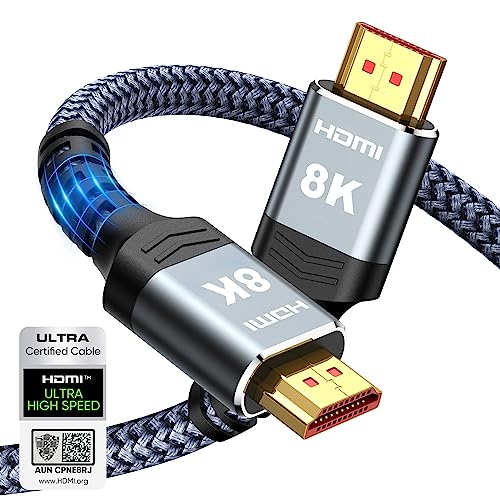
Highwings 8K 10K 4K HDMI Cable 48Gbps 6.6FT/2M, Certified Ultra High Speed HDMI Cable Braided Cord-4K@120Hz 8K@60Hz, DTS:X, HDCP 2.2 & 2.3, HDR 10 Compatible with Roku TV/PS5/HDTV/Blu-ray
Top Technology—-8K@60HZ: This 8K Ultra High Speed HDMI Cable uses the most cutting-edge technology, is compatible with 8K@60HZ…
As an affiliate, we earn on qualifying purchases.
As an affiliate, we earn on qualifying purchases.
Frequently Asked Questions
How Does Cable Quality Affect Attenuation Levels?
Cable quality directly impacts attenuation levels because better cable material reduces signal loss, allowing for clearer transmission. High-quality cables with effective shielding minimize interference from external sources, which also lowers attenuation. If your cable uses inferior materials or shielding, you’ll notice increased signal degradation over distance. Choosing cables with superior shielding effectiveness and quality materials ensures stronger signals and less attenuation, maintaining ideal performance for your system.
What Are the Best Tools for Measuring Cable Attenuation?
Think of measuring cable attenuation like tuning a guitar; you need the right tools to hit the perfect note. You should use a fiber optics power meter and a signal booster to get accurate readings. These tools act as your ears and amplifier, revealing how much signal weakens along the cable. With them, you can fine-tune your setup, ensuring your data travels smoothly and strongly through every twist and turn.
Can Equalization Completely Eliminate Signal Loss?
Equalization can’t completely eliminate signal loss, but it can substantially reduce attenuation versus loss, improving signal quality. By adjusting the frequency response, you prevent some of the effects of cable attenuation, which causes signal weakening over distances. While it’s effective for signal loss prevention, it won’t entirely stop attenuation; instead, it optimizes your system’s performance, ensuring clearer signals and better data transmission over long cable runs.
How Does Temperature Influence Cable Attenuation?
Temperature acts like a silent conductor, subtly changing the tune of your cable signals. As thermal effects heat or cool your cables, material properties such as resistance and dielectric constant shift, increasing attenuation. When it’s hot, signals weaken faster; in cold, they tend to hold stronger. You can’t stop this natural dance, but understanding thermal effects helps you manage and optimize your cable performance effectively.
What Are Future Trends in Cable Attenuation Management?
You’ll see future trends in cable attenuation management focus on advanced fiber optics and wireless integration. Innovations like adaptive equalization and smart monitoring systems will help you minimize signal loss and optimize performance. As technology evolves, expect more dynamic solutions that automatically adjust to environmental changes, ensuring clearer signals. These developments will make your network more reliable, efficient, and capable of supporting growing data demands seamlessly.

BOSS Audio Systems B65N High Level to RCA Converter for Car Sound Systems – Ground Loop Isolator for Crossover Stereo Equalizer Amplifier Subwoofer
Reduces High Pitched Whine Alternator Noise caused by the car's electrical system
As an affiliate, we earn on qualifying purchases.
As an affiliate, we earn on qualifying purchases.
Conclusion
Just as a skilled conductor balances each instrument to create harmony, understanding cable attenuation and equalization lets you fine-tune your signals for clarity. Recognize that without proper adjustment, your data may fade into silence like a forgotten melody. By mastering these techniques, you become the maestro of your network, ensuring every note—every bit—reaches its destination intact, echoing the timeless wisdom that even the strongest symphony needs careful tuning to sound its best.

Smolink Ethernet Cable 50 ft, Cat 8 Ethernet Cable with 40Gbps 2000Mhz High Speed Ethernet Cable, Shielded Heavy Duty SFTP RJ45 LAN Cable Patch Cord for Modem Router Gaming PC PS4/5/6 Xbox, Black
HIGH SPEED ETHERNET CABLE: Lightning fast transmission of up to 40 Gbps, 4x faster than Cat 7 ethernet…
As an affiliate, we earn on qualifying purchases.
As an affiliate, we earn on qualifying purchases.
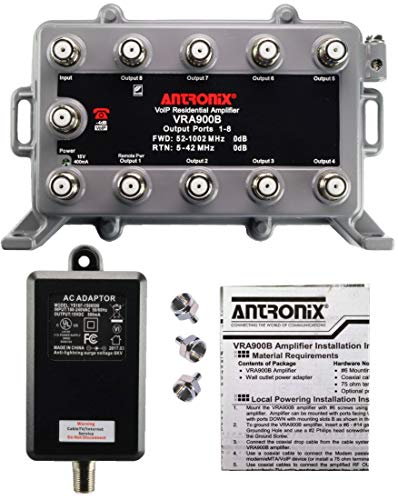
Reliable Cable Products 9 Port Bi-Directional Cable TV Splitter Signal Booster/Amplifier with Active Return (Not Recommended for use with OTA Antennas and not Compatible with Satellite Systems)
Provides 8 amplified output ports with Active Return for use with cable TV. All ports are LOSSLESS both…
As an affiliate, we earn on qualifying purchases.
As an affiliate, we earn on qualifying purchases.