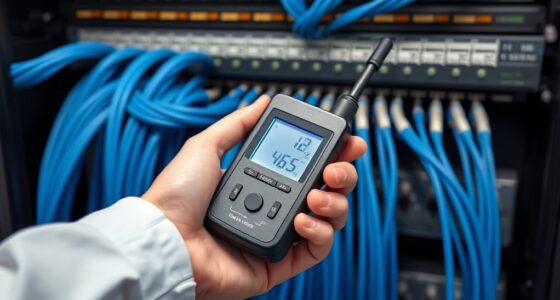
Measuring cable length electronically involves techniques that can quickly and accurately determine how long a cable is without physically measuring it. You might use methods like Time Domain Reflectometry or capacitance measurement, but each has its own considerations for accuracy. Understanding these methods and the factors that influence them can help you choose the right approach. There are details and nuances worth exploring to guarantee reliable results—are you ready to learn more?

Get business pricing on networking and server gear
- Business-only prices and quantity discounts
- Tax-exempt purchasing
- Multiple users, one account, clear invoices
Key Takeaways
- Use a Time Domain Reflectometer (TDR) to send a pulse and measure reflection time for accurate cable length.
- Measure the cable’s capacitance with a capacitance meter and convert the reading into length using known capacitance per unit length.
- Calibrate measurement devices with a known cable length to improve accuracy of electronic length estimations.
- Minimize environmental interference and ensure proper grounding to enhance measurement reliability.
- Utilize portable, modern electronic tools designed for quick and precise cable length measurement in various settings.
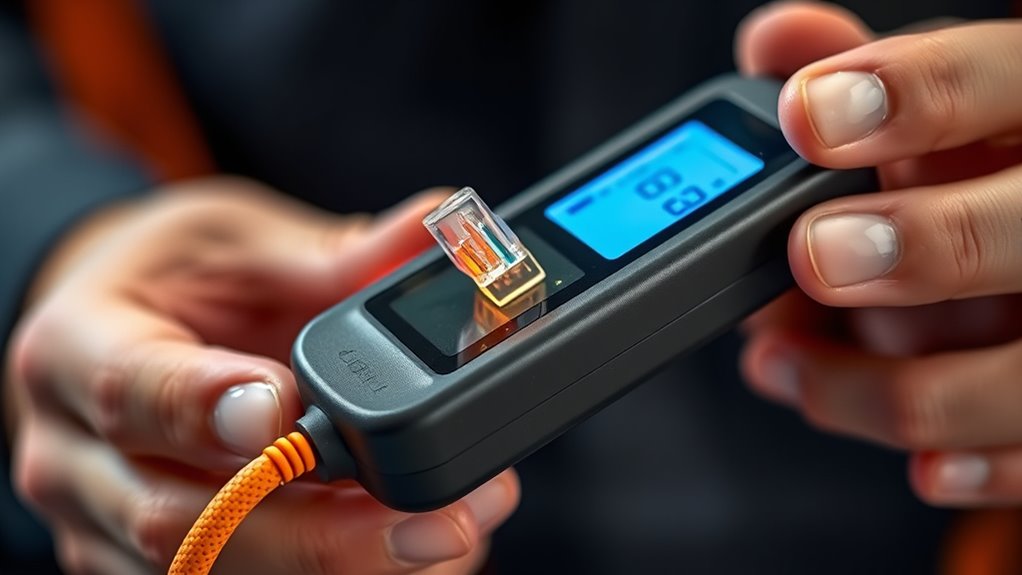
Measuring cable length accurately can be challenging with traditional methods, but electronic measurement techniques offer a quick and reliable alternative. Instead of relying on physical tools like rulers or tape measures, you can use electrical methods to determine the length of a cable more precisely, especially over long distances or in complex setups. These techniques leverage the cable’s electrical properties, such as signal reflection and capacitance measurement, to provide accurate results.
One common electronic method involves analyzing signal reflection. When an electrical signal is sent down a cable, any impedance mismatch at the end or along the cable causes part of the signal to reflect back toward the source. By sending a test pulse and measuring the time it takes for the reflected signal to return, you can calculate the cable’s length. This process, called Time Domain Reflectometry (TDR), is highly effective because it directly relates the delay of the reflected signal to the physical length of the cable. The key is to precisely measure the reflection and guarantee the signal is clean, which helps avoid errors caused by noise or signal degradation.
Signal reflection analysis via TDR accurately measures cable length by timing reflected pulses.
Capacitance measurement offers another accurate way to determine cable length electronically. Every cable has a specific capacitance per unit length, depending on its construction and dielectric material. By measuring the total capacitance between the conductors, you can estimate the length by dividing this value by the known capacitance per meter. This method is especially useful for cables that are difficult to access physically or are embedded within walls or equipment. To enhance accuracy, it’s important to calibrate your measurement device with a known length of cable of the same type, making sure your capacitance-to-length conversion is precise.
Additionally, advancements in electronic measurement tools have made these techniques more accessible, providing portable and user-friendly options for technicians and engineers. Both techniques benefit from modern electronic measurement tools that are portable and user-friendly. Devices like TDR testers or capacitance meters can quickly provide readings without the need for complex calculations or extensive setup. When using these tools, it’s imperative to account for environmental factors such as temperature and cable conditions, which can influence measurements. Additionally, making certain proper grounding and minimizing external interference will improve measurement reliability.
Frequently Asked Questions
Can Electronic Cable Length Measurement Be Affected by Cable Type?
Yes, electronic cable length measurement can be affected by cable type. Different cables, like those with varying cable insulation, impact signal quality and introduce signal interference. These factors can cause inaccuracies in measurements, especially if the cable has high capacitance or poor shielding. To guarantee precise results, choose the right cable type suited for electronic measurement methods and minimize interference by using properly shielded cables.
What Safety Precautions Are Necessary When Measuring Cables Electronically?
Think of measuring cables electronically like walking a tightrope—safety is key. You must always watch for electrical hazards and make certain proper grounding to prevent shocks or damage. I once saw a technician avoid injury by double-checking grounding connections before testing. Always wear insulated gloves, turn off power when possible, and keep your workspace dry. These precautions protect you and ensure accurate measurements every time.
How Accurate Are Electronic Methods Compared to Traditional Tools?
Electronic measurement methods are generally quite accurate, especially when you use proper calibration techniques. Regular measurement calibration guarantees your devices provide reliable results, often matching or surpassing traditional tools in precision. While traditional tools like tape measures are straightforward, electronic methods reduce human error and can measure longer cables efficiently. Keep your equipment calibrated and follow manufacturer guidelines to maintain high accuracy in your measurements.
Is Special Training Needed to Use Electronic Cable Length Measurement Devices?
Think of operating electronic cable length measurement devices like learning to ride a bike. You don’t need special training to get started, but understanding device operation helps you ride smoothly. Most devices are user-friendly, and basic training often suffices. However, for precise measurements or advanced features, some training guarantees you’re confident and accurate. So, while you can usually start easily, a little instruction enhances your skill and results.
Can Electronic Measurement Detect Cable Damage or Faults?
Yes, electronic measurement can detect cable damage or faults. When you perform testing, it checks for issues like damaged cable insulation or signal interference, which can cause performance problems. By analyzing the signals, you can identify irregularities indicating faults or damage. This helps you pinpoint exact locations of issues, ensuring you address problems efficiently and maintain ideal cable performance.
Conclusion
Now that you know the techniques, you can confidently navigate the electrical maze. Whether sending a pulse or reading capacitance, remember each method is a brushstroke on your canvas of precision. Environmental factors and calibration are your guiding stars, ensuring your measurements stay true. With a steady hand and sharp eye, you’ll transform complex signals into clear, accurate cable lengths—turning technical puzzles into a harmonious symphony of measurement mastery.
Halloween Picks
halloween
As an affiliate, we earn on qualifying purchases.