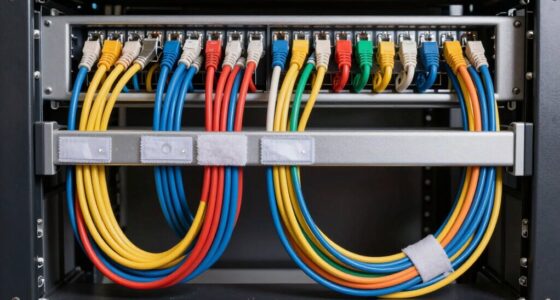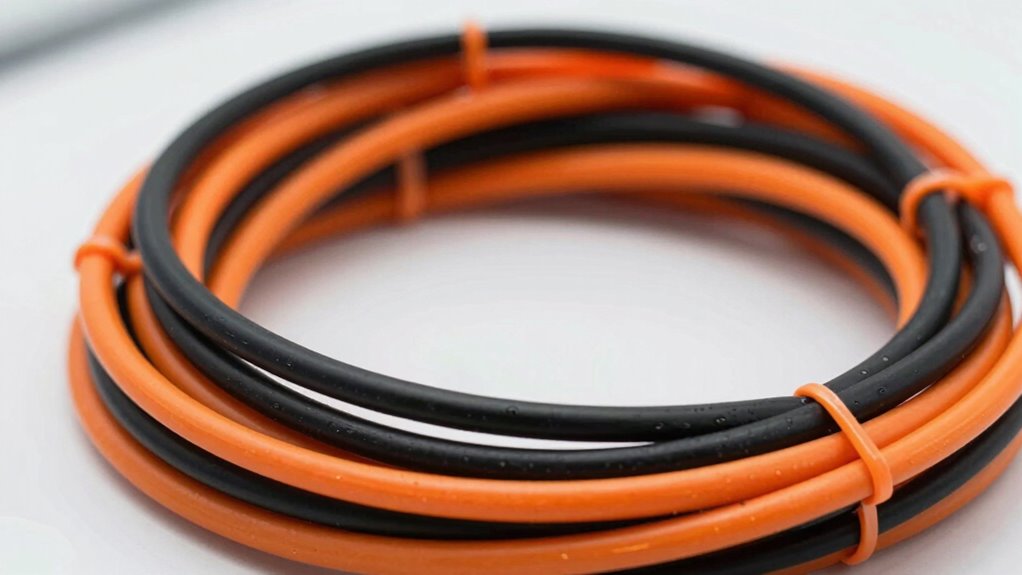

When managing service loops and cable slack, you should guarantee cables have enough extra length for easy adjustments and maintenance, but not so much that it causes clutter or safety hazards. Proper slack prevents strain on connectors, reduces wear, and minimizes damage risks. Securing cables with clips or ties keeps them organized and safe, especially in changing environments. Understanding these practices helps keep your systems safe, reliable, and easy to maintain—skills that become clearer as you explore further.
Key Takeaways
- Proper service loops and cable slack prevent strain on connectors and facilitate easier maintenance or repairs.
- Adequate slack reduces the risk of damage, tangling, or tripping hazards in cable installations.
- Securing cables with clips or ties helps manage slack and maintain a neat, organized setup.
- Excessive tension or loose cables can cause insulation stress or safety hazards; proper management mitigates these risks.
- Regular inspection of slack and loops ensures system reliability, safety, and compliance with electrical standards.
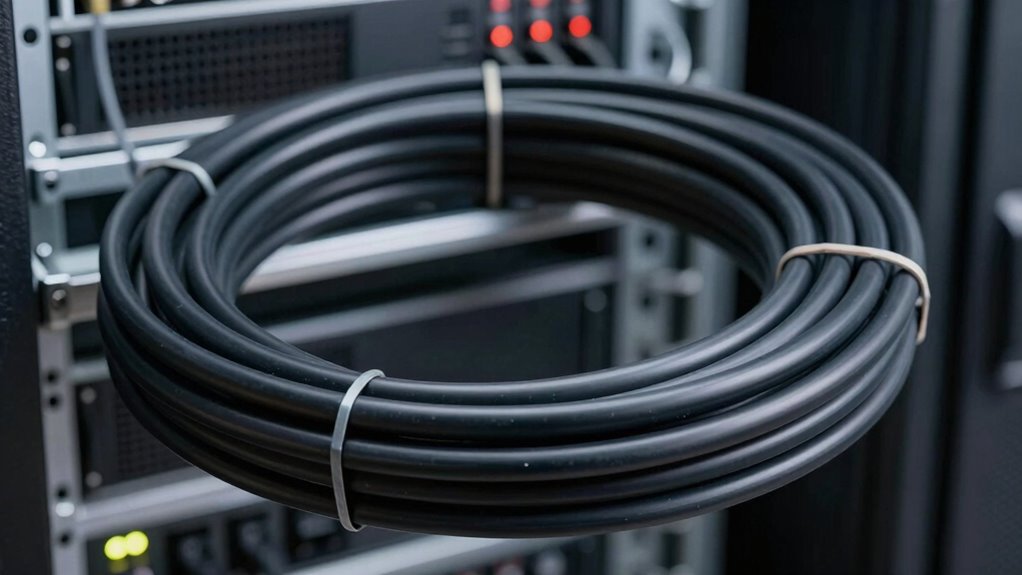
When installing or maintaining electrical and communication cables, understanding the importance of service loops and cable slack is essential. These elements are critical for effective cable management, ensuring your setup remains organized and accessible. Properly incorporating service loops and slack helps prevent strain on connectors and terminals, reducing the risk of damage that could lead to costly repairs or safety hazards. Without sufficient slack, cables may be pulled tight, causing stress on connections, which can result in failures or fire hazards. Conversely, too much slack can create clutter and trip hazards, so finding the right balance is key.
In terms of cable management, service loops provide flexibility. They allow you to make adjustments or repairs easily without having to replace entire runs of cable. When you plan your cable routes, leaving a sufficient amount of slack at connection points ensures you can troubleshoot or upgrade components without disturbance. This proactive approach simplifies maintenance, saves time, and minimizes disruption. Additionally, neat, well-managed cables with appropriate slack reduce the risk of accidental disconnections or damage caused by external forces or vibrations.
Safety considerations are paramount when dealing with cable slack. Excessively tight cables can cause stress on insulation, increasing the likelihood of wear or failure over time. On the other hand, loose cables left unchecked might become tangled or create tripping hazards, especially in busy environments. Properly managing cable slack also involves securing the cables with clips, ties, or conduits to prevent movement that could loosen connections or cause damage. You should always adhere to electrical codes and standards, which specify acceptable slack lengths and securement methods to ensure safety and compliance. Overlooking these details can result in code violations, potential electrical fires, or personal injury.
Furthermore, when installing or maintaining cables, you want to be mindful of environmental factors. For example, in areas prone to temperature fluctuations or vibrations, additional slack can accommodate expansion, contraction, or movement, safeguarding your connections. Regular inspections of cable slack are necessary to identify any signs of wear, degradation, or looseness. By doing so, you help maintain a safe and reliable electrical or communication system. Properly managing service loops and their purpose can improve your ability to troubleshoot and extend the lifespan of your cable installations. Understanding these concepts also helps ensure that your setup complies with electrical codes and standards, which are designed to promote safety and reliability.

XHF 120 PCS Adhesive Cable Wire Clips Black, Outdoor Christmas Light Clips, Cable Management Wire Organizer Cord Holder for Under Desk, Car, Wall, TV PC Ethernet Cable
- High-Quality Material: Strong adhesive and PA66 nylon construction
- Versatile Usage: Suitable for USB, Ethernet, lights, and more
- Compact Size: Base 5/8" x 5/8", buckle 1/4" x 2/5"
As an affiliate, we earn on qualifying purchases.
As an affiliate, we earn on qualifying purchases.
Frequently Asked Questions
How Do Service Loops Affect Signal Quality?
Service loops help improve signal quality by reducing signal interference caused by cable movement or stress. They provide extra slack, preventing tension that can disrupt signal transmission. This enhances cable stability, ensuring consistent data flow and minimizing disruptions. Properly implemented service loops absorb vibrations and physical stress, which helps maintain ideal signal quality over time. So, including adequate service loops is essential for reliable, interference-free connections.
What Tools Are Best for Installing Cable Slack?
Did you know that improper cable slack can reduce signal quality by up to 50%? For installing cable slack, use cable management tools like cable ties, clips, or Velcro strips to keep everything tidy and secure. Proper installation techniques involve leaving enough slack for future adjustments without excess. These tools and methods help you avoid tension, reduce interference, and guarantee reliable connections in your setup.
Can Too Much Slack Cause System Issues?
Yes, too much slack can cause system issues. Excess cable slack increases cable tension, which can strain connectors and equipment, leading to potential failures. Environmental factors like temperature changes or movement can worsen these issues, causing cables to shift or become overstressed. To prevent problems, maintain a balance—use enough slack for flexibility but avoid excessive loops that put unnecessary stress on your system. Proper installation guarantees reliability and safety.
How Often Should Service Loops Be Maintained?
Back in the day, cable management was a hit-or-miss affair, but now, you should inspect your service loops every 6 to 12 months. Regular maintenance guarantees safety considerations are met and prevents issues like cable strain or damage. You should check for any signs of wear, tight bends, or unnecessary slack, and adjust accordingly. Keeping your cables organized and well-maintained safeguards your system and simplifies future troubleshooting.
Are There Industry Standards for Cable Slack Length?
Yes, industry standards for cable slack length exist to guarantee proper cable tension and secure installations. You should follow recommended installation techniques, which typically suggest leaving enough slack to accommodate movement and prevent strain on connectors or equipment. Proper cable slack allows for future adjustments, reduces stress, and minimizes risk of damage. Always refer to specific standards from organizations like TIA or BICSI for precise guidelines tailored to your application.

Cable Zip Ties,400 Pack Black Assorted Sizes 12+8+6+4 Inch,Multi-Purpose Self-Locking Nylon Cable Cord Management,Plastic Wire Ties for Home,Office,Garden,Workshop. By HAVE ME TD
- Complete Pack of 400 Zip Ties: Includes four sizes for versatile use
- Assorted Sizes for Various Projects: 12, 8, 6, and 4-inch ties for different needs
- High Tensile Strength: Up to 40 lbs for larger applications
As an affiliate, we earn on qualifying purchases.
As an affiliate, we earn on qualifying purchases.
Conclusion
Understanding service loops and cable slack is essential for maintaining a reliable network. For example, imagine installing a new switch in an office; if you leave enough slack and a proper loop, future repairs or expansions become much easier. Without it, you risk damaging cables or causing disruptions. So, always plan your cable runs carefully, leaving just enough slack and loops to accommodate movement and future adjustments. It’s a simple step that saves you headaches later.

Nettbe 60 PCS 6 Inches Reusable Cable Ties, Adjustable Cord Straps Wire Organizer Cord Wrap and Hook Loop Cable Management
- Reusable nylon cable ties: Made from durable, eco-friendly nylon
- Versatile cable organizer: Wraps all types of loose cords
- Multi-use application: Suitable for home, office, garage, outdoors
As an affiliate, we earn on qualifying purchases.
As an affiliate, we earn on qualifying purchases.
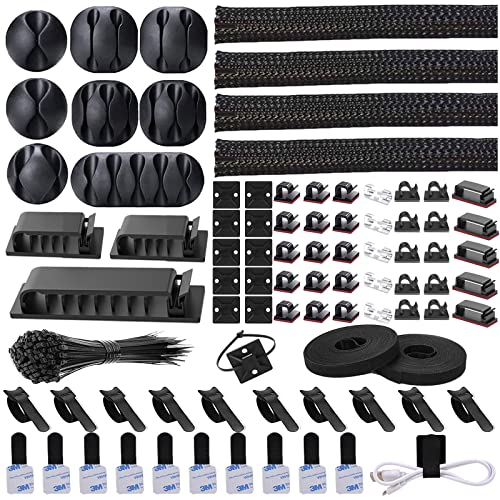
N NOROCME 192 PCS Cable Management Kit 4 Wire Organizer Sleeve
- Complete Cable Management Kit: Includes sleeves, ties, clips, and mounts
- Multiple Cable Clips: 6 types, 46 eco-friendly clips in two colors
- Durable Materials: Sturdy, high-quality components for long-lasting use
As an affiliate, we earn on qualifying purchases.
As an affiliate, we earn on qualifying purchases.