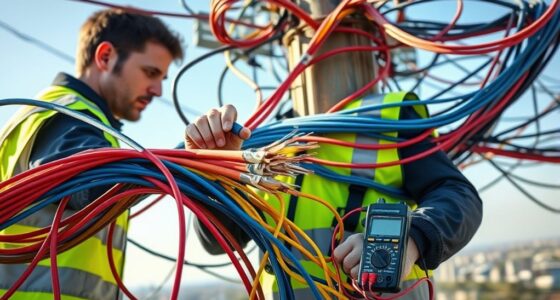
Not every cable failure begins within the cable itself; external influences and improper installation often cause issues over time. Environmental factors like extreme weather, moisture, and UV exposure weaken insulation and promote corrosion, leading to eventual failure. Poor handling, sharp bends, or stress during installation can also damage cables before they’re even used. Being aware of these external and installation factors helps you prevent problems early. Keep exploring to understand how to better protect your cables and extend their lifespan.

Get business pricing on networking and server gear
- Business-only prices and quantity discounts
- Tax-exempt purchasing
- Multiple users, one account, clear invoices
Key Takeaways
- External environmental factors like moisture and UV exposure degrade insulation before internal components fail.
- Improper installation practices cause stress and damage that lead to failure, not inherent cable quality.
- Weatherproofing and proper protection extend cable lifespan, reducing failures caused by environmental wear.
- Gradual environmental deterioration often results in failure that stems from external damage, not the cable’s internal defect.
- Routine maintenance and inspections can detect external damage early, preventing cable failure from internal causes.

Have you ever wondered why a cable might fail unexpectedly? Sometimes, the problem isn’t with the cable itself but with external influences that compromise its integrity over time. Environmental factors play a significant role in how long a cable can perform reliably. Exposure to extreme weather conditions, such as high temperatures, moisture, or UV radiation, can weaken the cable’s outer insulation and internal components. If a cable isn’t rated for outdoor use or isn’t properly protected, these environmental stresses accelerate wear and tear, eventually leading to failure. For instance, prolonged exposure to sunlight can cause the insulation to become brittle and crack, while moisture can promote corrosion of metal conductors. These factors often go unnoticed until a sudden malfunction occurs, making it seem as if the cable failed unexpectedly when, in reality, it was gradually compromised by its environment. Recognizing the importance of environmental resilience can help in choosing cables suited for specific conditions. Proper protection, such as weatherproofing or shielding, can significantly extend a cable’s lifespan. Additionally, understanding external influences can lead to better preventative measures and maintenance routines.
Installation errors are another common cause of cable failure that’s often overlooked. When cables aren’t installed correctly, they face unnecessary stress and damage that can shorten their lifespan dramatically. For example, pulling a cable too tightly during installation can stretch or deform the conductors, weakening their structure and making them more prone to breakage. Bending cables sharply or twisting them beyond their specified bend radius can also cause internal damage that isn’t visible on the surface. Additionally, improper securing or routing can lead to abrasion against sharp edges or other objects, gradually wearing down the insulation. Over time, these small mistakes accumulate, resulting in failures that seem to come out of nowhere. Proper installation practices, including using the right tools, following manufacturer guidelines, and avoiding excessive force, are vital to guarantee longevity. Being aware of installation best practices can help prevent such issues from occurring. Regular training and adherence to industry standards are essential for minimizing these errors and ensuring long-term reliability.
Products Worth Considering

Bose Smart Ultra Dolby Atmos Soundbar with Voice Control, HDMI eARC, Black

Apple Watch Series 8 GPS 41mm Smartwatch with Midnight Aluminum Case and Midnight Sport Band (S/M)

Bose QuietComfort Wireless Noise-Cancelling Headphones, Sandstone
As an affiliate, we earn on qualifying purchases.
Frequently Asked Questions
How Can External Environmental Factors Affect Cable Failure?
External environmental factors, like environmental hazards, can cause cable failure by exposing cables to elements such as moisture, extreme temperatures, or chemicals. Physical damage from impacts, abrasion, or pests also plays a role, weakening the cable’s insulation or core. You should regularly inspect cables in harsh environments, protect them with proper shielding, and address environmental hazards promptly to minimize risks of failure caused by external factors.
What Role Do Connectors Play in Cable Failure?
Connectors act like gateways, and their integrity determines the flow of signals. When connector corrosion occurs, it’s like rust creeping into the gates, causing signal degradation. This corrosion weakens the connection, leading to intermittent failures or complete loss of signal. You should regularly inspect and maintain connectors to prevent corrosion, ensuring a solid, reliable link. Strong connectors keep your cable system resilient, preventing failure from the very first gate.
How Does Improper Installation Contribute to Cable Issues?
Improper installation can cause cable issues by damaging the cable material or weakening connections. If you neglect proper installation techniques, you risk bending or twisting the cable excessively, which damages the internal wires. Poorly securing connectors or forcing cables into tight spaces can also lead to failures. Always follow correct installation methods and use suitable cable materials to guarantee longevity and reliable performance.
Can Electrical Surges Cause Cable Failure?
Electrical surges can definitely cause cable failure. When a surge occurs, electromagnetic interference increases, which can damage the cable’s internal components. Sometimes, manufacturing defects make cables more vulnerable to surges, leading to failure. You need to protect your cables with surge protectors and guarantee proper installation. Recognizing these vulnerabilities helps prevent damage and extends the lifespan of your cables, saving you money and hassle in the long run.
What Maintenance Practices Help Prevent Cable Failures?
Did you know that improper maintenance causes over 30% of cable failures? To prevent this, regularly inspect cable insulation for cracks or wear, guaranteeing it remains intact. Keep connectors clean and free from corrosion, which can cause poor connections and overheating. Implement routine testing and cleaning schedules, and replace damaged cables promptly. These practices help prolong cable life, reduce failures, and ensure your system stays reliable and safe.
Conclusion
Remember, not every cable failure begins with the cable itself. Sometimes, external factors like poor installation, environmental conditions, or connected equipment cause the issue. In fact, studies show that up to 60% of cable failures result from these external influences rather than the cable’s internal quality. So, always consider the whole system and installation process, not just the cable, to prevent failures and guarantee reliable performance.